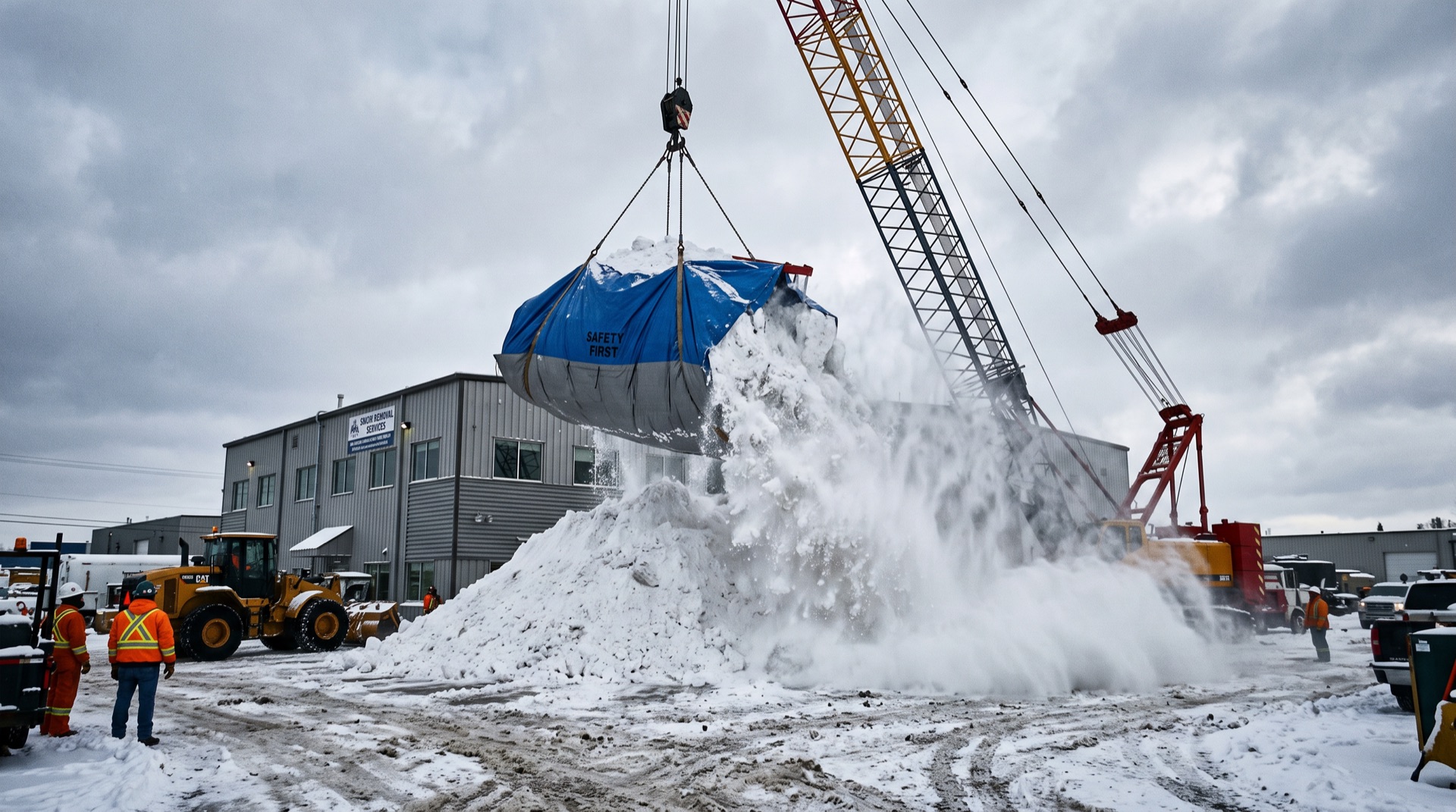
Ice dams are not a Reading problem so much as a Massachusetts one, and they show up on the same handful of eaves and valleys year after year. As part of our complete Reading winter roof services, crews handle crane-assisted snow removal across Middlesex County.
Reading Ice Dams: Wet Snow and a Thermometer That Will Not Settle
Coastal storms deliver the heaviest snow by weight. A single nor'easter can put a wet, dense pack on a roof in Reading in one night, and the maritime air that follows rarely stays on one side of freezing for long.

Add the architecture and the problem concentrates. Dormers, ells, knee walls and additions over porches all create pockets where warm air meets cold deck, and those are the eaves that dam first on a roof in Reading.
Ice-barrier practice in Middlesex County
Historic district review in parts of Middlesex County adds a step on materials and sometimes on color, which is worth knowing before a re-roof is scheduled rather than after the permit is refused.
Crane-Assisted Snow Removal in Reading: How The Work Runs
Traffic control and the street closure conversation
A crane set up in a street needs the street. Depending on the municipality that means a permit, cones and flaggers, a parking suspension, or all of it, and the lead time is days rather than hours. Ceiling Sagging or Bulging After Snow.
Those applications get made as part of the booking. Discovering on the morning of the lift that the road cannot legally be occupied is an expensive way to learn the local rules in Middlesex.
Outriggers on frozen and uneven ground
Frozen ground is not automatically good bearing. Frost heave, buried utilities, septic fields, soft fill under a lawn and anything that thaws mid-job all change what the pads are sitting on.
Pads are sized for the load and placed deliberately. It is the least visible part of a pick in Reading and the part with the least margin for improvisation.
Wind limits and when a pick gets postponed
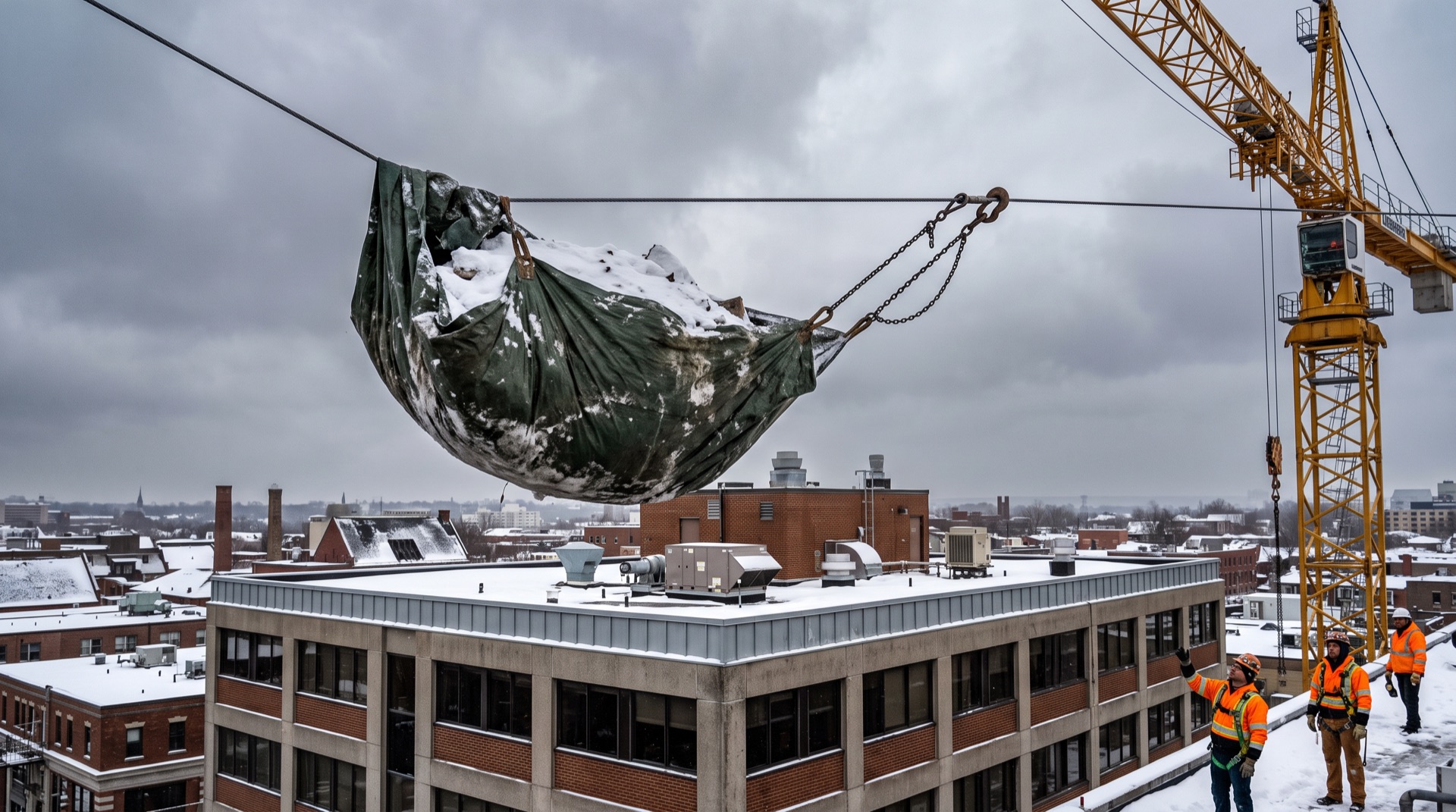
Every crane has a wind chart, and a tarp full of snow is about the worst possible load to put on a hook in a gust - large surface area, light enough to sail, heavy enough to hurt. The limit is lower than people expect and it is not negotiable.
A Reading pick that is cancelled for wind gets rescheduled rather than argued about. The alternative is a swinging load over an occupied building.
What goes in the tarp and what does not
A pick lifts loose and broken snow. It does not lift a solid sheet of ice frozen to the membrane, and trying to make it do so is how a tarp takes the roof covering with it.
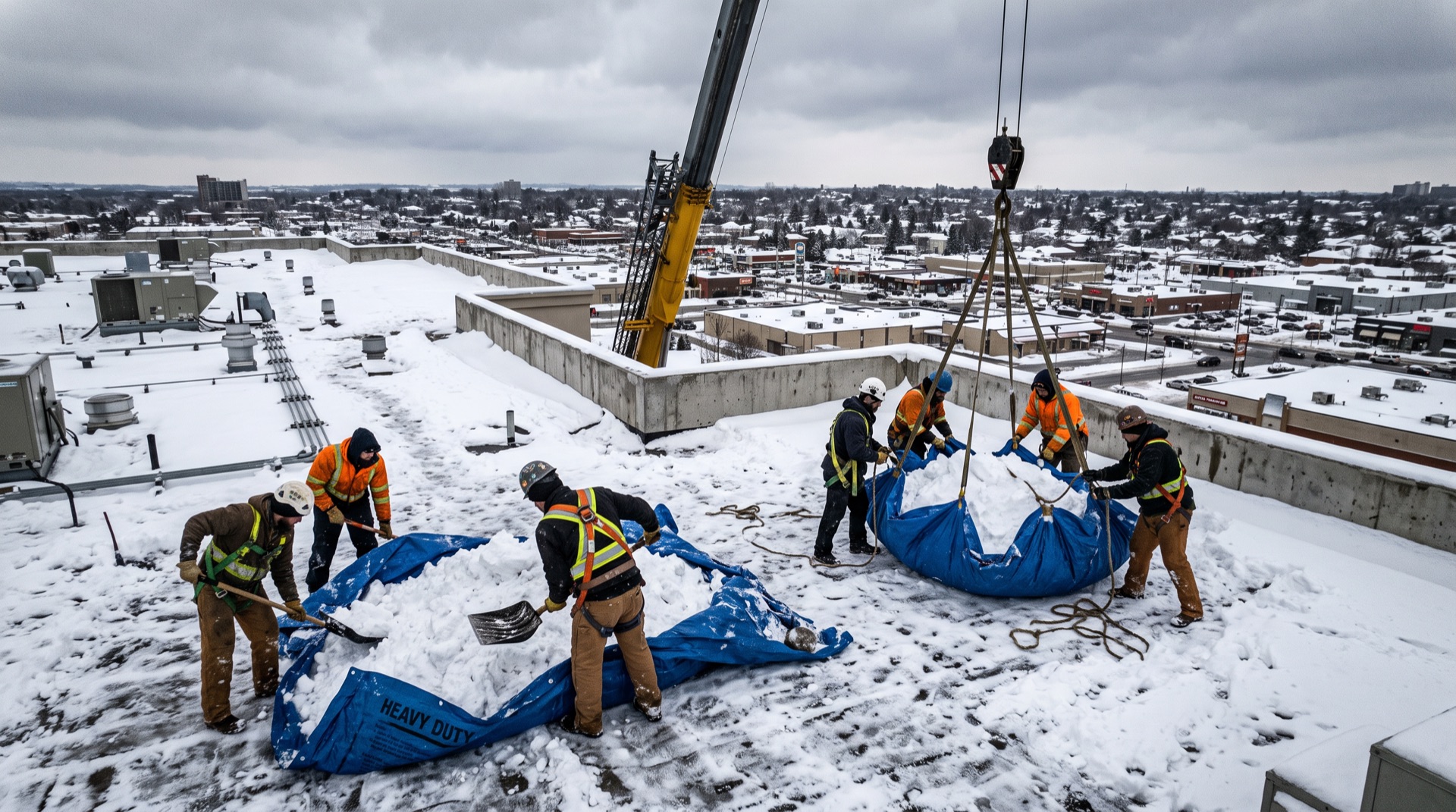
So the sequence is crews cutting and breaking the pack into liftable material, the crane moving it, and steam dealing with whatever is bonded to the surface. The crane is the transport, not the demolition.
How a pick actually works
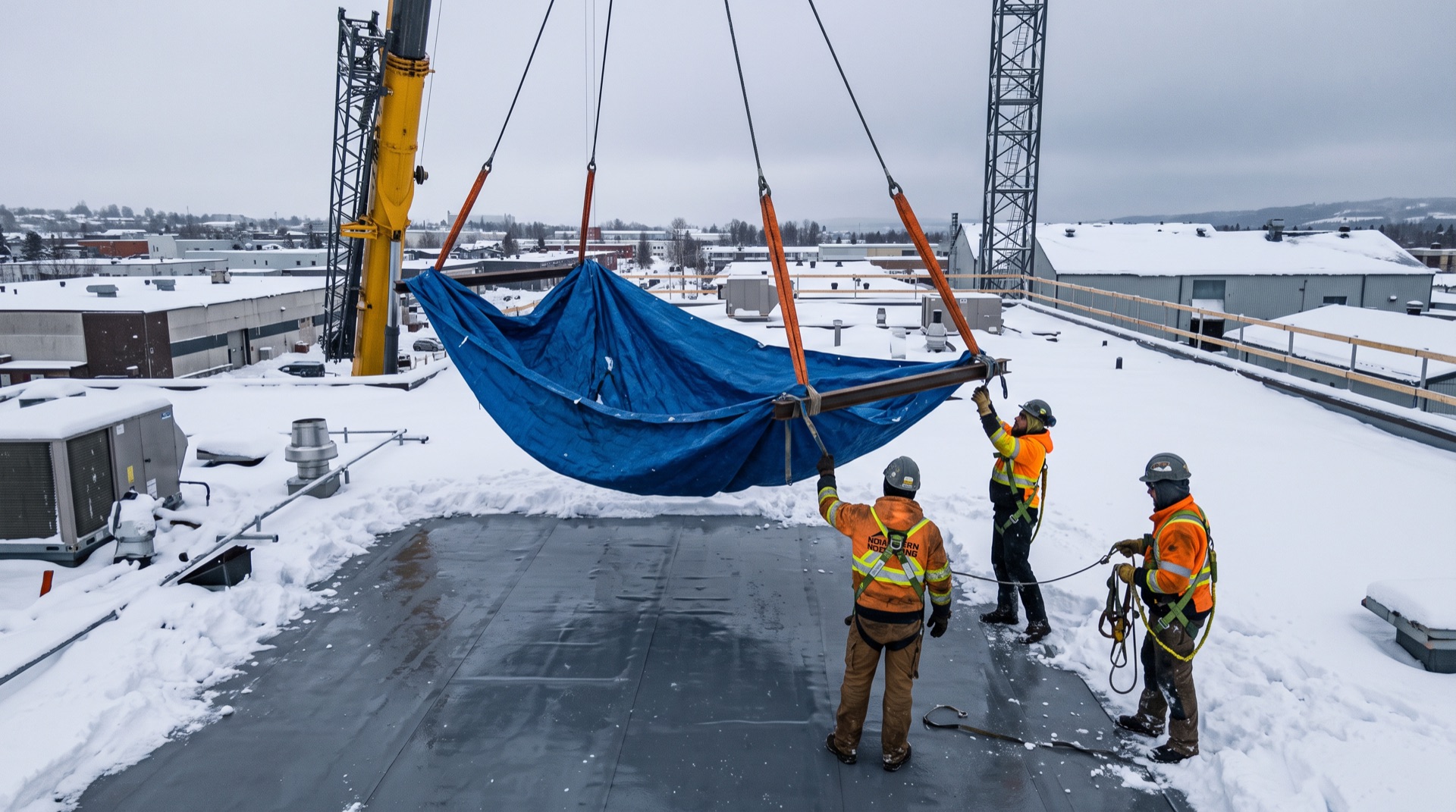
Rip-stop tarps are laid out and anchored on the deck, crews load them, and the boom lifts each loaded tarp clear and sets it down in a designated drop zone on the ground. Outrigger pads are placed on frozen ground rated for the load, and a pedestrian exclusion zone is set and marshalled for the whole operation.
It is a planned lift, not an improvisation. Site access, swing radius, overhead lines, drop zone and ground bearing all get walked before the first tarp goes down.
What you get in Reading
- Weights documentedDepths, densities and loads recorded for the carrier
- Lift planned firstAccess, swing radius, overhead lines and drop zone walked before scheduling
- Permits handledPulled where the municipality requires them for a street setup
| Typical scope | Steam, 4-10 crew hours typical |
|---|---|
| Local ice-barrier practice | Eave membrane standard on re-roofs |
| Coverage area | Reading and Middlesex County |
| Pricing model | Billed by the crew hour, rate quoted before dispatch |
| Primary climate stressor | Nor'easters, rapid thaw-freeze swing |
| Documentation | Dated before and after photos, written scope in Xactimate line items |
| Dispatch window | Same day to 24 hours |
Reading Coverage and the Adjoining Communities
Crews working Reading cover the adjoining communities on the same route — Wakefield, Stoneham, North Reading, Wilmington and Lynnfield — so a storm week usually means one truck handling several addresses in Middlesex County rather than separate trips.
Nearest hub towns with their own crane snow removal pages: Woburn, Burlington, Melrose, Saugus, Malden, Billerica.
Crews cover Reading and the surrounding Middlesex County towns through the whole season, and during a freeze event they run from first light until dark.
Most jobs do not stop at one service. Crane Snow Removal in Reading often runs alongside commercial roof snow removal in Reading, and both get written into one scope rather than billed as separate visits.
Active leak right now? Our 24/7 Reading steam ice dam removal crews are dispatched first during a freeze event. Call (888) 561-9664.