Middlesex County sees the same pattern every winter: snow on the roof, warm air in the attic, and a line of ice building along the eave where the two meet. As part of our complete Lowell winter roof services, crews handle mold remediation across Middlesex County.
Why a Lowell Roof Dams Between Storms
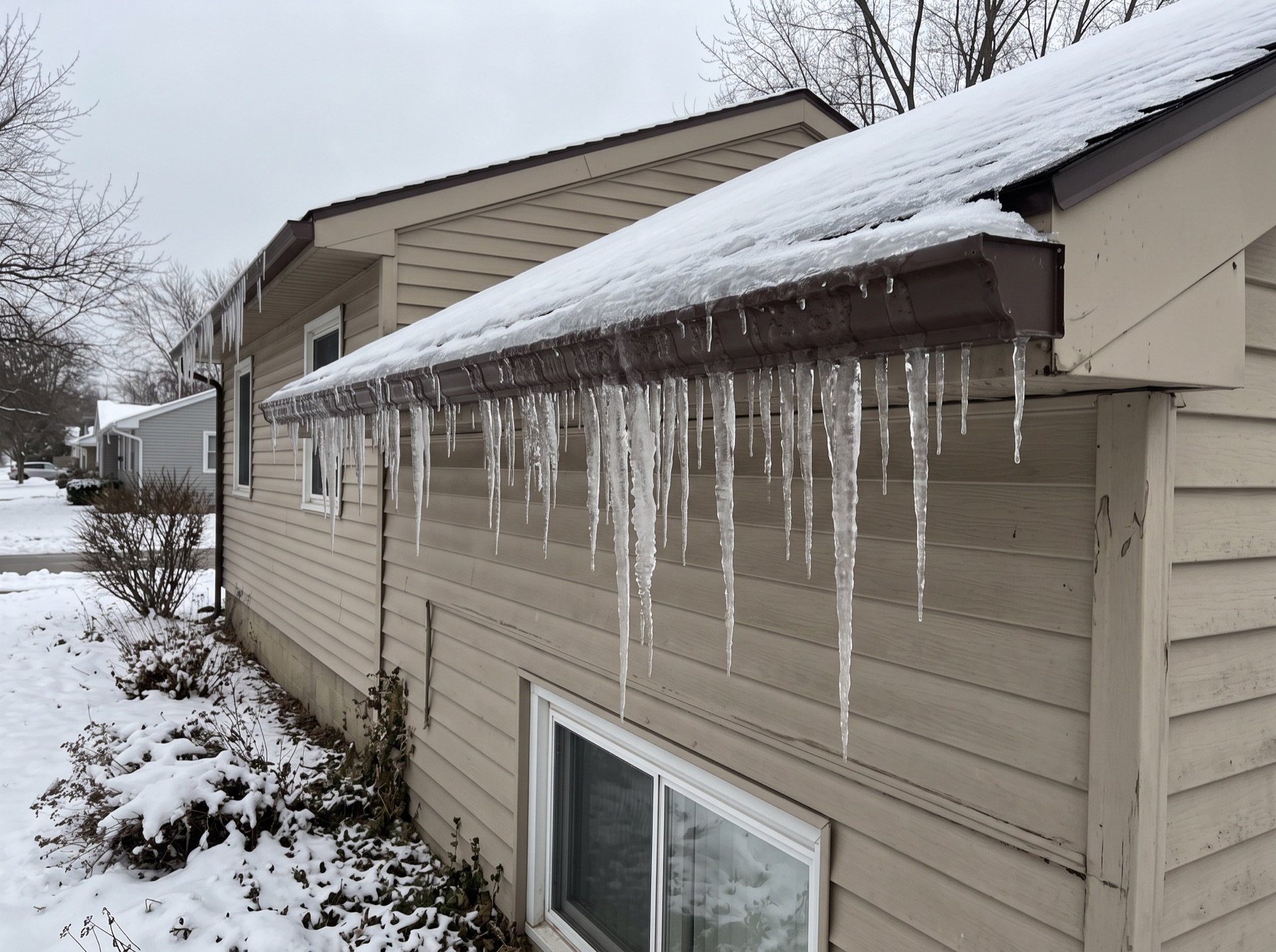
Middlesex County gets the worst combination for ice: snow with high water content, followed by temperatures that oscillate rather than settle. The pack does not stay frozen and it does not drain.

Older Middlesex County housing stock makes it worse. Shallow eave returns, knee-wall attics and additions built over unheated space all put warm air against a cold roof deck with very little insulation in between.
Ice-barrier practice in Middlesex County
Most Middlesex County towns require self-adhering ice barrier at the eaves on a re-roof permit. In a historic district there may be additional review on materials, which is worth checking before work is scheduled.
Mold Remediation in Lowell: How The Work Runs
Mold coverage and the sublimit
Where mold is the result of a covered water loss, many policies cover remediation, but often under a separate, smaller limit than the rest of the claim. Knowing that number before work starts matters, because it changes how the scope is written. Mold in the Attic After an Ice Dam.
The water mitigation, the interior repair and the roof work generally sit under the dwelling coverage, while the mold-specific line items sit under the sublimit. Scoping them separately keeps the mold cap from swallowing the rest of the claim.
Interior repair by the same crews
Once the readings are at standard, the rebuild starts: new insulation to current R-value, drywall, tape, texture matched to the existing ceiling, trim and paint.
Doing the repair in-house keeps it in one scope and one claim, avoids the gap where a cleared room sits open waiting for another contractor, and keeps the documentation continuous from the first photo to the last coat of paint.
Mold in the walls below an ice dam
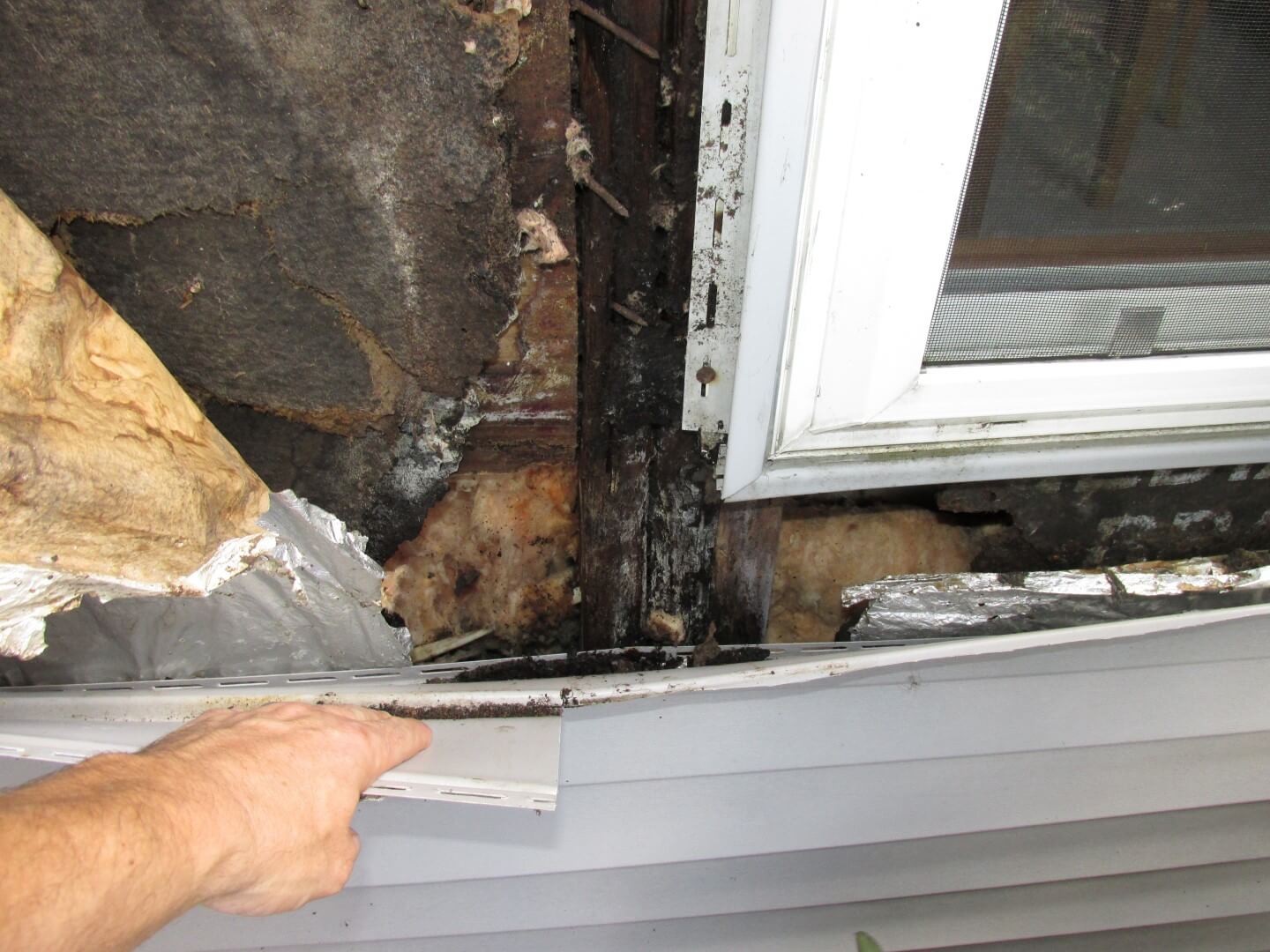
Water that gets past the attic runs down the inside of exterior walls, wetting the top plate, the insulation in the stud bays and the back of the drywall. It is common to find growth inside a wall where the only visible sign was a faint stain at the ceiling line.
Those cavities get opened, the wet insulation and drywall come out, the studs are cleaned and dried, and the wall is rebuilt once readings are at standard.
Remediation, then the rebuild, from one company
Removing mold is only half a job if you then have to find someone else to hang drywall, re-insulate and paint. Ice Dam Now does the interior repair as well: new insulation, drywall, texture, trim and paint, so the ceiling that came down to get the mold out goes back up under the same scope and the same claim.
That also means one set of photographs and moisture readings runs from the first visit to the finished room, which is what an adjuster wants to see.
Attic mold: the sheathing, the rafters and the insulation
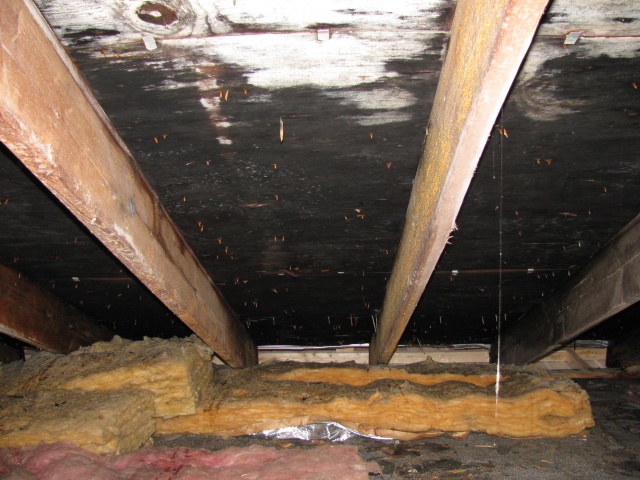
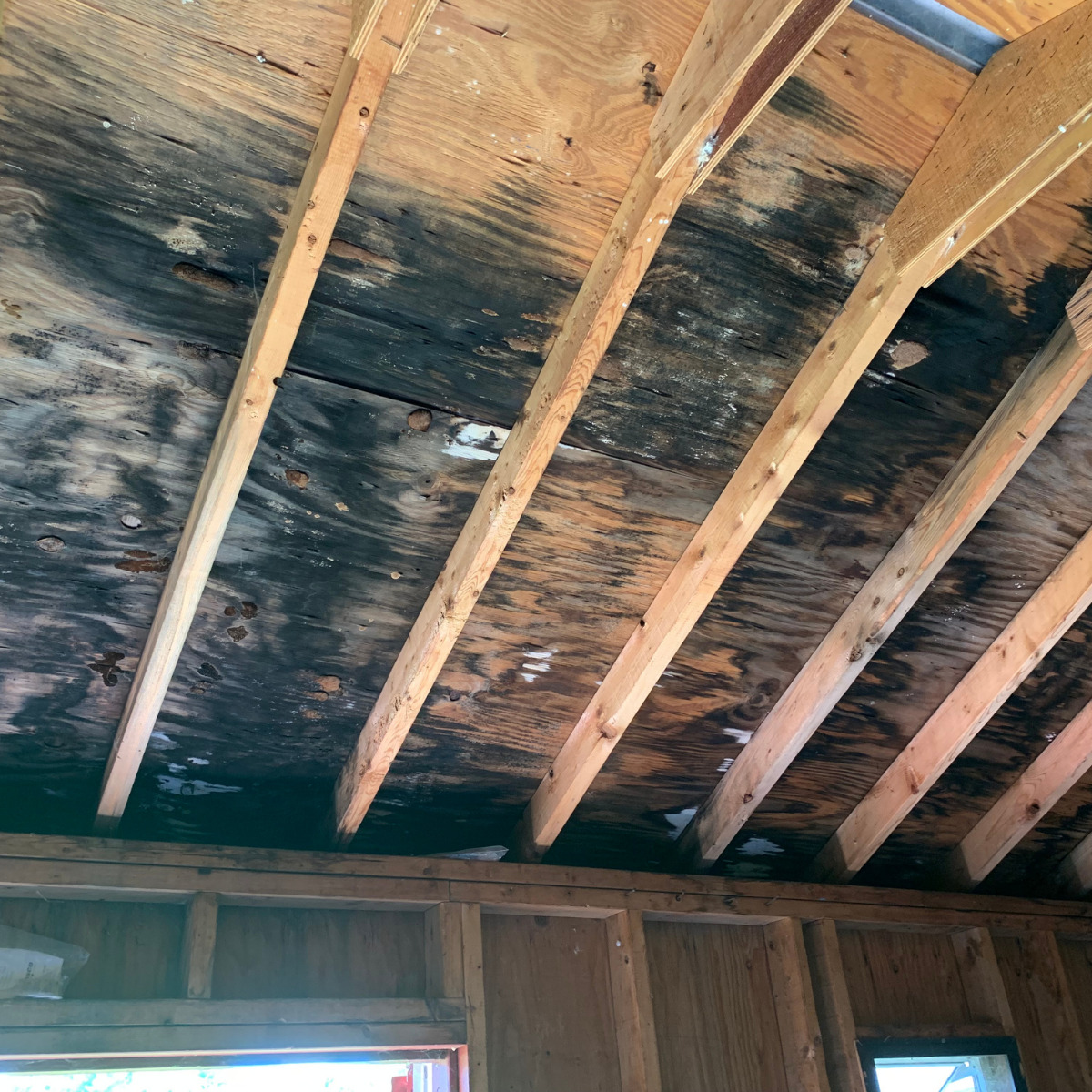
Most ice dam mold is in the attic. Meltwater backs up under the shingles at the eave, wets the roof deck from above, and runs down onto the insulation. Black spotting on the underside of the OSB or plywood along the eave line, darkened rafters and matted, stained insulation are the signs.
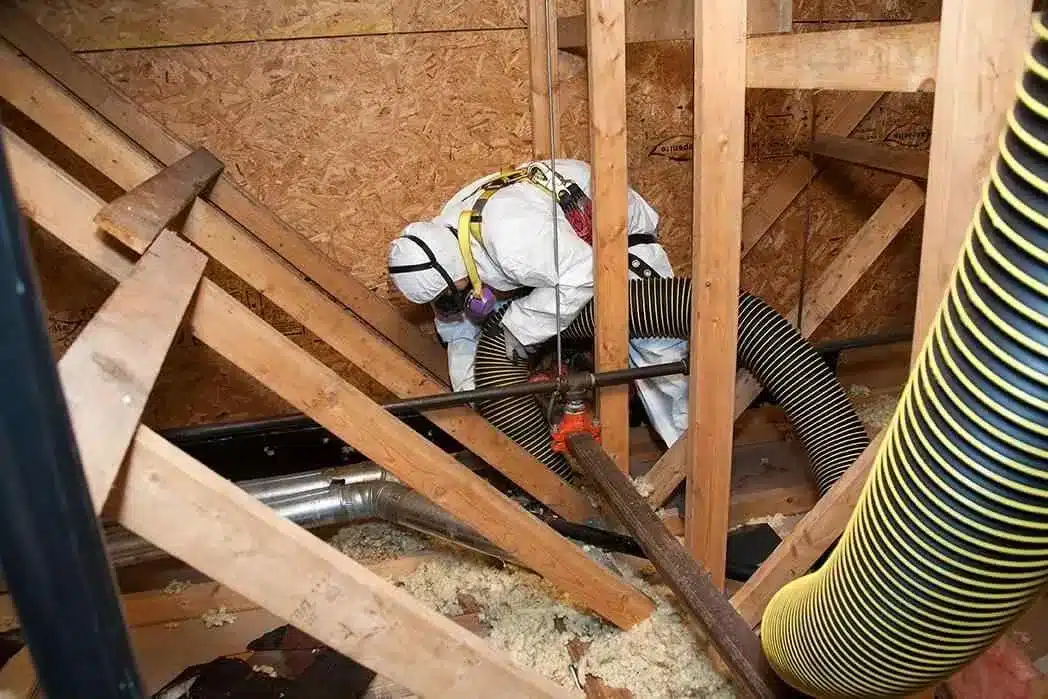
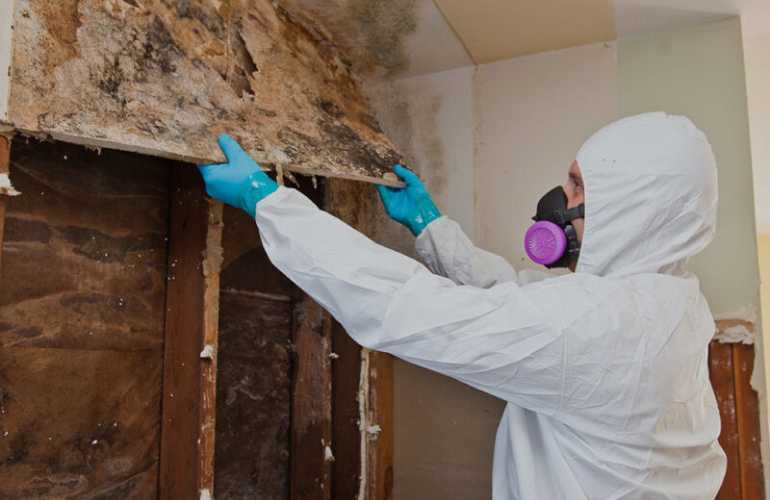
Wet insulation comes out and is bagged inside the containment. Affected sheathing and framing are HEPA vacuumed, cleaned and treated, or cut out and replaced where the wood has lost strength. Then the attic is dried to a measured number before anything goes back in.
What you get in Lowell
- Framing and sheathing cleanedHEPA vacuuming, cleaning and treatment, or replacement where the wood is compromised
- HEPA air scrubbingAir filtration running for the whole job, not just the tear-out
- Moldy material removedWet insulation, drywall and trim that cannot be cleaned are bagged and taken out
| Primary climate stressor | Nor'easters, rapid thaw-freeze swing |
|---|---|
| Method | Containment, HEPA filtration and drying to a measured IICRC standard |
| Dispatch window | Same day to 24 hours |
| Local ice-barrier practice | Eave membrane standard on re-roofs |
| Interior repair | Insulation, drywall, texture, trim and paint, done in-house after drying |
| Coverage area | Lowell and Middlesex County |
| Documentation | Dated before and after photos, written scope in Xactimate line items |
Neighborhoods and Towns We Reach From Lowell
Crews working Lowell cover the adjoining communities on the same route — North Chelmsford, North Billerica, Tyngsboro, Westford and Nutting Lake — so a storm week usually means one truck handling several addresses in Middlesex County rather than separate trips.
Nearest hub towns with their own mold remediation pages: Dracut, Chelmsford, Tewksbury, Andover, Billerica, Lawrence.
When a storm hits Middlesex County, crews are dispatched by severity rather than by call order — water already inside the house goes first.
Most jobs do not stop at one service. Mold Remediation in Lowell often runs alongside water mitigation & dryout in Lowell, and both get written into one scope rather than billed as separate visits.
Active leak right now? Our 24/7 Lowell steam ice dam removal crews are dispatched first during a freeze event. Call (888) 561-9664.