By the time a roof in Richmond has a visible ridge of ice at the eave, meltwater has already been pooling behind it for several freeze-thaw cycles. As part of our complete Richmond winter roof services, crews handle mold remediation across Wayne County.
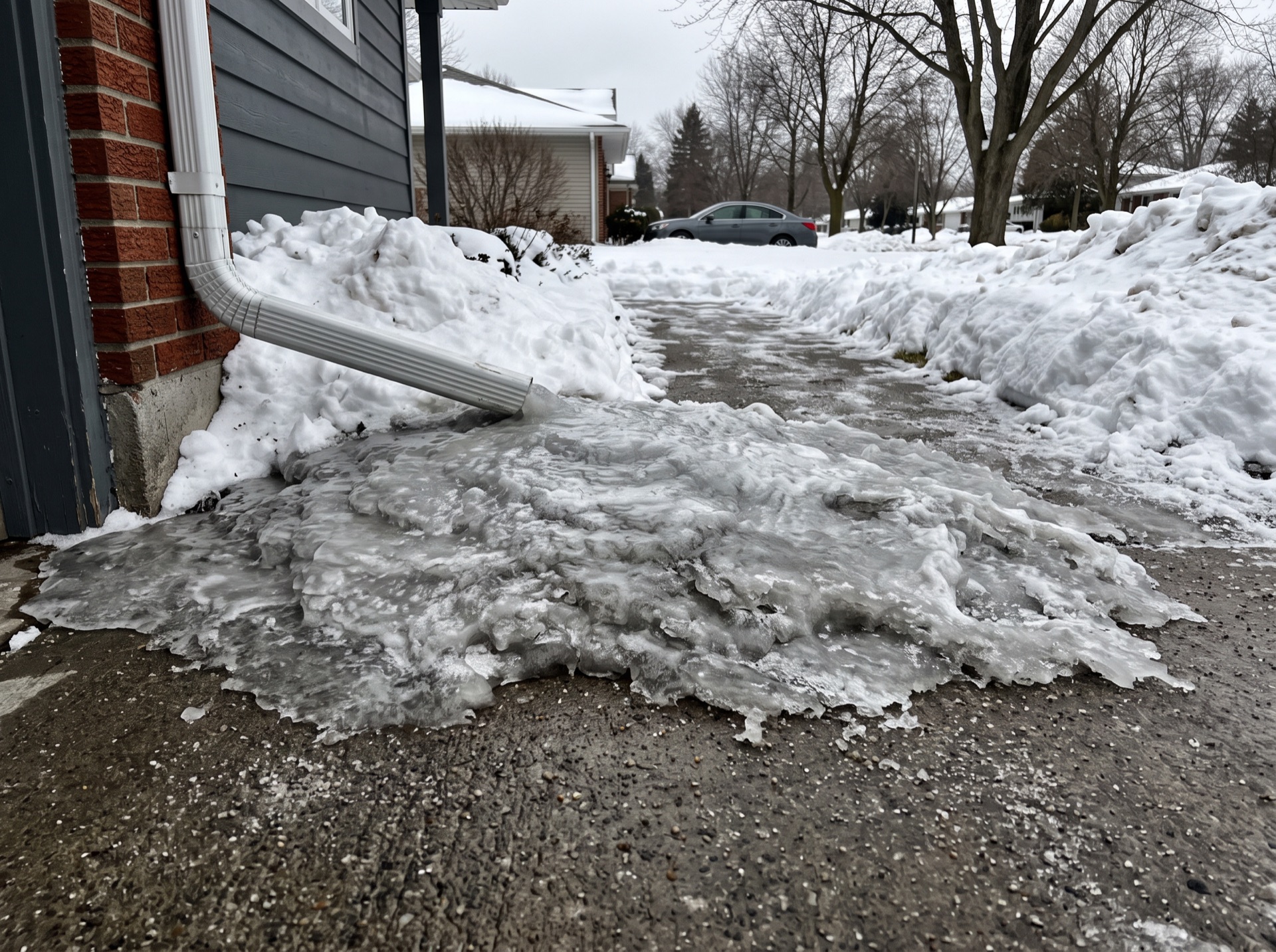
Why Richmond Roofs Dam Up: Cycling, Not Snowfall Totals
What catches people out in Wayne County is that the snow looks harmless. Two or three inches reads as nothing, and it builds ice on an eave just as effectively as a northern storm given enough cycles.

That is the part homeowners miss. Total snowfall here is modest compared with the northern belt, so roofs in Wayne County are often built and insulated as though ice is not a concern. Then a cycling week in January finds every weak eave at once.
Ice-barrier practice in Wayne County
The residential code Indiana follows requires eave ice barrier on new work, and Wayne County enforces it. The variable on any given house is simply when it was last roofed.
Mold Remediation in Richmond: How The Work Runs
Containment and negative air
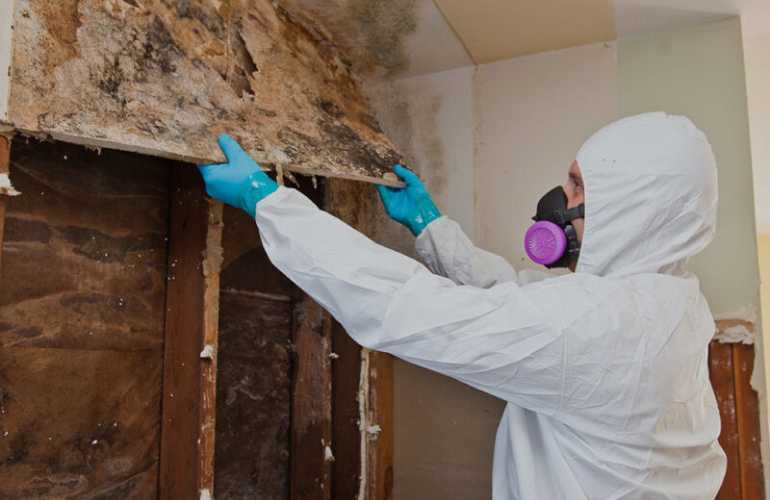
Before anything moldy is disturbed, the work area gets sealed off with poly sheeting and put under negative air pressure with an HEPA air scrubber exhausting it. Air flows into the work area, not out of it. Mold in the Attic After an Ice Dam.
That is the step that keeps a contained attic or ceiling problem from becoming a whole-house problem in Richmond. Disturbing mold without it spreads spores to rooms that were clean.
Mold in the walls below an ice dam
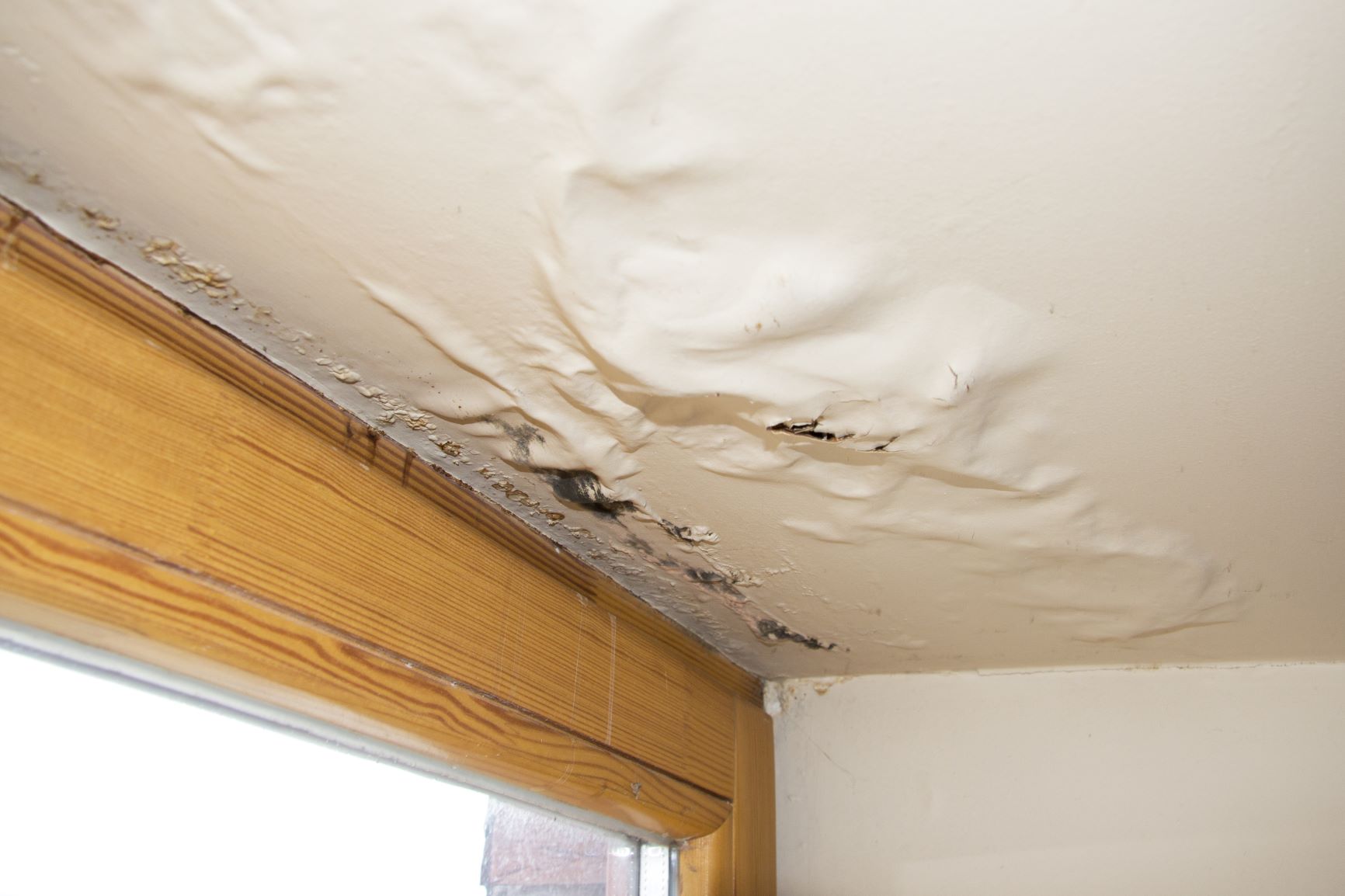
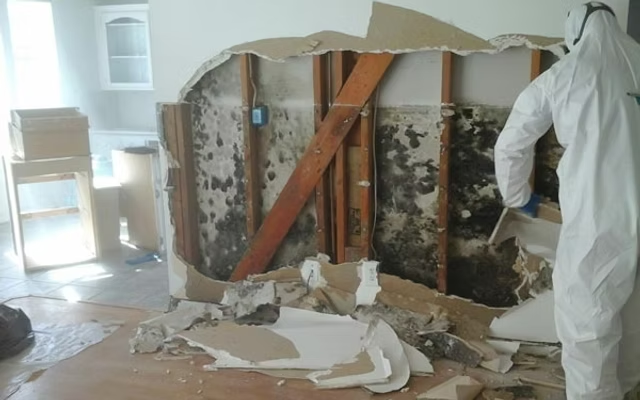
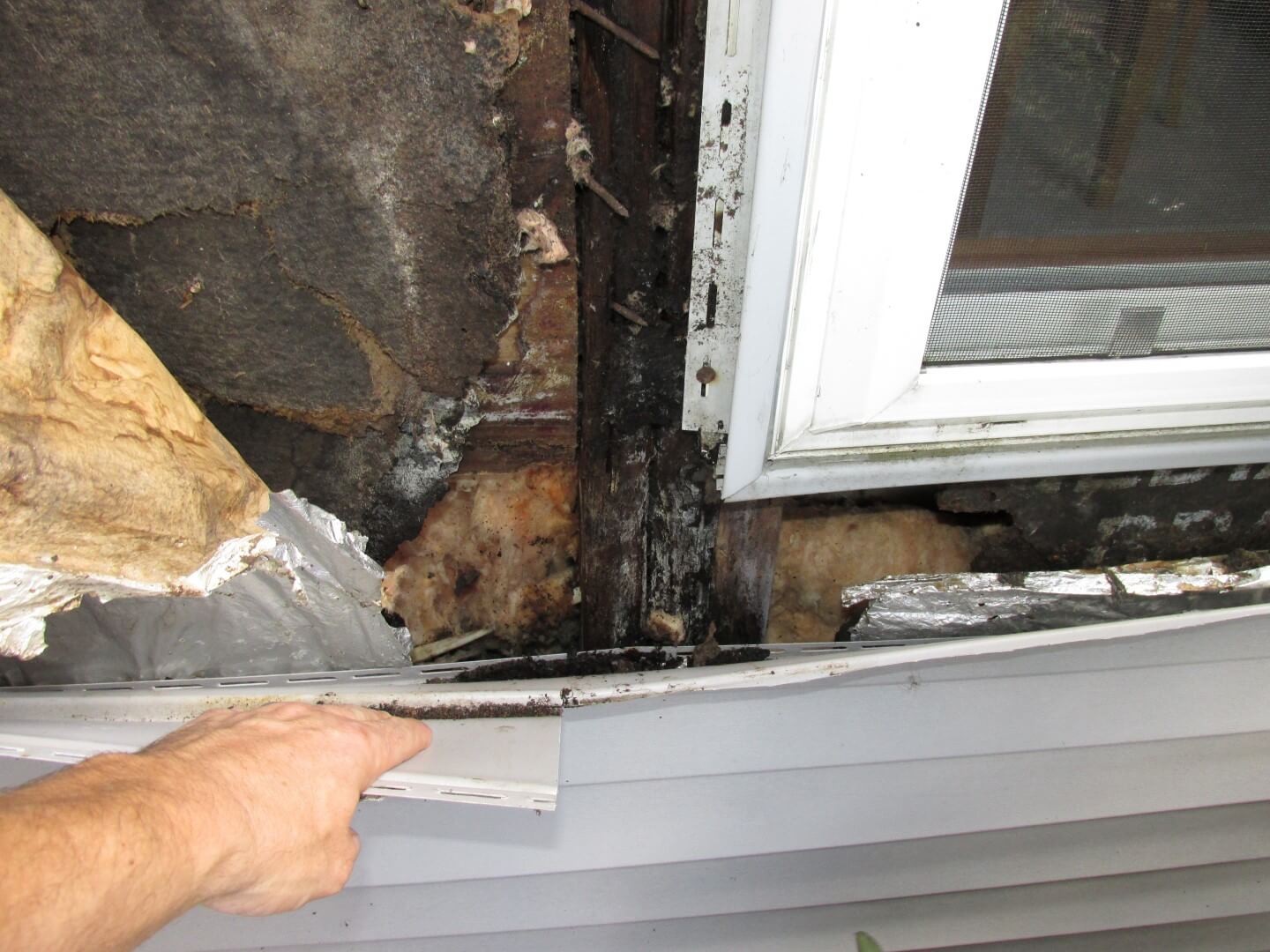
Water that gets past the attic runs down the inside of exterior walls, wetting the top plate, the insulation in the stud bays and the back of the drywall. It is common to find growth inside a wall where the only visible sign was a faint stain at the ceiling line.
Those cavities get opened, the wet insulation and drywall come out, the studs are cleaned and dried, and the wall is rebuilt once readings are at standard.
What it looks like from the homeowner side
Most people stay in the house. The affected room or attic is sealed off, the equipment runs for a few days, and the crew comes and goes through a zippered door in the containment.
The noise is the air scrubbers and dehumidifiers running around the clock. Placement can usually be worked around bedrooms, and the timeline is set out before anything starts.
The attic is the usual starting point
On most ice dam jobs in Richmond the worst growth is on the underside of the roof deck in the first few feet above the eave, exactly where the meltwater backed up. It often looks like a band of dark spotting running along the eave line.
Insulation along the same line is usually matted and stained. Both come into the scope together, because drying the deck while leaving wet insulation against it does not work.
Attic mold: the sheathing, the rafters and the insulation
Most ice dam mold is in the attic. Meltwater backs up under the shingles at the eave, wets the roof deck from above, and runs down onto the insulation. Black spotting on the underside of the OSB or plywood along the eave line, darkened rafters and matted, stained insulation are the signs.
Wet insulation comes out and is bagged inside the containment. Affected sheathing and framing are HEPA vacuumed, cleaned and treated, or cut out and replaced where the wood has lost strength. Then the attic is dried to a measured number before anything goes back in.
What you get in Richmond
- HEPA air scrubbingAir filtration running for the whole job, not just the tear-out
- Moldy material removedWet insulation, drywall and trim that cannot be cleaned are bagged and taken out
- Interior repair in-houseInsulation, drywall, texture, trim and paint put back by the same crews
| Local ice-barrier practice | Eave membrane on new work, often absent |
|---|---|
| Method | Containment, HEPA filtration and drying to a measured IICRC standard |
| Dispatch window | Same day to 24 hours |
| Primary climate stressor | Repeated thaw-freeze cycling |
| Documentation | Dated before and after photos, written scope in Xactimate line items |
| Billing | Xactimate line items on one claim; carrier billed directly where the policy allows |
| Service | Mold Remediation in Richmond, IN |
Richmond Coverage and the Adjoining Communities
Crews working Richmond cover the adjoining communities on the same route — Webster, Centerville, Boston, Fountain City and Greens Fork — so a storm week usually means one truck handling several addresses in Wayne County rather than separate trips.
Nearest hub towns with their own mold remediation pages: Muncie, Anderson, Fishers, Lawrence, Noblesville, Indianapolis.
Coverage runs across Richmond and the nearby towns all winter, and capacity is surged into whichever Indiana market the storm actually hits.
Most jobs do not stop at one service. Mold Remediation in Richmond often runs alongside water mitigation & dryout in Richmond, and both get written into one scope rather than billed as separate visits.
Active leak right now? Our 24/7 Richmond steam ice dam removal crews are dispatched first during a freeze event. Call (888) 561-9664.