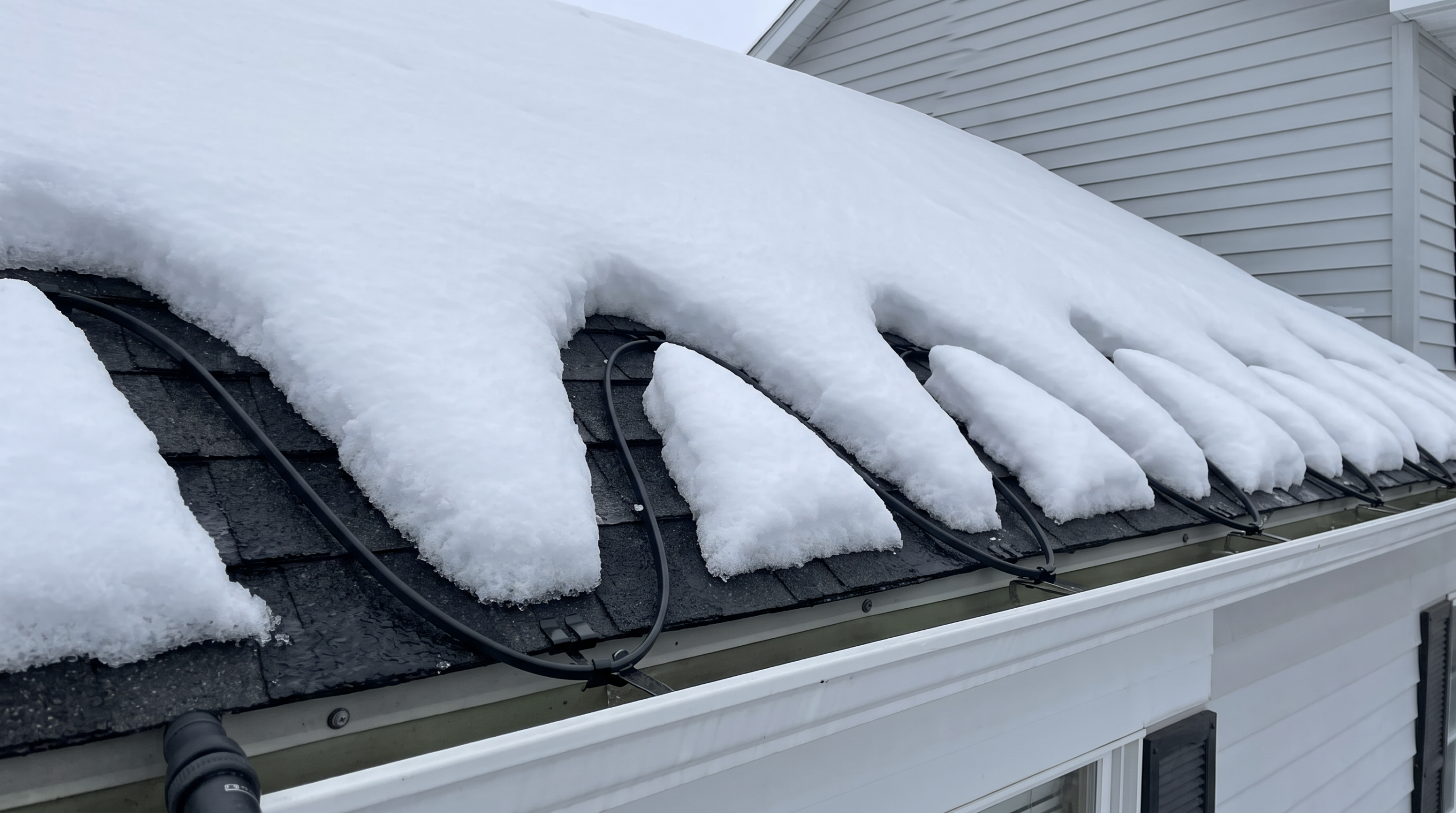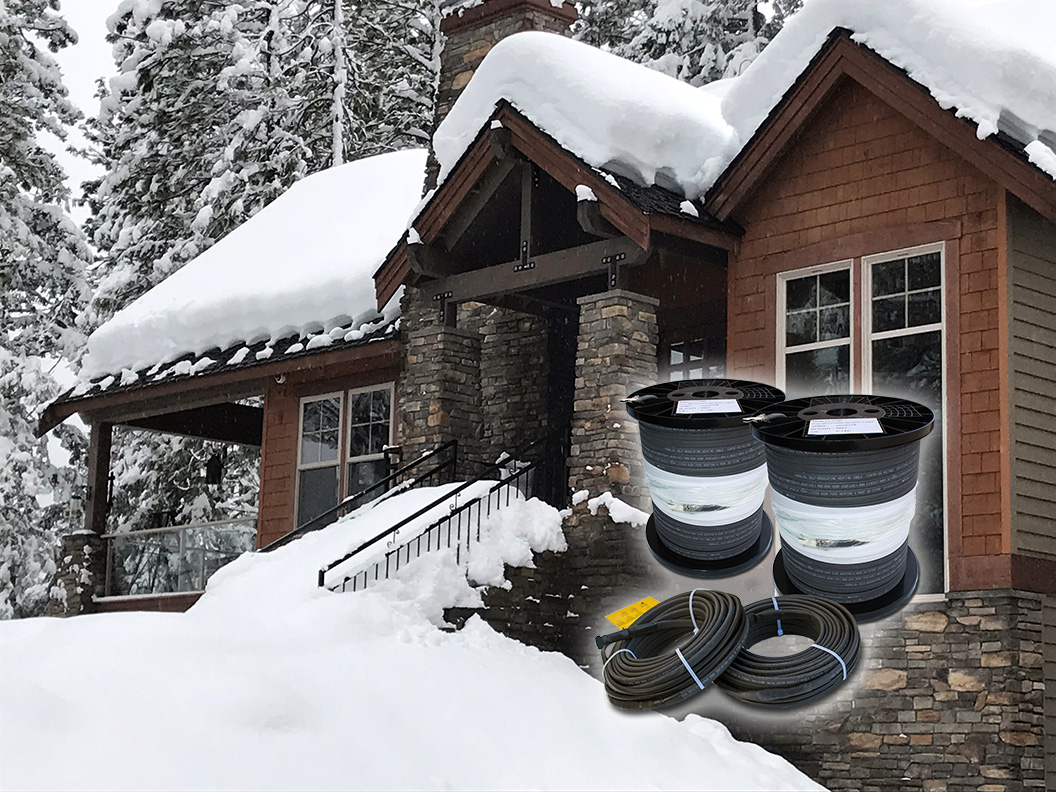
Ice dams are not a Twin Falls problem so much as an Idaho one, and they show up on the same handful of eaves and valleys year after year. As part of our complete Twin Falls winter roof services, crews handle heated roof & gutter cables across Twin Falls County.
Elevation, Aspect and Ice: The Twin Falls County Pattern
Thin air at altitude means intense direct sun even in deep cold. A Twin Falls roof can be melting on its south face at midday in air that never gets near freezing, and all of that water has to go somewhere.

Aspect decides which eaves suffer. A sunny plane sheds water across a roof in Twin Falls to a shaded eave that has not been above freezing for weeks, and that is where the ice builds into a wall.
Ice-barrier practice in Twin Falls County
High-country Idaho codes typically call for extended ice barrier and, on metal roofing, snow guards above any door, walkway or parking area. Both exist because of what comes off these roofs.
Heated Roof & Gutter Cables in Twin Falls: How The Work Runs
Retrofit against installing during a roof replacement
Cable can be added to an existing roof at any time and usually is. If a Twin Falls roof is being replaced anyway, that is the cheaper moment: clips can go under the courses, the downspout run can be planned properly, and the circuit can be brought to the eave while the fascia is open. Icicles and a Wet Ceiling.
Where a replacement is a year or two out, it is worth saying so before the retrofit is designed, so the layout can be reused rather than scrapped.
Sizing the eave zig-zag to the cold overhang
The zig-zag has to extend far enough up the roof to cover the part of the deck that sits past the heated wall line, because that is the part that stays below freezing.
Measured from inside the attic rather than guessed from the ground. On a house in Twin Falls with a deep overhang or a cantilever that distance is often further up than people expect.
The electrical side
A dedicated GFCI-protected circuit, properly rated terminations and a disconnect somebody can actually reach. Not an extension cord out of a bathroom window, which is what gets found on a surprising number of existing Twin Falls installs.
Done properly it is an ordinary piece of exterior electrical work and it should look like one.
Layout is most of the job
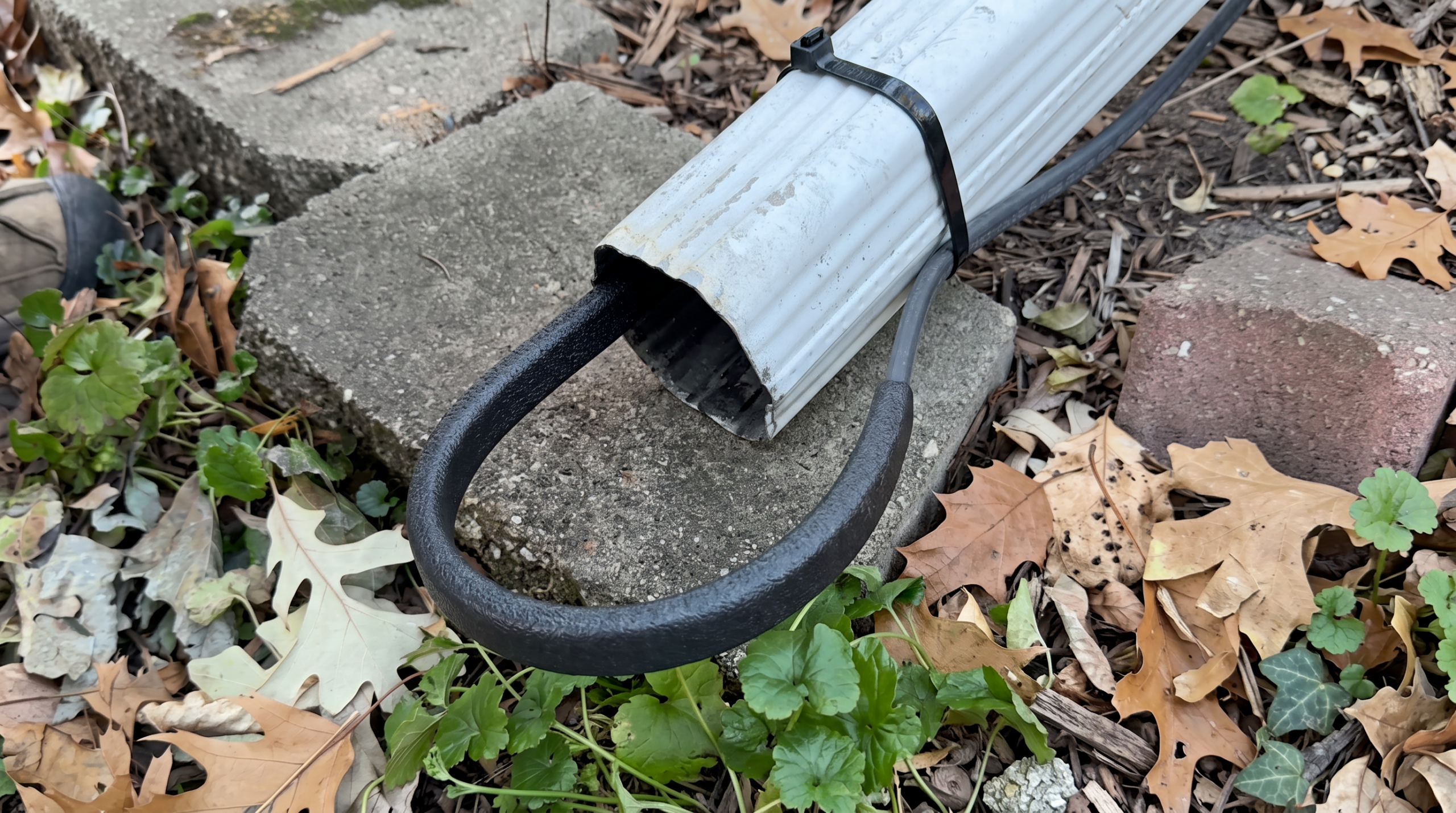
The cable has to trace a complete path: a zig-zag at the eave deep enough to cover the cold overhang, down through the valleys, along the gutter trough and all the way down the downspout to daylight. A zig-zag that stops short of the heated wall line, or a gutter run with no downspout trace, produces a channel that dead-ends into ice.
Systems get a dedicated GFCI-protected circuit, and controls run on a combination thermostat and moisture sensor so the system runs when it matters and not through a dry January cold snap.
Controls decide the running cost
A cable on a plain thermostat runs through every dry cold snap, which is most of the winter and none of the risk. A combined temperature and moisture sensor runs it only when there is both cold and water present.
On a Twin Falls winter that difference is most of the operating cost, and the controller pays for itself quickly.
What you get in Twin Falls
- Smart controlsThermostat and moisture sensing so it runs on the conditions that make ice
- Downspout traced to daylightThe drain path ends on the ground, not in a block of ice
- Complete drain pathEave zig-zag, valleys, gutter trough and downspout to daylight
| Documentation | Dated before and after photos, written scope in Xactimate line items |
|---|---|
| Pricing model | Billed by the crew hour, rate quoted before dispatch |
| Typical scope | Steam, 8-16 crew hours typical |
| Local ice-barrier practice | Extended membrane plus snow retention |
| Dispatch window | 24 to 48 hours in mountain terrain |
| Removal method | Low-pressure steam only. No chipping, salt or pressure washing. |
| Coverage area | Twin Falls and Twin Falls County |
Twin Falls County Coverage From Twin Falls
Crews working Twin Falls cover the adjoining communities on the same route — Kimberly, Filer, Hansen and Jerome — so a storm week usually means one truck handling several addresses in Twin Falls County rather than separate trips.
Nearest hub towns with their own heat cables pages: Mountain Home, Ketchum, Sun Valley, Pocatello, Boise, Kuna.
Crews cover Twin Falls and the surrounding Twin Falls County towns through the whole season, and during a freeze event they run from first light until dark.
Most jobs do not stop at one service. Heat Cables in Twin Falls often runs alongside ice dam removal in Twin Falls, and both get written into one scope rather than billed as separate visits.
Active leak right now? Our 24/7 Twin Falls steam ice dam removal crews are dispatched first during a freeze event. Call (888) 561-9664.