Skip to content
Twin Falls, ID
Structural Snow Load · Twin Falls County

Commercial Roof Snow Removal in Twin Falls, ID — Alpine Emergency Crews

Ice Dam Now is a licensed and insured winter roof contractor covering Twin Falls, ID and Twin Falls County. Commercial Roof Snow Removal is performed with low-pressure steam, which removes ice by heat rather than force. Same-day dispatch for active leaks, crew-hour billing at a rate quoted beforehand, and dated before-and-after photographs on every job.

Portfolio routes — Standing storm schedules with per-visit condition reports
Overflows opened first — Drains and scuppers cleared before the load comes off
One invoice per site — Multi-building properties scoped and billed together
Balanced reduction — Load brought under threshold without shifting it onto one bay

Get Ice Dam Help Twin Falls

A few quick questions, then pick a time. If water is coming in, call instead.

What is the zip code of the home?

Roof leaking right now? Call (888) 561-9664 — that is faster than any form.
Water coming through the ceiling?Every hour an ice dam sits there, more water gets under the shingles.Call (888) 561-9664
24/7
Dispatch All Winter
Steam
Only — No Pressure
Twin Falls
County Coverage
Same Day
For Active Leaks
Insured
Licensed & Harness-Certified

Twin Falls County sees the same pattern every winter: snow on the roof, warm air in the attic, and a line of ice building along the eave where the two meet. As part of our complete Twin Falls winter roof services, crews handle commercial roof snow removal across Twin Falls County.

Elevation, Aspect and Ice: The Twin Falls County Pattern

Thin air at altitude means intense direct sun even in deep cold. A Twin Falls roof can be melting on its south face at midday in air that never gets near freezing, and all of that water has to go somewhere.

Diagram showing how ice dams form on roofs due to inadequate insulation and poor ventilation
Heat escaping into the attic melts roof snow; the meltwater refreezes at the cold eave and the dam grows a layer every cycle.

Aspect decides which eaves suffer. A sunny plane sheds water across a roof in Twin Falls to a shaded eave that has not been above freezing for weeks, and that is where the ice builds into a wall.

Ice-barrier practice in Twin Falls County

High-country Idaho codes typically call for extended ice barrier and, on metal roofing, snow guards above any door, walkway or parking area. Both exist because of what comes off these roofs.

Commercial Roof Snow Removal in Twin Falls: How The Work Runs

The cost of a shutdown against the cost of a clear

Clearing a large deck is a real number and it is easy to defer. The comparison that matters is not clearing against nothing, it is clearing against the day the building is closed while an engineer inspects it - lost trade, displaced tenants, and an insurer asking what was done beforehand. Ceiling Sagging or Bulging After Snow.

The load reading is what makes that decision for you rather than a feeling about how deep the snow looks.

Drains and overflows come first

Before anything else comes off, the drains, scuppers and overflow outlets get opened. Otherwise the melt from the clearing has nowhere to go and the roof trades a snow problem for a ponding one.

On a deck in Twin Falls with internal drains that means confirming flow below, not just clearing the grate.

Reading the design load off the drawings

Where structural drawings exist they state the design ground snow load and the roof's own capacity, and that number turns the whole question from opinion into arithmetic. Measured depth and density against design capacity gives a percentage rather than an argument.

Where the drawings have been lost - common on older Twin Falls stock - the conservative assumption is the code minimum of the era the building went up, which is usually well below what a modern roof would be built to.

Ponding after the clear

Taking the snow off a flat roof with frozen drains leaves meltwater with nowhere to go, and water that ponds and refreezes puts load back on a deck that was just relieved.

So drains and overflows are opened as part of the clear rather than afterwards, and the roof is left draining. A clear that stops at the snow is half a job.

What the documentation covers

Depth and density readings, calculated load, dated photographs and a written condition report per visit.

Preventing an imminent failure is treated as loss mitigation by most carriers, and that record is what supports the position if it is ever tested.
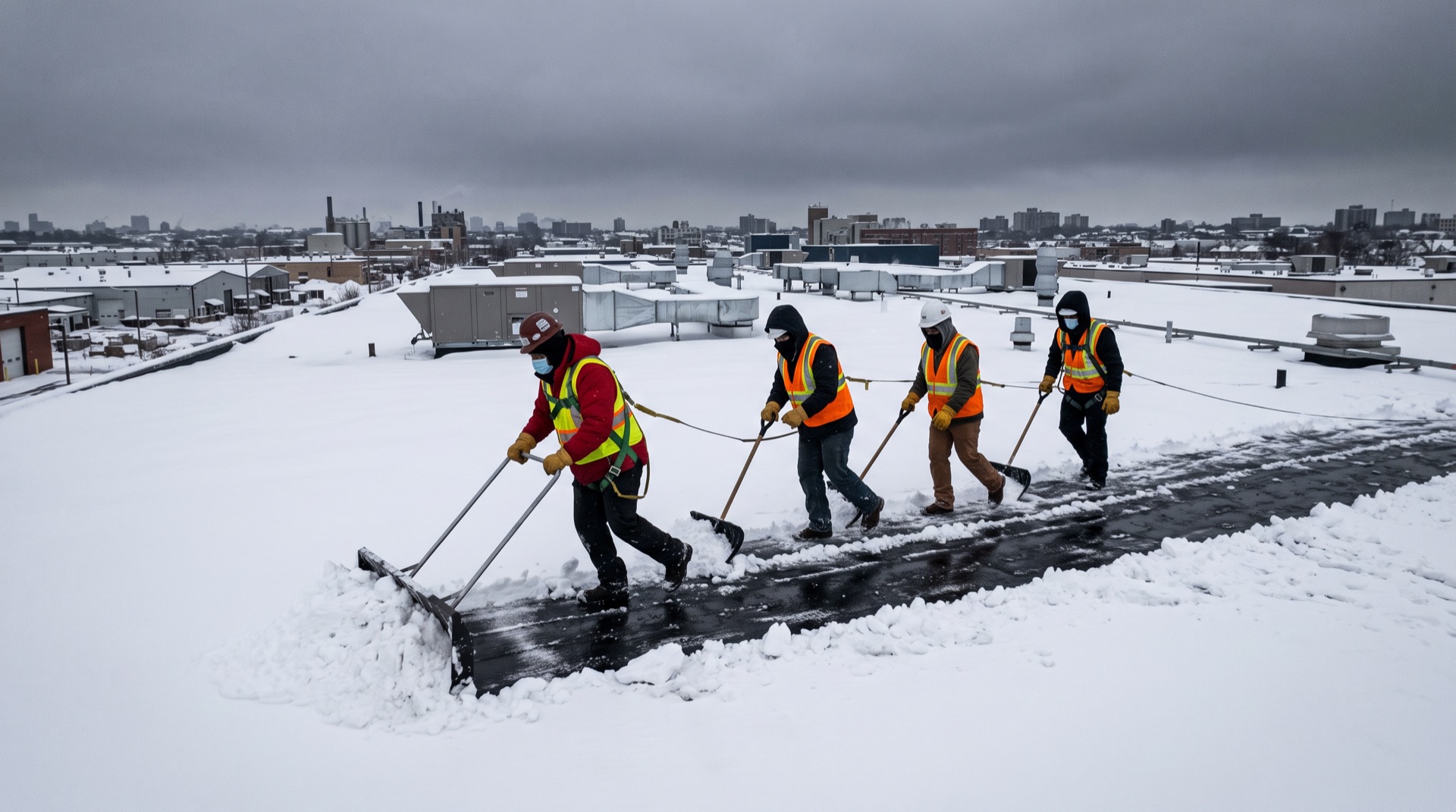
Four workers in safety vests clearing snow from a flat commercial rooftop
A four-man crew works in formation to clear heavy snow from a large flat commercial roof.

What you get in Twin Falls

  • Drains kept openScuppers and internal drains cleared so meltwater has an exit
  • Mid-span measuredDepth read over the longest unsupported span, not the average
  • Overflows opened firstDrains and scuppers cleared before the load comes off
Commercial Roof Snow Removal in Twin Falls, ID — specification
Service specification for Twin Falls, ID
Primary climate stressorSolar melt on deep pack, shaded eaves
Coverage areaTwin Falls and Twin Falls County
Pricing modelBilled by the crew hour, rate quoted before dispatch
Removal methodLow-pressure steam only. No chipping, salt or pressure washing.
DocumentationDated before and after photos, written scope in Xactimate line items
Dispatch window24 to 48 hours in mountain terrain
Local ice-barrier practiceExtended membrane plus snow retention

Twin Falls County Coverage From Twin Falls

Crews working Twin Falls cover the adjoining communities on the same route — Kimberly, Filer, Hansen and Jerome — so a storm week usually means one truck handling several addresses in Twin Falls County rather than separate trips.

Nearest hub towns with their own commercial snow pages: Mountain Home, Ketchum, Sun Valley, Pocatello, Boise, Kuna.

Scheduling for Twin Falls tightens up during a freeze event, which is exactly when the phone beats the form. Water coming in means a call, not an email.

Most jobs do not stop at one service. Commercial Snow in Twin Falls often runs alongside crane-assisted snow removal in Twin Falls, and both get written into one scope rather than billed as separate visits.

Active leak right now? Our 24/7 Twin Falls steam ice dam removal crews are dispatched first during a freeze event. Call (888) 561-9664.
Conditions We Work In

Commercial Roof Snow Removal In Practice

Conditions crews work in across Twin Falls County. Every job is photographed before and after.

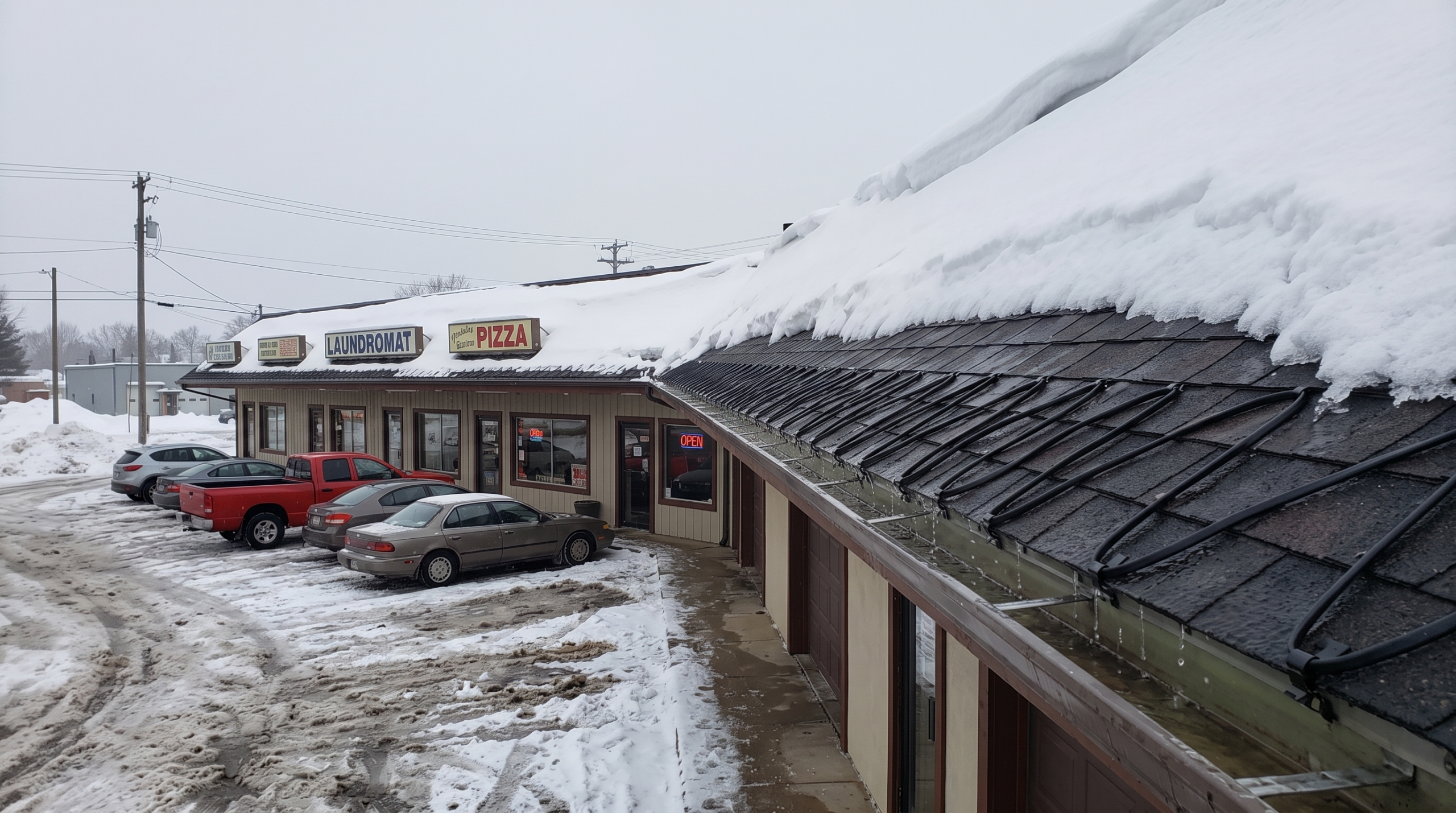
Heavy snow and ice dam buildup on commercial strip mall roofline in winter
A thick ice dam forms along the roofline of a commercial strip mall housing a laundromat and pizza restaurant.
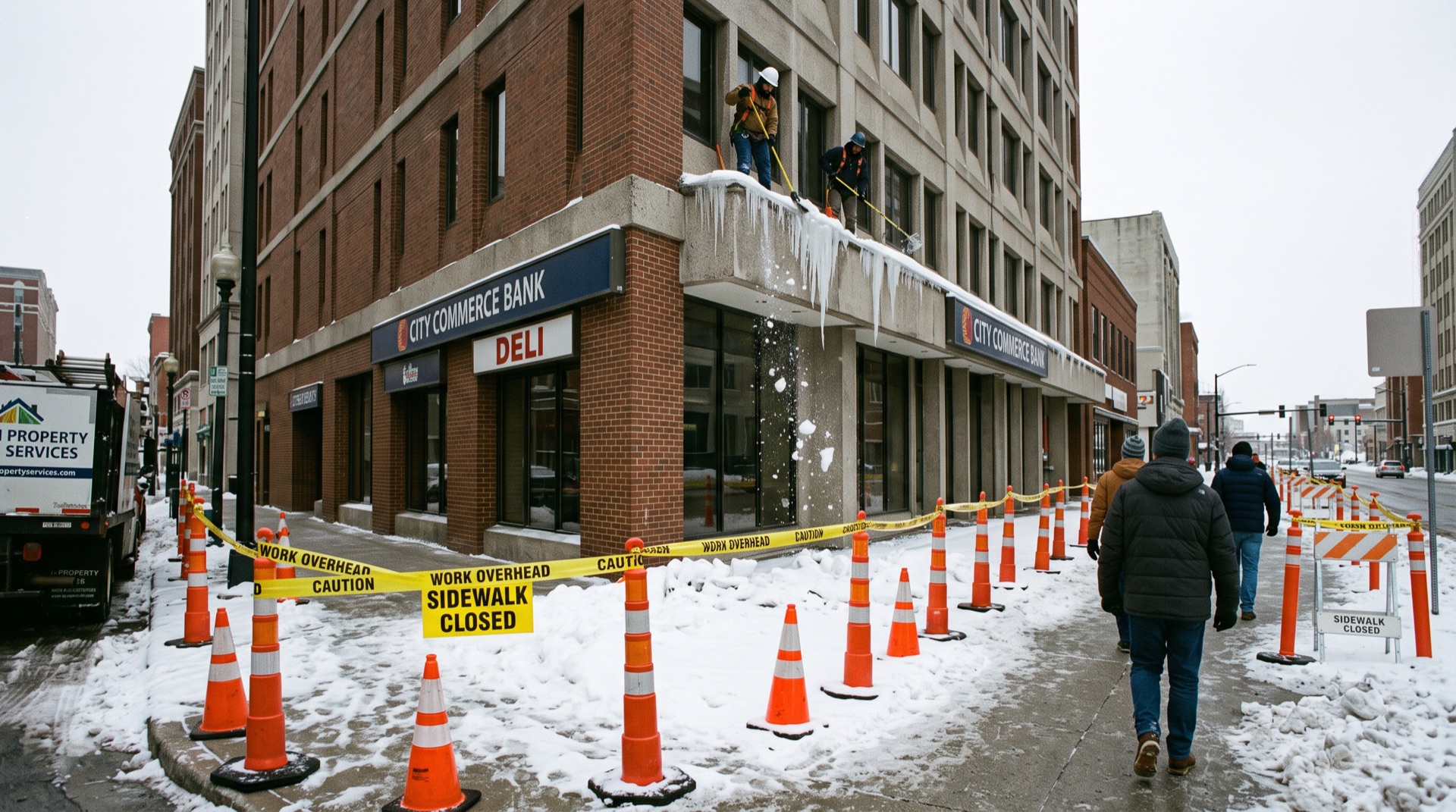
Workers removing snow and ice from building ledge above closed sidewalk with orange cones
Workers clear dangerous ice and snow from a City Commerce Bank building ledge while caution tape and cones protect pedestrians below.
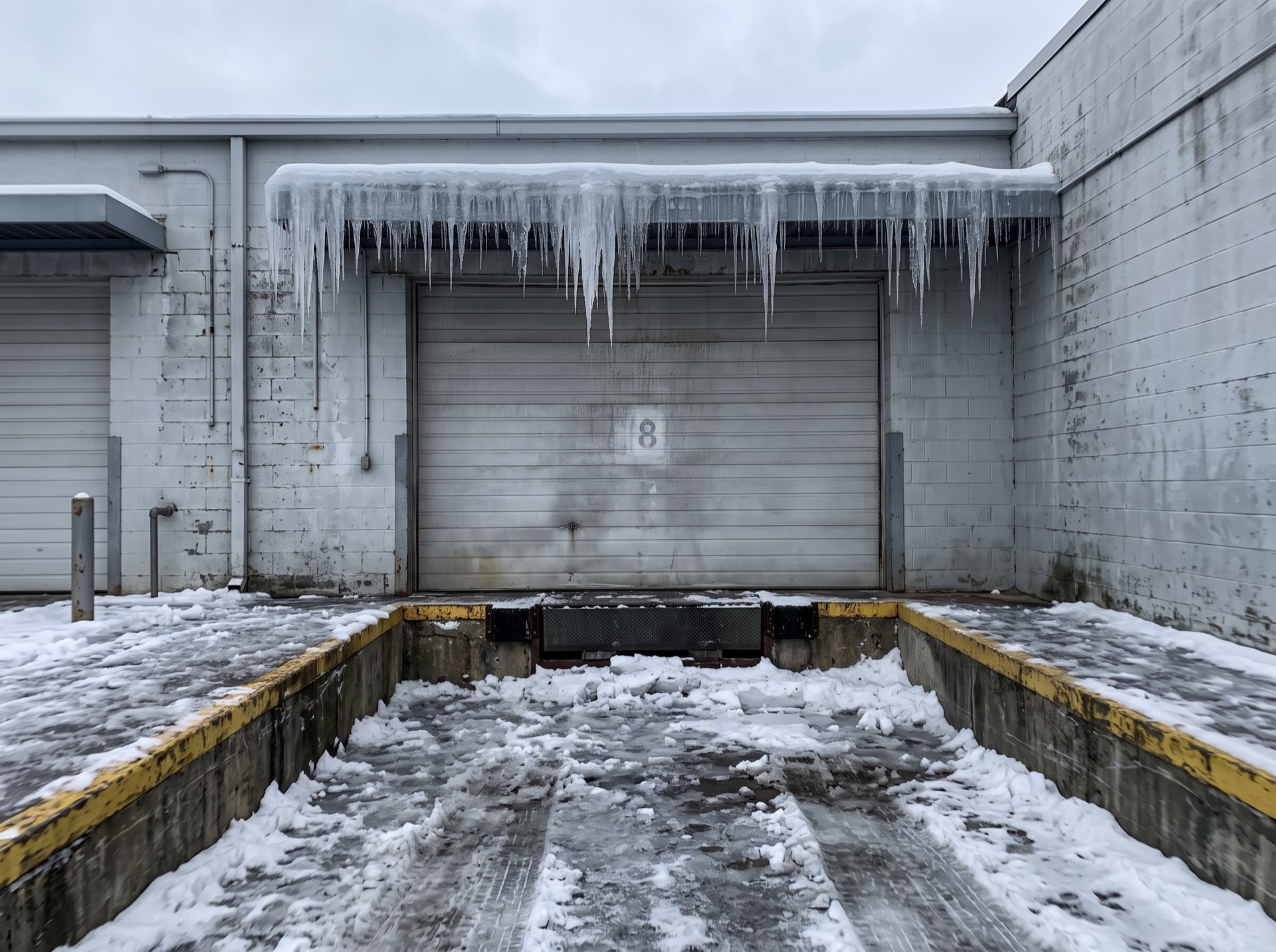
Large icicles hanging over warehouse loading dock number 8 in winter
Heavy icicles form along the roofline above a snow-covered commercial loading dock during freezing winter conditions.
FAQ

Local Questions About Twin Falls Roofs

It is billed by the crew hour, and the rate plus a realistic time estimate are quoted on the phone before anyone is dispatched.

  • Scope drives the hours: length and thickness of the ice, roof pitch and height, and whether the gutters are frozen solid.
  • Access matters too — a three-story Twin Falls roof takes longer to set up on than a ranch.
  • The invoice matches the quote. There are no surprise add-ons written on the tailgate.

More than it looks from the ground - a foot-deep dam across a thirty-foot eave is a few thousand pounds.

  • Depth is measured at the eave rather than estimated from the driveway.
  • The gutter trough underneath is usually frozen solid too and is part of the same mass.
  • That weight is one of the reasons chipping at it from a ladder goes badly.

Before the thaw rather than after it. The leak happens when the ice has water behind it, which is a day or two after the snow stops.

  • Calling during the storm is fine and often gets an earlier slot.
  • The expensive version is waiting until water appears on a ceiling.
  • Crews run across Twin Falls County from first light through a freeze event.

On a roof that is still leaking heat, it can — removal treats the symptom and the cause is in the attic.

  • Crews say so before leaving if the attic is obviously the problem.
  • A second visit in the same season at the same property is priced as the shorter job it usually is.
  • Air sealing, insulation and heat trace are what stop the cycle for good.

Same day or next morning for most Twin Falls calls, with active interior leaks moved to the front of the schedule.

  • During a freeze event crews run from first light until dark across Twin Falls County.
  • The same route covers Kimberly, Filer, Hansen, so several addresses are usually handled in one run.
  • Call rather than using the form if water is coming in — the phone is always faster.

Visible deflection between joists, new cracks in interior finishes, doors or roof hatches that suddenly bind, and sprinkler lines or ceiling grid that have moved are all late signals. The reliable method is measuring depth and density at the drift points and comparing the load to the design capacity.

Depth and density readings, the calculated load per square foot and dated photographs, yes - taken across the roof rather than at one convenient spot. Certifying a structure against those numbers is a structural engineer's signature, and where the readings warrant one that gets said plainly.

Nearby

Commercial Snow In Towns Around Twin Falls

Same-Day Response

Get A Twin Falls Crew Out

The cost of a steam visit does not change much from one week to the next. The cost of the water damage behind the dam does.

✓ Licensed & insured✓ Low-pressure steam only✓ Rate quoted up front✓ Photos for your claim
Online Quote(888) 561-9664