
Skip to content
Driggs, ID
Stops The Next Dam · Teton County

Roof Snow Removal in Driggs, ID — High‑Altitude Response

Roof Snow Removal in Driggs, ID from Ice Dam Now: low-pressure steam only, across Teton County. No chipping, no salt, no pressure washing. Crews carry licensing, insurance and fall-protection certification, bill by the crew hour at a rate quoted on the phone, prioritize active interior leaks the same day, and document the work for insurance.

Load reduction — Weight comes off valleys, dormer pockets and drift zones that collect the most
Paths cleared behind us — Driveways and walks are not left buried when the crew leaves
Eave-first clearing — The lower roof band where dams form gets cleared first, not last
Standing schedules — Repeat properties can be cleared automatically after every storm

Get Ice Dam Help Driggs

A few quick questions, then pick a time. If water is coming in, call instead.

What is the zip code of the home?

Roof leaking right now? Call (888) 561-9664 — that is faster than any form.
Water coming through the ceiling?Every hour an ice dam sits there, more water gets under the shingles.Call (888) 561-9664
24/7
Dispatch All Winter
Steam
Only — No Pressure
Teton
County Coverage
Same Day
For Active Leaks
Insured
Licensed & Harness-Certified

The ice along a roof in Driggsline is the symptom. The cause is warm air escaping into the attic, and it is still running right now. As part of our complete Driggs winter roof services, crews handle roof snow removal across Teton County.

Elevation, Aspect and Ice: The Teton County Pattern

At Driggs's elevation the air can stay below freezing all day while direct sun still melts the top of the snowpack. That meltwater runs down under the pack, reaches a shaded eave, and refreezes — on a day the thermometer never rose above freezing.

Diagram showing how ice dams form on a roof from heat loss and snow melt
Heat escaping into the attic melts roof snow; the meltwater refreezes at the cold eave and the dam grows a layer every cycle.

Aspect decides which eaves suffer. A sunny plane sheds water across a roof in Driggs to a shaded eave that has not been above freezing for weeks, and that is where the ice builds into a wall.

Ice-barrier practice in Teton County

Design snow loads in Teton County are among the highest anywhere, and the membrane and retention requirements that go with them are not formalities. On an older Driggs cabin or chalet neither may be present.

Roof Snow Removal in Driggs: How The Work Runs

Why the second storm is the dangerous one

A roof usually carries the first storm without trouble. The problem is that the first pack settles, hardens and stops sliding, so the second storm lands on a base that is not going anywhere and the third has nowhere to go at all. Ceiling Sagging or Bulging After Snow.

That is why clearing between storms is worth more than clearing after the whole sequence: each clear resets the base, and the roof never gets to the compounded load in the first place.

Wet snow, dry snow and what the weight actually is

Depth tells you very little on its own. Light powder runs around seven pounds per cubic foot; old settled snow two or three times that; the saturated layer sitting at the bottom of a pack after a thaw can approach the weight of standing water. Two roofs in Driggs under the same twenty inches can be carrying loads that differ by a factor of four.

Crews take a core and weigh it rather than guessing from the ruler, because that measurement is what decides whether a roof is near its limit or nowhere close.

Rake from the ground or crew on the roof

Ground work is safer, cheaper and enough for most single-story and story-and-a-half Driggs homes. The limit is reach: a rake handles the first several feet and nothing past it.

Above that, or where the pitch makes a rake useless, somebody goes up harnessed. The call is made on arrival and the rate reflects which it turned out to be.

Skylights, vents and what gets flagged before clearing

Before a shovel moves, the crew walks the roof plan: skylights, solar panels, bath and ridge vents, satellite mounts, plumbing stacks and anything else that disappears under eighteen inches of snow. Each gets located and left proud of the surface.

On an older Driggs roof the more useful part of that walk is often what it finds underneath - a lifted flashing or a soft spot in the deck that was there before the snow arrived and gets reported rather than covered back up.

Standing clears for repeat properties

Properties that dam at the same eave every year are better on a schedule than on a phone call. A standing clear-after-every-storm arrangement means the snow comes off before the thaw instead of after it.

It also means an address in Driggs is on the route rather than in line during the week when everybody calls at once.

Worker in safety harness shoveling snow off a residential roof in winter
A roofing professional clears heavy snow from a residential roof while wearing a safety harness.

What you get in Driggs

  • Eave-first clearingThe lower roof band where dams form gets cleared first, not last
  • Drop zones plannedSnow lands clear of decks, walkways, shrubs and window wells
  • Drift points measuredDepth read where snow collects, not in the middle of the field
Roof Snow Removal in Driggs, ID — specification
Service specification for Driggs, ID
Primary climate stressorSolar melt on deep pack, shaded eaves
ServiceRoof Snow Removal in Driggs, ID
DocumentationDated before and after photos, written scope in Xactimate line items
Typical scopeSteam, 8-16 crew hours typical
Coverage areaDriggs and Teton County
Removal methodLow-pressure steam only. No chipping, salt or pressure washing.
Dispatch window24 to 48 hours in mountain terrain

Neighborhoods and Towns We Reach From Driggs

Crews working Driggs cover the adjoining communities on the same route — Victor, Tetonia and Felt — so a storm week usually means one truck handling several addresses in Teton County rather than separate trips.

Nearest hub towns with their own roof snow removal pages: Rexburg, Idaho Falls, Ammon, Pocatello, Sun Valley, Ketchum.

When a storm hits Teton County, crews are dispatched by severity rather than by call order — water already inside the house goes first.

Most jobs do not stop at one service. Roof Snow Removal in Driggs often runs alongside ice dam removal in Driggs, and both get written into one scope rather than billed as separate visits.

Active leak right now? Our 24/7 Driggs steam ice dam removal crews are dispatched first during a freeze event. Call (888) 561-9664.

Conditions We Work In

Roof Snow Removal In Practice

Conditions crews work in across Teton County. Every job is photographed before and after.

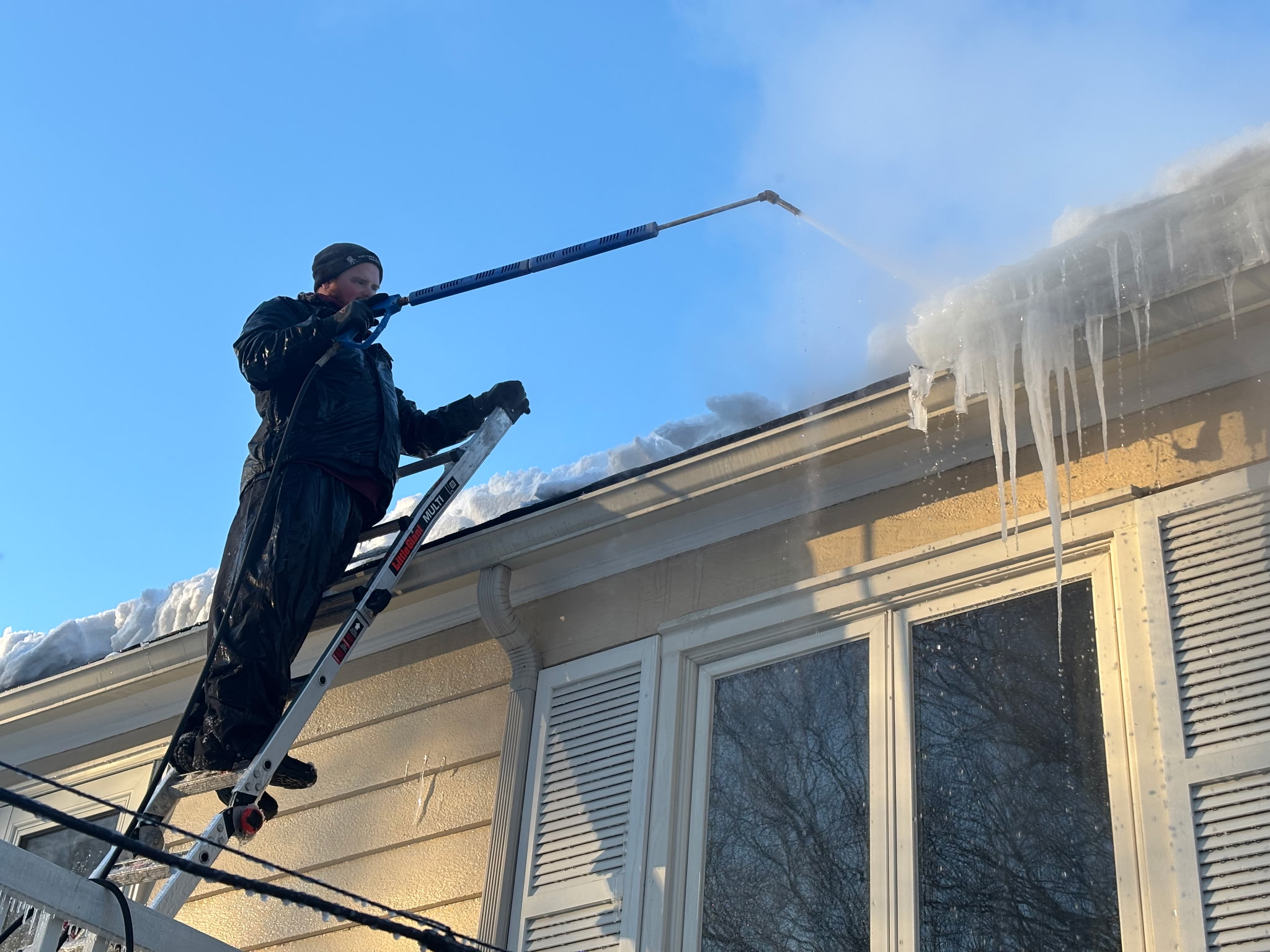
Worker on ladder using steam wand to remove ice dams and icicles from residential roof
A technician uses a high-pressure steam wand to melt ice dams and icicles from a home's roofline.
Worker in safety harness shoveling snow off a residential roof in winter
A roofing professional clears heavy snow from a residential roof while wearing a safety harness.
Large sheet of snow sliding off residential roof during winter removal
A heavy slab of accumulated snow breaks free and cascades off a residential rooftop during a winter storm.
FAQ

Local Questions About Driggs Roofs

It is billed by the crew hour, and the rate plus a realistic time estimate are quoted on the phone before anyone is dispatched.

  • Scope drives the hours: length and thickness of the ice, roof pitch and height, and whether the gutters are frozen solid.
  • Access matters too — a three-story Driggs roof takes longer to set up on than a ranch.
  • The invoice matches the quote. There are no surprise add-ons written on the tailgate.

Usually. The equipment needs a water supply and a place to park within hose reach, which is normally achievable even on a tight lot.

  • Hose runs of a few hundred feet are routine.
  • Street parking in a Teton County residential area is generally workable.
  • Tell dispatch about access on the call so the right setup arrives.

Clear a path to the affected side, move vehicles off the driveway and unlock any side gate.

  • Put something under an active interior drip and move what you can out of the way.
  • Photograph the interior damage yourself as well - more evidence is never a problem.
  • Do not go on the roof or up a ladder. That is the part that sends people to hospital.

More than it looks from the ground - a foot-deep dam across a thirty-foot eave is a few thousand pounds.

  • Depth is measured at the eave rather than estimated from the driveway.
  • The gutter trough underneath is usually frozen solid too and is part of the same mass.
  • That weight is one of the reasons chipping at it from a ladder goes badly.

Before the thaw rather than after it. The leak happens when the ice has water behind it, which is a day or two after the snow stops.

  • Calling during the storm is fine and often gets an earlier slot.
  • The expensive version is waiting until water appears on a ceiling.
  • Crews run across Teton County from first light through a freeze event.

Yes, and it is the single most effective preventive step there is. A dam needs three things: snow on the roof, heat under it and a cold eave. Removing the snow removes the only one of those three you can change in an afternoon.

From the ground, yes — a roof rake used with both feet on the ground is the one safe DIY option, and clearing the lower few feet genuinely helps. What is not safe is a ladder on ice, or climbing up to reach the rest.

Nearby

Roof Snow Removal In Towns Around Driggs

Same-Day Response

Get A Driggs Crew Out

Nothing about an ice dam improves by waiting. It refreezes tonight, thicker, and the water behind it keeps looking for a way in.

✓ Licensed & insured✓ Low-pressure steam only✓ Rate quoted up front✓ Photos for your claim
Online Quote(888) 561-9664