Skip to content
Driggs, ID
24/7 Emergency Steam · Teton County

Ice Dam Removal in Driggs, ID — High‑Altitude Response

Ice Dam Removal in Driggs, ID from Ice Dam Now: low-pressure steam only, across Teton County. No chipping, no salt, no pressure washing. Crews carry licensing, insurance and fall-protection certification, bill by the crew hour at a rate quoted on the phone, prioritize active interior leaks the same day, and document the work for insurance.

Same-day dispatch — Active interior leaks go to the front of the schedule during a freeze event
Cleared to the shingle — The dam comes off completely, not just a drainage channel cut through it
Steam only — Safe on asphalt, cedar, slate, tile and metal — no chipping, no pressure, no salt
No salt, no chipping — Nothing corrosive and nothing mechanical touches the covering

Get Ice Dam Help Driggs

A few quick questions, then pick a time. If water is coming in, call instead.

What is the zip code of the home?

Roof leaking right now? Call (888) 561-9664 — that is faster than any form.
Water coming through the ceiling?Every hour an ice dam sits there, more water gets under the shingles.Call (888) 561-9664
Same Day
For Water Already Inside
Steam
Safe On Every Covering
Teton
County Coverage
Insured
Harness-Certified On Every Roof
Written
Scope Before Work Starts

Every Driggs winter produces the same two calls: the ones who see the ice early, and the ones who see the ceiling stain first. As part of our complete Driggs winter roof services, crews handle ice dam removal across Teton County.

Elevation, Aspect and Ice: The Teton County Pattern

At Driggs's elevation the air can stay below freezing all day while direct sun still melts the top of the snowpack. That meltwater runs down under the pack, reaches a shaded eave, and refreezes — on a day the thermometer never rose above freezing.

Diagram showing how ice dams form on roofs due to inadequate insulation and poor ventilation
Heat escaping into the attic melts roof snow; the meltwater refreezes at the cold eave and the dam grows a layer every cycle.

Aspect decides which eaves suffer. A sunny plane sheds water across a roof in Driggs to a shaded eave that has not been above freezing for weeks, and that is where the ice builds into a wall.

Ice-barrier practice in Teton County

Design snow loads in Teton County are among the highest anywhere, and the membrane and retention requirements that go with them are not formalities. On an older Driggs cabin or chalet neither may be present.

Ice Dam Removal in Driggs: How The Work Runs

Access, ladders and what the crew needs on site

Steam equipment needs somewhere to park within hose reach, and ladders need footing that is not a buried flower bed or a sheet of ice. Clearing a path to the affected eave, moving vehicles off the driveway and unlocking a side gate takes ten minutes and saves considerably more than that on the clock. Water Stain on the Ceiling in Winter.

Where the only access is through a neighbor's property, that conversation is worth having before the crew is in the street rather than while it waits.

Dormers, valleys and dead spots

Ice does not distribute evenly. It concentrates where two roof planes meet, behind dormers, in dead valleys that drain nowhere, and along the north face that never sees sun. Those pockets hold water deepest and leak first.

A crew working a roof in Driggs clears the full eave line and then goes back through the valleys and dormer pockets specifically, because clearing the easy straight run and calling it done is how a roof leaks again a week later.

Steep, high and awkward Driggs roofs

Pitch and height change the job more than ice thickness does. A walkable ranch eave is a ladder and a lance. A three-story roof with a steep pitch means anchors, rope, staging and two people where one would otherwise do.

Crews quote on that honestly. If a property in Driggs needs a longer setup, it is said on the phone rather than discovered at the end of the invoice.

Working at night and during an active storm

Freeze events do not keep office hours, and the worst leaks tend to announce themselves in the evening when the day's melt refreezes. Crews run lit, and a roof that is actively collecting snow is worked anyway, because waiting for better weather means the dam is bigger when somebody finally gets to it.

What does stop a crew is wind and lightning. Both are judgment calls made on site in Driggs, and a postponed start gets explained rather than dressed up.

What steam actually does

A steam unit delivers water at roughly 290°F at a pressure low enough to rest your hand in the plume. It cuts a channel straight through the ice and lifts the dam off in sections, right down to the shingle. The heat does the work, not force, so granules, seal strips and flashing come through untouched.

That is the whole difference between steam and the hot pressure washers often sold as steam. A pressure washer cuts ice fast because of its pressure — and that same pressure strips the granules off asphalt shingles and drives water up under the courses. One method removes ice. The other removes ice and roof.

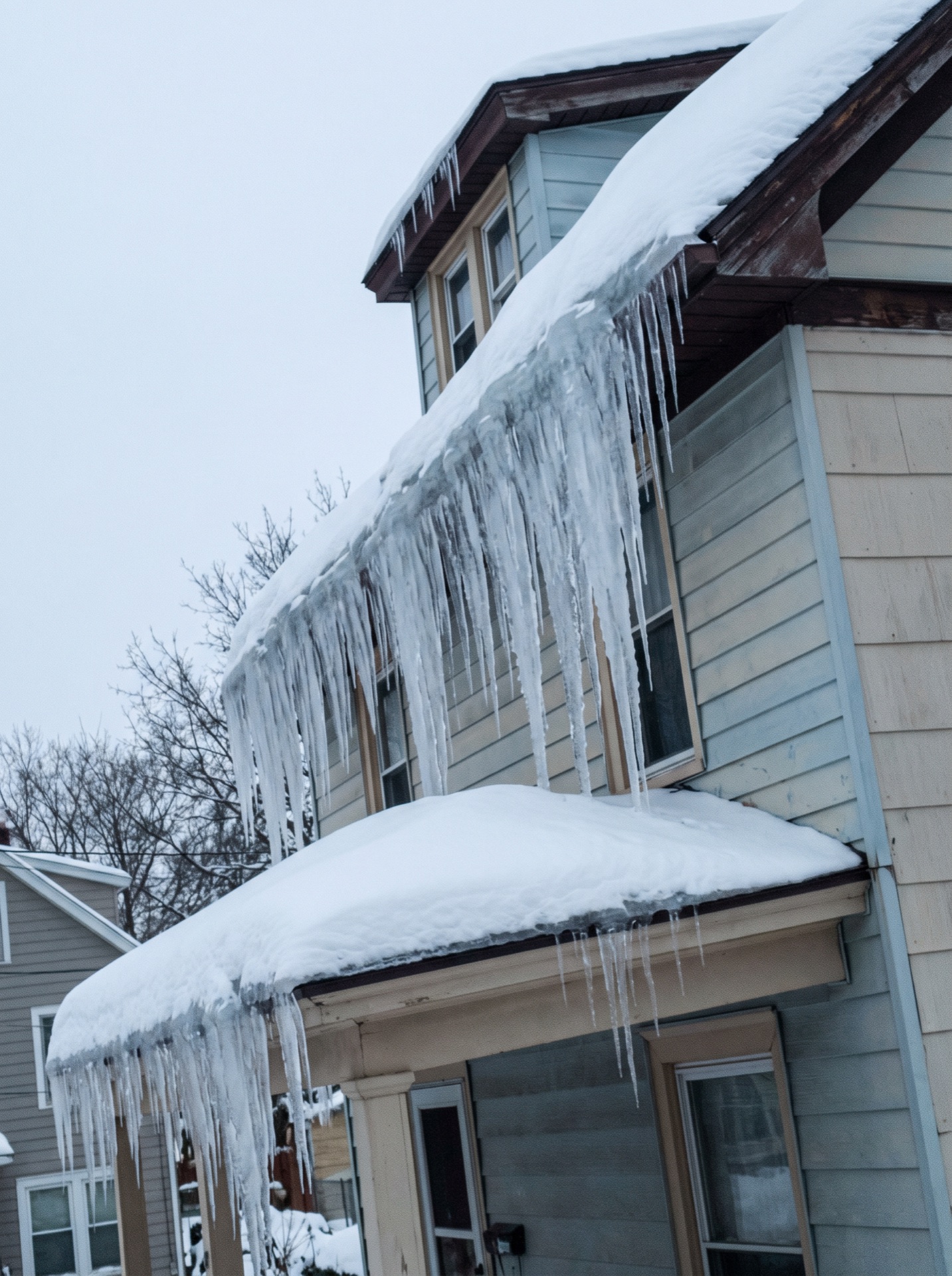
Large icicles and ice dam forming along gutters of gray house in winter
Heavy ice dam and icicles hang from the gutters of a gray residential home after a winter storm.

What you get in Driggs

  • Same-day dispatchActive interior leaks go to the front of the schedule during a freeze event
  • Steam onlySafe on asphalt, cedar, slate, tile and metal — no chipping, no pressure, no salt
  • Photographed as we workDated before and after images and a written scope your adjuster will accept
Ice Dam Removal in Driggs, ID — specification
Service specification for Driggs, ID
Dispatch window24 to 48 hours in mountain terrain
Removal methodLow-pressure steam only. No chipping, salt or pressure washing.
Local ice-barrier practiceExtended membrane plus snow retention
Pricing modelBilled by the crew hour, rate quoted before dispatch
ServiceIce Dam Removal in Driggs, ID
DocumentationDated before and after photos, written scope in Xactimate line items
Primary climate stressorSolar melt on deep pack, shaded eaves

Neighborhoods and Towns We Reach From Driggs

Crews working Driggs cover the adjoining communities on the same route — Victor, Tetonia and Felt — so a storm week usually means one truck handling several addresses in Teton County rather than separate trips.

Nearest hub towns with their own ice dam removal pages: Rexburg, Idaho Falls, Ammon, Pocatello, Sun Valley, Ketchum.

When a storm hits Teton County, crews are dispatched by severity rather than by call order — water already inside the house goes first.

Most jobs do not stop at one service. Ice Dam Removal in Driggs often runs alongside water mitigation & dryout in Driggs, and both get written into one scope rather than billed as separate visits.

Active leak right now? Our 24/7 Driggs steam ice dam removal crews are dispatched first during a freeze event. Call (888) 561-9664.


One Event, One Claim

Everything The Ice Dam Caused In Driggs, On One Claim

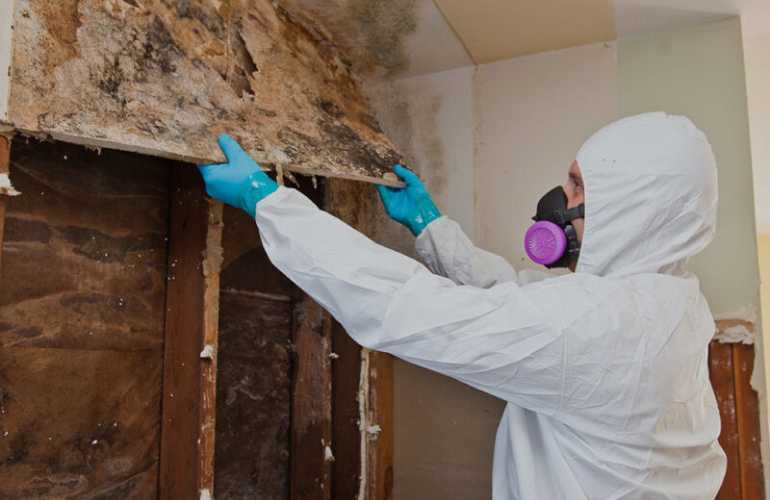
Taking the ice off is usually the cheapest part. The water that already got in, the mold it leaves, the ceiling that has to come down and sometimes the roof itself are one loss event, so they go on one insurance claim, handled by one company.

How it goes on the claim

  • One loss, one claim number. Removal, mitigation, mold, interior repair and roof damage from the same ice dam are reported as one event.
  • Broken out by coverage. Mitigation, mold (often under its own sublimit), interior repair and the roof are written as separate Xactimate sections, so a question on one line does not hold up the rest.
  • Documented the whole way. Dated photographs and moisture readings run from the ice on the roof to the finished room, from one company, in one file.
  • Honest about the limits. Coverage depends on your policy. A roof that was simply old is not storm damage, and you and your carrier make the coverage decision.
Ice Dam Claims In Driggs
Conditions We Work In

Ice Dam Removal In Practice

Conditions crews work in across Teton County. Every job is photographed before and after.

contractor using steam equipment to remove ice dam from snowy roof
A technician uses high-pressure steam to safely melt and remove a stubborn ice dam from a residential roof.
Worker on ladder using steam wand to remove ice dam from snowy roof
A professional uses a steam wand from a ladder to safely melt and remove a heavy ice dam from a residential roof.
Large icicles and thick snow ice dam along roof edge of dark gray house
Heavy snow and a significant ice dam have formed along the eaves of this dark gray home.
FAQ

What Driggs Homeowners Ask First

It is billed by the crew hour, and the rate plus a realistic time estimate are quoted on the phone before anyone is dispatched.

  • Scope drives the hours: length and thickness of the ice, roof pitch and height, and whether the gutters are frozen solid.
  • Access matters too — a three-story Driggs roof takes longer to set up on than a ranch.
  • The invoice matches the quote. There are no surprise add-ons written on the tailgate.

Because ice dams are made by heat loss, and two houses on the same street rarely leak heat the same way.

  • Attic air leaks around can lights, bath fans and the attic hatch are the usual source.
  • Crushed or missing soffit baffles stop the intake ventilation that would otherwise keep the deck cold.
  • An addition or dormer built over unheated space puts warm air right against a cold eave.
  • Local factor: altitude sun on deep pack makes the difference show up faster here than it would further south.

No. Steam removal is maintenance work, not construction, so no building permit is pulled for it anywhere in Teton County.

  • A permit does come into it once the work becomes a repair — new decking, a re-roof or structural work.
  • That is handled through the Driggs building department, or the Teton County building authority where the city has no department of its own.
  • Ask before signing anything: a contractor who says a re-roof in Driggs needs no permit is telling you something useful about how they work.

Clear a path to the affected side, move vehicles off the driveway and unlock any side gate.

  • Put something under an active interior drip and move what you can out of the way.
  • Photograph the interior damage yourself as well - more evidence is never a problem.
  • Do not go on the roof or up a ladder. That is the part that sends people to hospital.

Not for exterior removal, provided access and payment are arranged in advance.

  • Somebody being home helps where there is interior damage to look at or document.
  • Photographs go to you either way, timestamped as the work happens.
  • A gate code or an unlocked side gate is usually all a crew needs on a Driggs property.

Not to remove the ice - that is all done from outside. A quick look in the attic before the crew leaves is offered anyway, because the dam formed for a reason and that reason is almost always up there. It takes a few minutes and it is what stops the same dam returning next month.

Please do not. Cold shingles are brittle and crack under a chisel or hammer, the deck underneath punctures easily, and every winter people fall off ladders doing this. The DIY removal often costs more to repair than the ice damage would have.

Nearby

Ice Dam Removal In Towns Around Driggs

Same-Day Response

Get A Driggs Crew Out

A dam left alone through February is not the same dam in March. It is bigger, and so is the repair behind it.

✓ Licensed & insured✓ Low-pressure steam only✓ Rate quoted up front✓ Photos for your claim
Online Quote(888) 561-9664