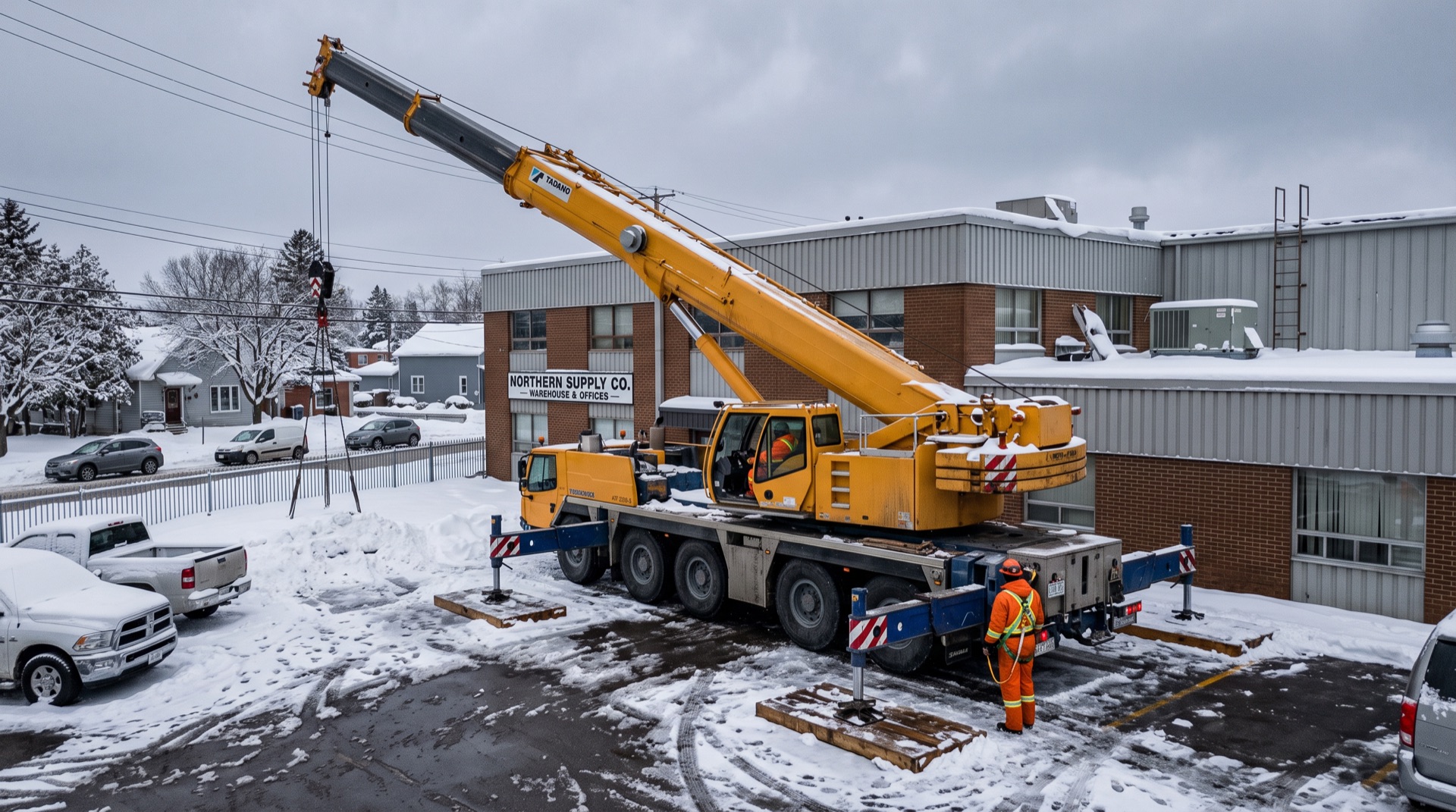
By the time a roof in Rock Springs has a visible ridge of ice at the eave, meltwater has already been pooling behind it for several freeze-thaw cycles. As part of our complete Rock Springs winter roof services, crews handle crane-assisted snow removal across Sweetwater County.
Rock Springs Ice Dams: Melting on Days It Never Thaws
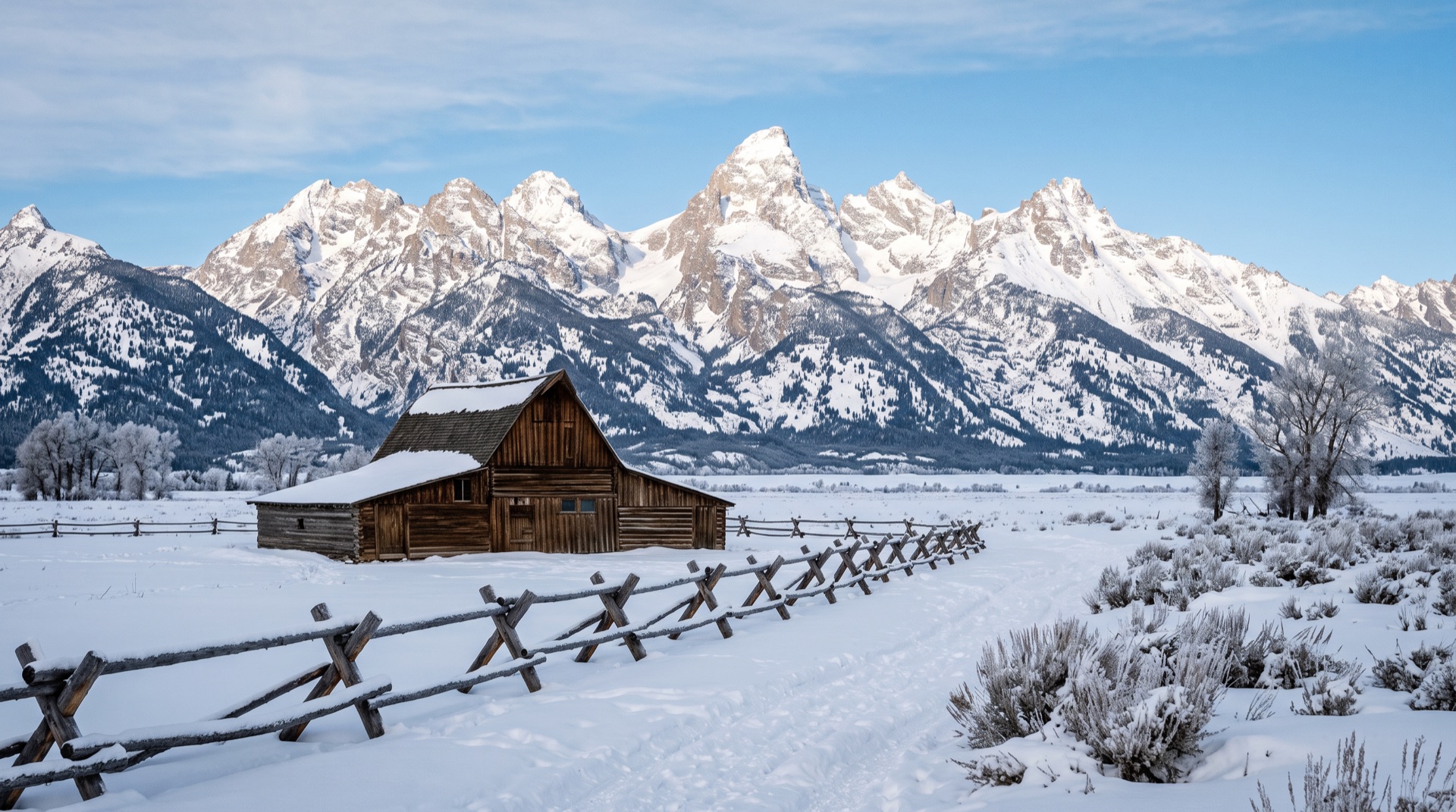
The pack at this elevation is deep enough to act as its own insulation, which means the surface melts under sun while the base stays locked. Water released at the top has to travel through and under all of it.

That is why mountain roofs dam up on clear, cold weeks that look harmless. South and west faces melt, north-facing eaves and shaded valleys hold the ice, and the pack above keeps feeding it.
Ice-barrier practice in Sweetwater County
High-country Wyoming codes typically call for extended ice barrier and, on metal roofing, snow guards above any door, walkway or parking area. Both exist because of what comes off these roofs.
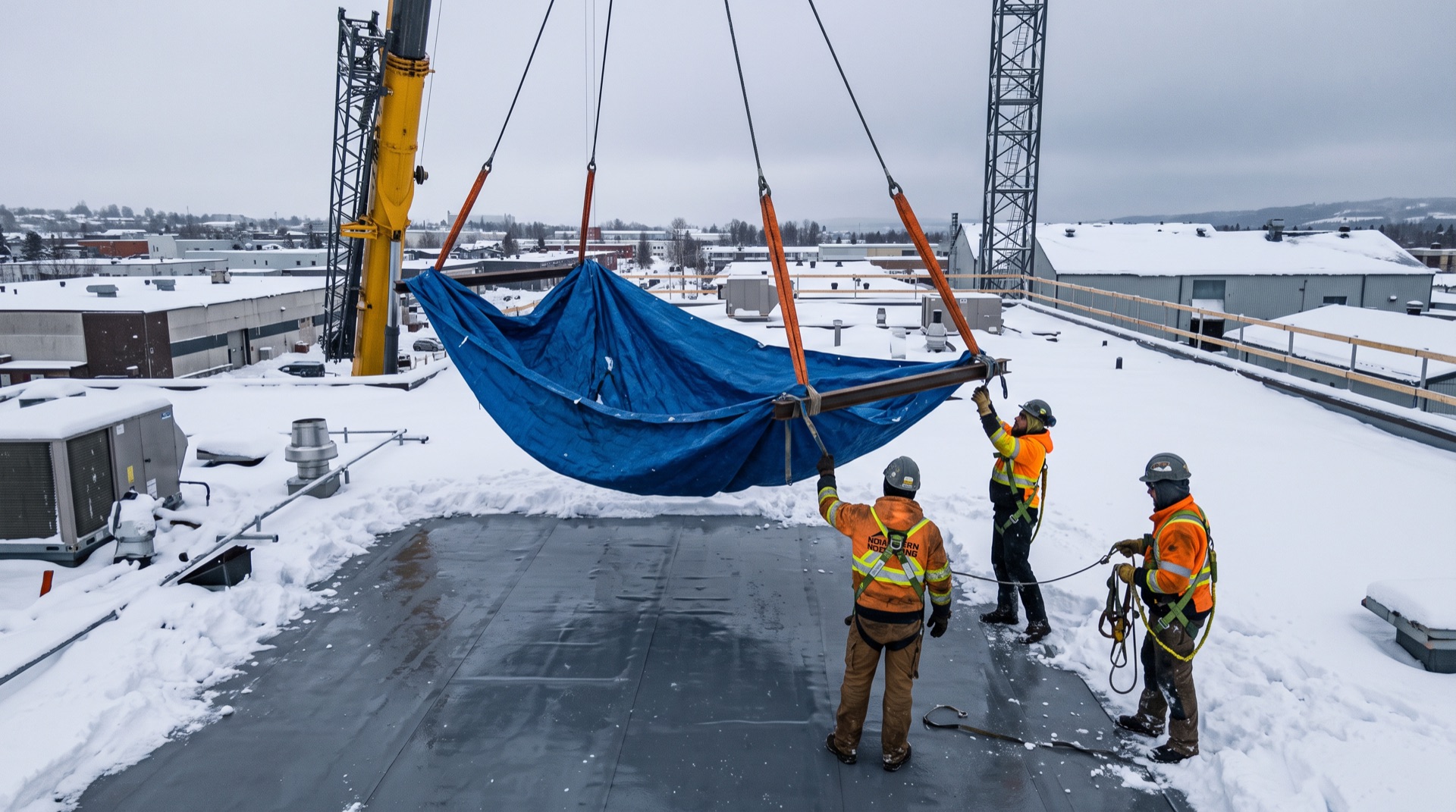
Crane-Assisted Snow Removal in Rock Springs: How The Work Runs
What goes in the tarp and what does not
A pick lifts loose and broken snow. It does not lift a solid sheet of ice frozen to the membrane, and trying to make it do so is how a tarp takes the roof covering with it. Ceiling Sagging or Bulging After Snow.
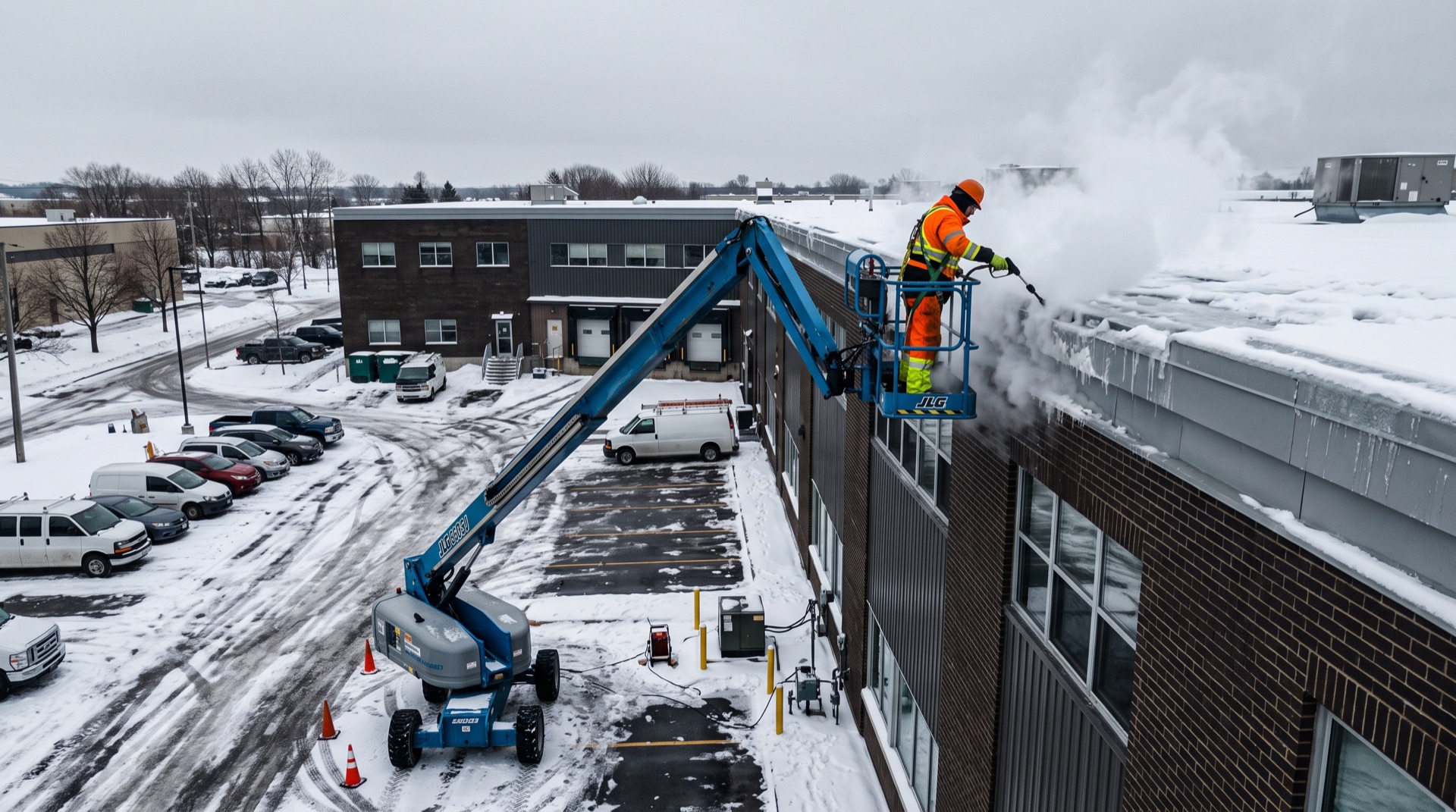
So the sequence is crews cutting and breaking the pack into liftable material, the crane moving it, and steam dealing with whatever is bonded to the surface. The crane is the transport, not the demolition.
Keeping people clear of the swing
A loaded tarp overhead is a serious exclusion zone. Pedestrian and vehicle routes get marshalled for the whole operation, and on an occupied building that means talking to whoever controls the doors before the first lift.
On a site in Rock Springs with public frontage this is usually the part that needs the most coordination and the part that gets the least credit.
What happens if the crane cannot get close enough
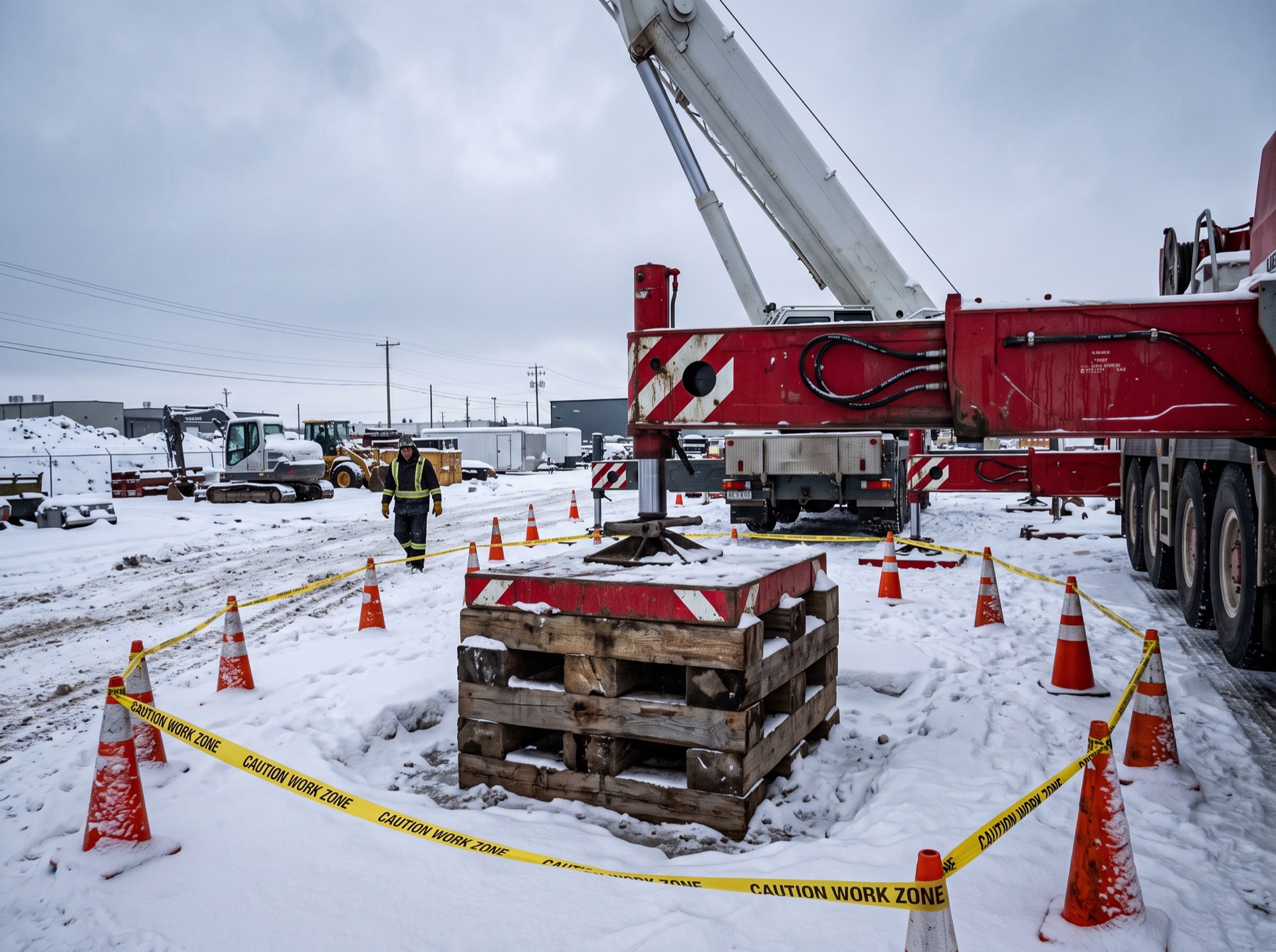
Overhead power, a narrow alley, soft ground that will not take outrigger loads, or a neighboring building in the swing path can all rule out a setup after a site visit.
That gets found on the walk rather than on the day. Where a crane genuinely will not work, the honest answer is a larger hand crew over more days with the cost difference laid out - not a pick that was never going to fit.
The arithmetic that justifies a crane
Snow weight is depth times density times area. Fresh powder is light; settled wet pack can be several times heavier for the same depth, and drifted pack heavier again.
Crews take depth and density readings at the drift points on a roof in Rock Springs, work out the load, and compare it to the structure's design capacity. A crane gets mobilised when that number says hand clearing cannot win the race against the next storm.
Documenting the load for the carrier
Depths, densities, calculated loads and dated photographs are recorded through the operation. Most carriers treat preventing an imminent structural failure as loss mitigation, which is a very different claim from one filed after a deck comes down.
That record is what supports it, and it only exists if somebody took the readings at the time.
What you get in Rock Springs
- Lift planned firstAccess, swing radius, overhead lines and drop zone walked before scheduling
- Outrigger padsBearing pads sized and placed for frozen and uneven ground
- Weights documentedDepths, densities and loads recorded for the carrier
| Pricing model | Billed by the crew hour, rate quoted before dispatch |
|---|---|
| Removal method | Low-pressure steam only. No chipping, salt or pressure washing. |
| Dispatch window | 24 to 48 hours in mountain terrain |
| Primary climate stressor | Solar melt on deep pack, shaded eaves |
| Local ice-barrier practice | Extended membrane plus snow retention |
| Documentation | Dated before and after photos, written scope in Xactimate line items |
| Typical scope | Steam, 8-16 crew hours typical |
Rock Springs Coverage and the Adjoining Communities
Crews working Rock Springs cover the adjoining communities on the same route — Reliance — so a storm week usually means one truck handling several addresses in Sweetwater County rather than separate trips.
Nearest hub towns with their own crane snow removal pages: Green River, Lander, Evanston, Riverton, Jackson, Teton Village.
Crews cover Rock Springs and the surrounding Sweetwater County towns through the whole season, and during a freeze event they run from first light until dark.
Most jobs do not stop at one service. Crane Snow Removal in Rock Springs often runs alongside commercial roof snow removal in Rock Springs, and both get written into one scope rather than billed as separate visits.
Active leak right now? Our 24/7 Rock Springs steam ice dam removal crews are dispatched first during a freeze event. Call (888) 561-9664.