




Rock Springs Ice Dams: Melting on Days It Never Thaws
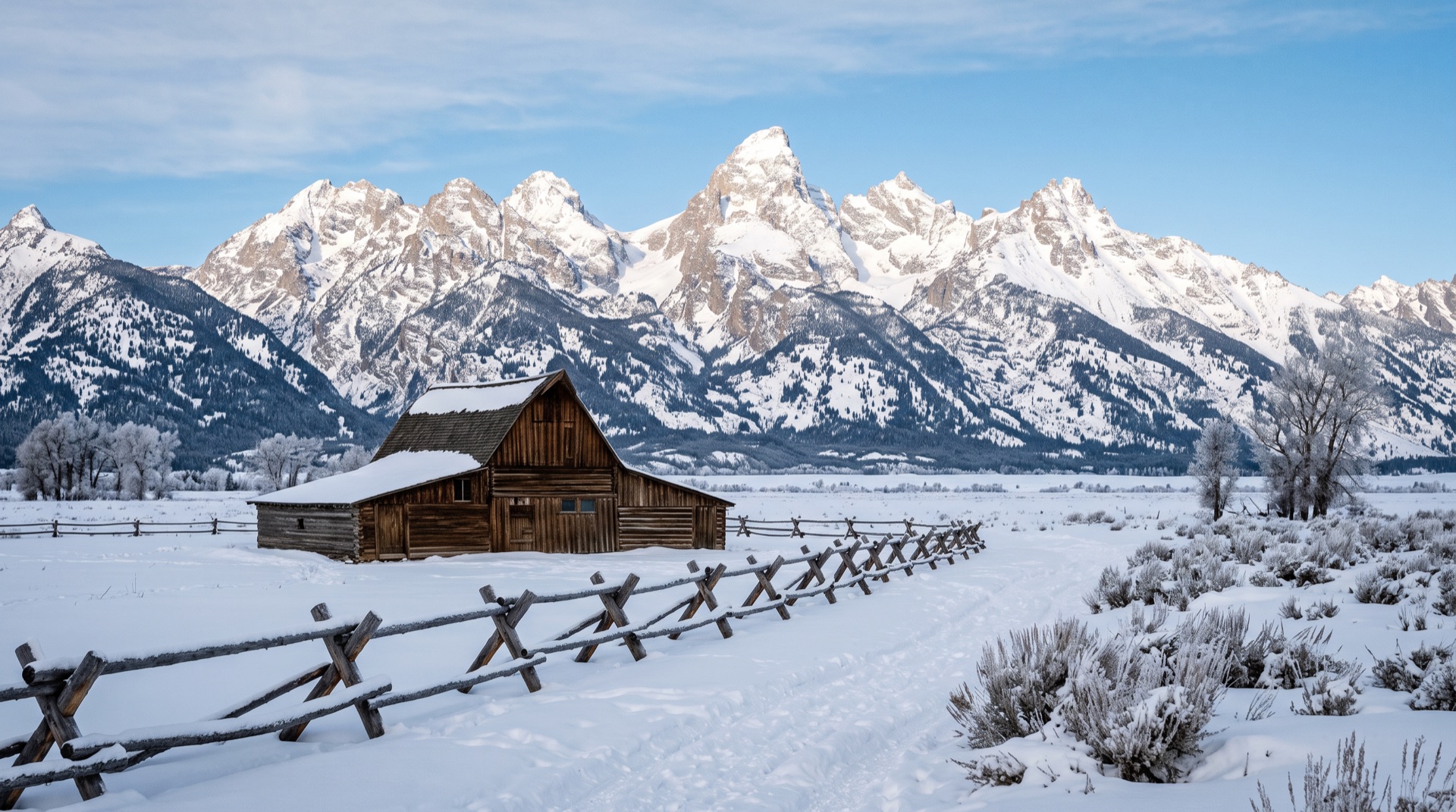
The pack at this elevation is deep enough to act as its own insulation, which means the surface melts under sun while the base stays locked. Water released at the top has to travel through and under all of it.

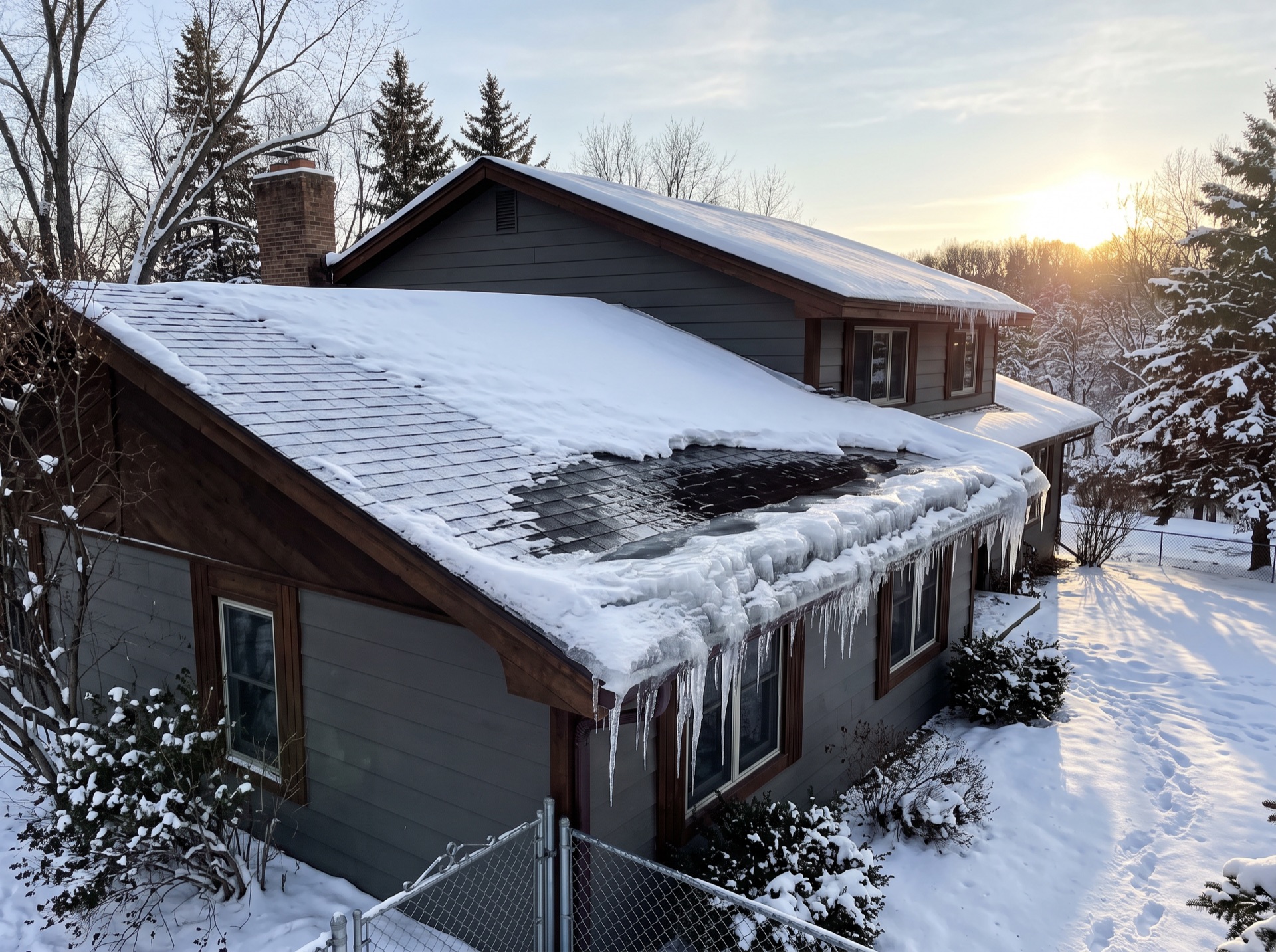
That is why mountain roofs dam up on clear, cold weeks that look harmless. South and west faces melt, north-facing eaves and shaded valleys hold the ice, and the pack above keeps feeding it.
Ice-barrier practice in Sweetwater County
High-country Wyoming codes typically call for extended ice barrier and, on metal roofing, snow guards above any door, walkway or parking area. Both exist because of what comes off these roofs.
How We Work a Rock Springs Ice Dam
Nothing gets touched until the roof has been walked and photographed. The crew finds every dam, locates where water is getting in, shows you, and gives you the crew-hour rate and a time estimate before the equipment comes off the truck.
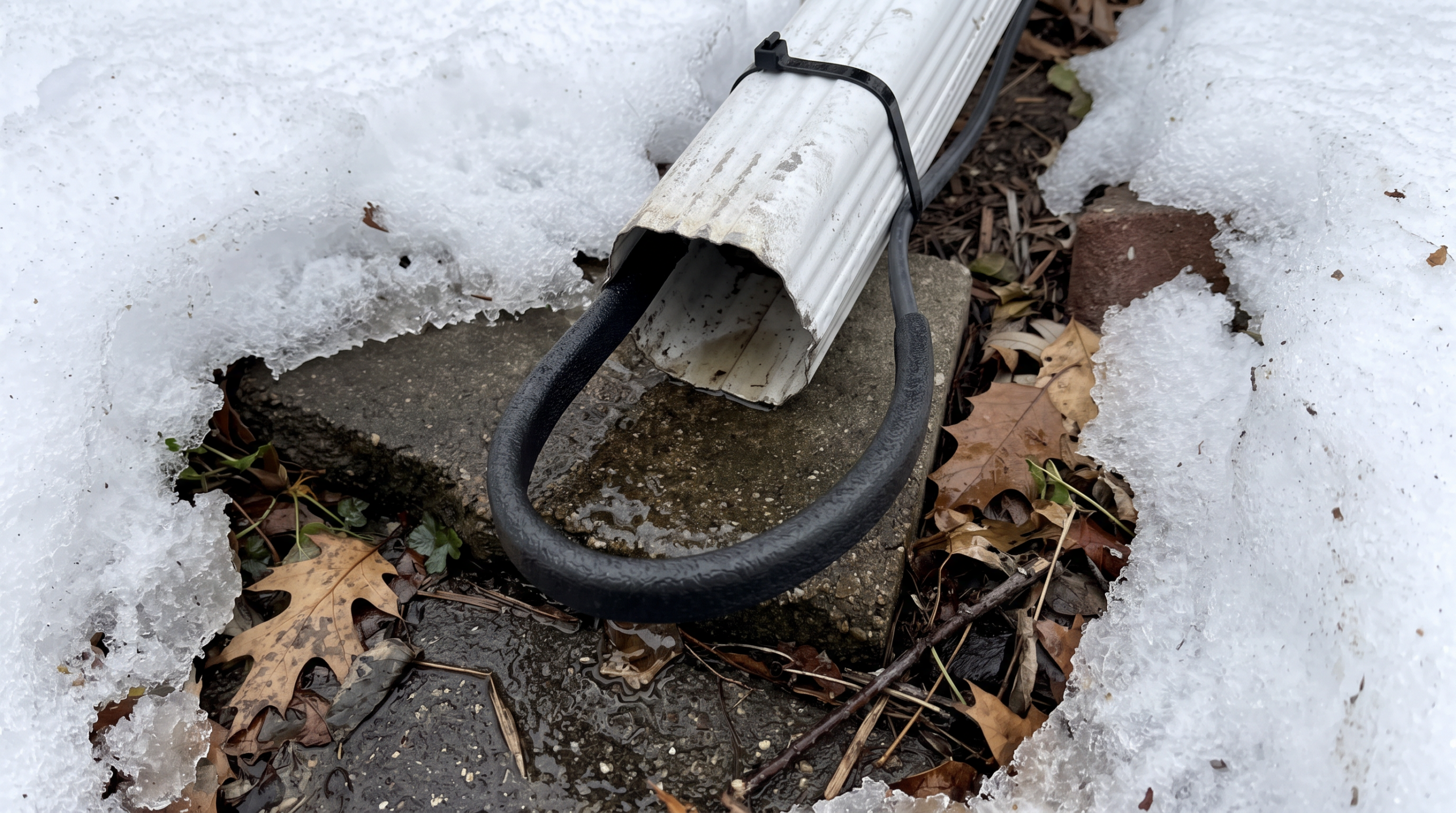
Removal then works from the worst point outward, so water starts draining early rather than at the end. Gutters and downspouts frozen solid get steamed through in the same visit — leaving them means the eave dams again within days.
What gets photographed, and why it matters later
Before the lance comes out, the crew shoots the dam from the ground and from the roof, the icicle line, any staining visible inside, and the specific courses where water is tracking under the shingles. Timestamps are on every frame.
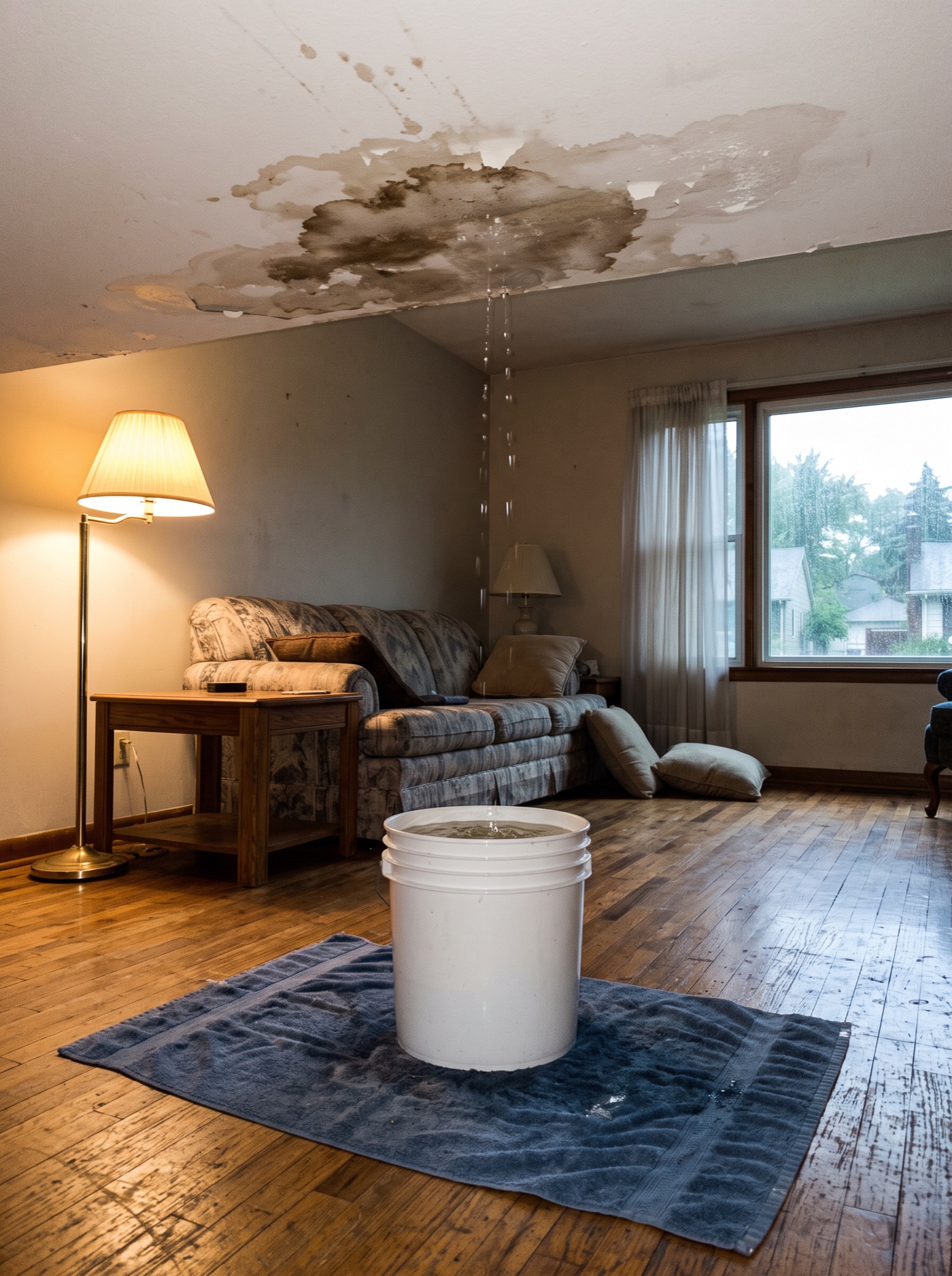
That record is the whole case if a claim follows. An adjuster arriving in March sees a dry roof and a stained ceiling; the photographs are what connect the two, and they are what a maintenance-exclusion denial runs into.
What steam actually does
A steam unit delivers water at roughly 290°F at a pressure low enough to rest your hand in the plume. It cuts a channel straight through the ice and lifts the dam off in sections, right down to the shingle. The heat does the work, not force, so granules, seal strips and flashing come through untouched.
That is the whole difference between steam and the hot pressure washers often sold as steam. A pressure washer cuts ice fast because of its pressure — and that same pressure strips the granules off asphalt shingles and drives water up under the courses. One method removes ice. The other removes ice and roof.
Why salt and ice melt make it worse
Calcium chloride opens a narrow channel and leaves the dam standing. The channel refreezes, the dam does not go anywhere, and in the meantime the runoff corrodes gutter seams, fasteners, flashing and anything growing underneath.
It is a stopgap at best. On a roof in Rock Springs with an active leak it buys hours, not days, and it adds a corrosion problem to the water problem.
| Pricing model | Billed by the crew hour, rate quoted before dispatch |
|---|---|
| Coverage area | Rock Springs and Sweetwater County |
| Documentation | Dated before and after photos, written scope in Xactimate line items |
| Service | Ice dam removal in Rock Springs, WY |
| Typical scope | Steam, 8-16 crew hours typical |
| Dispatch window | 24 to 48 hours in mountain terrain |
| Removal method | Low-pressure steam only. No chipping, salt or pressure washing. |
Rock Springs Coverage and the Adjoining Communities
Crews working Rock Springs cover the adjoining communities on the same route — Reliance — so a storm week usually means one truck handling several addresses in Sweetwater County rather than separate trips.
Nearest hub towns with their own crew pages: Green River, Lander, Evanston, Riverton, Jackson, Teton Village.
When a storm hits Sweetwater County, crews are dispatched by severity rather than by call order — water already inside the house goes first.
Water through a ceiling in Rock Springs is a same-day call, not a next-week one. (888) 561-9664 goes straight to dispatch.