A South Milwaukee roof can look fine from the driveway and still be backing water under the shingles at the eave, where nobody can see it. As part of our complete South Milwaukee winter roof services, crews handle heated roof & gutter cables across Milwaukee County.
South Milwaukee Ice Dams: What Lake-Effect Snow Does to an Eave
What makes Milwaukee County roofs dam is not the seasonal total, it is how the snow arrives. Bands dump a heavy, saturated pack in hours, and that pack becomes a water reservoir sitting on a heated surface.

Then the temperature swings. Lake-effect regions cycle hard either side of freezing, and each cycle moves meltwater down to a cold eave and locks it there. The dam grows by a layer every time, and the water behind it rises with it.
Ice-barrier practice in Milwaukee County
The relevant detail is how far up the roof the membrane runs — it has to reach past the interior wall line, not just cover the first course. On older South Milwaukee roofs it frequently does neither.
Heated Roof & Gutter Cables in South Milwaukee: How The Work Runs
The electrical side
A dedicated GFCI-protected circuit, properly rated terminations and a disconnect somebody can actually reach. Not an extension cord out of a bathroom window, which is what gets found on a surprising number of existing South Milwaukee installs. Icicles and a Wet Ceiling.
Done properly it is an ordinary piece of exterior electrical work and it should look like one.
Self-regulating versus constant wattage
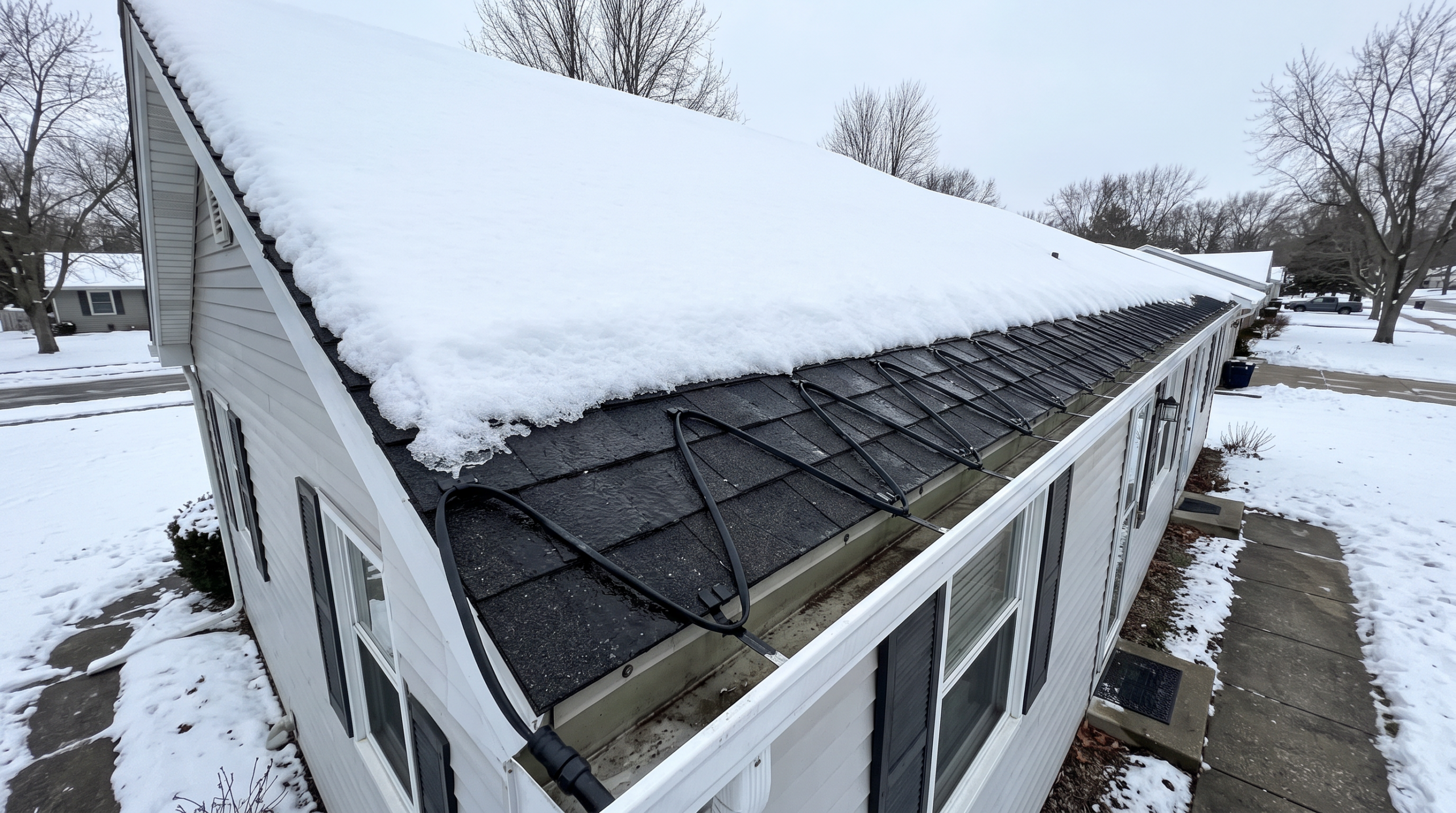
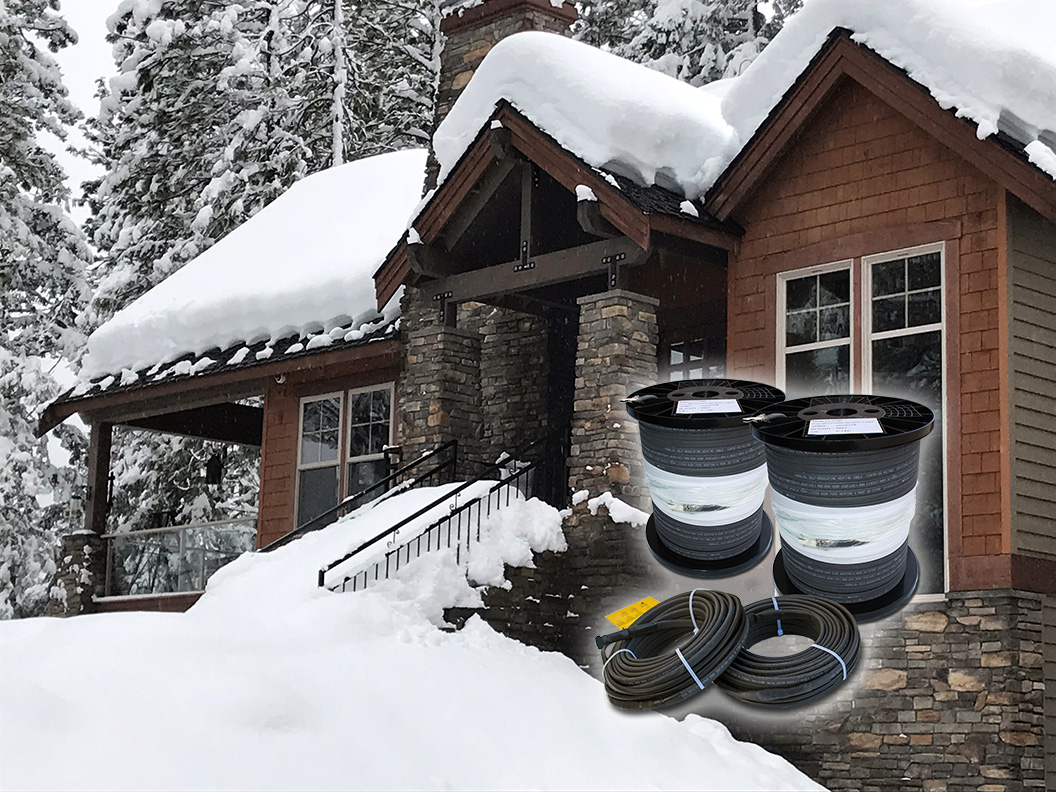
Self-regulating cable varies its output along its own length with the temperature of what it is touching: colder sections draw more, warmer sections throttle back. It can be cut to length on site, it tolerates being overlapped in a gutter, and it cannot cook itself into failure the way constant-wattage cable can.
Constant wattage is cheaper per foot and that is the whole of its case. On a roof in South Milwaukee that sees real freeze-thaw cycling, self-regulating is the one worth installing.
What heat trace does and does not do
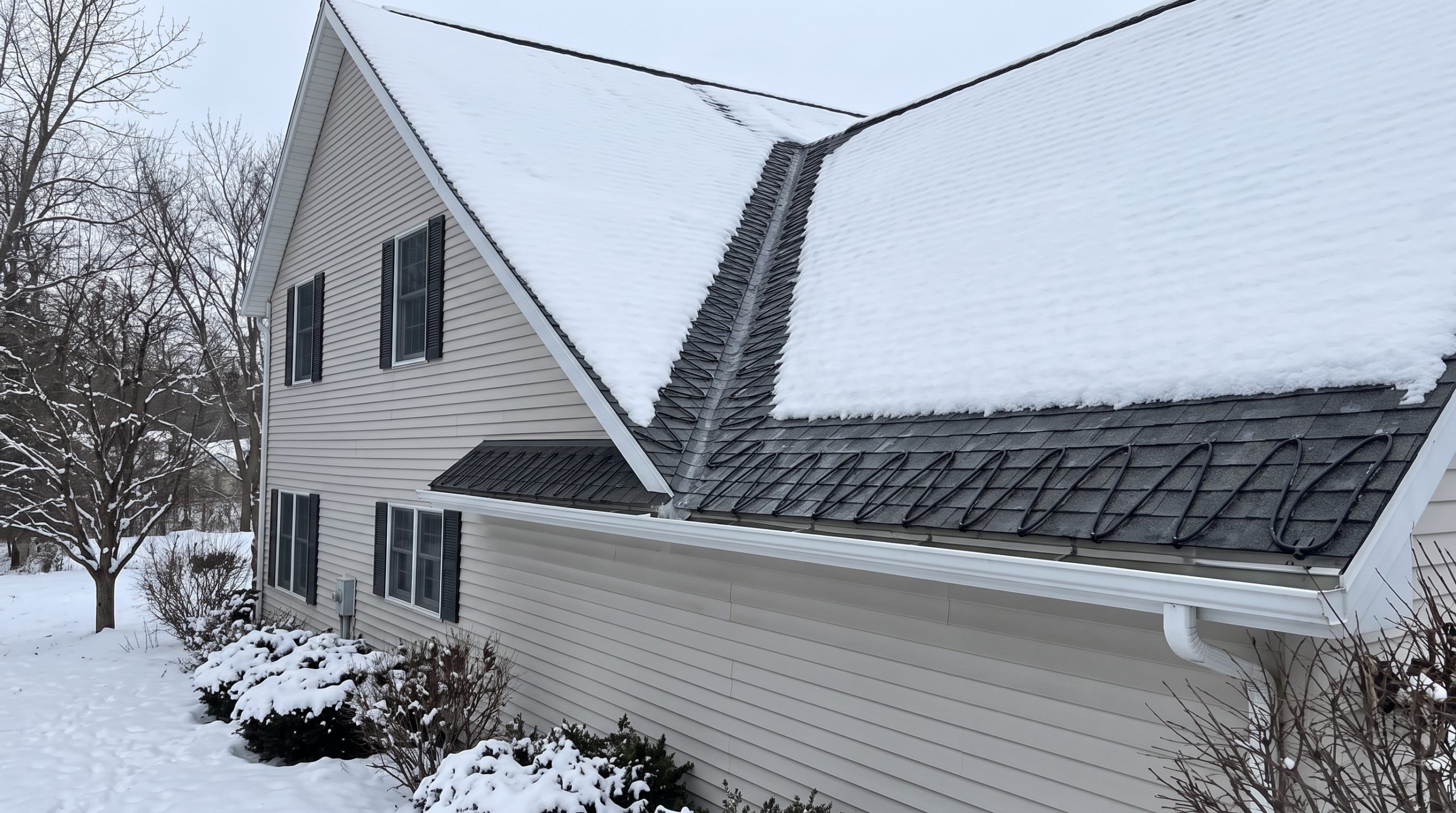
A properly designed system keeps a continuous drainage channel open from the roof surface through the gutter and down the leader to the ground. Meltwater that would have refrozen at the cold eave instead keeps running. It does not melt the snow off your roof, and it will not remove a dam that has already formed — it prevents the dam from establishing in the first place.
That distinction matters when comparing quotes. Anyone selling cable as an emergency fix for an existing dam is selling the wrong product.
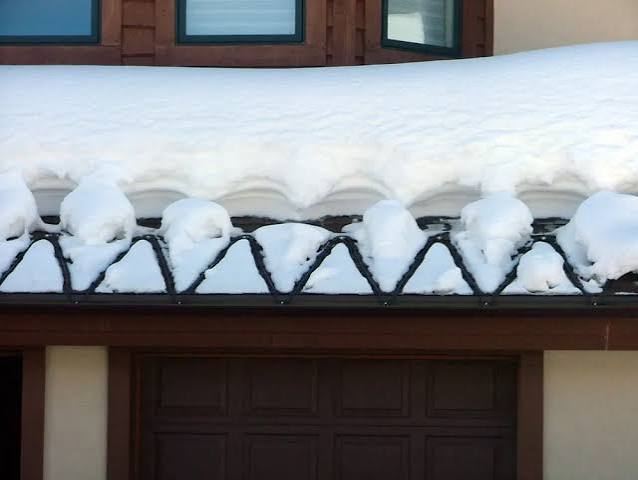
Sizing the eave zig-zag to the cold overhang
The zig-zag has to extend far enough up the roof to cover the part of the deck that sits past the heated wall line, because that is the part that stays below freezing.
Measured from inside the attic rather than guessed from the ground. On a house in South Milwaukee with a deep overhang or a cantilever that distance is often further up than people expect.
Why most cable installations underperform
Not because the cable is bad. Because the path is incomplete. A zig-zag along the first few feet of eave that does not continue into the gutter and down the leader melts a channel that ends in a block of ice.
The water has to get all the way to the ground. On a South Milwaukee install that means eave, valleys, trough and downspout traced as one continuous path, and it is the single thing that separates a system that works from one that does not.
What you get in South Milwaukee
- Zig-zag sized properlyEave coverage measured against the actual cold overhang
- Downspout traced to daylightThe drain path ends on the ground, not in a block of ice
- Self-regulating cableOutput varies along the run; safe to overlap, cut to length on site
| Local ice-barrier practice | Eave membrane expected on re-roofs |
|---|---|
| Removal method | Low-pressure steam only. No chipping, salt or pressure washing. |
| Typical scope | Steam, 6-12 crew hours typical |
| Pricing model | Billed by the crew hour, rate quoted before dispatch |
| Dispatch window | Same day to 24 hours |
| Primary climate stressor | Lake-effect bands, wet heavy pack |
| Service | Heated Roof & Gutter Cables in South Milwaukee, WI |
Where We Dispatch Around South Milwaukee
Crews working South Milwaukee cover the adjoining communities on the same route — Cudahy, Greendale, Hales Corners and Franksville — so a storm week usually means one truck handling several addresses in Milwaukee County rather than separate trips.
Nearest hub towns with their own heat cables pages: Oak Creek, Caledonia, Franklin, Greenfield, Milwaukee, West Allis.
Scheduling for South Milwaukee tightens up during a freeze event, which is exactly when the phone beats the form. Water coming in means a call, not an email.
Most jobs do not stop at one service. Heat Cables in South Milwaukee often runs alongside ice dam removal in South Milwaukee, and both get written into one scope rather than billed as separate visits.
Active leak right now? Our 24/7 South Milwaukee steam ice dam removal crews are dispatched first during a freeze event. Call (888) 561-9664.