




The Milwaukee County Pattern: Heavy Bands, Fast Thaws
Oak Creek sits in the lake-effect belt, where a single band can drop a foot on one side of Milwaukee County and leave the other side clear. That snow lands wet and heavy, packs down on the upper roof, and sits there as a reservoir.

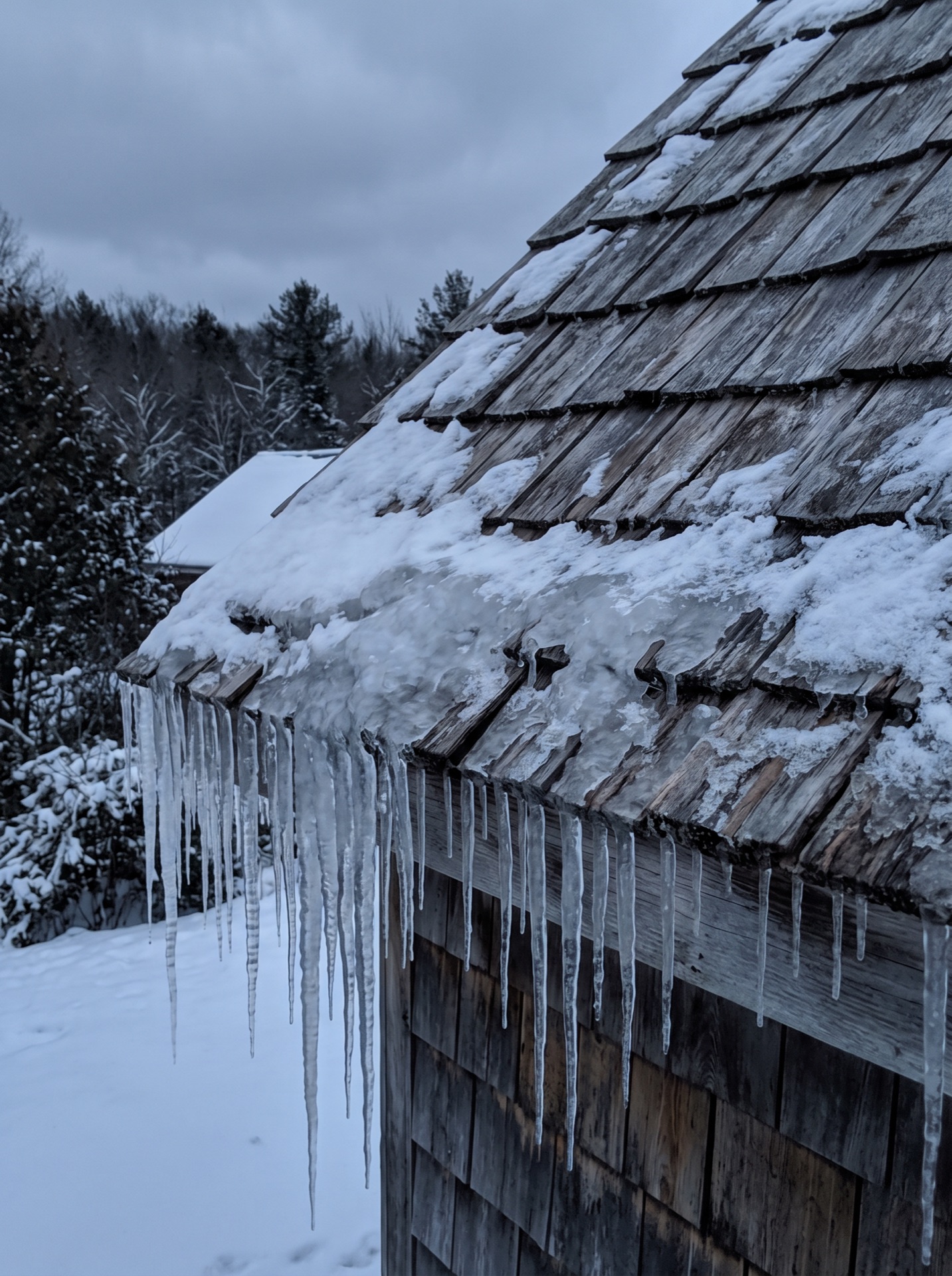
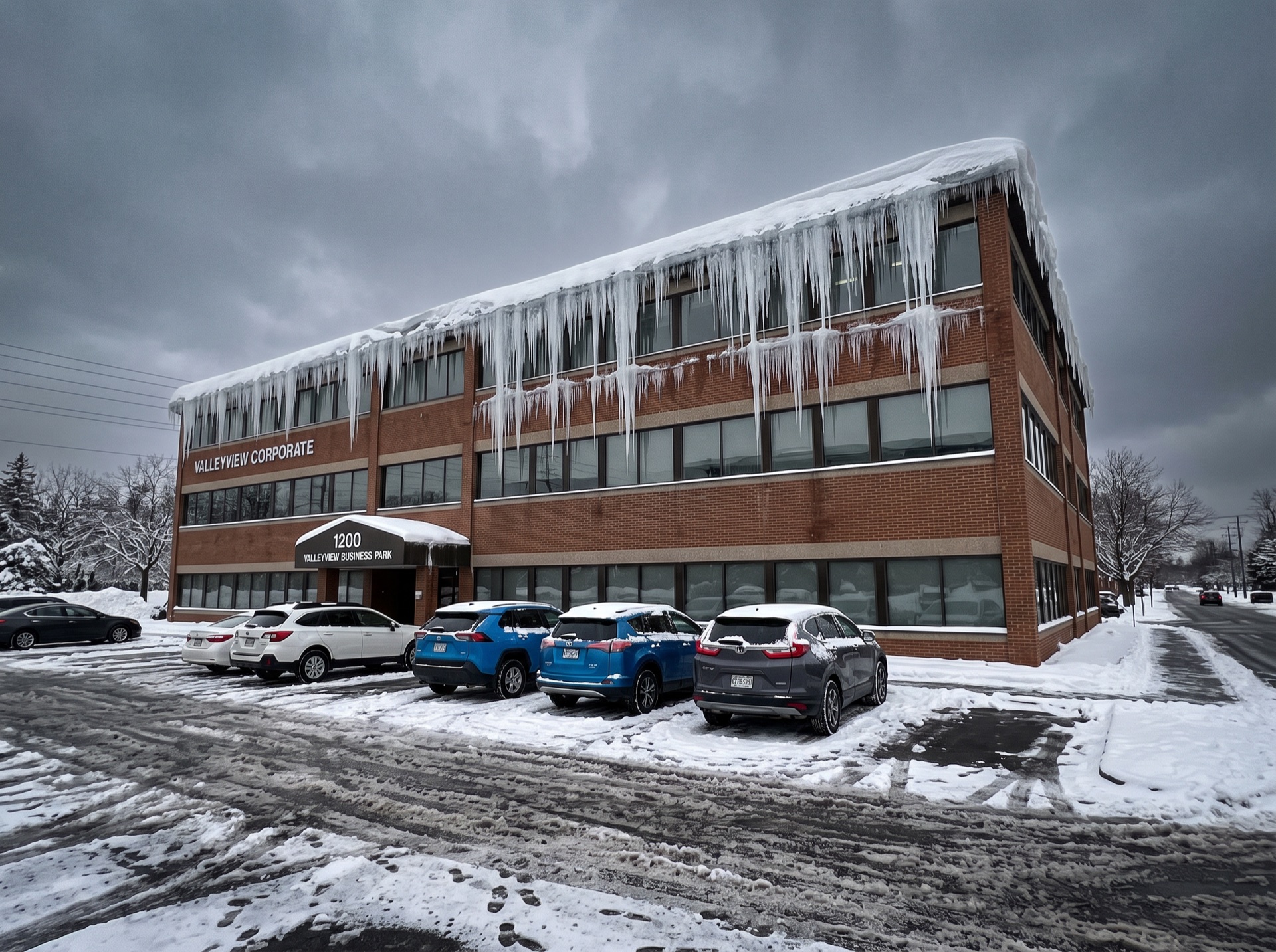
Each band is followed by a clearance and a cold night, and that is the cycle doing the damage. Meltwater released during the day sets at the eave after dark, and the ridge at the gutter line gains a layer every time.
Ice-barrier practice in Milwaukee County
What matters on an Oak Creek roof is not whether ice barrier exists but how far up it runs. Water backed up behind a foot of ice travels much further than the first course, and a membrane that stops short is a membrane that stops working.
How an Oak Creek Steam Call Runs, Start to Finish
Nothing gets touched until the roof has been walked and photographed. The crew finds every dam, locates where water is getting in, shows you, and gives you the crew-hour rate and a time estimate before the equipment comes off the truck.
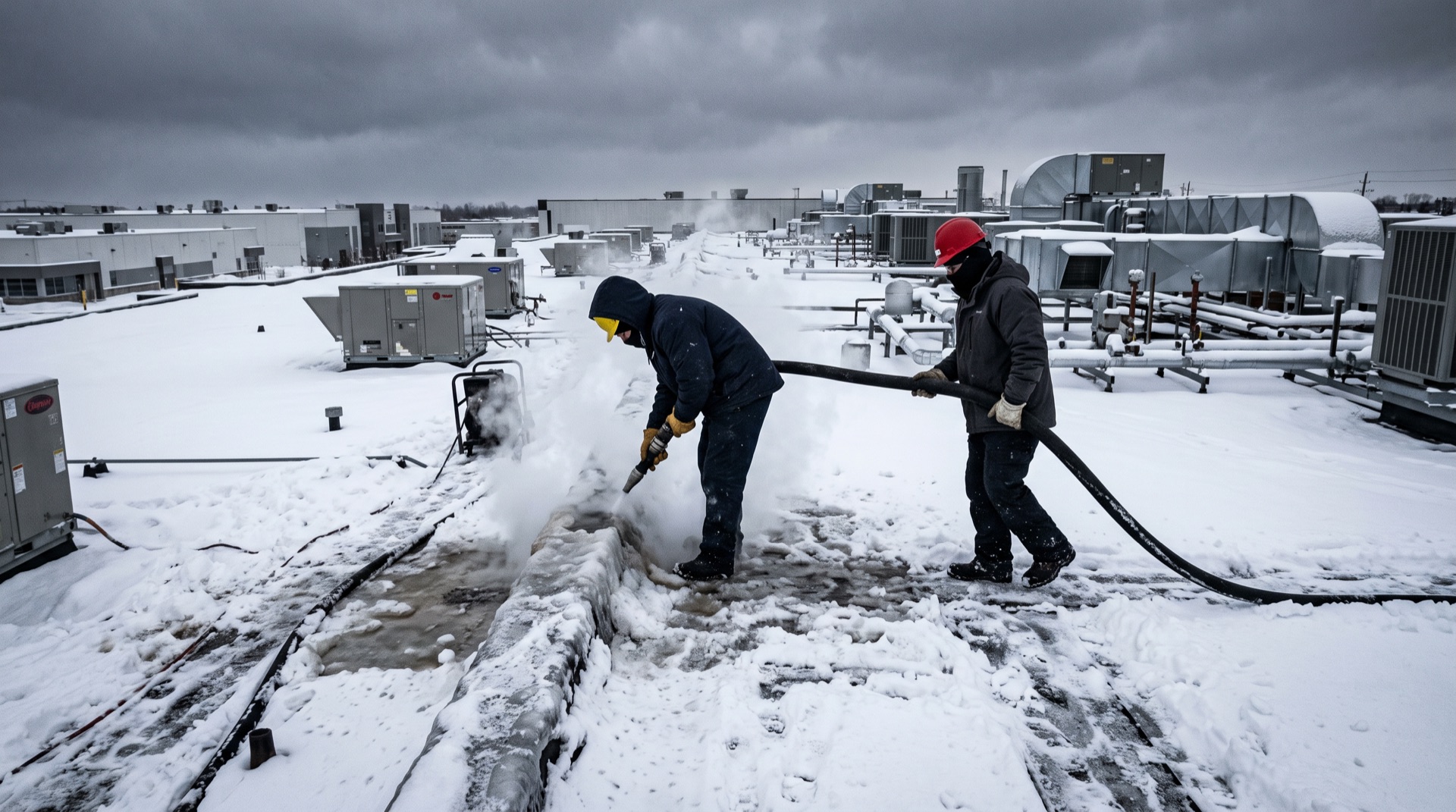
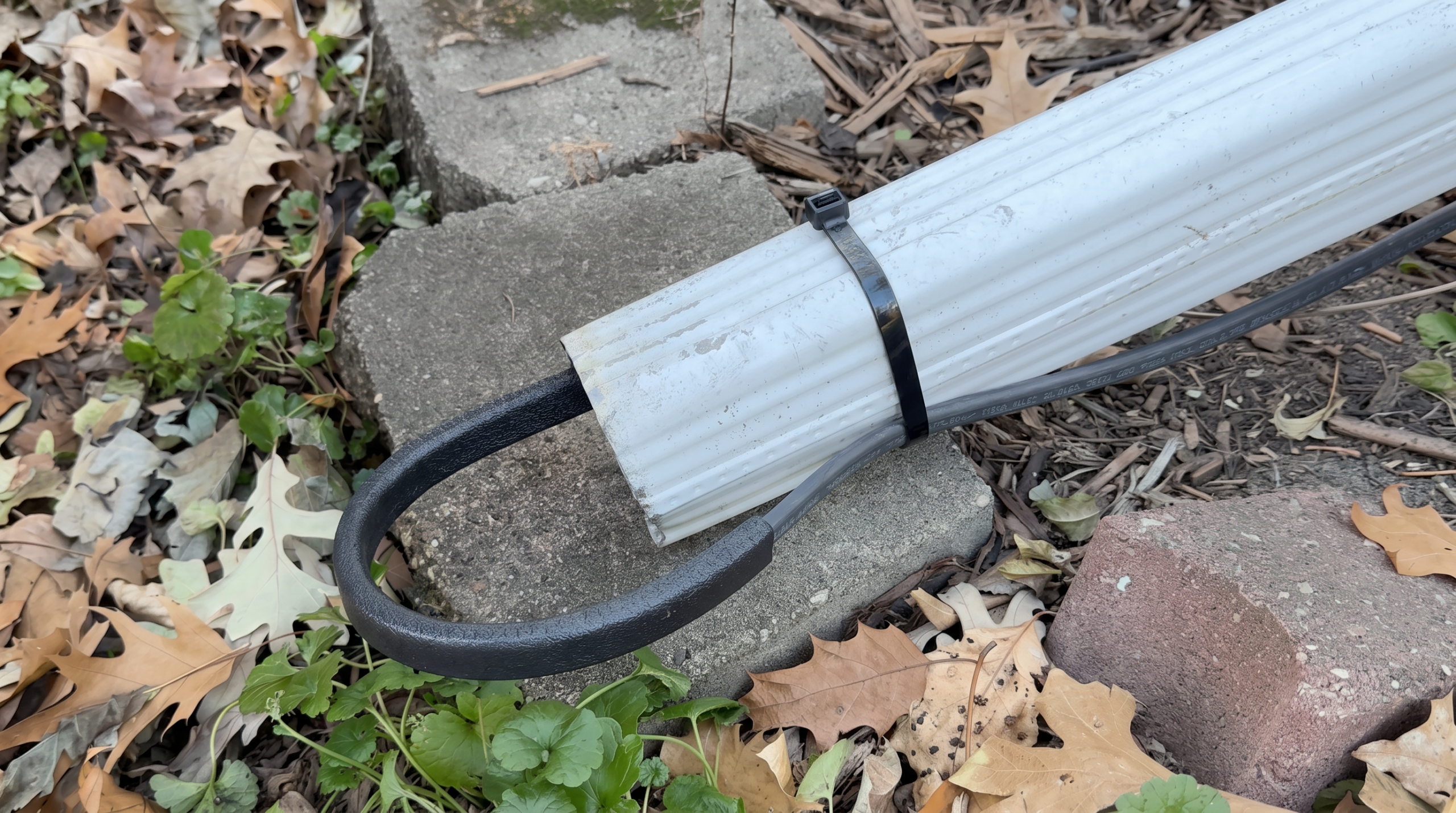
Removal then works from the worst point outward, so water starts draining early rather than at the end. Gutters and downspouts frozen solid get steamed through in the same visit — leaving them means the eave dams again within days.
Working at night and during an active storm
Freeze events do not keep office hours, and the worst leaks tend to announce themselves in the evening when the day's melt refreezes. Crews run lit, and a roof that is actively collecting snow is worked anyway, because waiting for better weather means the dam is bigger when somebody finally gets to it.
What does stop a crew is wind and lightning. Both are judgment calls made on site in Oak Creek, and a postponed start gets explained rather than dressed up.
Access, ladders and what the crew needs on site
Steam equipment needs somewhere to park within hose reach, and ladders need footing that is not a buried flower bed or a sheet of ice. Clearing a path to the affected eave, moving vehicles off the driveway and unlocking a side gate takes ten minutes and saves considerably more than that on the clock.
Where the only access is through a neighbor's property, that conversation is worth having before the crew is in the street rather than while it waits.
Dormers, valleys and dead spots
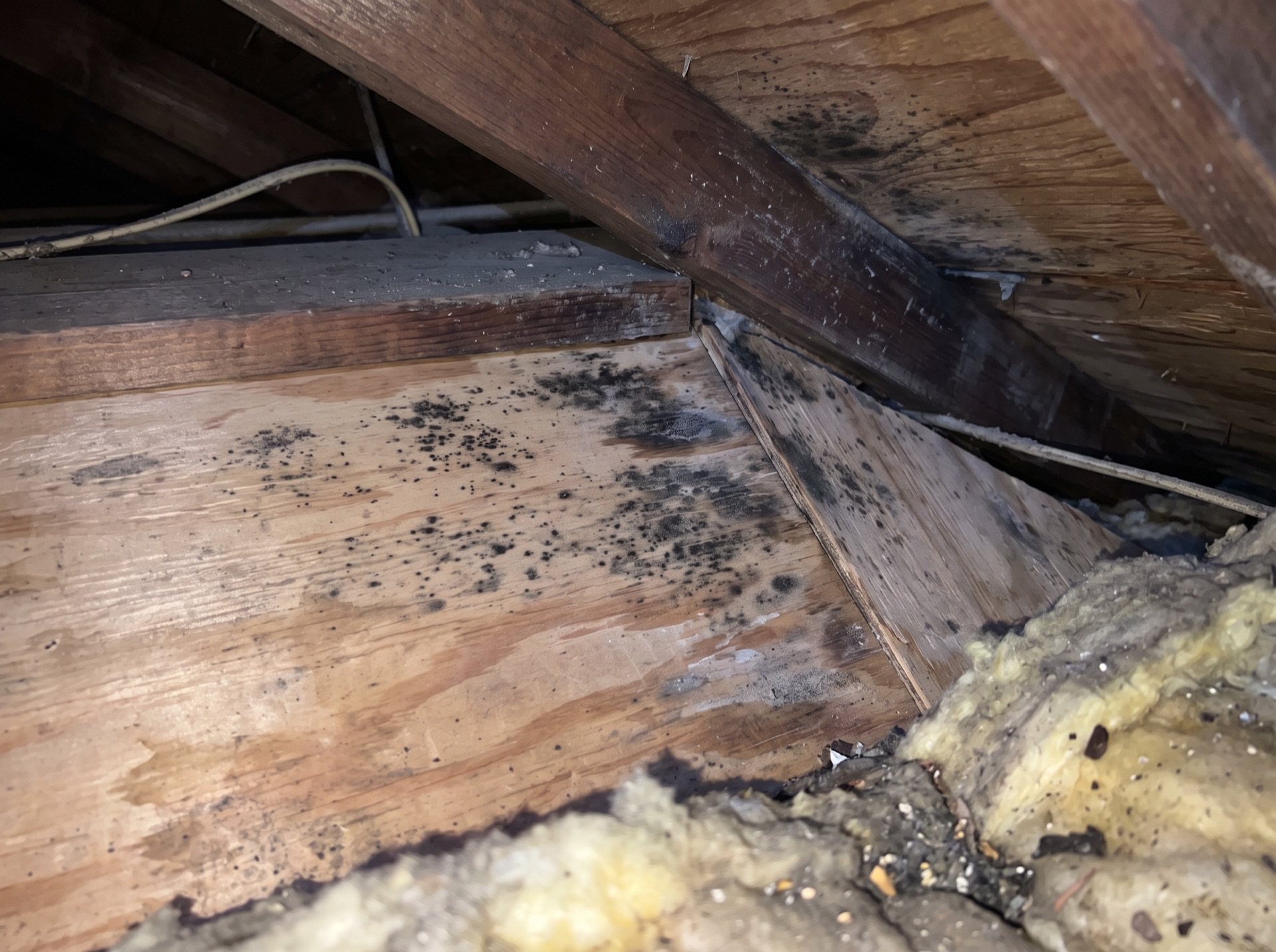
Ice does not distribute evenly. It concentrates where two roof planes meet, behind dormers, in dead valleys that drain nowhere, and along the north face that never sees sun. Those pockets hold water deepest and leak first.
A crew working a roof in Oak Creek clears the full eave line and then goes back through the valleys and dormer pockets specifically, because clearing the easy straight run and calling it done is how a roof leaks again a week later.
| Local ice-barrier practice | Eave membrane expected on re-roofs |
|---|---|
| Service | Ice dam removal in Oak Creek, WI |
| Documentation | Dated before and after photos, written scope in Xactimate line items |
| Typical scope | Steam, 6-12 crew hours typical |
| Primary climate stressor | Lake-effect bands, wet heavy pack |
| Coverage area | Oak Creek and Milwaukee County |
| Pricing model | Billed by the crew hour, rate quoted before dispatch |
Where We Dispatch Around Oak Creek
Crews working Oak Creek cover the adjoining communities on the same route — Cudahy, Greendale, Hales Corners, Franksville and Sturtevant — so a storm week usually means one truck handling several addresses in Milwaukee County rather than separate trips.
Nearest hub towns with their own crew pages: South Milwaukee, Caledonia, Franklin, Greenfield, Milwaukee, West Allis.
Crews cover Oak Creek and the surrounding Milwaukee County towns through the whole season, and during a freeze event they run from first light until dark.
Active leak at an address in Oak Creek? (888) 561-9664 reaches dispatch directly. Interior water moves a job to the front of the day.