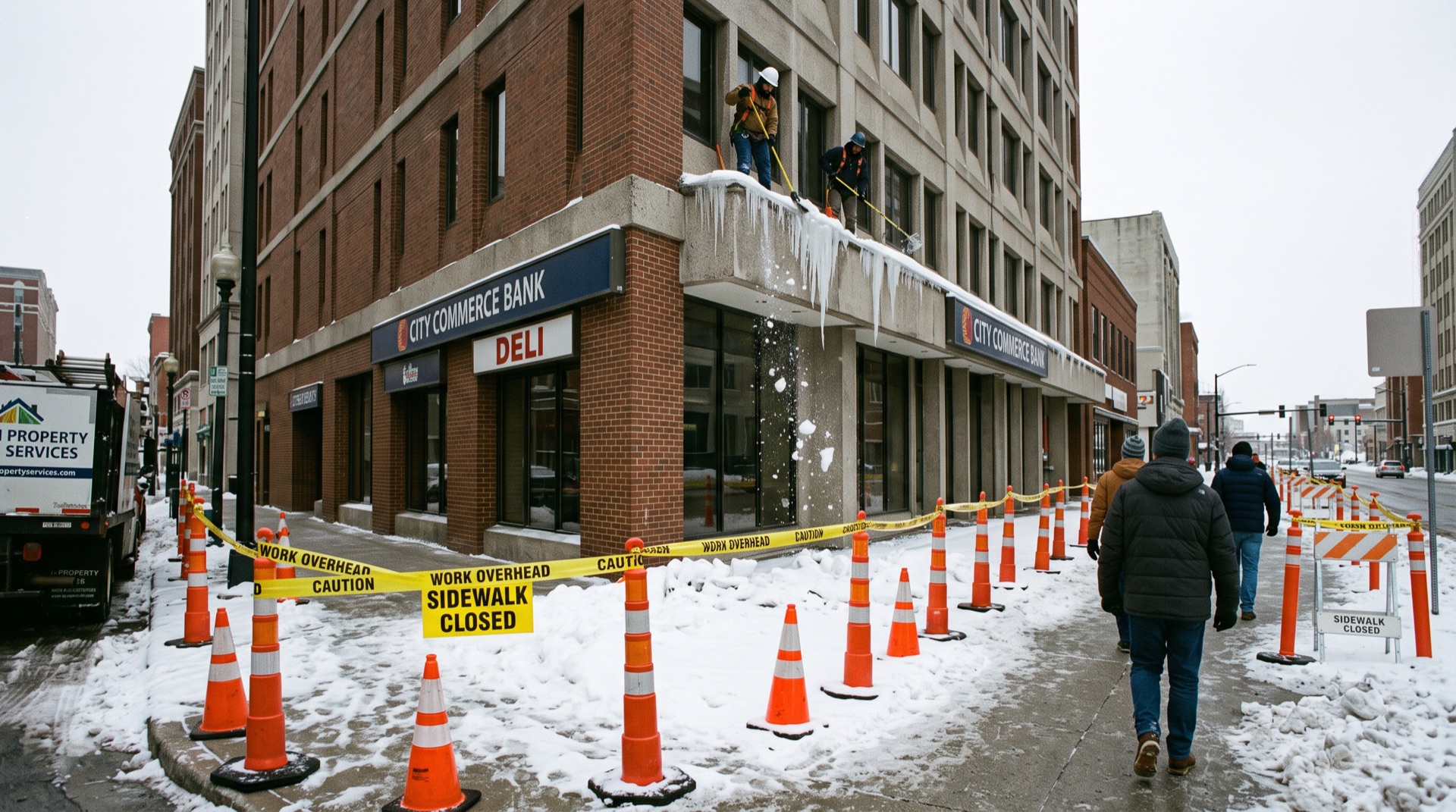
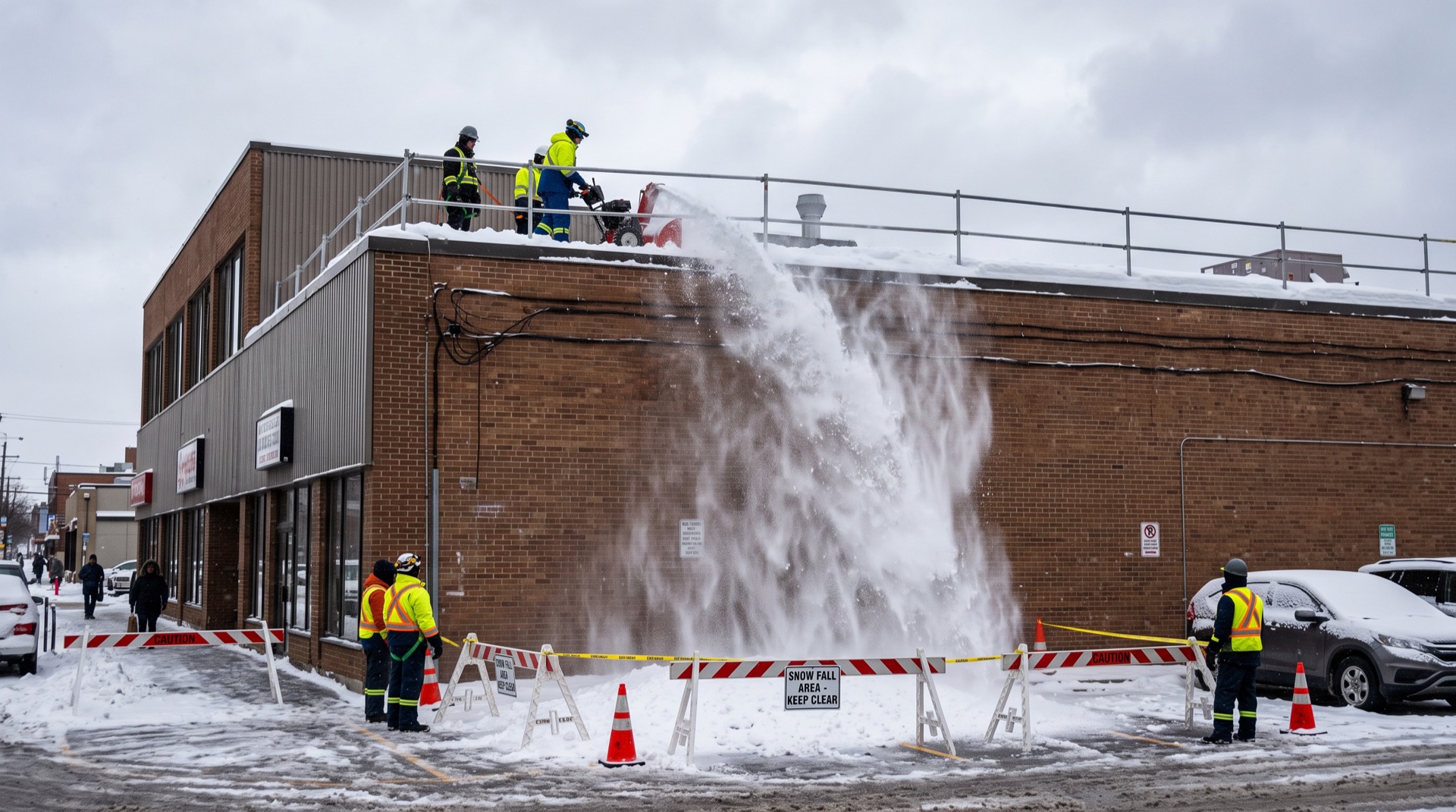
Ice dams are not a Hood River problem so much as an Oregon one, and they show up on the same handful of eaves and valleys year after year. As part of our complete Hood River winter roof services, crews handle commercial ice dam removal across Hood River County.
Hood River Ice Dams: Melting on Days It Never Thaws
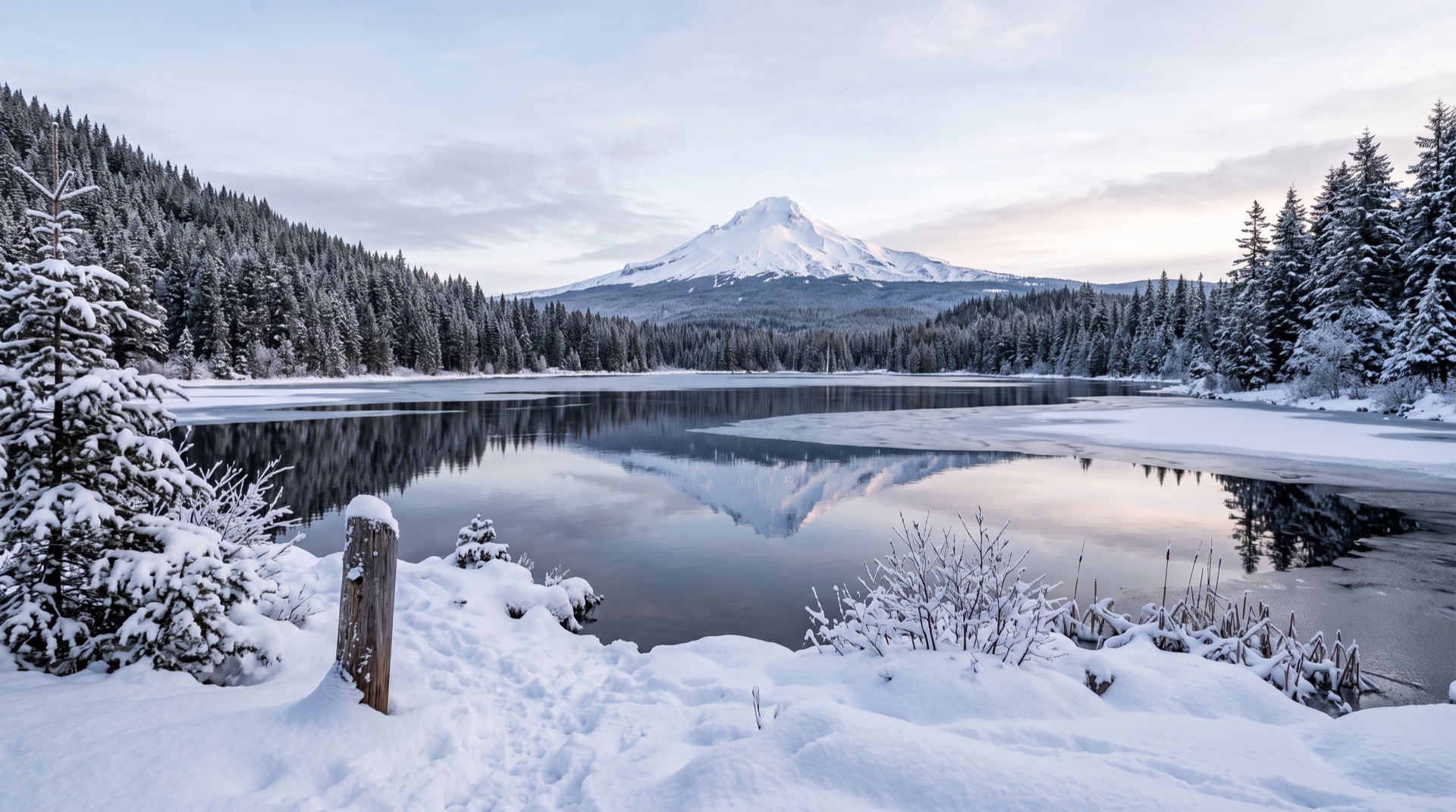
The pack at this elevation is deep enough to act as its own insulation, which means the surface melts under sun while the base stays locked. Water released at the top has to travel through and under all of it.

Aspect decides which eaves suffer. A sunny plane sheds water across a roof in Hood River to a shaded eave that has not been above freezing for weeks, and that is where the ice builds into a wall.
Ice-barrier practice in Hood River County
Design snow loads up here are among the highest in the country, and the membrane and retention details that come with them are not paperwork. On an older Hood River cabin neither is likely to be present.
Commercial Ice Dam Removal in Hood River: How The Work Runs
Access control, hatches and escorts
Getting onto a commercial roof is a procedure: keys or fobs, a hatch that may be padlocked, a ladder in a locked plant room, sometimes a site induction and an escort for the duration.
Sorting that out with the property manager in advance is the difference between a crew starting at seven and a crew waiting in the parking lot until nine. Where a tenant controls the only access, that conversation happens before the dispatch rather than on the roof.
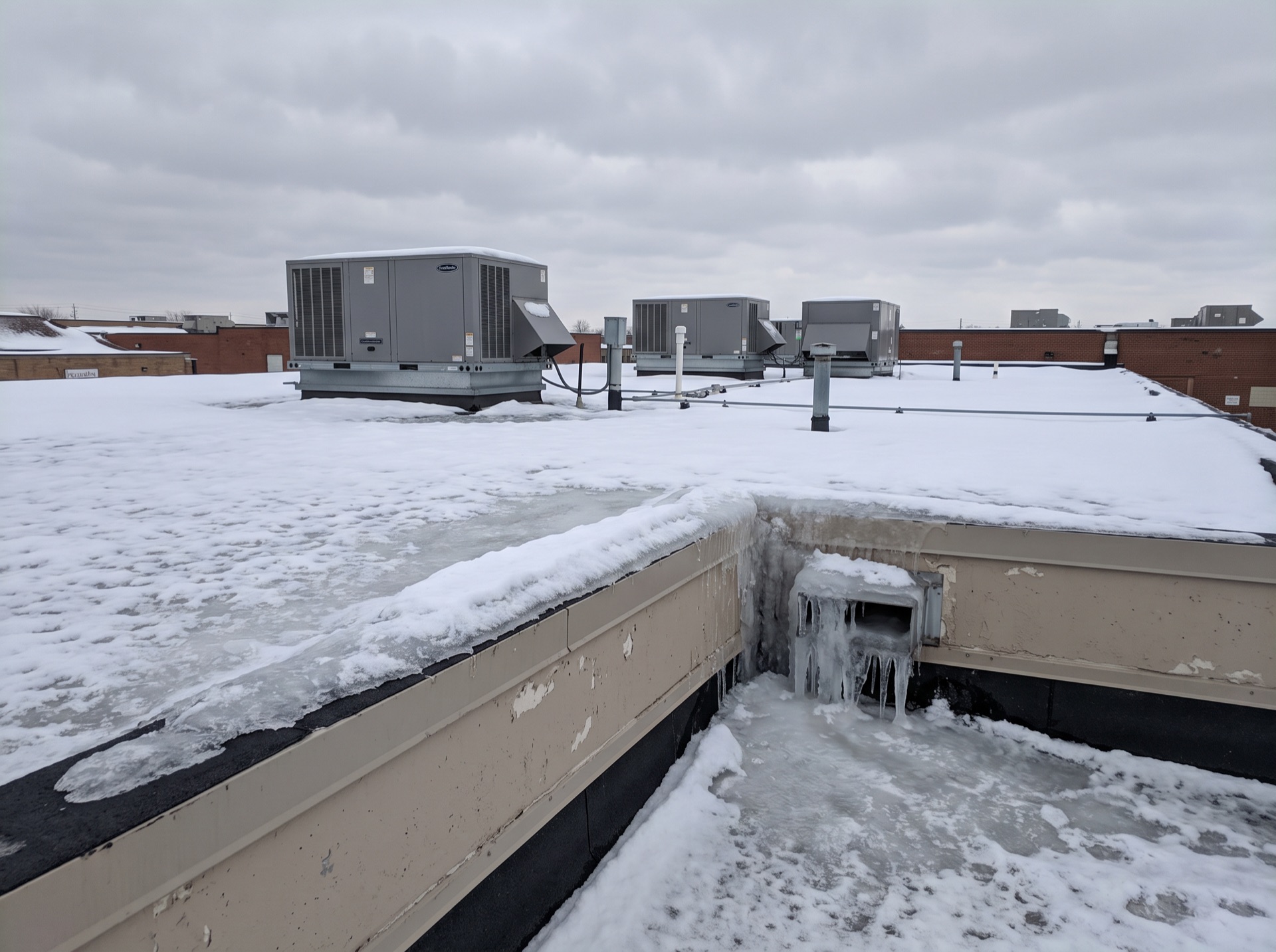
Overflow scuppers are the tell
Water running out of an overflow scupper in winter means the primary drains are not taking it. On a Hood River building that is a sign the roof is holding standing water somewhere above a frozen drain, and the load is being carried rather than shed.
Scuppers are checked first for exactly that reason, and a dry scupper above a wet roof is as informative as a running one.
What the board or the owner gets
A condition report with dated photographs, what was found, what was done and what is still a risk — in a form that can go to a board, an owner or a carrier without being rewritten.
For a managed Hood River property that document is usually the reason the spend gets approved without a second conversation.
Membrane-safe means something specific
EPDM, TPO and modified bitumen all tolerate steam at low pressure and none of them tolerate chipping, scraping or a pressure washer. Crews steam the drains and scuppers open first to restore flow, then work the ponded ice, and they stay off seams and flashing details with the lance.
Mechanical units, conduit runs, solar racking and safety railing all get worked around rather than over.
Insulation above the deck changes the melt pattern
A modern commercial assembly puts most of its insulation above the deck, so very little building heat reaches the membrane. That is good for energy and it means the snow that lands mostly stays - the roof does not self-clear the way an under-insulated one does.
Where dams do form on those roofs it is almost always at a thermal bridge: a parapet, a curb, a drain bowl or a line of fasteners. Those are the spots crews work first.
What you get in Hood River
- Documentation for the boardCondition report and photo record with every invoice
- EPDM, TPO and mod-bitLow-pressure steam only, seams and flashing details avoided
- Drains and scuppers firstFlow restored before the ponded ice is worked
| Typical scope | Steam, 8-16 crew hours typical |
|---|---|
| Coverage area | Hood River and Hood River County |
| Removal method | Low-pressure steam only. No chipping, salt or pressure washing. |
| Primary climate stressor | Solar melt on deep pack, shaded eaves |
| Local ice-barrier practice | Extended membrane plus snow retention |
| Dispatch window | 24 to 48 hours in mountain terrain |
| Documentation | Dated before and after photos, written scope in Xactimate line items |
Where We Dispatch Around Hood River
Crews working Hood River cover the adjoining communities on the same route — Odell, Mosier and Mount Hood Parkdale — so a storm week usually means one truck handling several addresses in Hood River County rather than separate trips.
Nearest hub towns with their own commercial ice dams pages: Government Camp (Mt. Hood), Gresham, Oregon City, Portland, Lake Oswego, Tigard.
Hood River sits inside the regular Oregon service area, so a crew is usually scheduled the same day or the following morning.
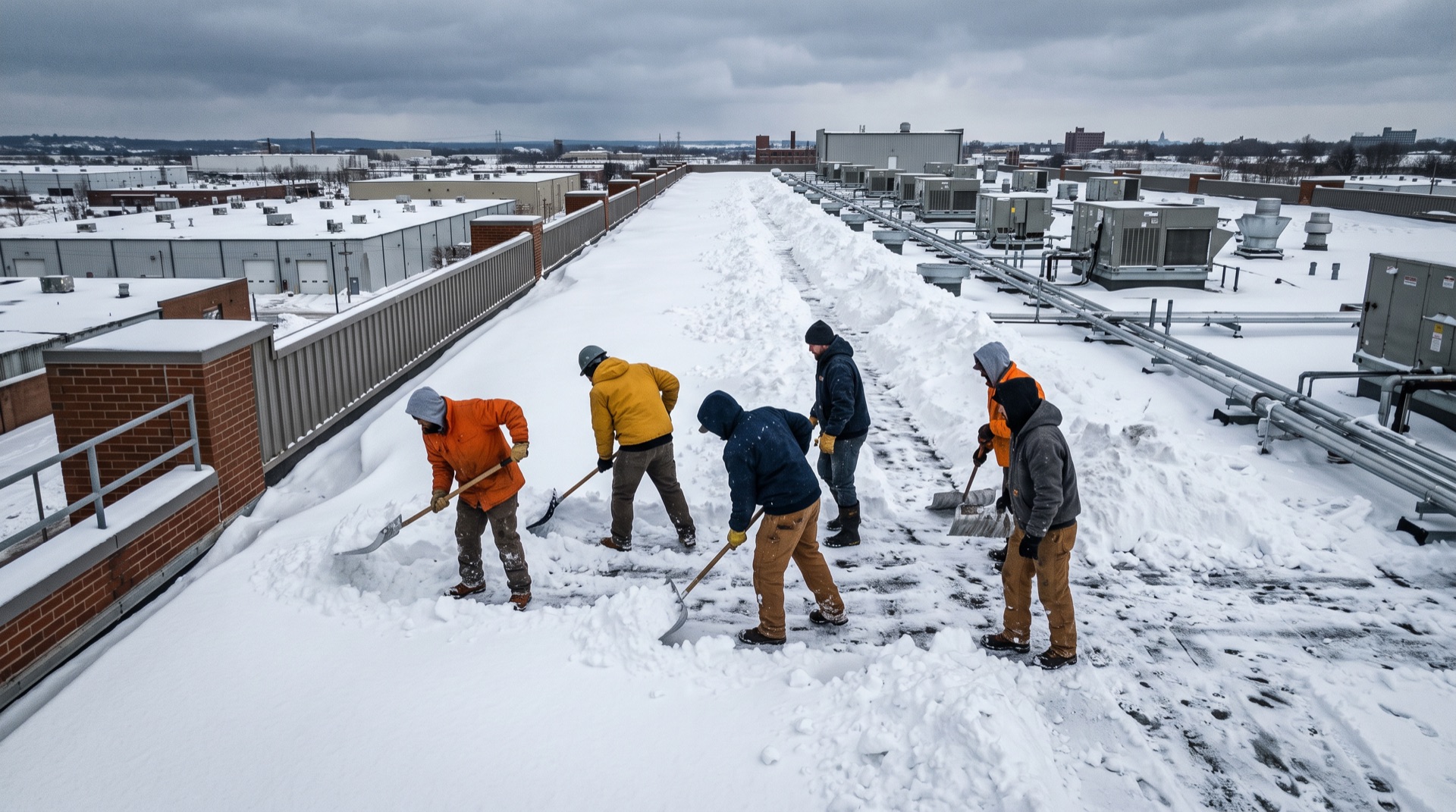
Most jobs do not stop at one service. Commercial Ice Dams in Hood River often runs alongside commercial roof snow removal in Hood River, and both get written into one scope rather than billed as separate visits.
Active leak right now? Our 24/7 Hood River steam ice dam removal crews are dispatched first during a freeze event. Call (888) 561-9664.