



Why Lake Oswego Roofs Dam Up: Altitude Sun on a Deep Pack
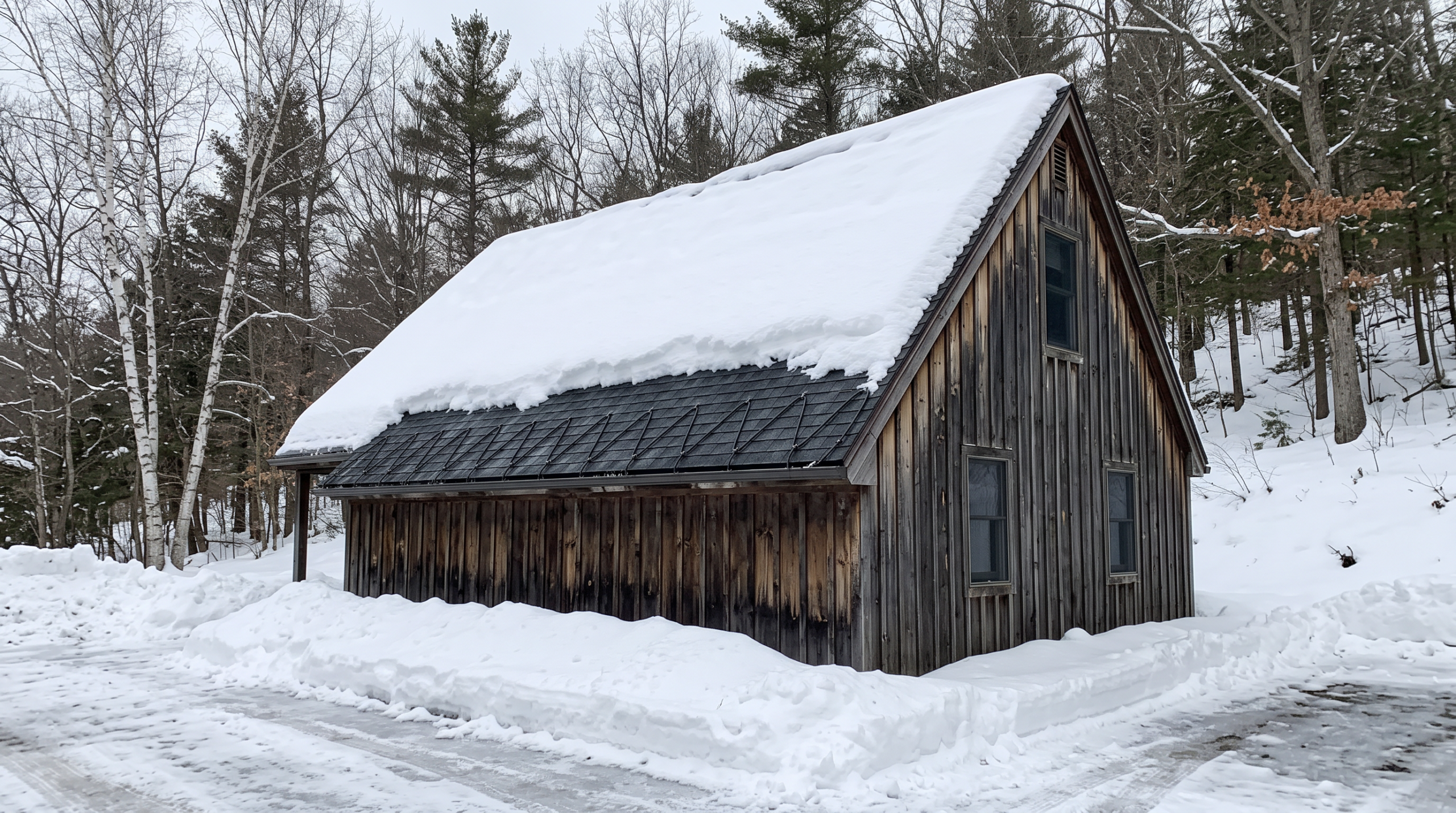
The pack at this elevation is deep enough to act as its own insulation, which means the surface melts under sun while the base stays locked. Water released at the top has to travel through and under all of it.

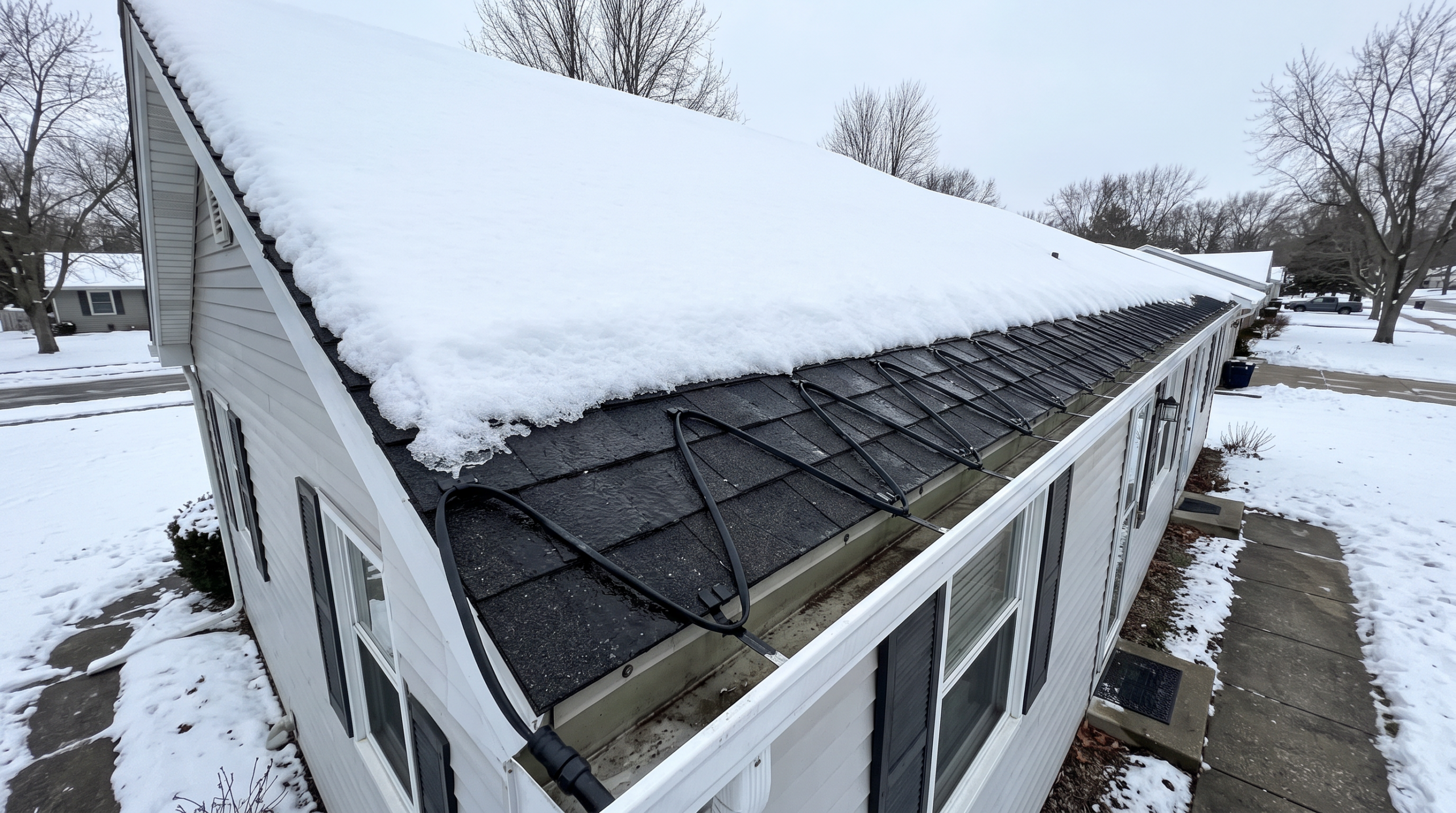
That is why mountain roofs dam up on clear, cold weeks that look harmless. South and west faces melt, north-facing eaves and shaded valleys hold the ice, and the pack above keeps feeding it.
Ice-barrier practice in Clackamas County
Design snow loads up here are among the highest in the country, and the membrane and retention details that come with them are not paperwork. On an older Lake Oswego cabin neither is likely to be present.
How We Work a Lake Oswego Ice Dam
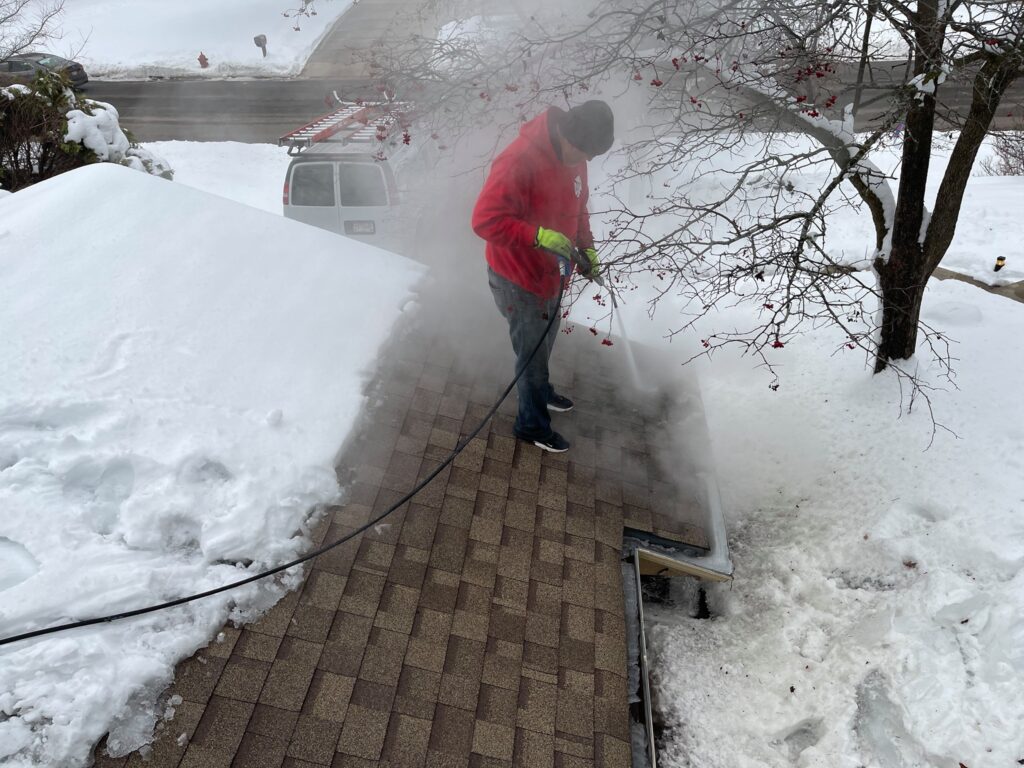
Nothing gets touched until the roof has been walked and photographed. The crew finds every dam, locates where water is getting in, shows you, and gives you the crew-hour rate and a time estimate before the equipment comes off the truck.
Removal then works from the worst point outward, so water starts draining early rather than at the end. Gutters and downspouts frozen solid get steamed through in the same visit — leaving them means the eave dams again within days.
Steep, high and awkward Lake Oswego roofs
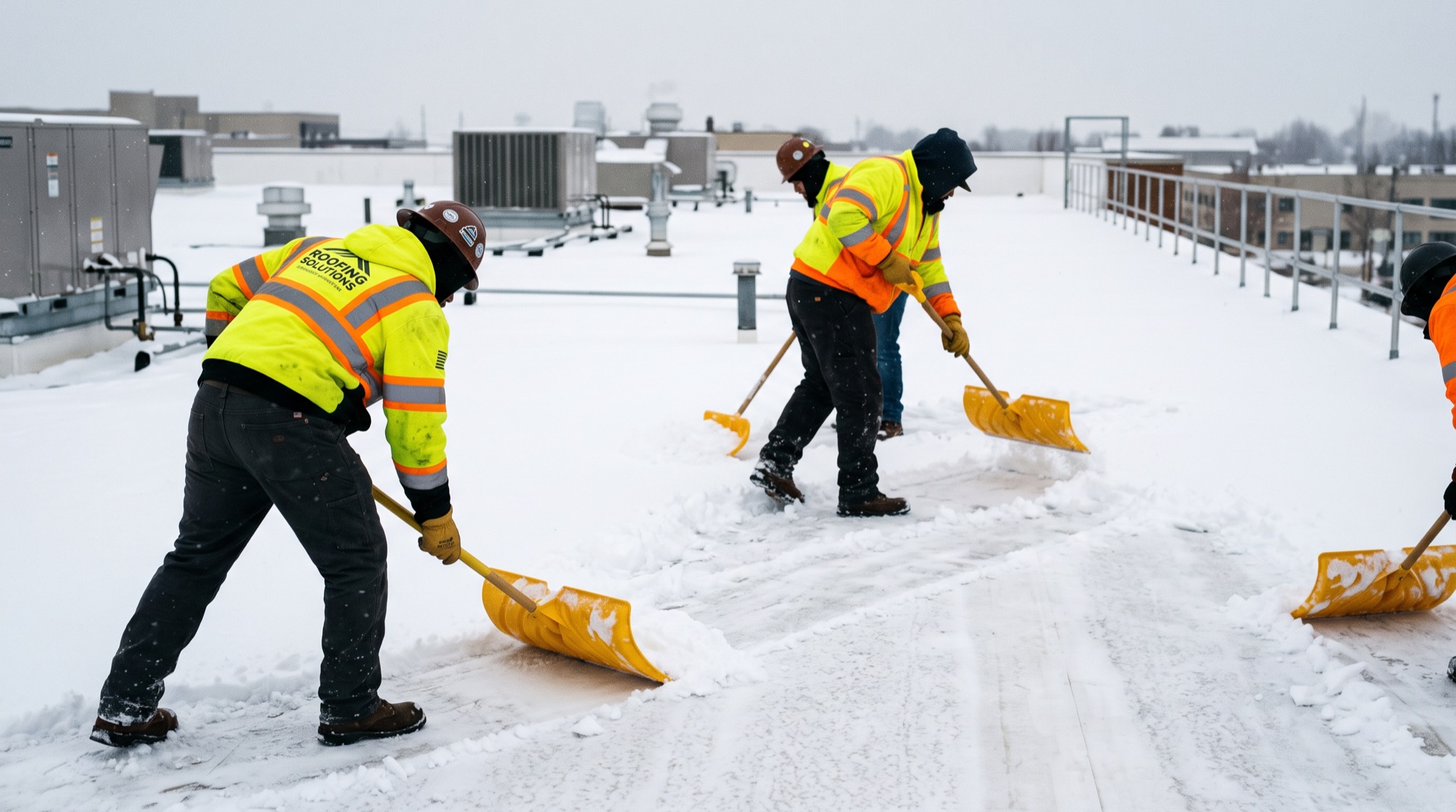
Pitch and height change the job more than ice thickness does. A walkable ranch eave is a ladder and a lance. A three-story roof with a steep pitch means anchors, rope, staging and two people where one would otherwise do.
Crews quote on that honestly. If a property in Lake Oswego needs a longer setup, it is said on the phone rather than discovered at the end of the invoice.
Working at night and during an active storm
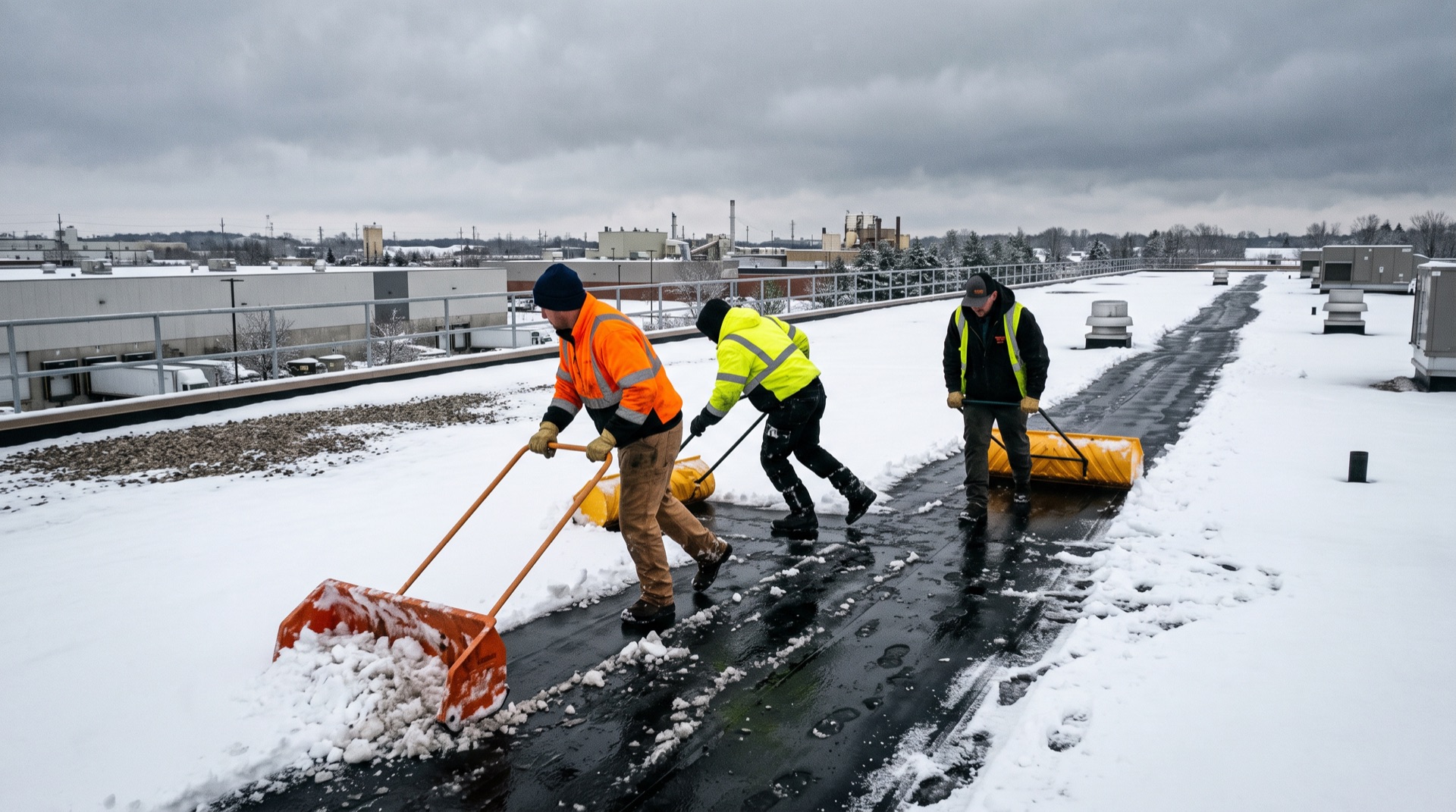
Freeze events do not keep office hours, and the worst leaks tend to announce themselves in the evening when the day's melt refreezes. Crews run lit, and a roof that is actively collecting snow is worked anyway, because waiting for better weather means the dam is bigger when somebody finally gets to it.
What does stop a crew is wind and lightning. Both are judgment calls made on site in Lake Oswego, and a postponed start gets explained rather than dressed up.
What gets photographed, and why it matters later
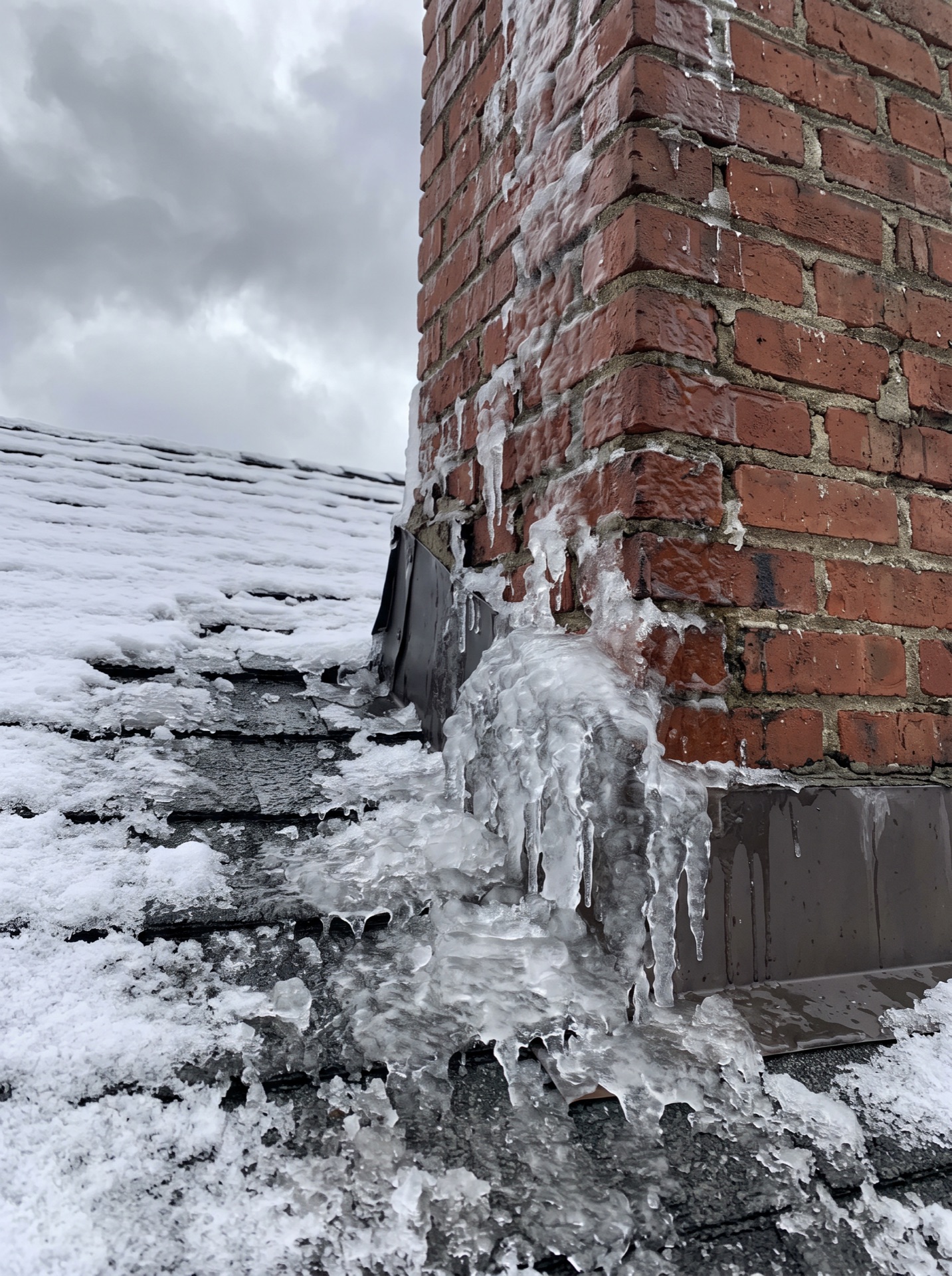
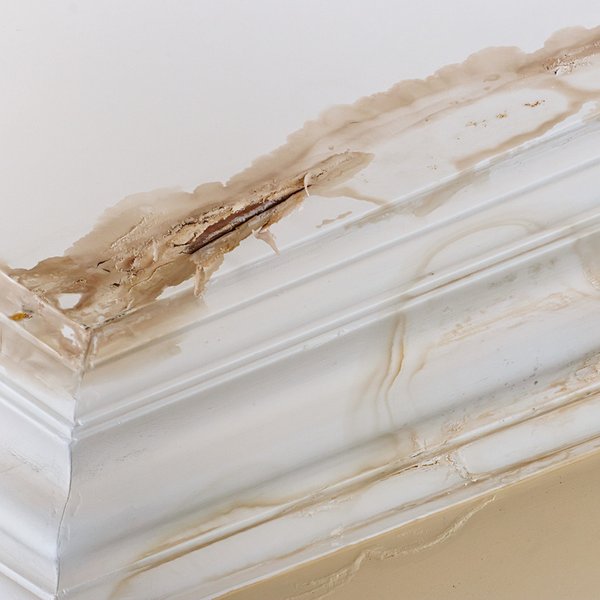
Before the lance comes out, the crew shoots the dam from the ground and from the roof, the icicle line, any staining visible inside, and the specific courses where water is tracking under the shingles. Timestamps are on every frame.
That record is the whole case if a claim follows. An adjuster arriving in March sees a dry roof and a stained ceiling; the photographs are what connect the two, and they are what a maintenance-exclusion denial runs into.
| Documentation | Dated before and after photos, written scope in Xactimate line items |
|---|---|
| Service | Ice dam removal in Lake Oswego, OR |
| Removal method | Low-pressure steam only. No chipping, salt or pressure washing. |
| Dispatch window | 24 to 48 hours in mountain terrain |
| Typical scope | Steam, 8-16 crew hours typical |
| Local ice-barrier practice | Extended membrane plus snow retention |
| Primary climate stressor | Solar melt on deep pack, shaded eaves |
Lake Oswego Coverage and the Adjoining Communities
Crews working Lake Oswego cover the adjoining communities on the same route — Marylhurst, West Linn, Tualatin, Gladstone and Happy Valley — so a storm week usually means one truck handling several addresses in Clackamas County rather than separate trips.
Nearest hub towns with their own crew pages: Tigard, Portland, Beaverton, Oregon City, Hillsboro, Gresham.
During a cold snap Lake Oswego gets worked alongside the neighboring Clackamas County towns on the same route, with active interior leaks moved to the front of the list.
Water through a ceiling in Lake Oswego is a same-day call, not a next-week one. (888) 561-9664 goes straight to dispatch.