Skip to content
Lakewood, OH
Structural Snow Load · Cuyahoga County

Commercial Roof Snow Removal in Lakewood, OH — Thaw‑Cycle Storm Response

Commercial Roof Snow Removal in Lakewood, OH from Ice Dam Now: low-pressure steam only, across Cuyahoga County. No chipping, no salt, no pressure washing. Crews carry licensing, insurance and fall-protection certification, bill by the crew hour at a rate quoted on the phone, prioritize active interior leaks the same day, and document the work for insurance.

Drift-point survey — Depth and density measured where it collects, not where it is convenient
One invoice per site — Multi-building properties scoped and billed together
Overflows opened first — Drains and scuppers cleared before the load comes off
Portfolio routes — Standing storm schedules with per-visit condition reports

Get Ice Dam Help Lakewood

A few quick questions, then pick a time. If water is coming in, call instead.

What is the zip code of the home?

Roof leaking right now? Call (888) 561-9664 — that is faster than any form.
Water coming through the ceiling?Every hour an ice dam sits there, more water gets under the shingles.Call (888) 561-9664
Same Day
For Water Already Inside
Steam
Safe On Every Covering
Cuyahoga
County Coverage
Insured
Harness-Certified On Every Roof
Written
Scope Before Work Starts

By the time a roof in Lakewood has a visible ridge of ice at the eave, meltwater has already been pooling behind it for several freeze-thaw cycles. As part of our complete Lakewood winter roof services, crews handle commercial roof snow removal across Cuyahoga County.

Why Lakewood Roofs Dam Up: Cycling, Not Snowfall Totals

An ice dam needs meltwater and a cold eave, and Lakewood supplies both on an ordinary week. A thin cover that melts by lunchtime and sets again after dark is a perfectly good dam factory.

Diagram showing how ice dams form on roofs due to inadequate insulation and poor ventilation
Heat escaping into the attic melts roof snow; the meltwater refreezes at the cold eave and the dam grows a layer every cycle.

The expectation is the problem. Nobody in Lakewood re-roofs with ice dams in mind, so when a cycling stretch arrives the houses with the least margin all leak in the same week.

Ice-barrier practice in Cuyahoga County

Because ice is not the first thing a homeowner in Lakewood thinks about, the eave membrane is the detail most often value-engineered out of a re-roof quote. It is worth asking for by name.

Commercial Roof Snow Removal in Lakewood: How The Work Runs

Reduction to a threshold, not a bare deck

The goal is bringing the load under the structure's capacity safely, with a cushion layer left on the membrane throughout. Ceiling Sagging or Bulging After Snow.

Scraping a commercial Lakewood roof to bare membrane costs more, takes longer and risks the roof covering for no structural benefit.

Unbalanced loading is the real hazard

Snow does not settle evenly on a large deck. It piles against parapets, behind rooftop units, in the lee of a higher adjoining roof and in the valleys between bays.

Clearing has to be balanced for the same reason. Taking it all off one bay and none off the next shifts the load rather than removing it.

Fall protection on a deck with no anchors

Most commercial roofs have no permanent anchor points and a parapet too low to count as a guard. Working near an unprotected edge legally requires a system, and improvising one is where people get hurt.

Crews bring mobile anchors, warning lines and whatever the layout actually needs. Where the roof cannot be worked safely at all, that gets reported to the Lakewood property manager as a finding, because it will be just as true during the next storm.

The cost of a shutdown against the cost of a clear

Clearing a large deck is a real number and it is easy to defer. The comparison that matters is not clearing against nothing, it is clearing against the day the building is closed while an engineer inspects it - lost trade, displaced tenants, and an insurer asking what was done beforehand.

The load reading is what makes that decision for you rather than a feeling about how deep the snow looks.

Drains and overflows come first

Before anything else comes off, the drains, scuppers and overflow outlets get opened. Otherwise the melt from the clearing has nowhere to go and the roof trades a snow problem for a ponding one.

On a deck in Lakewood with internal drains that means confirming flow below, not just clearing the grate.
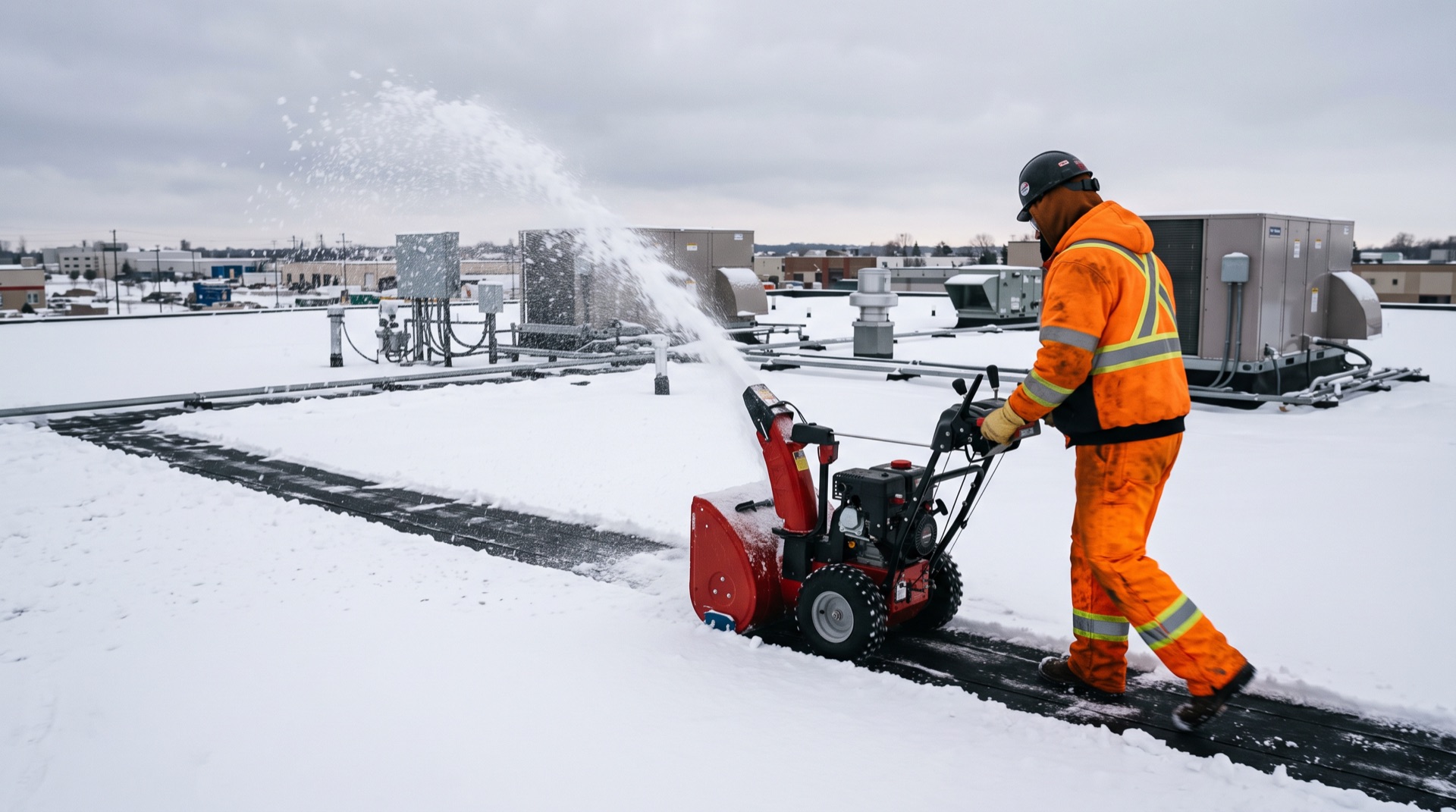
Worker in orange safety gear using snow blower on commercial flat roof
A maintenance worker clears heavy snow from a commercial flat roof using a gas-powered snow blower.

What you get in Lakewood

  • Drift-point surveyDepth and density measured where it collects, not where it is convenient
  • Balanced reductionLoad brought under threshold without shifting it onto one bay
  • Portfolio routesStanding storm schedules with per-visit condition reports
Commercial Roof Snow Removal in Lakewood, OH — specification
Service specification for Lakewood, OH
ServiceCommercial Roof Snow Removal in Lakewood, OH
Coverage areaLakewood and Cuyahoga County
Local ice-barrier practiceEave membrane on new work, often absent
Primary climate stressorRepeated thaw-freeze cycling
Dispatch windowSame day to 24 hours
Typical scopeSteam, 4-8 crew hours typical
DocumentationDated before and after photos, written scope in Xactimate line items

Where We Dispatch Around Lakewood

Crews working Lakewood cover the adjoining communities on the same route — Rocky River, Brook Park, Bay Village, Berea and Olmsted Falls — so a storm week usually means one truck handling several addresses in Cuyahoga County rather than separate trips.

Nearest hub towns with their own commercial snow pages: Cleveland, Parma, Westlake, North Olmsted, Garfield Heights, Avon Lake.

Coverage runs across Lakewood and the nearby towns all winter, and capacity is surged into whichever Ohio market the storm actually hits.

Most jobs do not stop at one service. Commercial Snow in Lakewood often runs alongside crane-assisted snow removal in Lakewood, and both get written into one scope rather than billed as separate visits.

Active leak right now? Our 24/7 Lakewood steam ice dam removal crews are dispatched first during a freeze event. Call (888) 561-9664.
Conditions We Work In

Commercial Roof Snow Removal In Practice

Conditions crews work in across Cuyahoga County. Every job is photographed before and after.

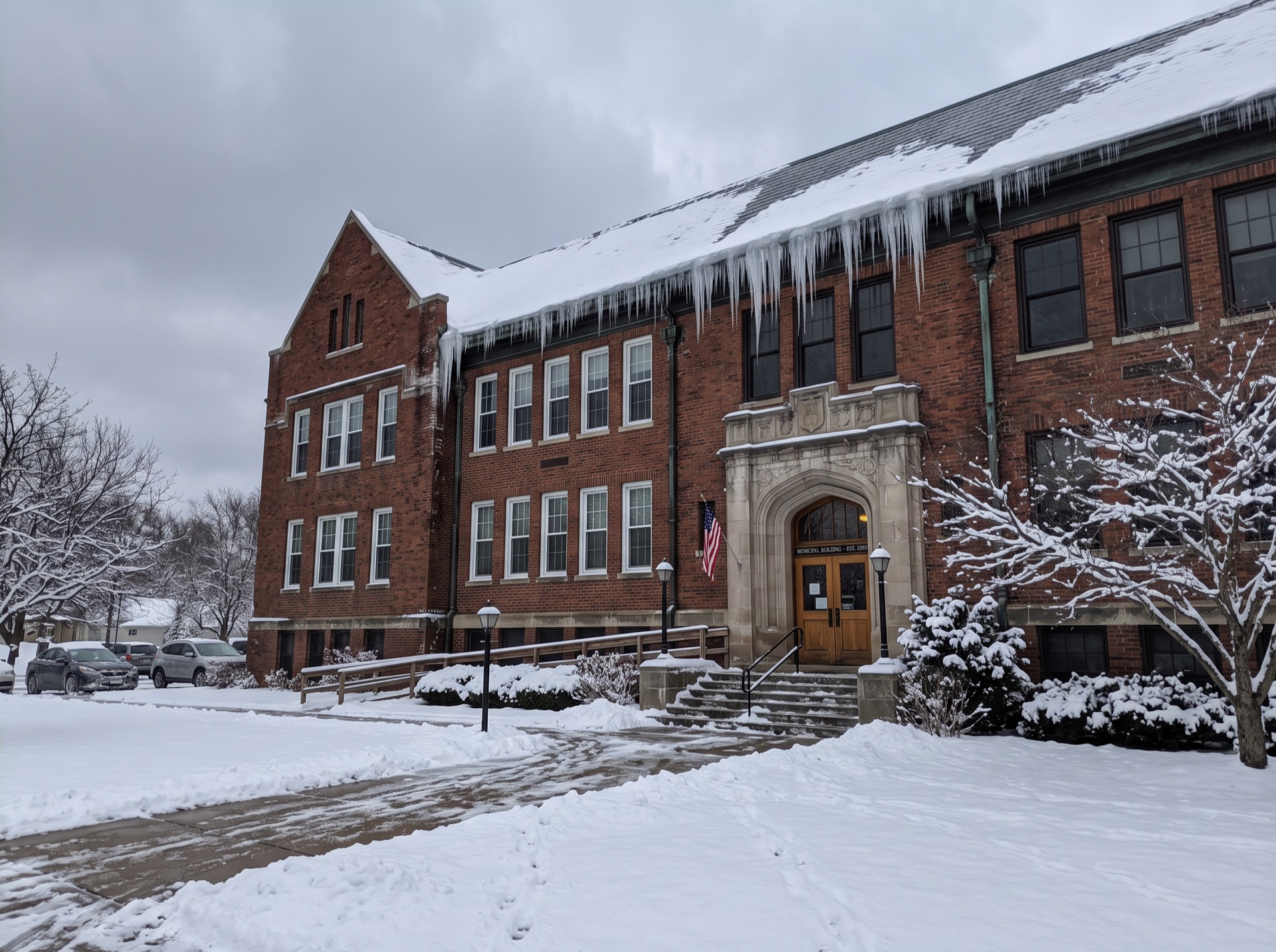
Large icicles hanging from brick municipal building roofline covered in snow
Massive icicles form along the roofline of a historic brick municipal building after a heavy winter snowfall.
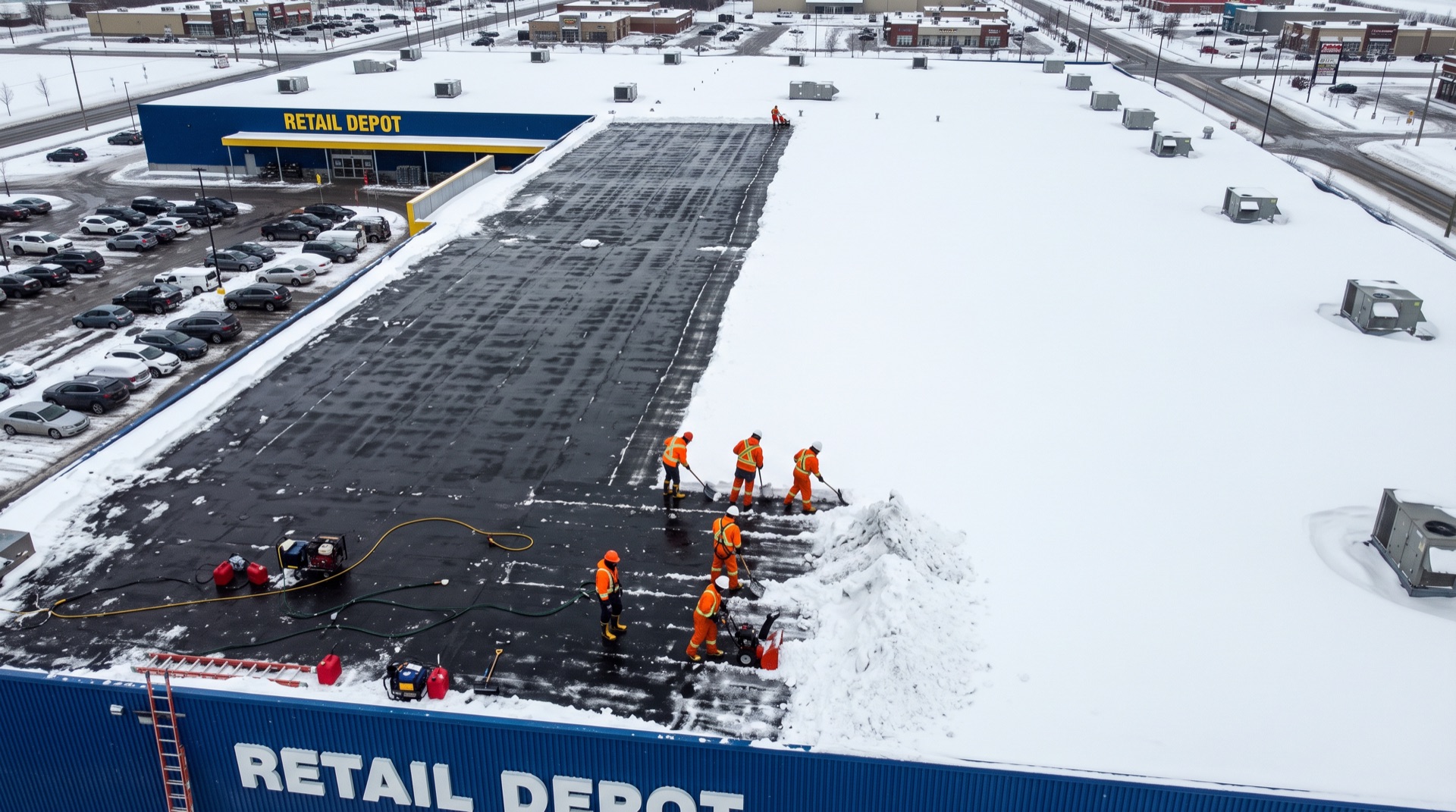
Workers in high-visibility gear clearing snow from a large retail store rooftop
A crew of workers removes heavy snow from the flat roof of a Retail Depot big-box store.
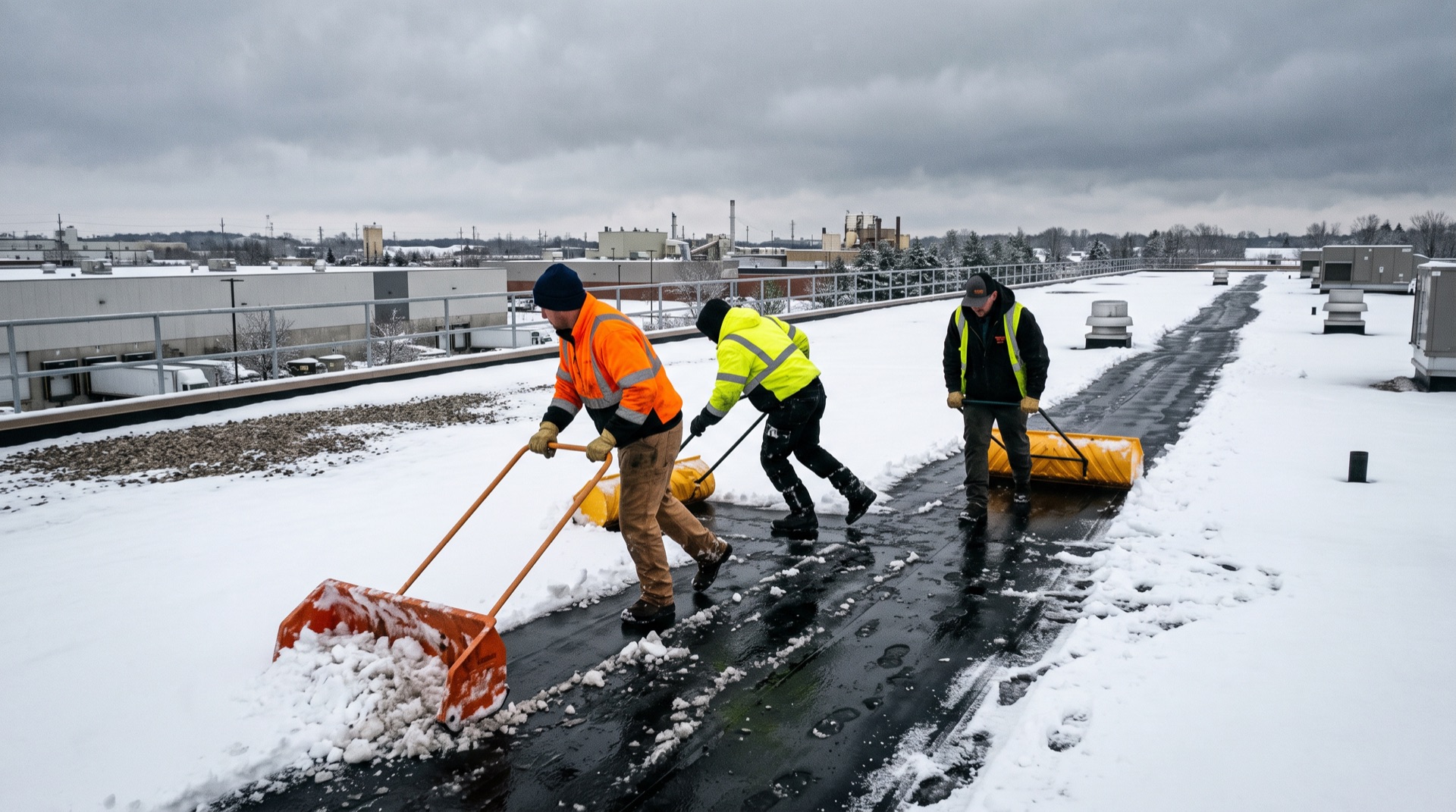
Three workers in high-visibility vests pushing snow off a flat warehouse roof
A three-person crew uses push plows to clear heavy snow from a large commercial flat roof.
FAQ

Lakewood Questions We Actually Get Asked

It is billed by the crew hour, and the rate plus a realistic time estimate are quoted on the phone before anyone is dispatched.

  • Scope drives the hours: length and thickness of the ice, roof pitch and height, and whether the gutters are frozen solid.
  • Access matters too — a three-story Lakewood roof takes longer to set up on than a ranch.
  • The invoice matches the quote. There are no surprise add-ons written on the tailgate.

Tell the crew. Chipping marks change what the roof needs and they matter for the claim.

  • Cracked shingles and punctures get photographed and reported rather than steamed over.
  • Damage caused by removal attempts is treated differently by carriers than storm damage.
  • It is extremely common and nobody is going to lecture you about it.

Yes. Steam is safe on slate, cedar shake, tile and metal as well as asphalt, because it removes ice with heat rather than force.

  • Older Lakewood housing stock with original slate is exactly where chipping does the most damage.
  • Crews adjust the lance distance and dwell rather than the pressure.
  • Nothing mechanical touches the covering at any point.

Because ice dams are made by heat loss, and two houses on the same street rarely leak heat the same way.

  • Attic air leaks around can lights, bath fans and the attic hatch are the usual source.
  • Crushed or missing soffit baffles stop the intake ventilation that would otherwise keep the deck cold.
  • An addition or dormer built over unheated space puts warm air right against a cold eave.
  • Local factor: repeated thaw-freeze cycling makes the difference show up faster here than it would further south.

Only where there is interior damage to document or dry. Pure exterior removal happens entirely from outside.

  • If water has come in, seeing it is what makes the claim documentation worth anything.
  • Attic access helps identify the heat source but is not required for removal.
  • Nobody needs to be home for exterior-only work, provided access and payment are arranged.

Depth and density readings, the calculated load per square foot and dated photographs, yes - taken across the roof rather than at one convenient spot. Certifying a structure against those numbers is a structural engineer's signature, and where the readings warrant one that gets said plainly.

When the measured load approaches a meaningful fraction of design capacity, when rain is forecast onto an existing pack, when drifting has loaded one area far more than the rest, or when the drains have stopped taking water. Depth alone is a poor trigger - density is what matters, and that needs measuring.

Nearby

Commercial Snow In Towns Around Lakewood

Same-Day Response

Get A Lakewood Crew Out

The cost of a steam visit does not change much from one week to the next. The cost of the water damage behind the dam does.

✓ Licensed & insured✓ Low-pressure steam only✓ Rate quoted up front✓ Photos for your claim
Online Quote(888) 561-9664