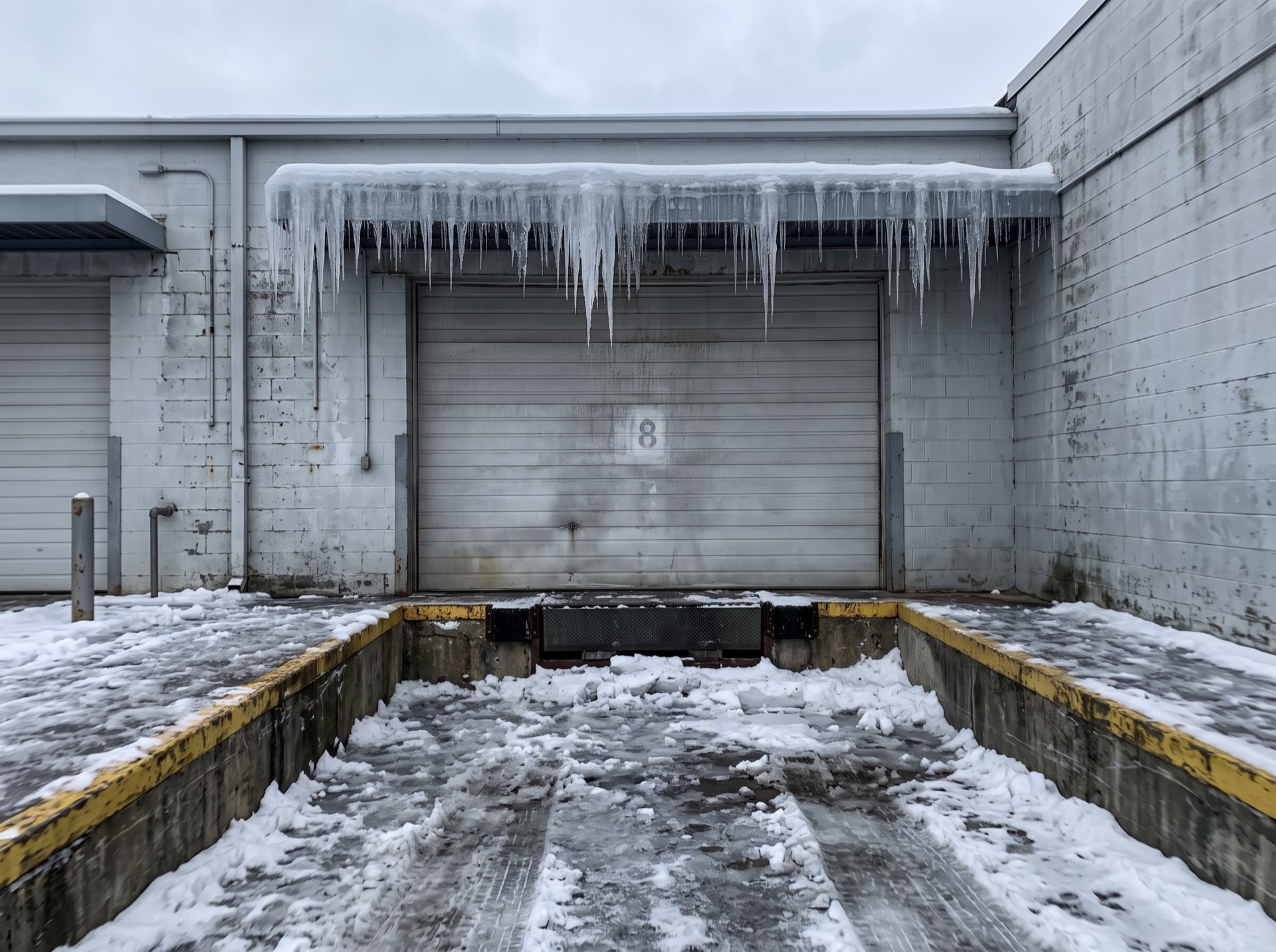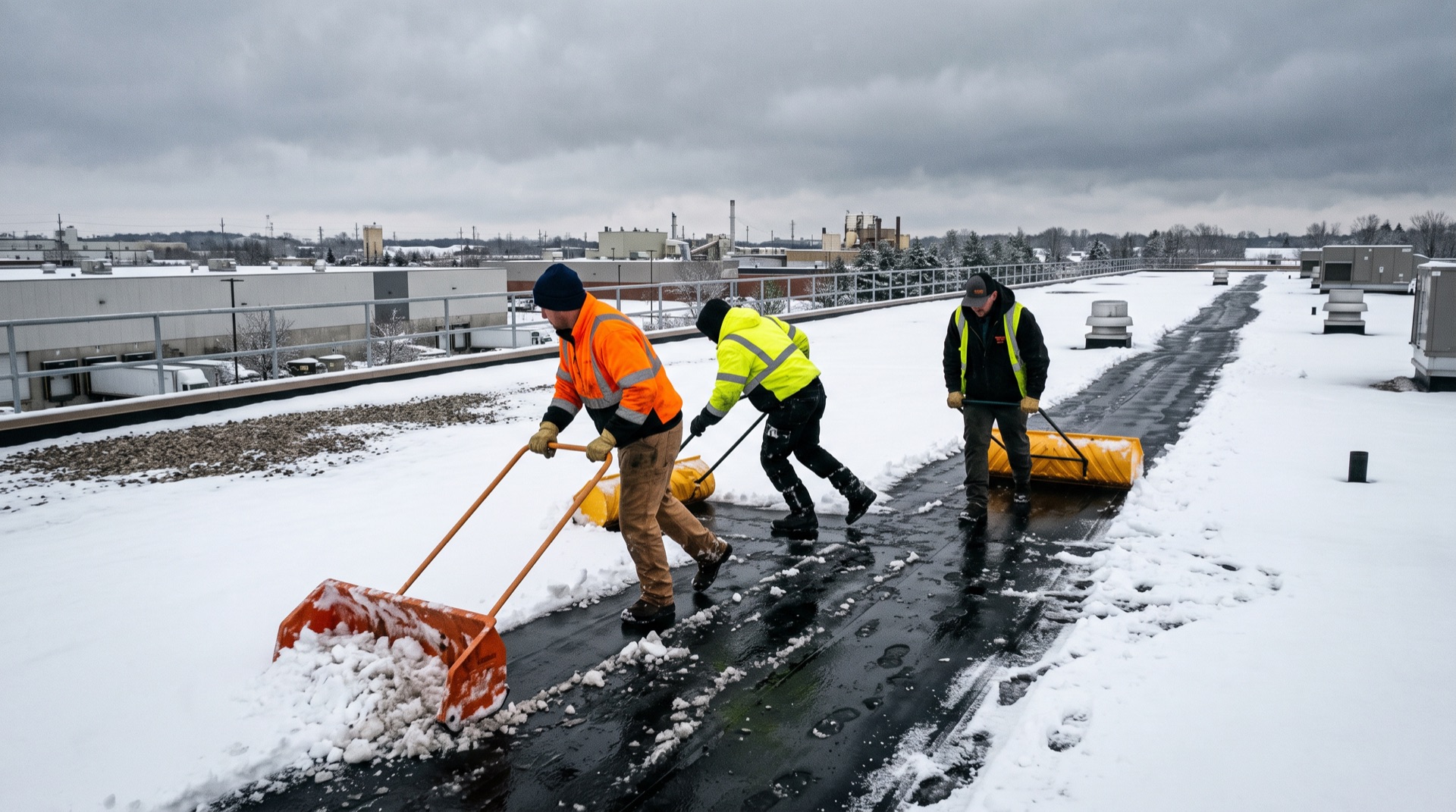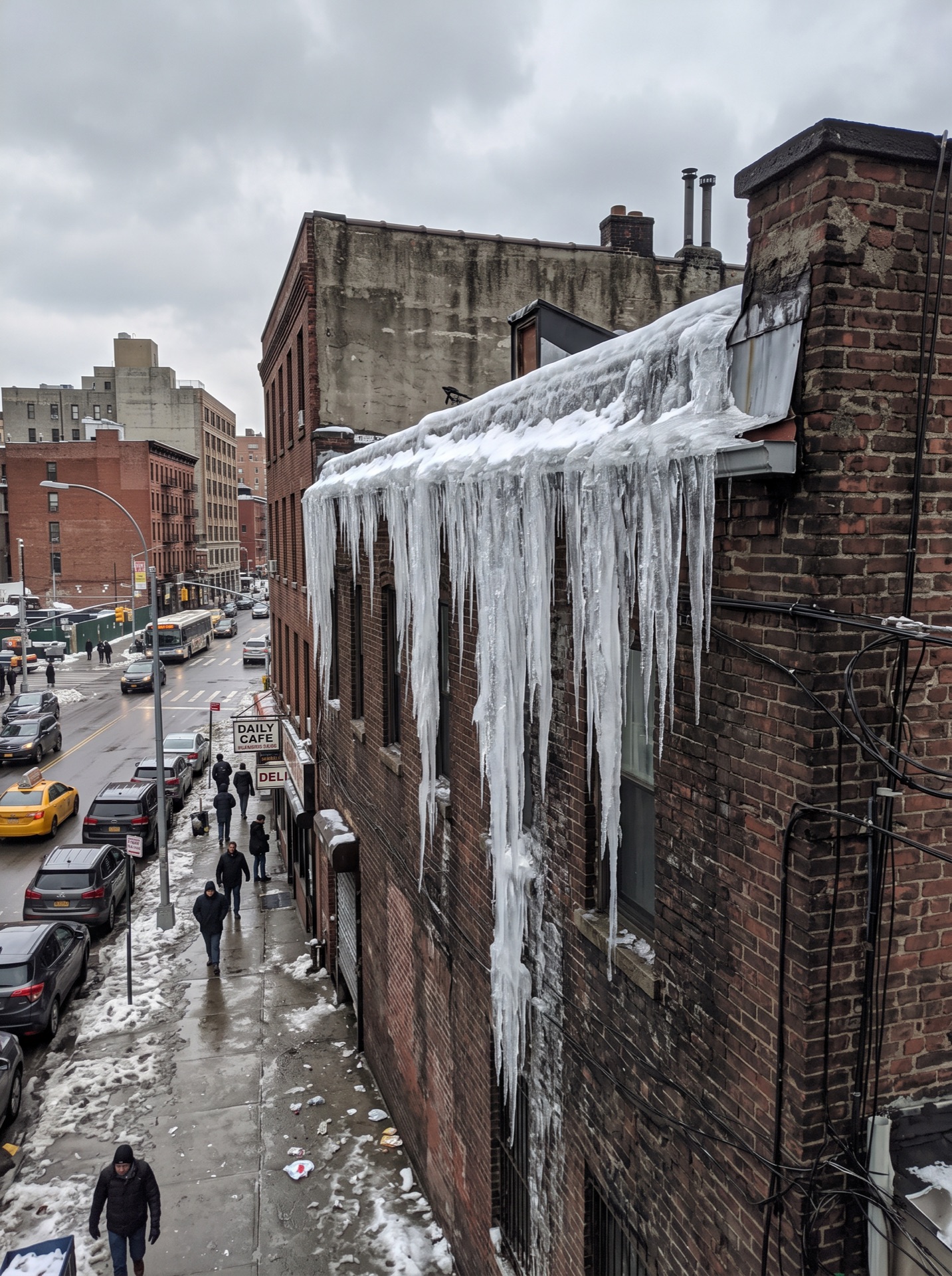
Cuyahoga County sees the same pattern every winter: snow on the roof, warm air in the attic, and a line of ice building along the eave where the two meet. As part of our complete Cleveland Heights winter roof services, crews handle commercial ice dam removal across Cuyahoga County.
The Cuyahoga County Trap: Modest Snow, Constant Cycling
What catches people out in Cuyahoga County is that the snow looks harmless. Two or three inches reads as nothing, and it builds ice on an eave just as effectively as a northern storm given enough cycles.

That is the part homeowners miss. Total snowfall here is modest compared with the northern belt, so roofs in Cuyahoga County are often built and insulated as though ice is not a concern. Then a cycling week in January finds every weak eave at once.
Ice-barrier practice in Cuyahoga County
Ice-barrier membrane at the eaves is required on new work under the residential code Ohio follows, but on a roof built before that it is frequently absent — and this is the region where it is most often skipped.
Commercial Ice Dam Removal in Cleveland Heights: How The Work Runs
Roof warranties and who is allowed up there
Most commercial membranes carry a manufacturer's warranty with conditions about who may work on the roof and what methods are permitted. Snow removal is generally fine; mechanical ice removal very often is not, and the wrong contractor with the wrong tool can void cover worth considerably more than the clearing.
The warranty gets read before the roof is walked, and the method used is one the document permits.
Insulation above the deck changes the melt pattern
A modern commercial assembly puts most of its insulation above the deck, so very little building heat reaches the membrane. That is good for energy and it means the snow that lands mostly stays - the roof does not self-clear the way an under-insulated one does.
Where dams do form on those roofs it is almost always at a thermal bridge: a parapet, a curb, a drain bowl or a line of fasteners. Those are the spots crews work first.
Multiple buildings on one site
Campuses, retail strips and multi-building properties get walked together and prioritized by which deck is closest to trouble, rather than worked in the order the calls came in.
One scope, one invoice, one contact. It is a meaningfully different job from nine separate ones.
Flat roofs fail differently
A pitched residential roof dams at the eave. A commercial deck dams at its drainage: frozen scuppers, iced-over internal drains, and ponding that refreezes into a sheet across the low spots. Water then sits on the membrane at depth, finds a seam or a flashing detail, and comes through into the tenant space below.
Parapet walls make it worse by holding the melt on the deck instead of letting it run off an edge. By the time it shows up as a ceiling tile stain in a Cleveland Heights unit, there is usually standing water up there.
Internal drains fail differently from gutters
A residential gutter overflows when it blocks. An internal roof drain just stops, and the water stays on the deck at depth until it finds a seam, a flashing detail or a pitch pocket.
Crews open the drain throat and then confirm flow in the leader below before calling it clear. An open drain over a frozen leader is not an open drain, and on a Cleveland Heights building that distinction shows up as a tenant ceiling two floors down.
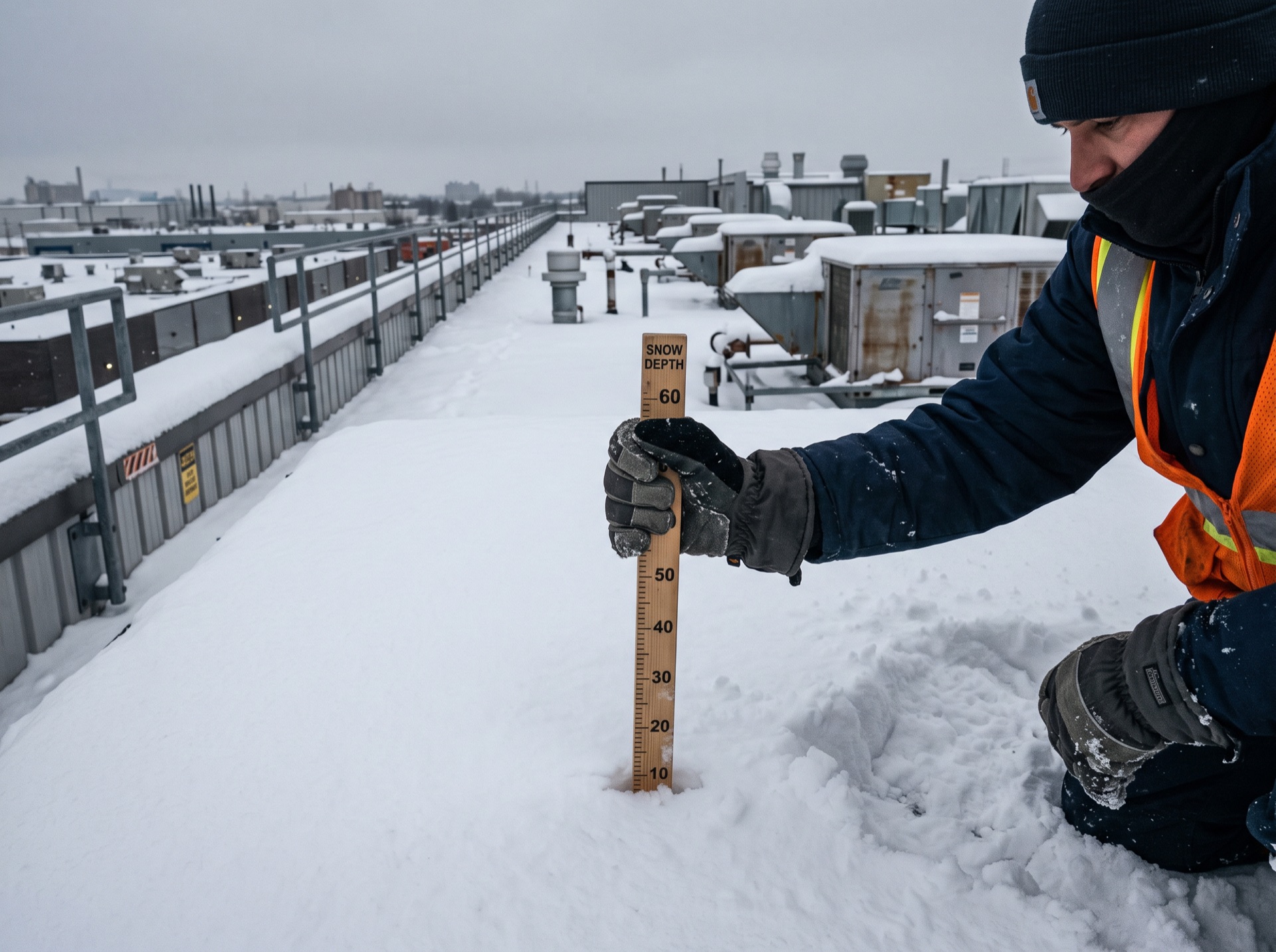
What you get in Cleveland Heights
- Overnight windows availableWork scheduled outside occupancy where access demands it
- EPDM, TPO and mod-bitLow-pressure steam only, seams and flashing details avoided
- Tenant-hours schedulingWork windows set around occupancy and access
| Removal method | Low-pressure steam only. No chipping, salt or pressure washing. |
|---|---|
| Primary climate stressor | Repeated thaw-freeze cycling |
| Local ice-barrier practice | Eave membrane on new work, often absent |
| Typical scope | Steam, 4-8 crew hours typical |
| Coverage area | Cleveland Heights and Cuyahoga County |
| Dispatch window | Same day to 24 hours |
| Pricing model | Billed by the crew hour, rate quoted before dispatch |
Cleveland Heights Coverage and the Adjoining Communities
Crews working Cleveland Heights cover the adjoining communities on the same route — Beachwood, Gates Mills, Wickliffe, Maple Heights and Bedford — so a storm week usually means one truck handling several addresses in Cuyahoga County rather than separate trips.
Nearest hub towns with their own commercial ice dams pages: Shaker Heights, Euclid, Cleveland, Garfield Heights, Parma, Lakewood.
Scheduling for Cleveland Heights tightens up during a freeze event, which is exactly when the phone beats the form. Water coming in means a call, not an email.
Most jobs do not stop at one service. Commercial Ice Dams in Cleveland Heights often runs alongside commercial roof snow removal in Cleveland Heights, and both get written into one scope rather than billed as separate visits.
Active leak right now? Our 24/7 Cleveland Heights steam ice dam removal crews are dispatched first during a freeze event. Call (888) 561-9664.