



The Euclid Problem Is the Thermometer, Not the Snowfall
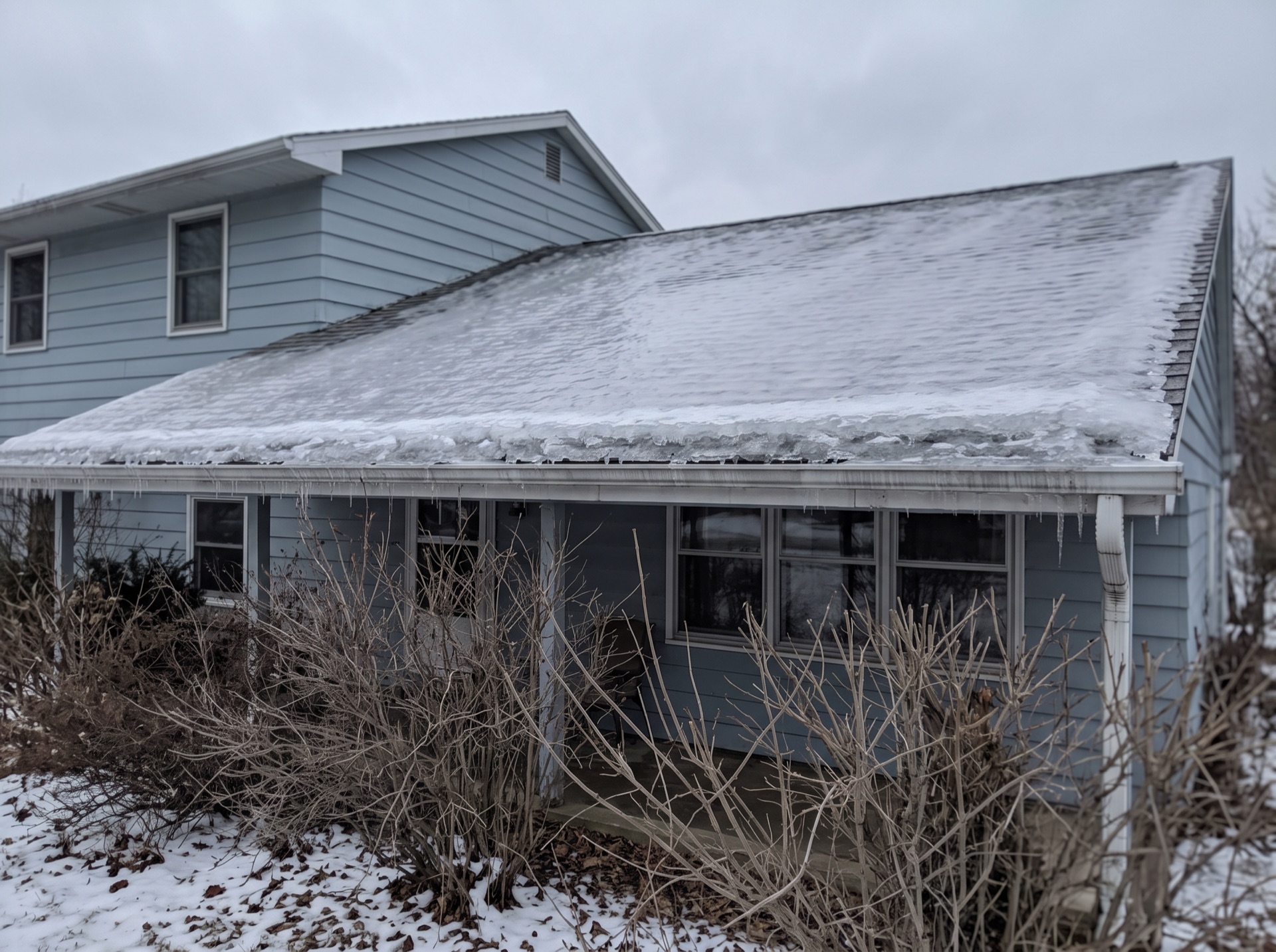
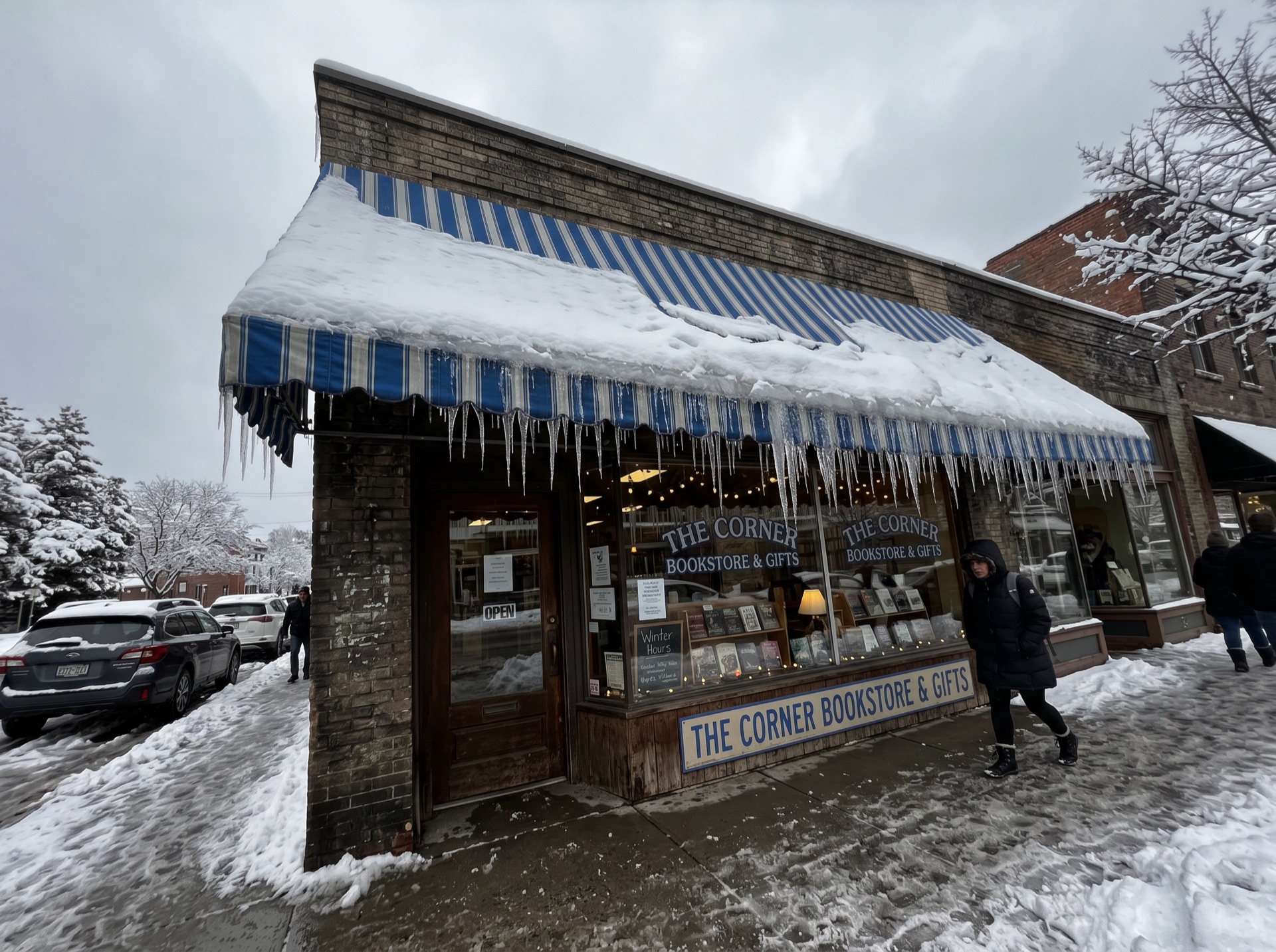
The snow totals here are unremarkable, which is exactly why Euclid roofs get caught out. An ice dam needs meltwater and a cold eave, not a record storm.

And the cycling is relentless rather than dramatic. Fifteen or twenty crossings of freezing in a season each add a layer, and the houses with the thinnest attic insulation in Cuyahoga County all find out in the same week.
Ice-barrier practice in Cuyahoga County
The residential code Ohio follows calls for eave ice barrier on new work. Enforcement in Cuyahoga County is real but recent, so the age of the roof is what decides whether it is there.
The Euclid Dispatch Process, Step by Step
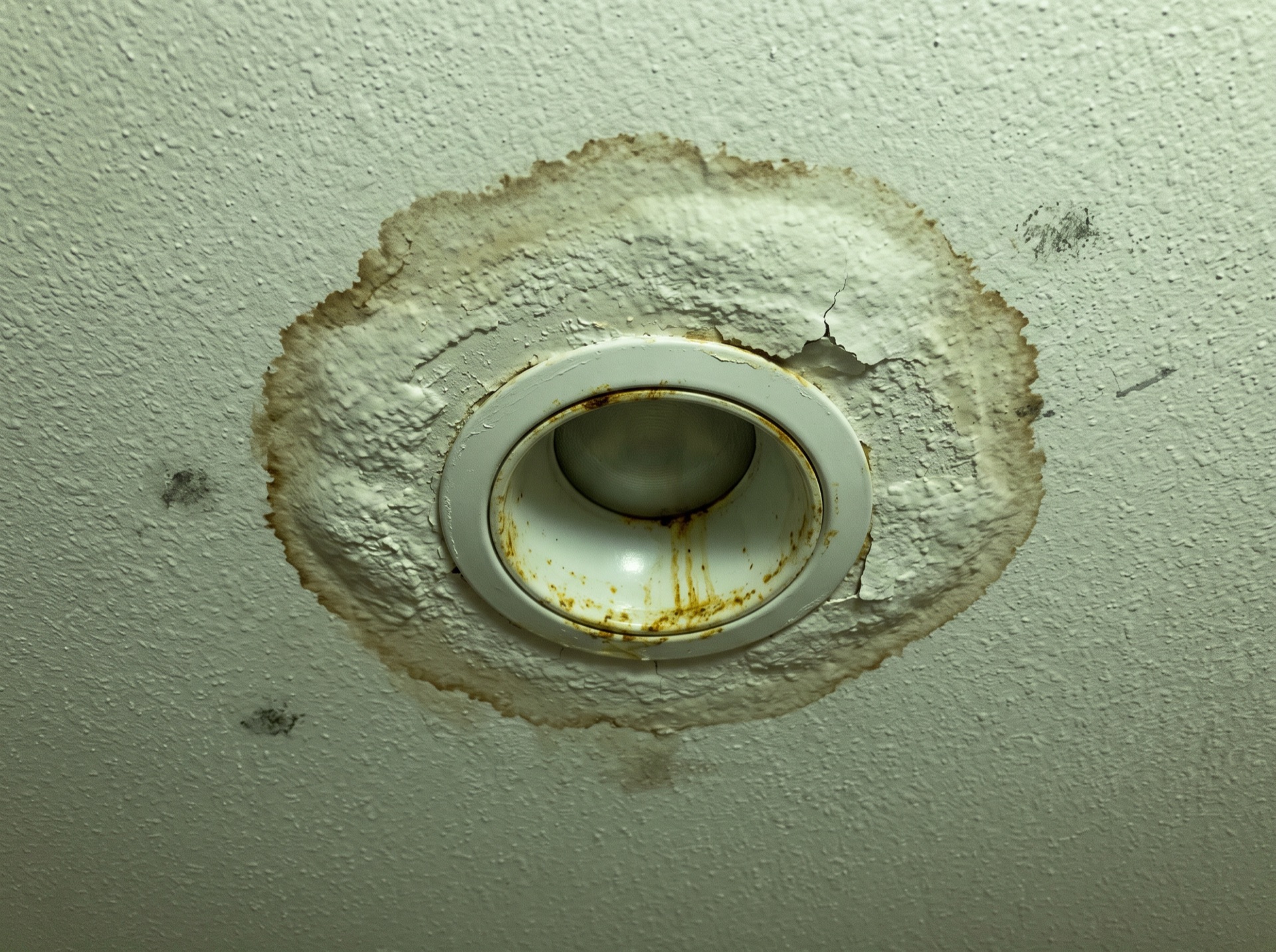
The first pass is assessment: eaves, valleys, gutter line and any interior staining, all photographed with timestamps. You see what the crew sees, and the rate and likely hours are agreed before work begins.
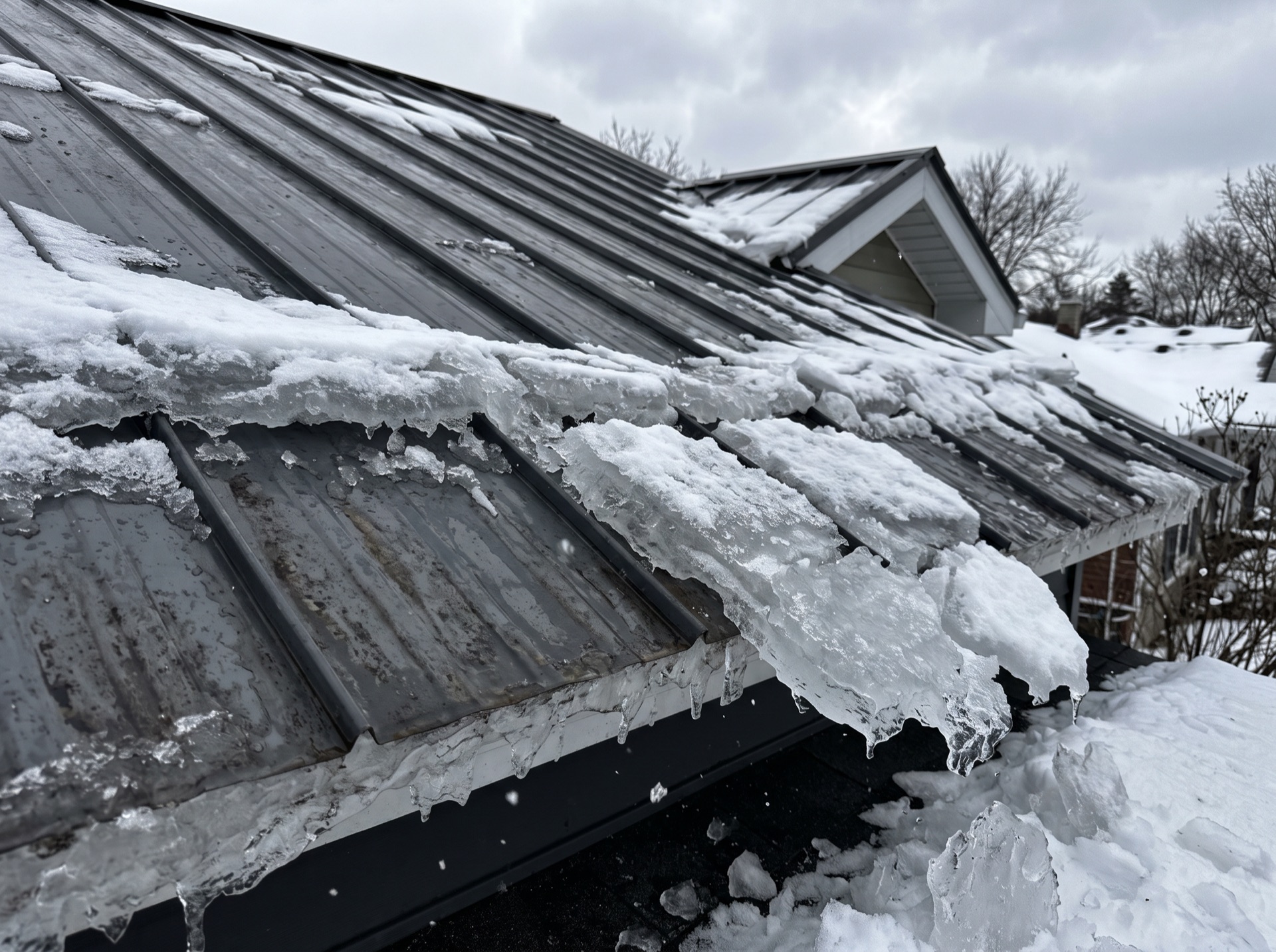
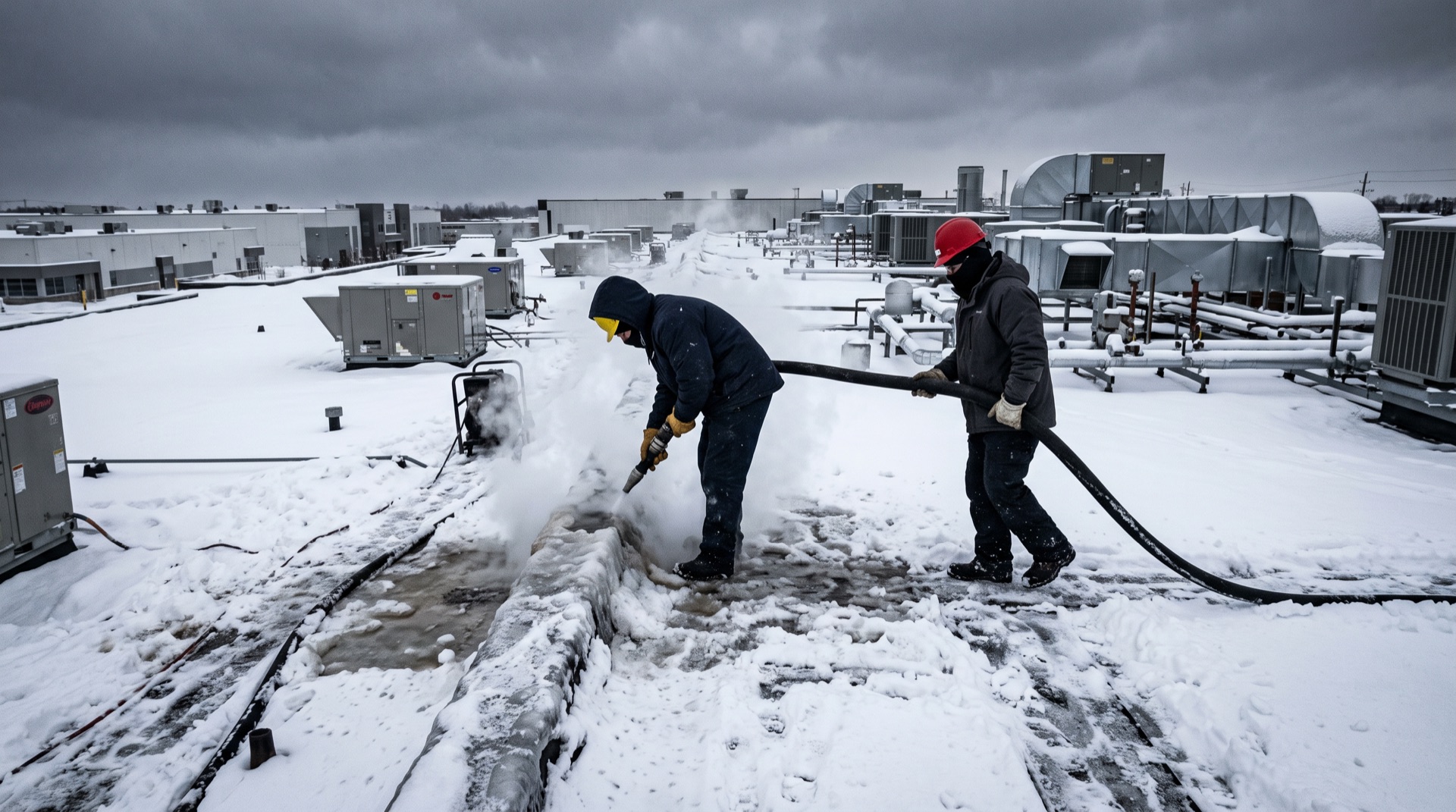
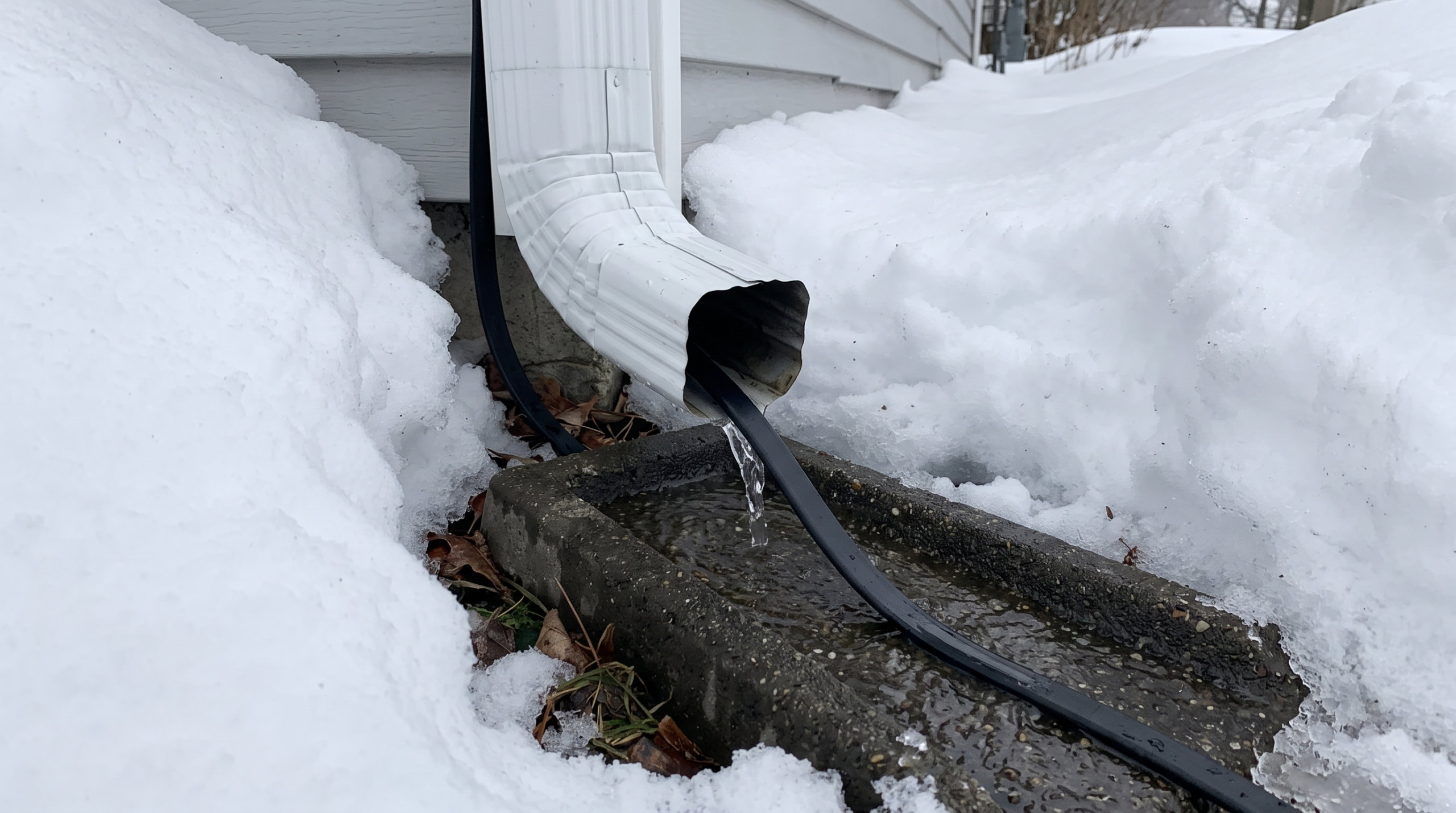
Steam then takes the dam off in sections, prioritizing wherever water is actively backing up behind it. The gutter trough and downspout are cleared through to daylight on the same visit, because a clear eave over a frozen gutter is a temporary fix.
What the dam has already done to the gutter and fascia
Ice expands as it forms, and a trough packed solid pushes the gutter away from the fascia a little more every cycle. By the time the dam is thick enough to leak, the hangers are often pulled, the back of the trough has lifted, and the fascia board behind it has been wet for weeks.
None of that is visible until the ice is off. It gets photographed when it appears, because a bent gutter found in February is a great deal easier to argue about with a carrier than one discovered in May.
What steam actually does
A steam unit delivers water at roughly 290°F at a pressure low enough to rest your hand in the plume. It cuts a channel straight through the ice and lifts the dam off in sections, right down to the shingle. The heat does the work, not force, so granules, seal strips and flashing come through untouched.
That is the whole difference between steam and the hot pressure washers often sold as steam. A pressure washer cuts ice fast because of its pressure — and that same pressure strips the granules off asphalt shingles and drives water up under the courses. One method removes ice. The other removes ice and roof.
Dormers, valleys and dead spots
Ice does not distribute evenly. It concentrates where two roof planes meet, behind dormers, in dead valleys that drain nowhere, and along the north face that never sees sun. Those pockets hold water deepest and leak first.
A crew working a roof in Euclid clears the full eave line and then goes back through the valleys and dormer pockets specifically, because clearing the easy straight run and calling it done is how a roof leaks again a week later.
| Typical scope | Steam, 4-8 crew hours typical |
|---|---|
| Local ice-barrier practice | Eave membrane on new work, often absent |
| Coverage area | Euclid and Cuyahoga County |
| Primary climate stressor | Repeated thaw-freeze cycling |
| Removal method | Low-pressure steam only. No chipping, salt or pressure washing. |
| Dispatch window | Same day to 24 hours |
| Pricing model | Billed by the crew hour, rate quoted before dispatch |
Neighborhoods and Towns We Reach From Euclid
Crews working Euclid cover the adjoining communities on the same route — Wickliffe, Gates Mills, Eastlake, Beachwood and Willoughby — so a storm week usually means one truck handling several addresses in Cuyahoga County rather than separate trips.
Nearest hub towns with their own crew pages: Cleveland Heights, Shaker Heights, Cleveland, Garfield Heights, Mentor, Lakewood.
Euclid sits inside the regular Ohio service area, so a crew is usually scheduled the same day or the following morning.
Water coming in right now in Euclid? Call (888) 561-9664. Active interior leaks go to the front of the schedule.