Skip to content
Fort Lee, NJ
Structural Snow Load · Bergen County

Commercial Roof Snow Removal in Fort Lee, NJ — Coastal Storm Response

Ice Dam Now provides commercial roof snow removal in Fort Lee, NJ and the surrounding Bergen County, using low-pressure steam only — never chipping, salt or pressure washing. Crews are licensed, insured and harness-certified, dispatch same day for active interior leaks, and bill by the crew hour at a rate quoted before dispatch. Dated photo documentation is supplied for insurance claims.

Overflows opened first — Drains and scuppers cleared before the load comes off
One invoice per site — Multi-building properties scoped and billed together
Portfolio routes — Standing storm schedules with per-visit condition reports
Mid-span measured — Depth read over the longest unsupported span, not the average

Get Ice Dam Help Fort Lee

A few quick questions, then pick a time. If water is coming in, call instead.

What is the zip code of the home?

Roof leaking right now? Call (888) 561-9664 — that is faster than any form.
Water coming through the ceiling?Every hour an ice dam sits there, more water gets under the shingles.Call (888) 561-9664
Same Day
For Water Already Inside
Steam
Safe On Every Covering
Bergen
County Coverage
Insured
Harness-Certified On Every Roof
Written
Scope Before Work Starts

Homeowners across Bergen County call about icicles. Icicles are cosmetic. The dam behind them, holding back standing water, is not. As part of our complete Fort Lee winter roof services, crews handle commercial roof snow removal across Bergen County.

Why a Fort Lee Roof Dams Between Storms

A nor'easter can load a roof in Fort Lee with heavy, wet snow overnight. Coastal air then swings the temperature either side of freezing for days, which is the exact condition that builds ice fastest.

Diagram showing how ice dams form on roofs due to inadequate insulation and poor ventilation
Heat escaping into the attic melts roof snow; the meltwater refreezes at the cold eave and the dam grows a layer every cycle.

Then there is the architecture. Fort Lee has a great deal of older housing with shallow eave returns, knee-wall attics and rooms built out over porches, all of which put heated air against cold deck with very little between.

Ice-barrier practice in Bergen County

In most coastal New Jersey towns the eave membrane requirement extends past the interior wall line rather than stopping at the first course. On a roof in Fort Lee with a deep overhang, that is further up than it sounds.

Commercial Roof Snow Removal in Fort Lee: How The Work Runs

Storm routes and standing contracts

Properties on a standing contract get a scheduled clear after each qualifying snowfall, with a single point of contact and a condition report per visit. For a portfolio, that means the clearing order is decided in advance by risk rather than by whoever calls first during the storm. Ceiling Sagging or Bulging After Snow.

Mid-span is where the margin runs out

Long-span steel and open-web joist roofs carry least where the drift is deepest. The average depth across the field is not the number that matters; the depth over the longest unsupported span is.

That is where crews measure on a Fort Lee building, and it is why two roofs with the same snowfall can be in very different trouble.

The cost of a shutdown against the cost of a clear

Clearing a large deck is a real number and it is easy to defer. The comparison that matters is not clearing against nothing, it is clearing against the day the building is closed while an engineer inspects it - lost trade, displaced tenants, and an insurer asking what was done beforehand.

The load reading is what makes that decision for you rather than a feeling about how deep the snow looks.

Why large decks carry the most risk

A long-span steel or open-web joist roof has the least margin exactly where the drift is deepest — mid-span. Snow does not settle evenly either: it piles against parapets, behind rooftop units, in the lee of higher adjoining roofs, and in valleys between bays. The average depth across the roof is not the number that matters.

Crews survey depth and density at the drift points rather than the middle of the field, and calculate the working load from that against the structure's design capacity.

Storm routes for a portfolio

Properties on a standing contract get cleared on a scheduled route after each qualifying snowfall, in a priority order agreed in advance by risk rather than by who calls first.

For anyone managing several Fort Lee buildings that is the difference between a plan and a scramble.
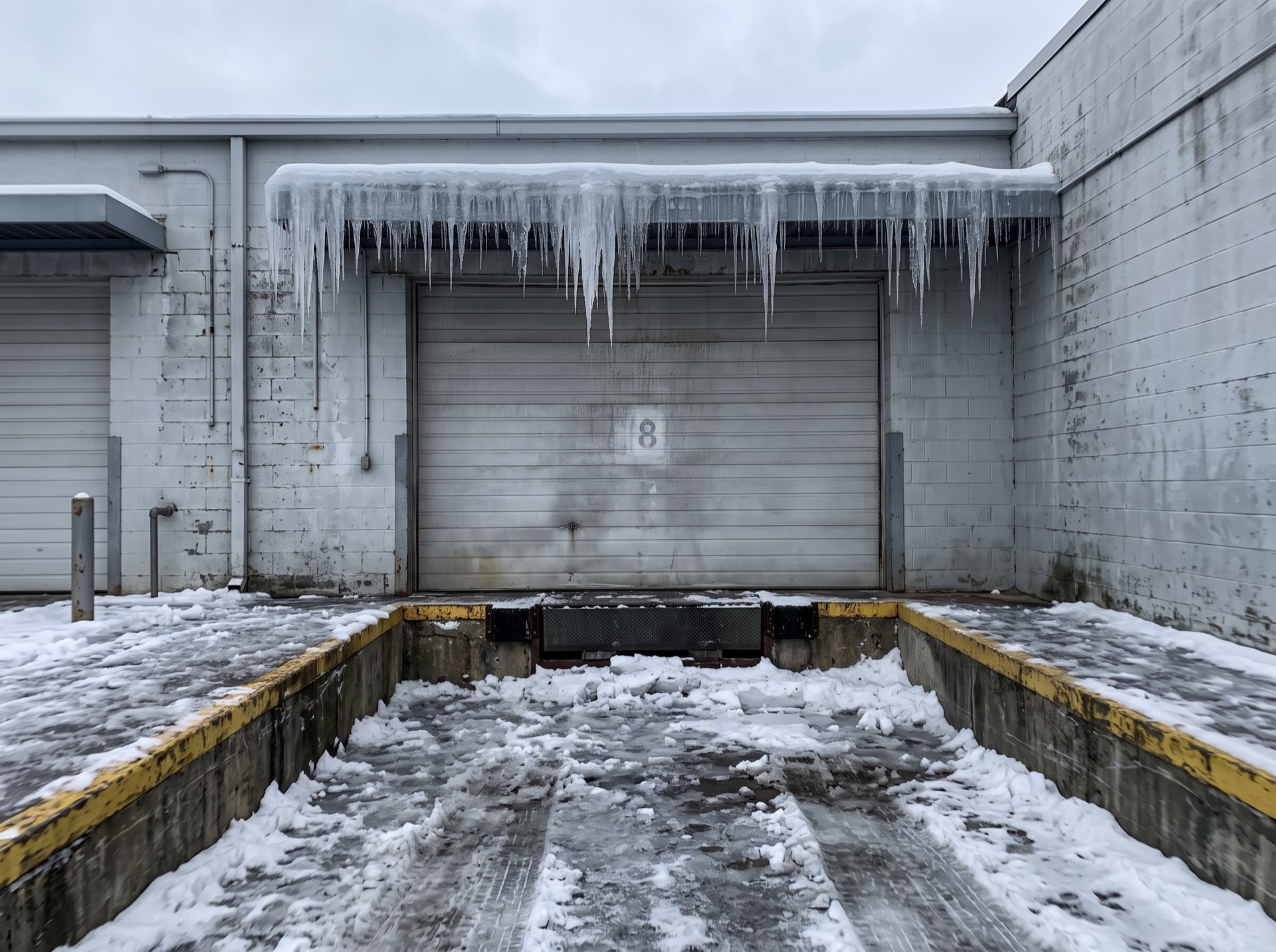
Large icicles hanging over warehouse loading dock number 8 in winter
Heavy icicles form along the roofline above a snow-covered commercial loading dock during freezing winter conditions.

What you get in Fort Lee

  • Overflows opened firstDrains and scuppers cleared before the load comes off
  • Drift-point surveyDepth and density measured where it collects, not where it is convenient
  • Balanced reductionLoad brought under threshold without shifting it onto one bay
Commercial Roof Snow Removal in Fort Lee, NJ — specification
Service specification for Fort Lee, NJ
Pricing modelBilled by the crew hour, rate quoted before dispatch
Local ice-barrier practiceEave membrane standard on re-roofs
Primary climate stressorNor'easters, rapid thaw-freeze swing
DocumentationDated before and after photos, written scope in Xactimate line items
Dispatch windowSame day to 24 hours
Typical scopeSteam, 4-10 crew hours typical
ServiceCommercial Roof Snow Removal in Fort Lee, NJ

Neighborhoods and Towns We Reach From Fort Lee

Crews working Fort Lee cover the adjoining communities on the same route — Leonia, Palisades Park, Edgewater, Ridgefield and Cliffside Park — so a storm week usually means one truck handling several addresses in Bergen County rather than separate trips.

Nearest hub towns with their own commercial snow pages: North Bergen, Hackensack, Hoboken, Passaic, Paramus, Clifton.

Coverage runs across Fort Lee and the nearby towns all winter, and capacity is surged into whichever New Jersey market the storm actually hits.

Most jobs do not stop at one service. Commercial Snow in Fort Lee often runs alongside crane-assisted snow removal in Fort Lee, and both get written into one scope rather than billed as separate visits.

Active leak right now? Our 24/7 Fort Lee steam ice dam removal crews are dispatched first during a freeze event. Call (888) 561-9664.
Conditions We Work In

Commercial Roof Snow Removal In Practice

Conditions crews work in across Bergen County. Every job is photographed before and after.

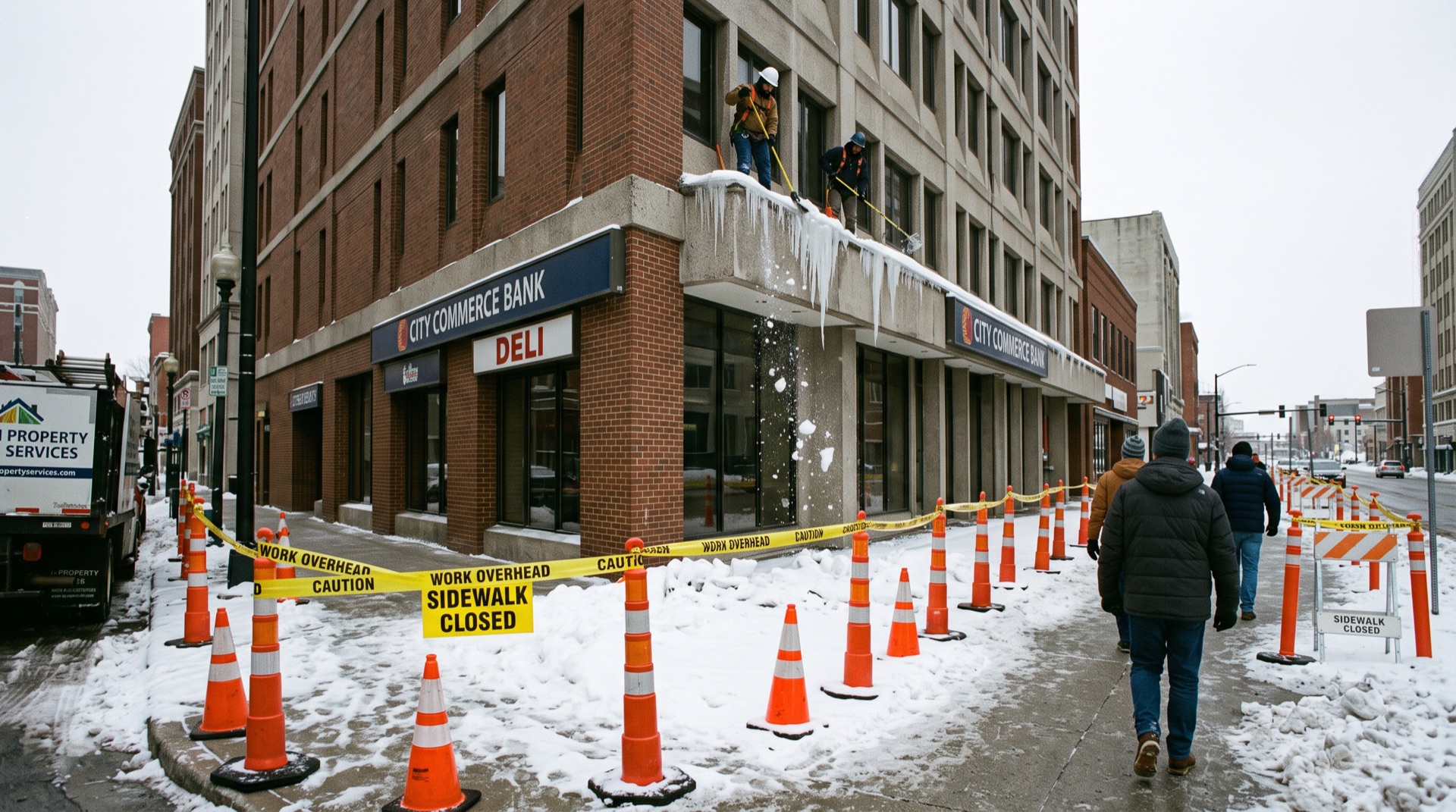
Workers removing snow and ice from building ledge above closed sidewalk with orange cones
Workers clear dangerous ice and snow from a City Commerce Bank building ledge while caution tape and cones protect pedestrians below.
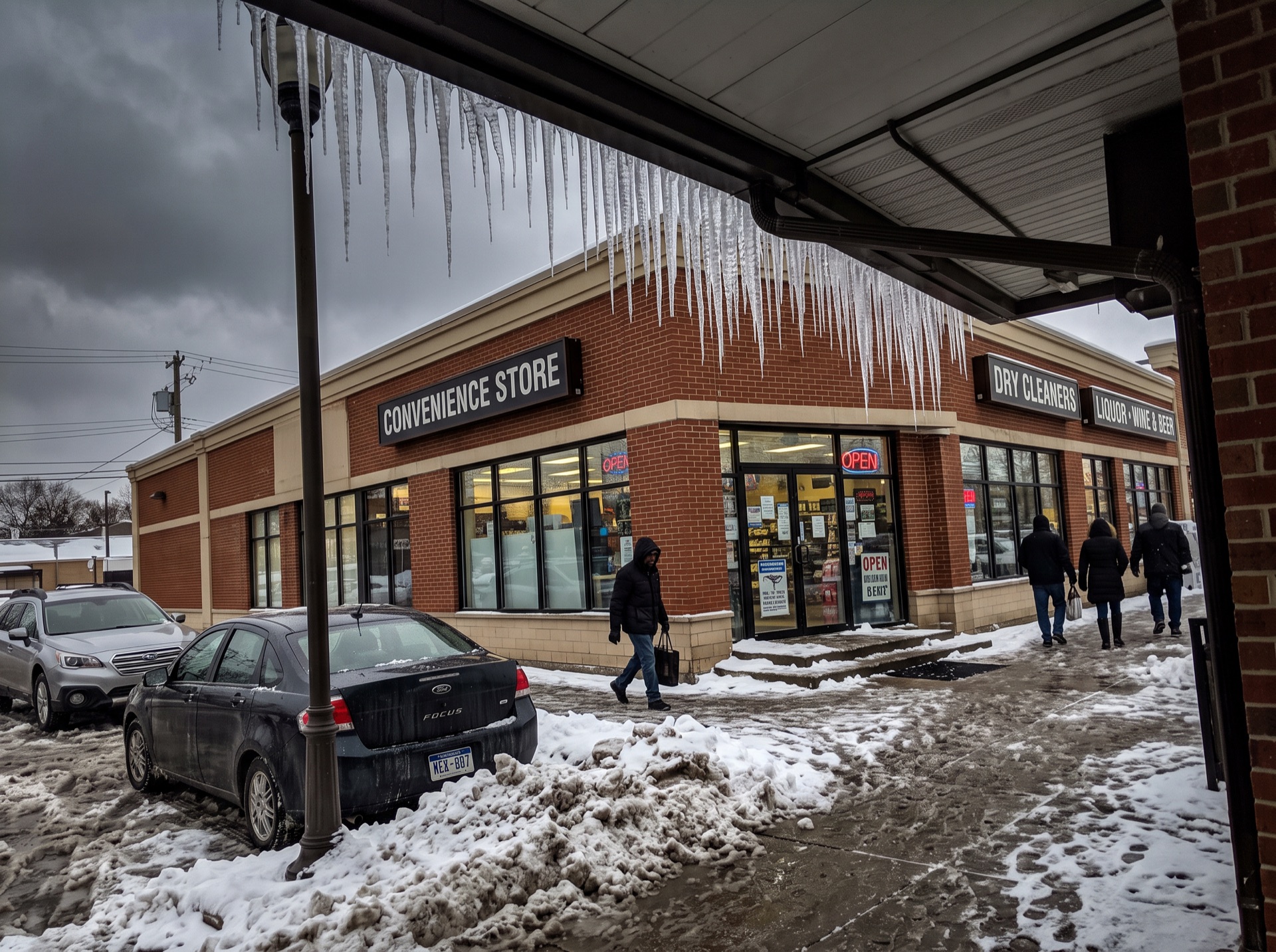
Large icicles hanging from strip mall canopy over snowy parking lot in winter
Dramatic icicles line the canopy of a brick strip mall during a cold winter day.
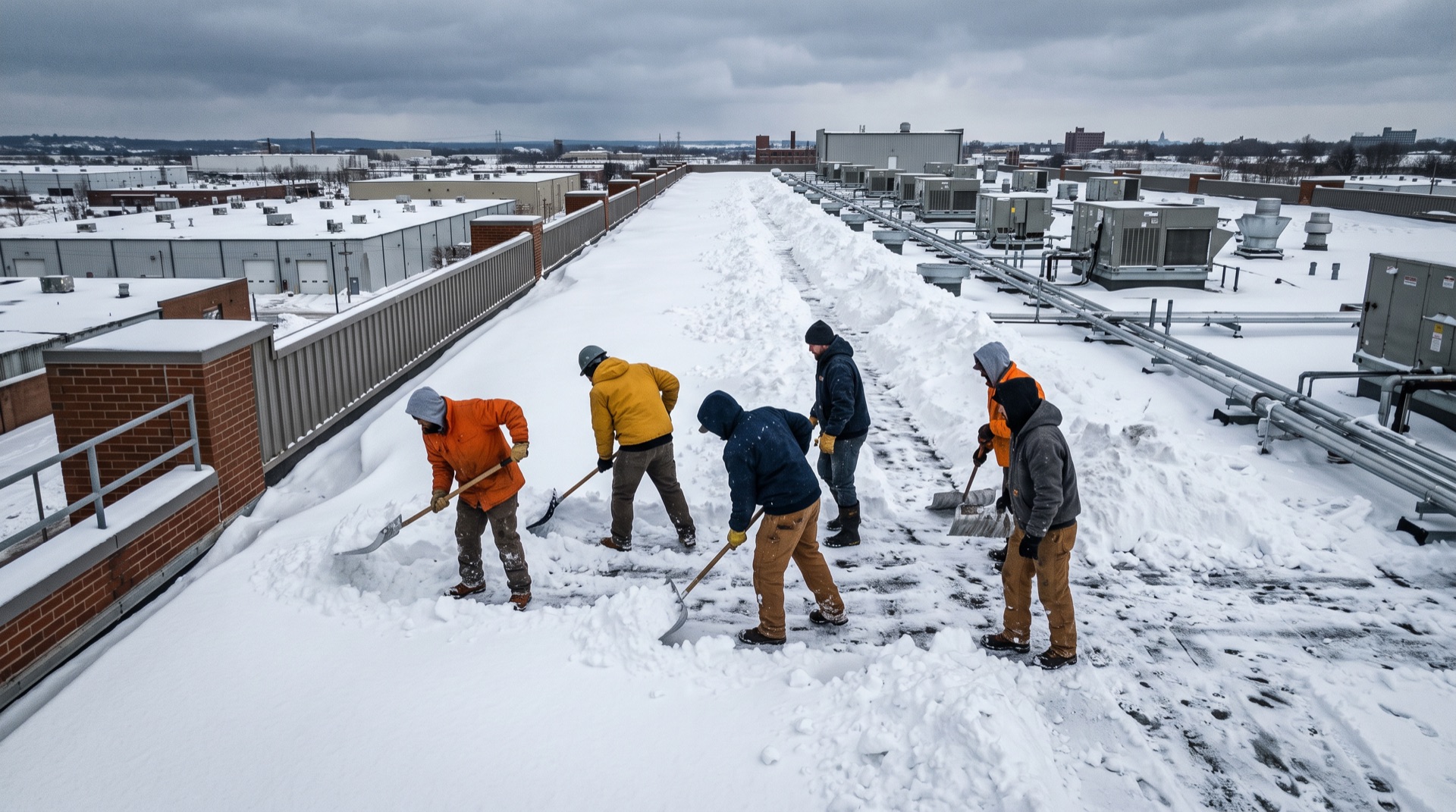
Five workers shoveling heavy snow off a large commercial flat roof
A five-person crew works together to clear accumulated snow from a large commercial building rooftop.
FAQ

Fort Lee and Bergen County FAQ

It is billed by the crew hour, and the rate plus a realistic time estimate are quoted on the phone before anyone is dispatched.

  • Scope drives the hours: length and thickness of the ice, roof pitch and height, and whether the gutters are frozen solid.
  • Access matters too — a three-story Fort Lee roof takes longer to set up on than a ranch.
  • The invoice matches the quote. There are no surprise add-ons written on the tailgate.

Yes. The dispatch area runs across Bergen County, and several addresses in one area are usually handled in the same run.

  • Adjoining communities are on the same route rather than treated as a separate trip.
  • Rural addresses outside the normal radius get told the travel position on the call.
  • Capacity is moved into whichever part of New Jersey the storm actually hits.

Tell the crew. Chipping marks change what the roof needs and they matter for the claim.

  • Cracked shingles and punctures get photographed and reported rather than steamed over.
  • Damage caused by removal attempts is treated differently by carriers than storm damage.
  • It is extremely common and nobody is going to lecture you about it.

Often for the interior water damage, sometimes for the removal itself, but it depends entirely on your carrier and policy wording.

  • Many policies treat emergency mitigation separately under a duty to protect property clause.
  • Denials usually cite the maintenance exclusion, which dated photographs taken during the event are the direct counter to.
  • Crews photograph the dam, the entry points and the interior damage, and write the scope in Xactimate line items.
  • The coverage decision is between you and your carrier — no contractor can promise an outcome there.

The crew hours on site, the equipment and the photo documentation - with the rate and an estimate given on the phone beforehand.

  • Travel to a Fort Lee address inside the normal service area is not an added line.
  • If the roof turns out worse than described, you are told before the extra hours are worked.
  • The invoice matches what was quoted. Nothing gets added on the tailgate.

Yes. HVAC units, exhaust fans, conduit, gas lines, solar racking and safety railing are all worked around. Equipment wells and the drift shadows behind units are usually the deepest snow on the roof and get specific attention.

Contracted properties are on a storm route and get reached in a set order that is agreed before the season. Uncontracted calls are fitted around those, prioritized by load and by whether water is already inside. During a regional event, a standing agreement is the difference between hours and days.

Nearby

Commercial Snow In Towns Around Fort Lee

Same-Day Response

Get A Fort Lee Crew Out

Waiting for a thaw is a strategy, but it is an expensive one — the melt has to go somewhere, and it goes into the insulation first.

✓ Licensed & insured✓ Low-pressure steam only✓ Rate quoted up front✓ Photos for your claim
Online Quote(888) 561-9664