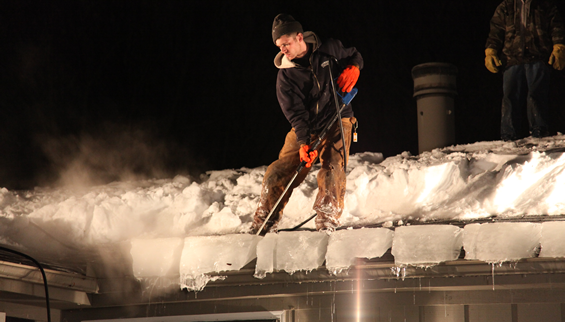
Every Nashua winter produces the same two calls: the ones who see the ice early, and the ones who see the ceiling stain first. As part of our complete Nashua winter roof services, crews handle water mitigation & dryout across Hillsborough County.
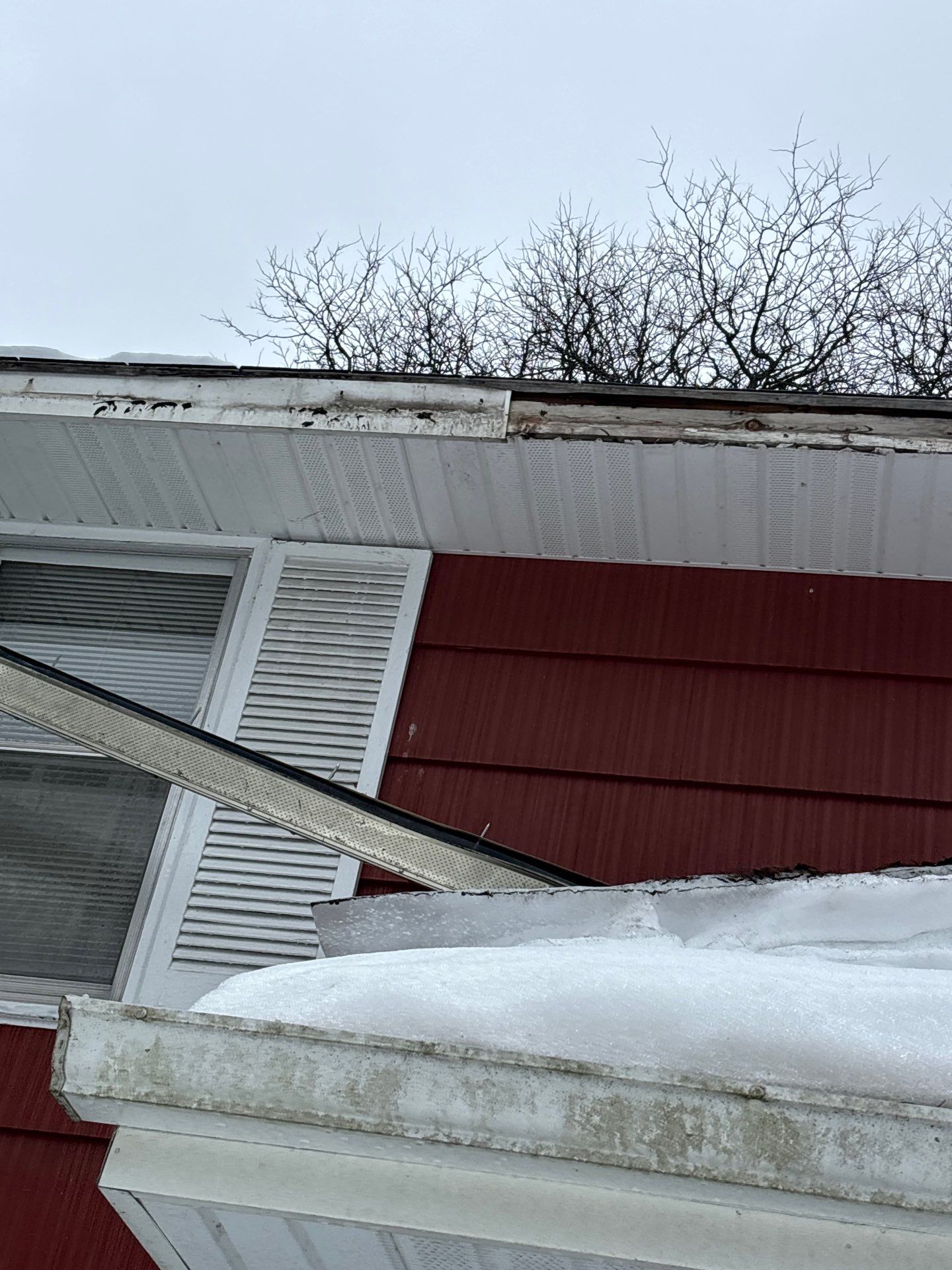
Nashua Ice Dams: Wet Snow and a Thermometer That Will Not Settle
The maritime air is the other half of it. Temperatures in Hillsborough County move either side of freezing within the same day far more often than they do inland, and every crossing moves water down the roof and locks it at the eave.

Older Hillsborough County housing stock makes it worse. Shallow eave returns, knee-wall attics and additions built over unheated space all put warm air against a cold roof deck with very little insulation in between.
Ice-barrier practice in Hillsborough County
Most Hillsborough County towns require self-adhering ice barrier at the eaves on a re-roof permit. In a historic district there may be additional review on materials, which is worth checking before work is scheduled.
Water Mitigation & Dryout in Nashua: How The Work Runs
Why a cold attic will not dry itself
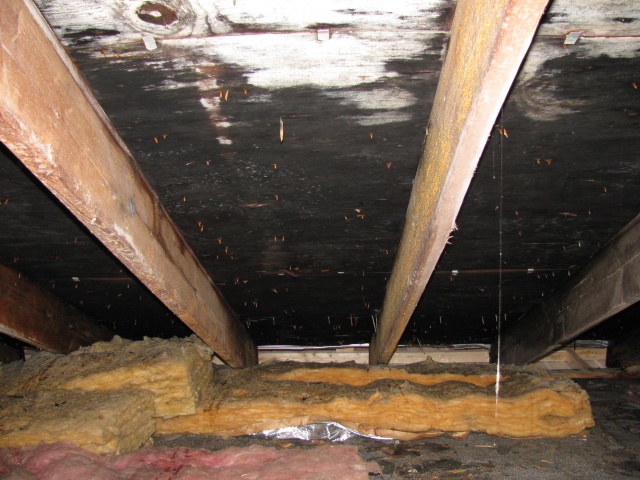
Drying is evaporation, and evaporation needs warmth and air movement. A Nashua attic in February has neither. Wet insulation and damp sheathing sit at near-freezing with no meaningful vapor drive, which is why a leak that stops in January can still be wet in March. Wet Insulation in the Attic.
Equipment supplies what the season does not. Without it the structure is not drying slowly - in a cold cavity it is very largely not drying at all.
Dry does not mean dry
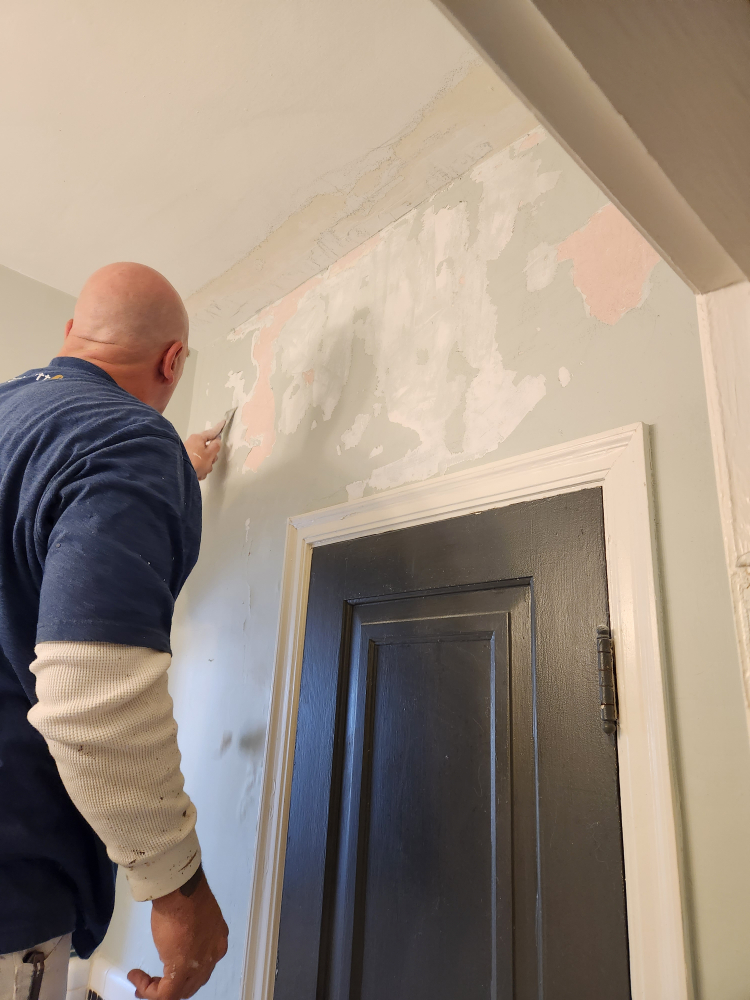
A ceiling stain stops spreading long before the cavity behind it is dry. Wet cellulose and fiberglass hold water against the framing for weeks, and in a cold attic the evaporation that would normally handle it simply does not happen. That is how a January leak becomes a spring mold problem.
Mitigation means getting the structure back to a documented dry standard — not back to looking fine. Moisture meter readings on framing, sheathing and drywall are what close the job, not appearance.
The sequence
Standing water is extracted first. Saturated insulation comes out, because it cannot be dried in place and it is holding moisture against everything it touches. Containment goes up where tear-out is needed, with HEPA scrubbers running inside it. Dehumidifiers and air movers are placed to the room's volume and load rather than scattered around.
Then the readings get taken daily until they hit standard. In a Nashua winter, with cold cavities and low ambient humidity outside, that typically takes longer than people expect.
Contents, storage and what moves out of the way
Mitigation needs the room. Furniture gets blocked up or moved, stored boxes come out of the affected area, and in a finished basement the contents usually have to leave entirely before tear-out starts.
What is already wet gets photographed and listed as it is moved, because contents are a separate part of most policies and the list is considerably harder to assemble once everything has been shifted.
What happens to flooring
Hardwood cups as it absorbs and may flatten out on its own once the subfloor is dry, so it is given the chance before anyone talks about replacement. Laminate and engineered board usually do not recover.
Carpet and pad are a judgment call on how long they were wet and what the water passed through on the way down.

What you get in Nashua
- Electrical made safeCircuits killed where water reached fixtures, before equipment goes in
- Wet insulation removedIt cannot be dried in place and it holds water against the framing
- Interior repair in-houseDrywall, insulation, texture, trim and paint put back by the same company
| Interior repair | Insulation, drywall, texture, trim and paint, done in-house after drying |
|---|---|
| Method | Containment, HEPA filtration and drying to a measured IICRC standard |
| Local ice-barrier practice | Eave membrane standard on re-roofs |
| Documentation | Dated before and after photos, written scope in Xactimate line items |
| Coverage area | Nashua and Hillsborough County |
| Billing | Xactimate line items on one claim; carrier billed directly where the policy allows |
| Dispatch window | Same day to 24 hours |
Nashua Coverage and the Adjoining Communities
Crews working Nashua cover the adjoining communities on the same route — Hollis, Litchfield, Pelham, Windham and Amherst — so a storm week usually means one truck handling several addresses in Hillsborough County rather than separate trips.
Nearest hub towns with their own water mitigation pages: Hudson, Merrimack, Londonderry, Derry, Salem, Bedford.
When a storm hits Hillsborough County, crews are dispatched by severity rather than by call order — water already inside the house goes first.
Most jobs do not stop at one service. Water Mitigation in Nashua often runs alongside ice dam removal in Nashua, and both get written into one scope rather than billed as separate visits.
Active leak right now? Our 24/7 Nashua steam ice dam removal crews are dispatched first during a freeze event. Call (888) 561-9664.