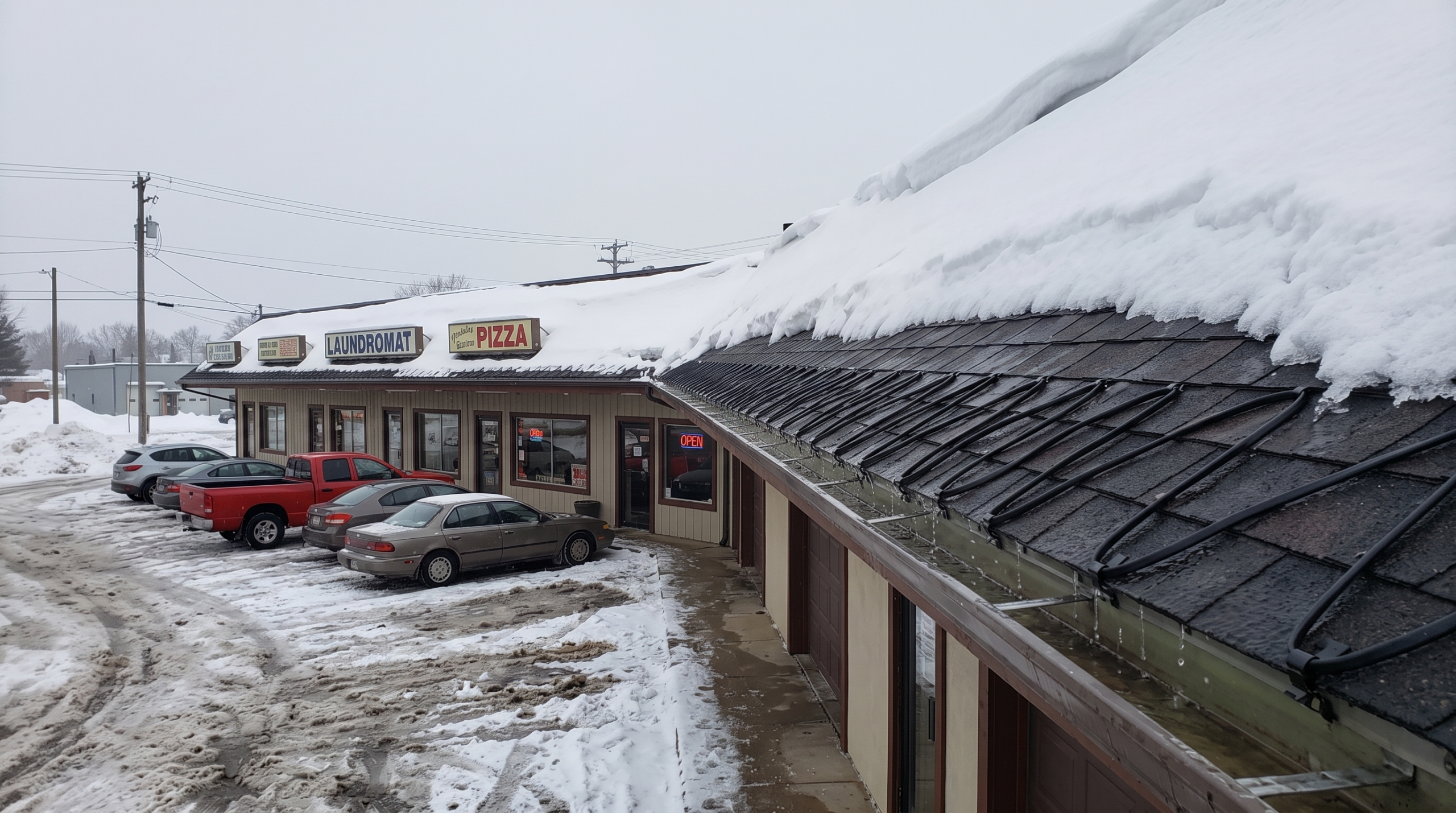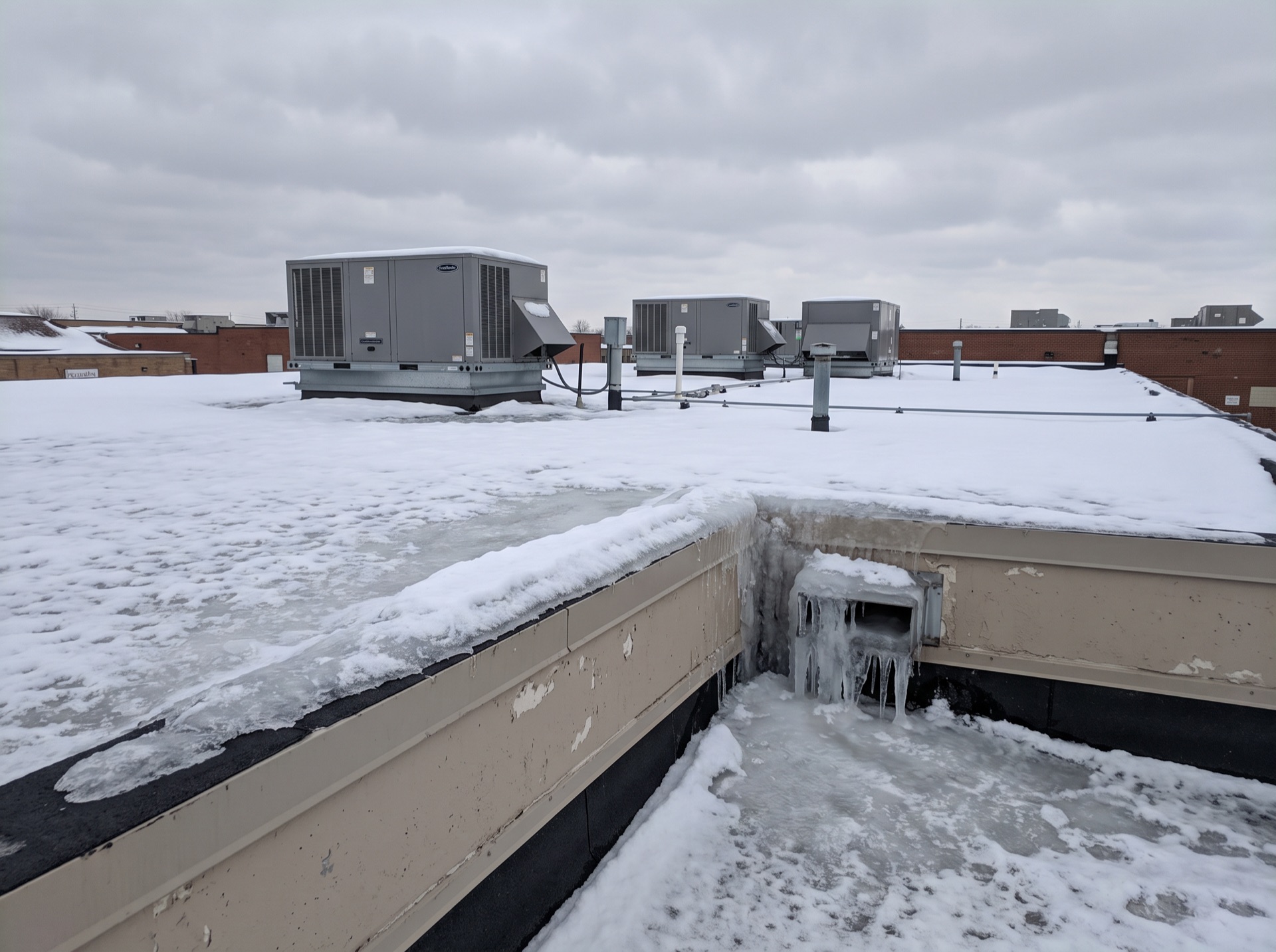
Ice dams are not a Lakeville problem so much as a Minnesota one, and they show up on the same handful of eaves and valleys year after year. As part of our complete Lakeville winter roof services, crews handle commercial roof snow removal across Dakota County.
The Dakota County Pattern: Heavy Bands, Fast Thaws
Lake-effect snow arrives in bands rather than fronts, which is why Lakeville can take a foot overnight while a town twenty miles inland takes two inches. It falls wet, it compacts fast, and it does not blow off.

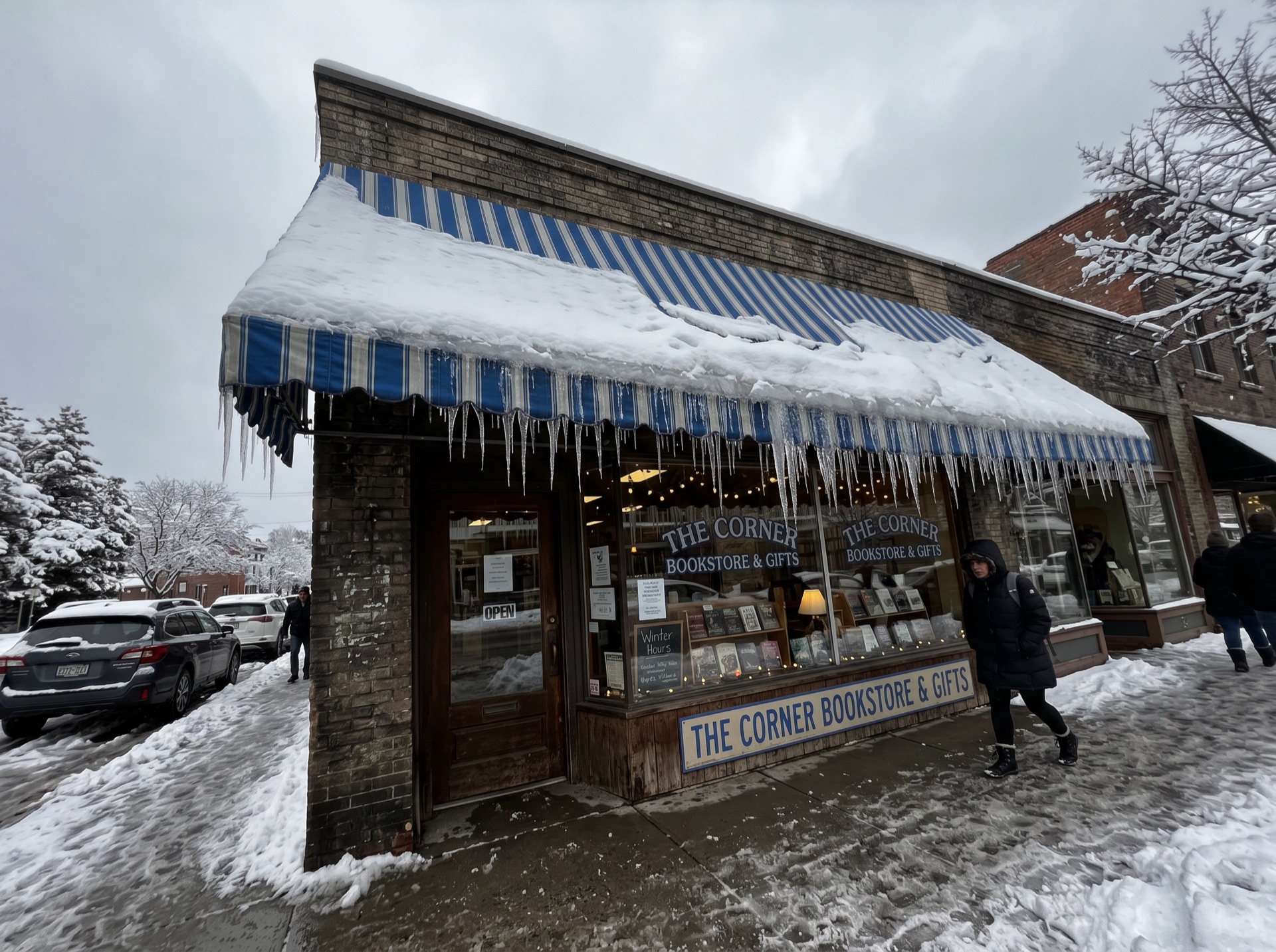
The damage comes on the thaw. Warm air leaking into the attic melts the underside of that pack, the meltwater runs to an eave that is still well below freezing, and it sets. Repeat that four or five times in a January and the ridge of ice at the gutter line stops being cosmetic.
Ice-barrier practice in Dakota County
Lake-belt jurisdictions in Minnesota have enforced eave membrane on re-roof permits for a long time. The roofs that leak are, almost without exception, the ones that have not been touched since before that.
Commercial Roof Snow Removal in Lakeville: How The Work Runs
Fall protection on a deck with no anchors
Most commercial roofs have no permanent anchor points and a parapet too low to count as a guard. Working near an unprotected edge legally requires a system, and improvising one is where people get hurt. Ceiling Sagging or Bulging After Snow.
Crews bring mobile anchors, warning lines and whatever the layout actually needs. Where the roof cannot be worked safely at all, that gets reported to the Lakeville property manager as a finding, because it will be just as true during the next storm.
Storm routes and standing contracts
Properties on a standing contract get a scheduled clear after each qualifying snowfall, with a single point of contact and a condition report per visit. For a portfolio, that means the clearing order is decided in advance by risk rather than by whoever calls first during the storm.
Ponding after the clear
Taking the snow off a flat roof with frozen drains leaves meltwater with nowhere to go, and water that ponds and refreezes puts load back on a deck that was just relieved.
So drains and overflows are opened as part of the clear rather than afterwards, and the roof is left draining. A clear that stops at the snow is half a job.
Reading the design load off the drawings
Where structural drawings exist they state the design ground snow load and the roof's own capacity, and that number turns the whole question from opinion into arithmetic. Measured depth and density against design capacity gives a percentage rather than an argument.
Where the drawings have been lost - common on older Lakeville stock - the conservative assumption is the code minimum of the era the building went up, which is usually well below what a modern roof would be built to.
The cost of a shutdown against the cost of a clear
Clearing a large deck is a real number and it is easy to defer. The comparison that matters is not clearing against nothing, it is clearing against the day the building is closed while an engineer inspects it - lost trade, displaced tenants, and an insurer asking what was done beforehand.
The load reading is what makes that decision for you rather than a feeling about how deep the snow looks.
What you get in Lakeville
- Mid-span measuredDepth read over the longest unsupported span, not the average
- Drains kept openScuppers and internal drains cleared so meltwater has an exit
- One invoice per siteMulti-building properties scoped and billed together
| Typical scope | Steam, 6-12 crew hours typical |
|---|---|
| Primary climate stressor | Lake-effect bands, wet heavy pack |
| Local ice-barrier practice | Eave membrane expected on re-roofs |
| Dispatch window | Same day to 24 hours |
| Documentation | Dated before and after photos, written scope in Xactimate line items |
| Service | Commercial Roof Snow Removal in Lakeville, MN |
| Removal method | Low-pressure steam only. No chipping, salt or pressure washing. |
Where We Dispatch Around Lakeville
Crews working Lakeville cover the adjoining communities on the same route — New Market, Elko, Castle Rock and Webster — so a storm week usually means one truck handling several addresses in Dakota County rather than separate trips.
Nearest hub towns with their own commercial snow pages: Apple Valley, Farmington, Rosemount, Burnsville, Savage, Prior Lake.
Lakeville sits inside the regular Minnesota service area, so a crew is usually scheduled the same day or the following morning.
Most jobs do not stop at one service. Commercial Snow in Lakeville often runs alongside crane-assisted snow removal in Lakeville, and both get written into one scope rather than billed as separate visits.
Active leak right now? Our 24/7 Lakeville steam ice dam removal crews are dispatched first during a freeze event. Call (888) 561-9664.