Winter in Bloomington does not need a record storm to put water inside a house. It needs a roof with snow on it, an attic leaking heat, and one cold night. As part of our complete Bloomington winter roof services, crews handle ice dam removal across Dakota County.
Bloomington Ice Dams: What Lake-Effect Snow Does to an Eave
Roofs in Bloomington are loaded unevenly and quickly. A band sets up, dumps for six hours and moves, and the roof is carrying a dense wet pack it did not have at breakfast. Nothing about that snow wants to slide off.

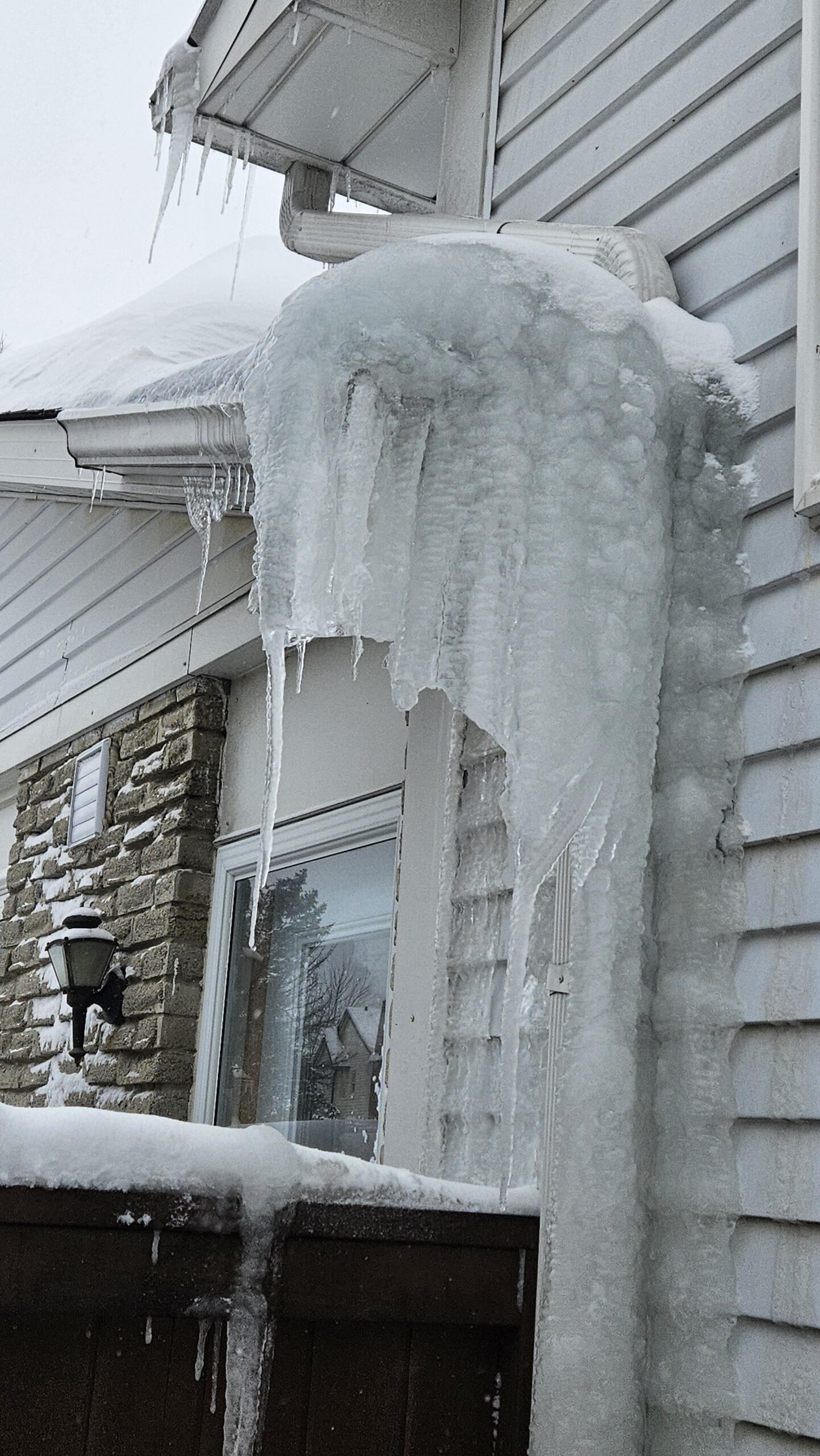
The damage comes on the thaw. Warm air leaking into the attic melts the underside of that pack, the meltwater runs to an eave that is still well below freezing, and it sets. Repeat that four or five times in a January and the ridge of ice at the gutter line stops being cosmetic.
Ice-barrier practice in Dakota County
Ice-barrier membrane at the eaves is standard practice across the lake-effect counties, and most Minnesota jurisdictions enforce it on re-roofs. If your roof predates that, the eave has nothing under the shingles holding water out.
Ice Dam Removal in Bloomington: How The Work Runs
Why salt and ice melt make it worse
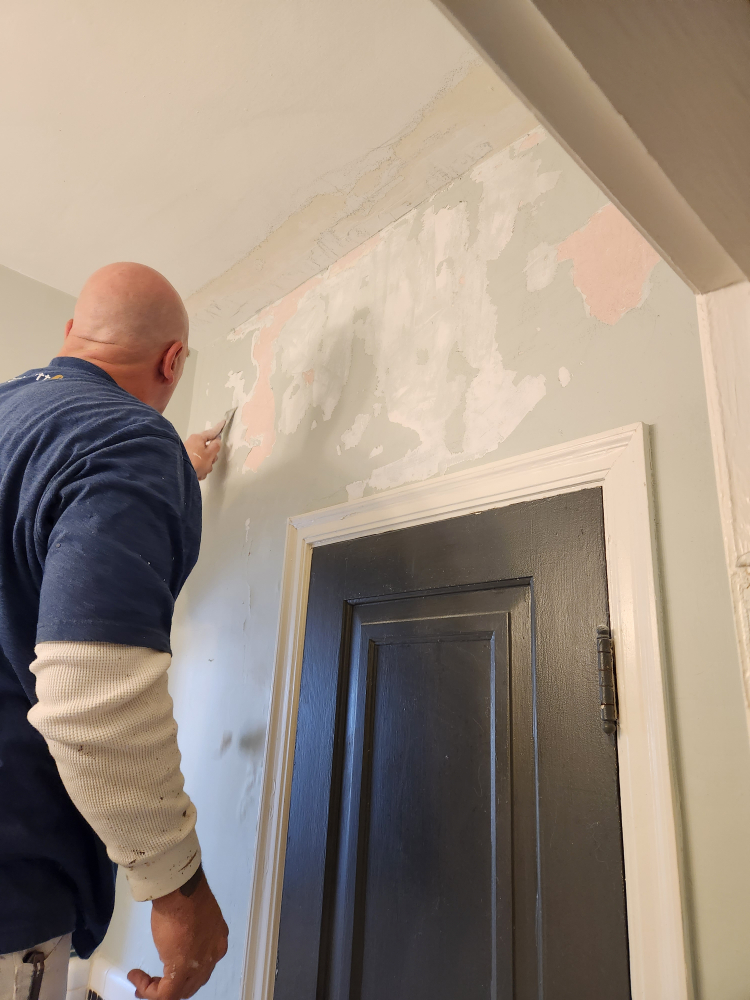
Calcium chloride opens a narrow channel and leaves the dam standing. The channel refreezes, the dam does not go anywhere, and in the meantime the runoff corrodes gutter seams, fasteners, flashing and anything growing underneath. Water Stain on the Ceiling in Winter.
It is a stopgap at best. On a roof in Bloomington with an active leak it buys hours, not days, and it adds a corrosion problem to the water problem.
What steam actually does
A steam unit delivers water at roughly 290°F at a pressure low enough to rest your hand in the plume. It cuts a channel straight through the ice and lifts the dam off in sections, right down to the shingle. The heat does the work, not force, so granules, seal strips and flashing come through untouched.
That is the whole difference between steam and the hot pressure washers often sold as steam. A pressure washer cuts ice fast because of its pressure — and that same pressure strips the granules off asphalt shingles and drives water up under the courses. One method removes ice. The other removes ice and roof.
What the dam has already done to the gutter and fascia
Ice expands as it forms, and a trough packed solid pushes the gutter away from the fascia a little more every cycle. By the time the dam is thick enough to leak, the hangers are often pulled, the back of the trough has lifted, and the fascia board behind it has been wet for weeks.
None of that is visible until the ice is off. It gets photographed when it appears, because a bent gutter found in February is a great deal easier to argue about with a carrier than one discovered in May.
How long a removal actually takes
A single-story eave with a thin dam and clear gutters is often an hour or two. A two-story Bloomington house with ice standing a foot deep across the front, frozen downspouts and a valley packed solid is most of a day for a two-man crew. The honest answer on the phone is a range and the reason for it, not a number designed to win the booking.
The estimate is revised out loud if the roof turns out worse than it looked from the ground, before the extra hours are worked rather than after they appear on the invoice.
Why a drainage channel is not removal
Cutting a few channels through a dam so water can get past is quick and it is sometimes sold as ice dam removal. It drains the roof for as long as the channels stay open, which in a Bloomington cold snap can be a single night before they close again.
Removing the dam means taking the ice off down to the shingle along the whole affected run, so the eave can drain the way it was built to. It takes longer and it is the only version that holds.

What you get in Bloomington
- Same-day dispatchActive interior leaks go to the front of the schedule during a freeze event
- Steam onlySafe on asphalt, cedar, slate, tile and metal — no chipping, no pressure, no salt
- No salt, no chippingNothing corrosive and nothing mechanical touches the covering
| Local ice-barrier practice | Eave membrane expected on re-roofs |
|---|---|
| Dispatch window | Same day to 24 hours |
| Primary climate stressor | Lake-effect bands, wet heavy pack |
| Service | Ice Dam Removal in Bloomington, MN |
| Removal method | Low-pressure steam only. No chipping, salt or pressure washing. |
| Typical scope | Steam, 6-12 crew hours typical |
| Pricing model | Billed by the crew hour, rate quoted before dispatch |
Dakota County Coverage From Bloomington
Crews working Bloomington cover the adjoining communities on the same route — Saint Louis Park, Mendota, South Saint Paul, Saint Paul and Wayzata — so a storm week usually means one truck handling several addresses in Dakota County rather than separate trips.
Nearest hub towns with their own ice dam removal pages: Richfield, Edina, Burnsville, St. Louis Park, Savage, Eden Prairie.
Bloomington sits inside the regular Minnesota service area, so a crew is usually scheduled the same day or the following morning.
Most jobs do not stop at one service. Ice Dam Removal in Bloomington often runs alongside water mitigation & dryout in Bloomington, and both get written into one scope rather than billed as separate visits.
Active leak right now? Our 24/7 Bloomington steam ice dam removal crews are dispatched first during a freeze event. Call (888) 561-9664.