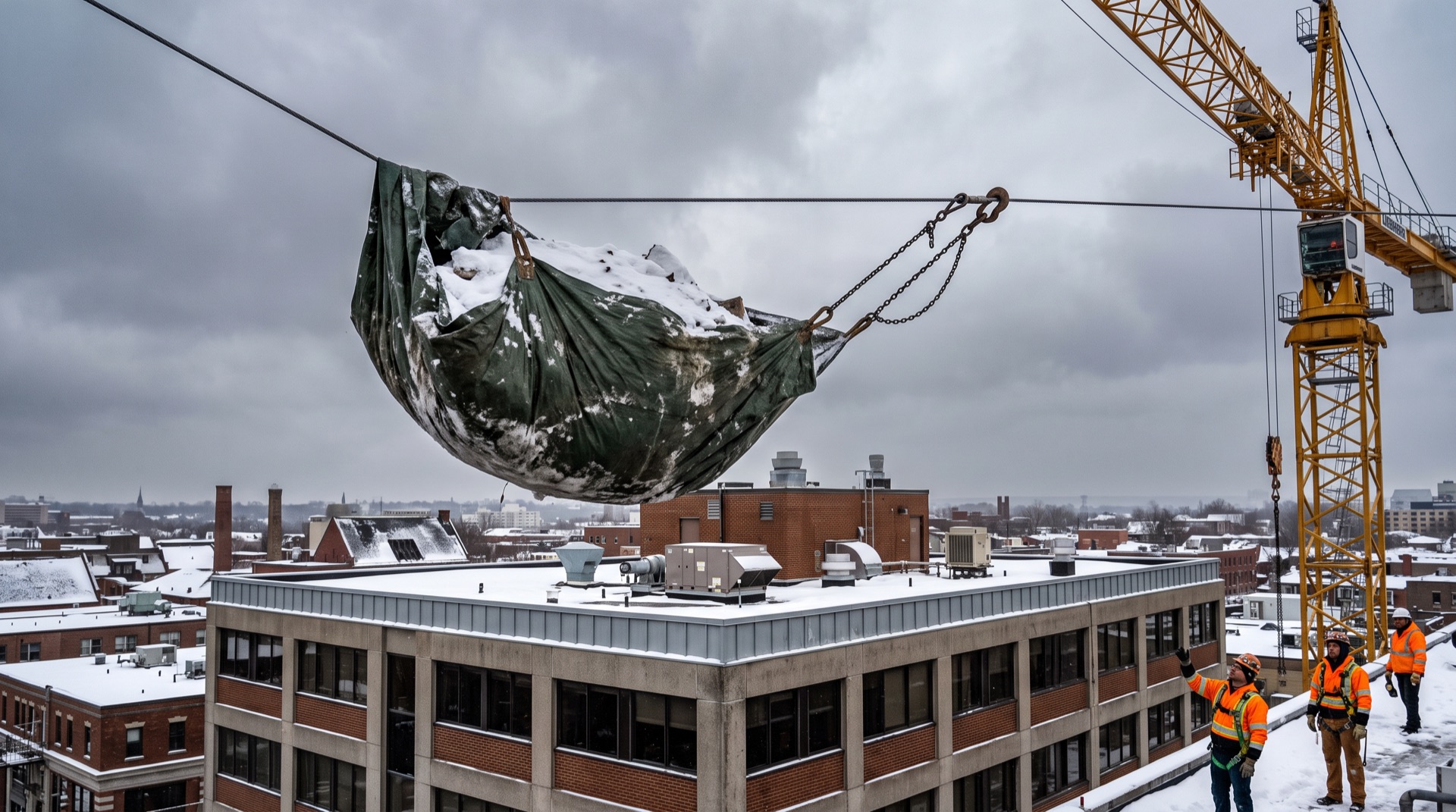
Homeowners across Dakota County call about icicles. Icicles are cosmetic. The dam behind them, holding back standing water, is not. As part of our complete Apple Valley winter roof services, crews handle crane-assisted snow removal across Dakota County.
What the Lake Does to a Roof in Apple Valley
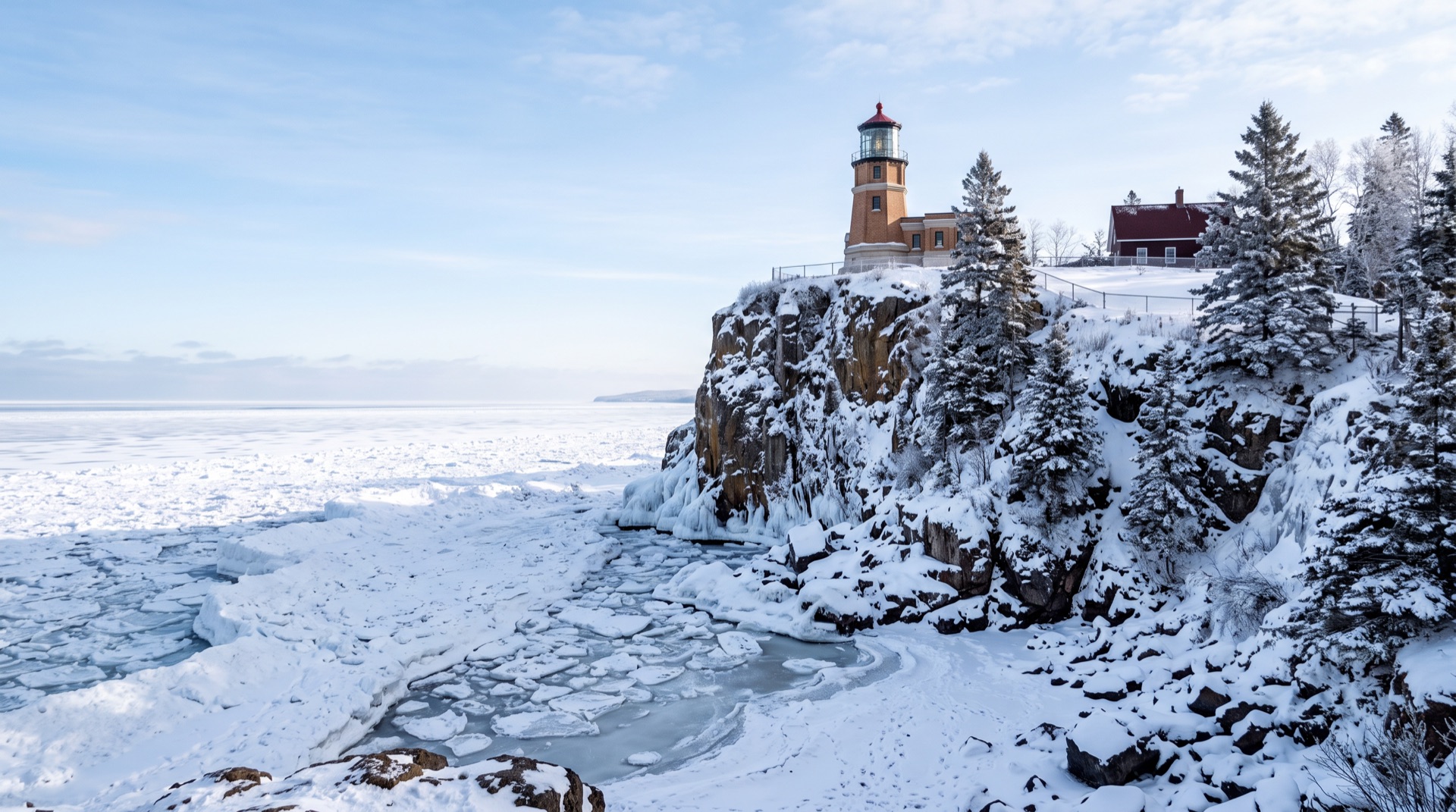
The lake keeps producing snow long after a front has passed, so a roof in Dakota County rarely gets the clear stretch it needs to shed. One band follows another and the pack simply deepens.

Then the temperature swings. Lake-effect regions cycle hard either side of freezing, and each cycle moves meltwater down to a cold eave and locks it there. The dam grows by a layer every time, and the water behind it rises with it.
Ice-barrier practice in Dakota County
Lake-belt jurisdictions in Minnesota have enforced eave membrane on re-roof permits for a long time. The roofs that leak are, almost without exception, the ones that have not been touched since before that.
Crane-Assisted Snow Removal in Apple Valley: How The Work Runs
Documenting the load for the carrier
Depths, densities, calculated loads and dated photographs are recorded through the operation. Most carriers treat preventing an imminent structural failure as loss mitigation, which is a very different claim from one filed after a deck comes down. Ceiling Sagging or Bulging After Snow.
That record is what supports it, and it only exists if somebody took the readings at the time.
What it protects
Avoiding a structural failure is the obvious part. The less obvious part is that most carriers treat preventing an imminent collapse as loss mitigation, which is a very different conversation from a claim filed after the deck comes down. Weights, depths and dates are documented throughout for exactly that reason.
Wind limits and when a pick gets postponed
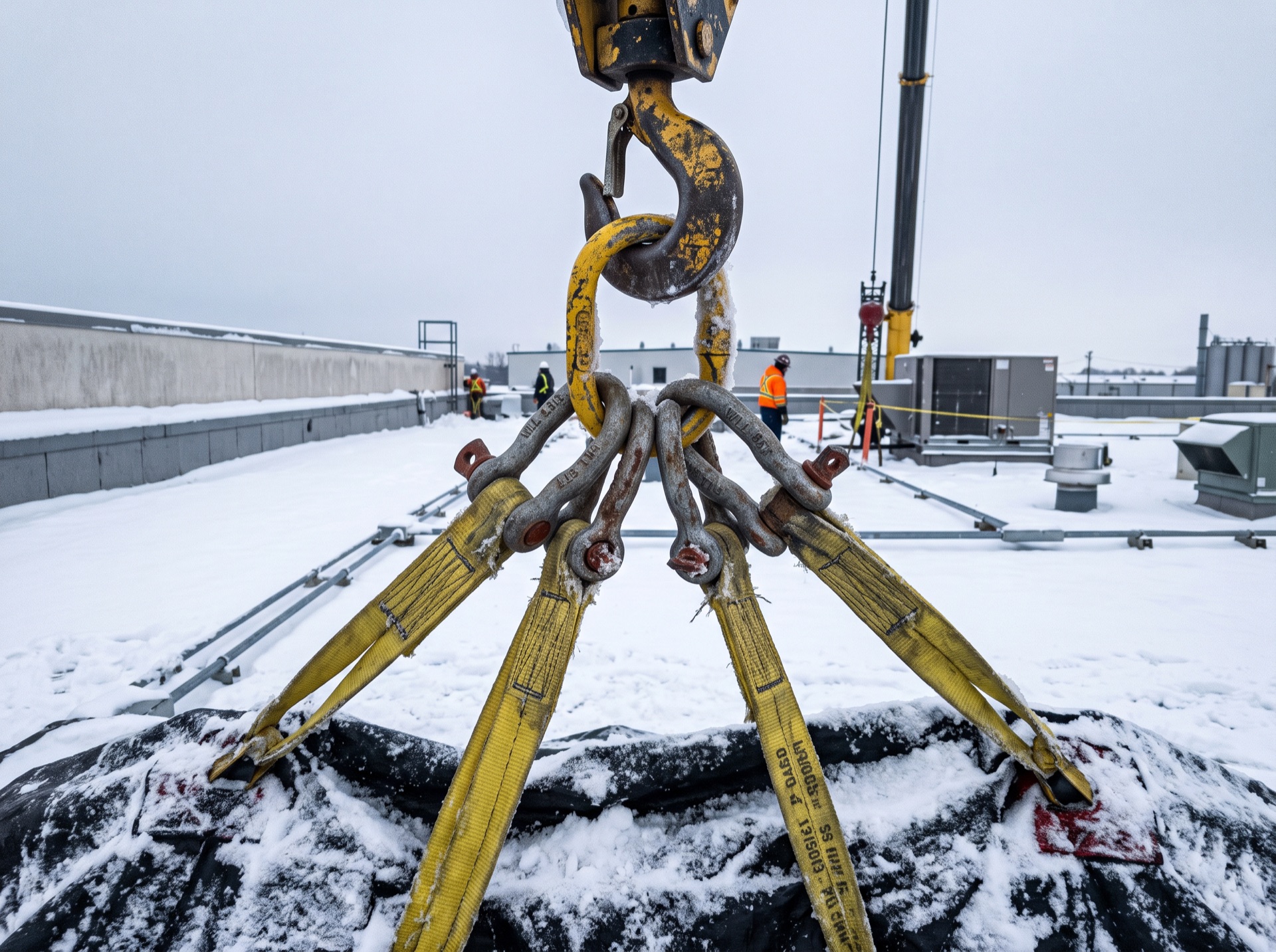
Every crane has a wind chart, and a tarp full of snow is about the worst possible load to put on a hook in a gust - large surface area, light enough to sail, heavy enough to hurt. The limit is lower than people expect and it is not negotiable.
A Apple Valley pick that is cancelled for wind gets rescheduled rather than argued about. The alternative is a swinging load over an occupied building.
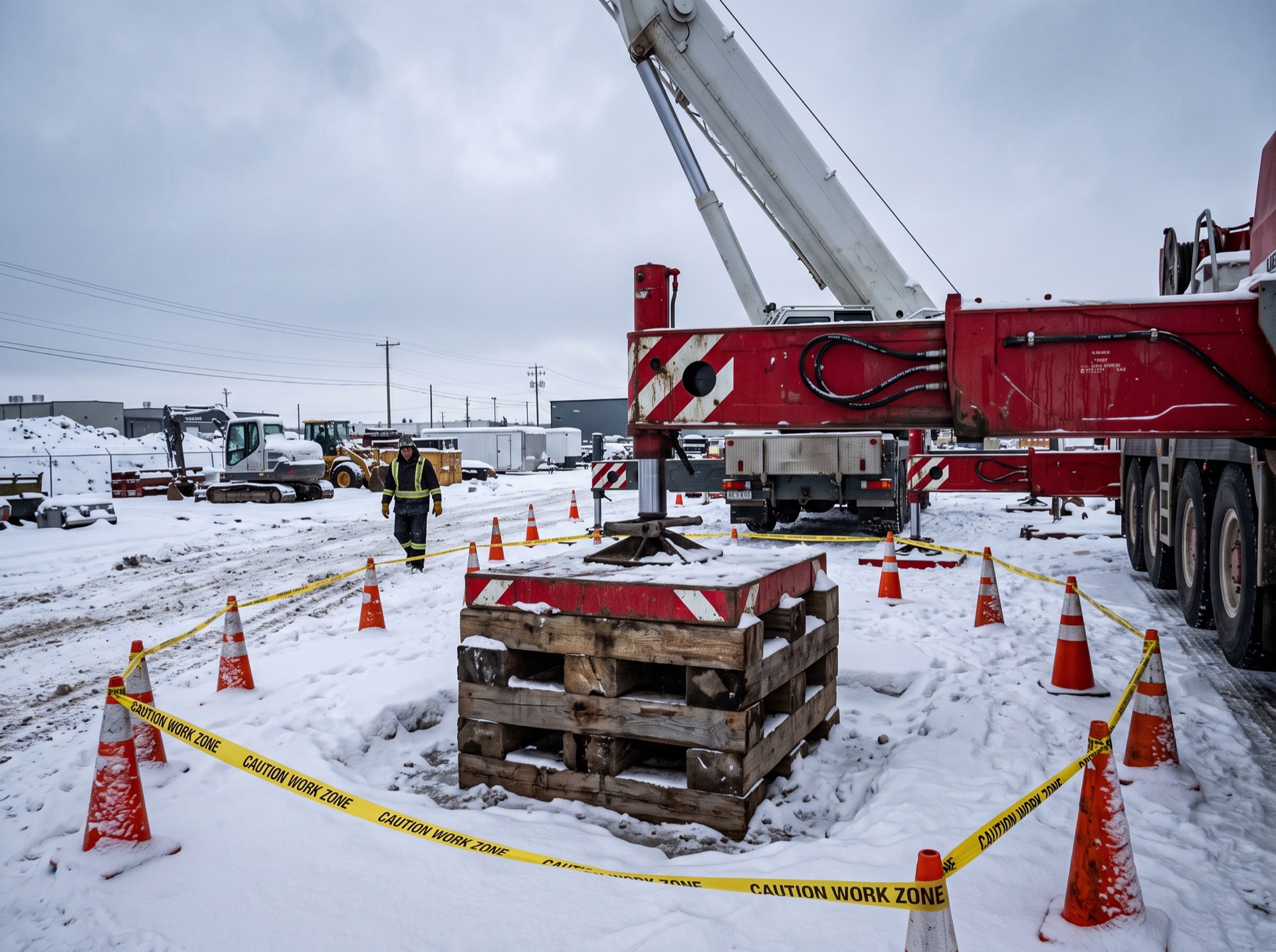
Outriggers on frozen and uneven ground
Frozen ground is not automatically good bearing. Frost heave, buried utilities, septic fields, soft fill under a lawn and anything that thaws mid-job all change what the pads are sitting on.
Pads are sized for the load and placed deliberately. It is the least visible part of a pick in Apple Valley and the part with the least margin for improvisation.
What goes in the tarp and what does not
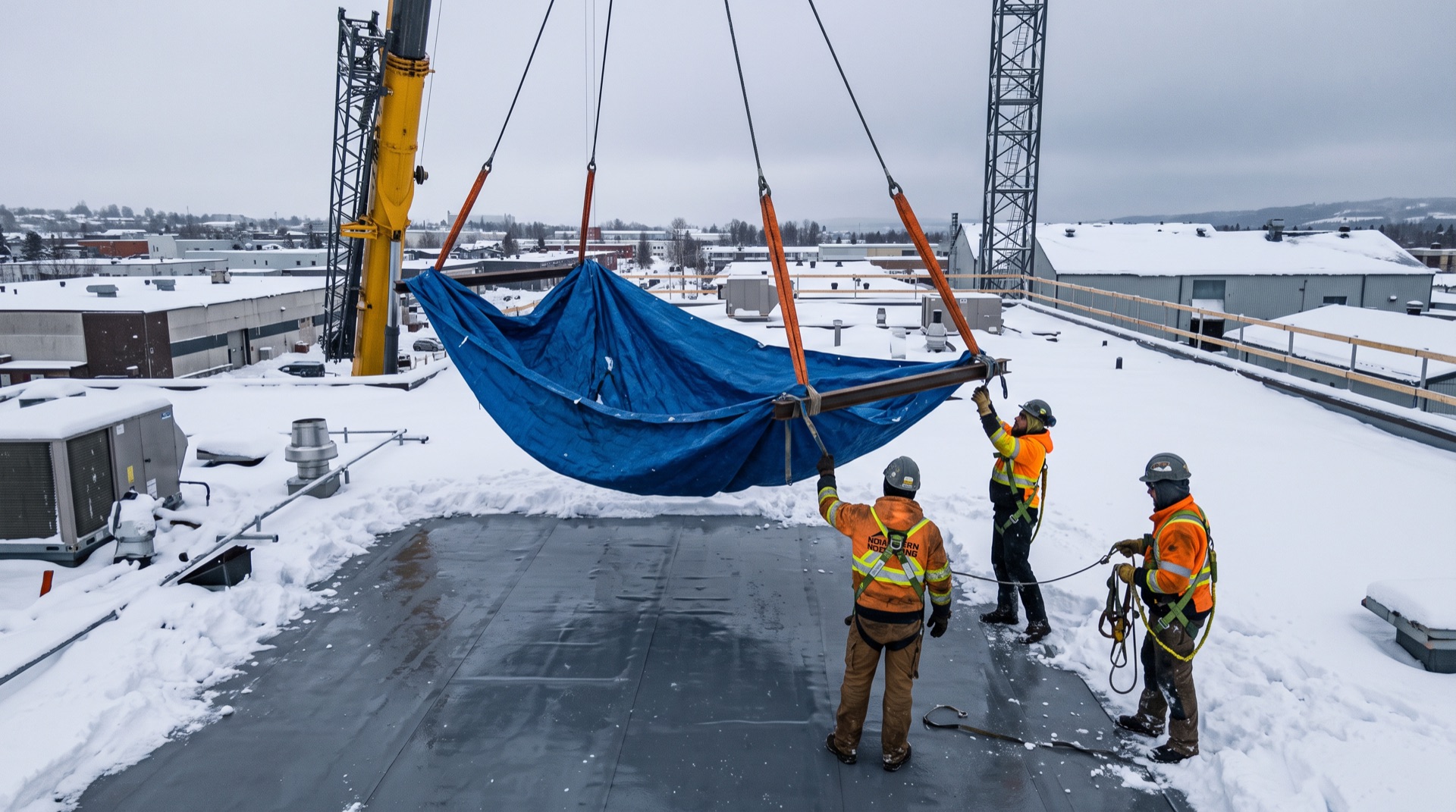
A pick lifts loose and broken snow. It does not lift a solid sheet of ice frozen to the membrane, and trying to make it do so is how a tarp takes the roof covering with it.
So the sequence is crews cutting and breaking the pack into liftable material, the crane moving it, and steam dealing with whatever is bonded to the surface. The crane is the transport, not the demolition.
What you get in Apple Valley
- Load calculated firstDepth, density and area against design capacity before anything mobilises
- Lift planned firstAccess, swing radius, overhead lines and drop zone walked before scheduling
- Permits handledPulled where the municipality requires them for a street setup
| Typical scope | Steam, 6-12 crew hours typical |
|---|---|
| Dispatch window | Same day to 24 hours |
| Coverage area | Apple Valley and Dakota County |
| Local ice-barrier practice | Eave membrane expected on re-roofs |
| Documentation | Dated before and after photos, written scope in Xactimate line items |
| Pricing model | Billed by the crew hour, rate quoted before dispatch |
| Removal method | Low-pressure steam only. No chipping, salt or pressure washing. |
Dakota County Coverage From Apple Valley
Crews working Apple Valley cover the adjoining communities on the same route — Castle Rock, Mendota, Elko, New Market and Vermillion — so a storm week usually means one truck handling several addresses in Dakota County rather than separate trips.
Nearest hub towns with their own crane snow removal pages: Rosemount, Burnsville, Lakeville, Eagan, Farmington, Savage.
Apple Valley sits inside the regular Minnesota service area, so a crew is usually scheduled the same day or the following morning.
Most jobs do not stop at one service. Crane Snow Removal in Apple Valley often runs alongside commercial roof snow removal in Apple Valley, and both get written into one scope rather than billed as separate visits.
Active leak right now? Our 24/7 Apple Valley steam ice dam removal crews are dispatched first during a freeze event. Call (888) 561-9664.