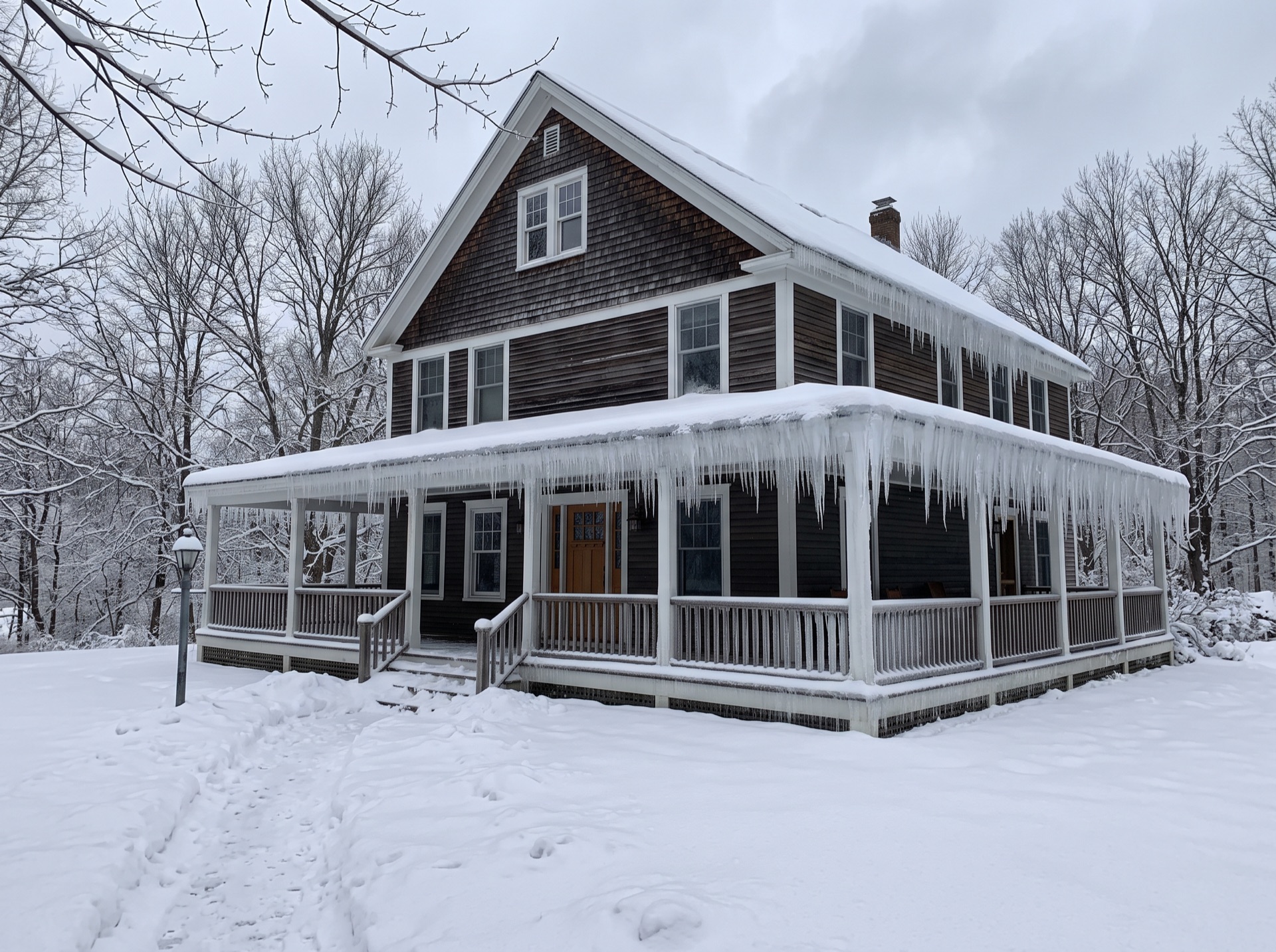
If you are in Georgetown watching icicles grow along the gutter line, what you are really watching is water that no longer has anywhere to drain. As part of our complete Georgetown winter roof services, crews handle water mitigation & dryout across Scott County.
The Georgetown Problem Is the Thermometer, Not the Snowfall
Georgetown does not need a blizzard to get an ice dam. A few inches that melts by afternoon and refreezes overnight builds one just as effectively, and it does it over and over through the season.

The building stock has no margin for it. Because the winters here read as mild, attics tend to be under-insulated, eave details are less considered, and ice barrier is as often absent as present on a roof in Georgetown.
Ice-barrier practice in Scott County
Because ice is not the first thing a homeowner in Georgetown thinks about, the membrane is the detail most often value-engineered out of a re-roof. It is worth asking for by name on any quote.
Water Mitigation & Dryout in Georgetown: How The Work Runs
Where the water actually went
Thermal imaging and meters find it, because the visible stain is usually the smallest part. Water tracks along top plates, down stud bays and across ceiling planes, and it collects in places with no stain at all — behind knee walls, above soffits, inside cathedral ceiling cavities with no access. Wet Insulation in the Attic.
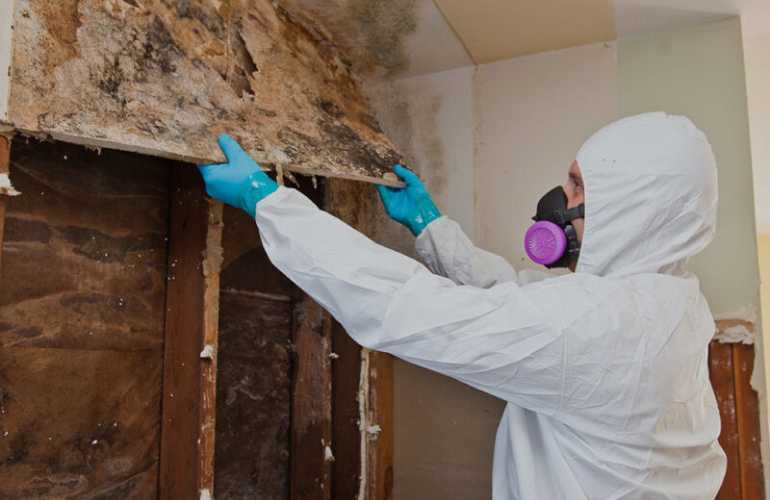
Where opening up finds mold, the work moves under containment and becomes mold remediation. Either way the same company puts the room back together afterward.
The sequence
Standing water is extracted first. Saturated insulation comes out, because it cannot be dried in place and it is holding moisture against everything it touches. Containment goes up where tear-out is needed, with HEPA scrubbers running inside it. Dehumidifiers and air movers are placed to the room's volume and load rather than scattered around.
Then the readings get taken daily until they hit standard. In a Georgetown winter, with cold cavities and low ambient humidity outside, that typically takes longer than people expect.
Contents, storage and what moves out of the way
Mitigation needs the room. Furniture gets blocked up or moved, stored boxes come out of the affected area, and in a finished basement the contents usually have to leave entirely before tear-out starts.
What is already wet gets photographed and listed as it is moved, because contents are a separate part of most policies and the list is considerably harder to assemble once everything has been shifted.
Why a cold attic will not dry itself
Drying is evaporation, and evaporation needs warmth and air movement. A Georgetown attic in February has neither. Wet insulation and damp sheathing sit at near-freezing with no meaningful vapor drive, which is why a leak that stops in January can still be wet in March.
Equipment supplies what the season does not. Without it the structure is not drying slowly - in a cold cavity it is very largely not drying at all.
When the dryout finds mold
Opening a ceiling or a wall below an ice dam leak often finds growth that was not visible from the room: on the back of the drywall, on the top plate, or on the roof sheathing above.
When it does, the work moves under containment and becomes mold remediation, written into the same claim. It is far cheaper to find it now than after the room has been closed up and repainted.

What you get in Georgetown
- Documented to standardDaily moisture readings until the structure meets IICRC S500 dry standard
- Wet insulation removedIt cannot be dried in place and it holds water against the framing
- Containment and HEPABarriers and air scrubbers wherever tear-out is required
| Documentation | Dated before and after photos, written scope in Xactimate line items |
|---|---|
| Primary climate stressor | Repeated thaw-freeze cycling |
| Dispatch window | Same day to 24 hours |
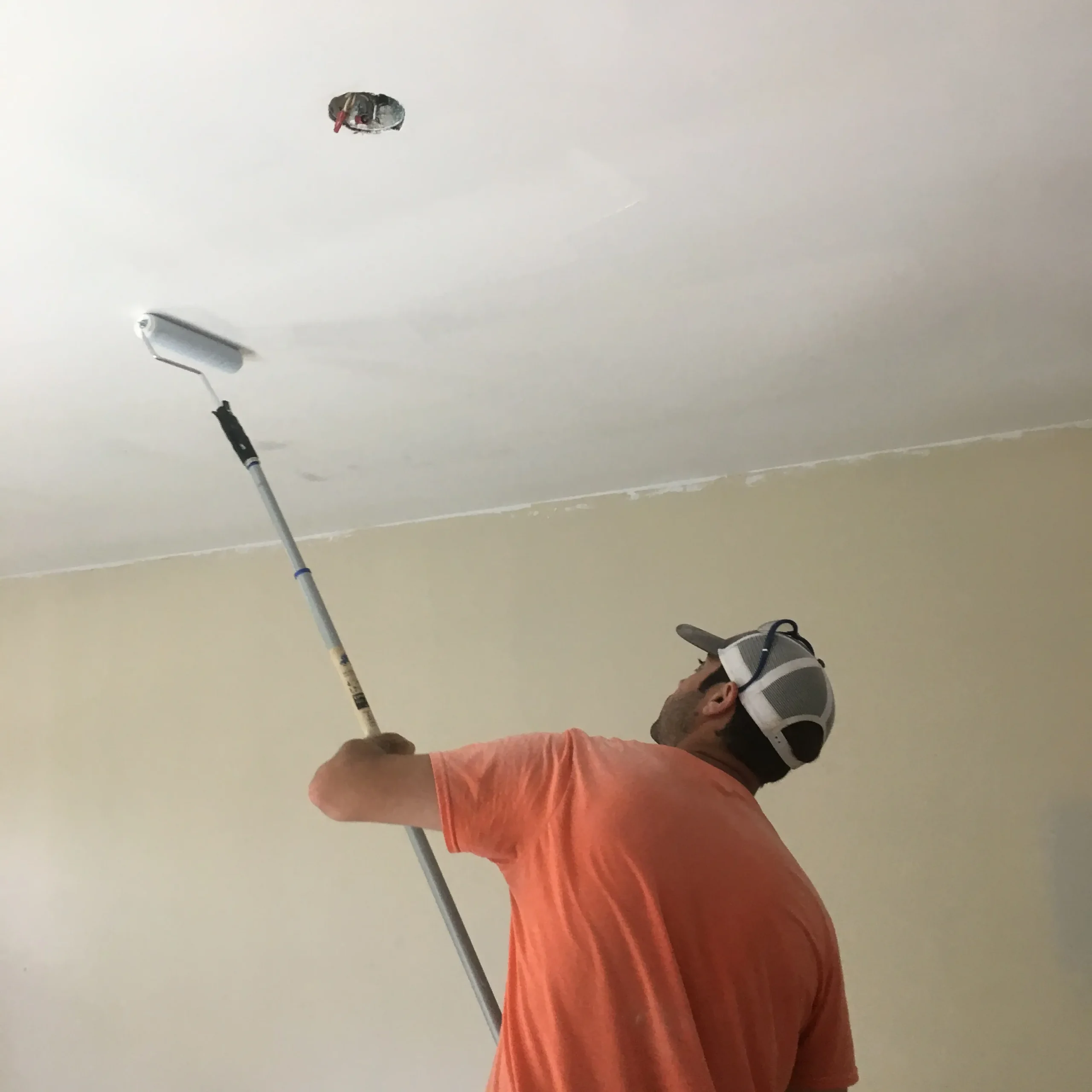
| Interior repair | Insulation, drywall, texture, trim and paint, done in-house after drying |
| Method | Containment, HEPA filtration and drying to a measured IICRC standard |
| Coverage area | Georgetown and Scott County |
| Billing | Xactimate line items on one claim; carrier billed directly where the policy allows |
Neighborhoods and Towns We Reach From Georgetown
Crews working Georgetown cover the adjoining communities on the same route — Midway, Stamping Ground and Sadieville — so a storm week usually means one truck handling several addresses in Scott County rather than separate trips.
Nearest hub towns with their own water mitigation pages: Lexington, Nicholasville, Richmond, Florence, Covington, Fort Thomas.
Coverage runs across Georgetown and the nearby towns all winter, and capacity is surged into whichever Kentucky market the storm actually hits.
Most jobs do not stop at one service. Water Mitigation in Georgetown often runs alongside ice dam removal in Georgetown, and both get written into one scope rather than billed as separate visits.
Active leak right now? Our 24/7 Georgetown steam ice dam removal crews are dispatched first during a freeze event. Call (888) 561-9664.