Ice dams are not a Bowling Green problem so much as a Kentucky one, and they show up on the same handful of eaves and valleys year after year. As part of our complete Bowling Green winter roof services, crews handle mold remediation across Warren County.
Bowling Green Ice Dams: Why a Few Inches Is Enough
Three inches of snow and a week of days above freezing and nights below it will build ice on a Warren County eave just as reliably as a foot of snow further north.

And the cycling is relentless rather than dramatic. Fifteen or twenty crossings of freezing in a season each add a layer, and the houses with the thinnest attic insulation in Warren County all find out in the same week.
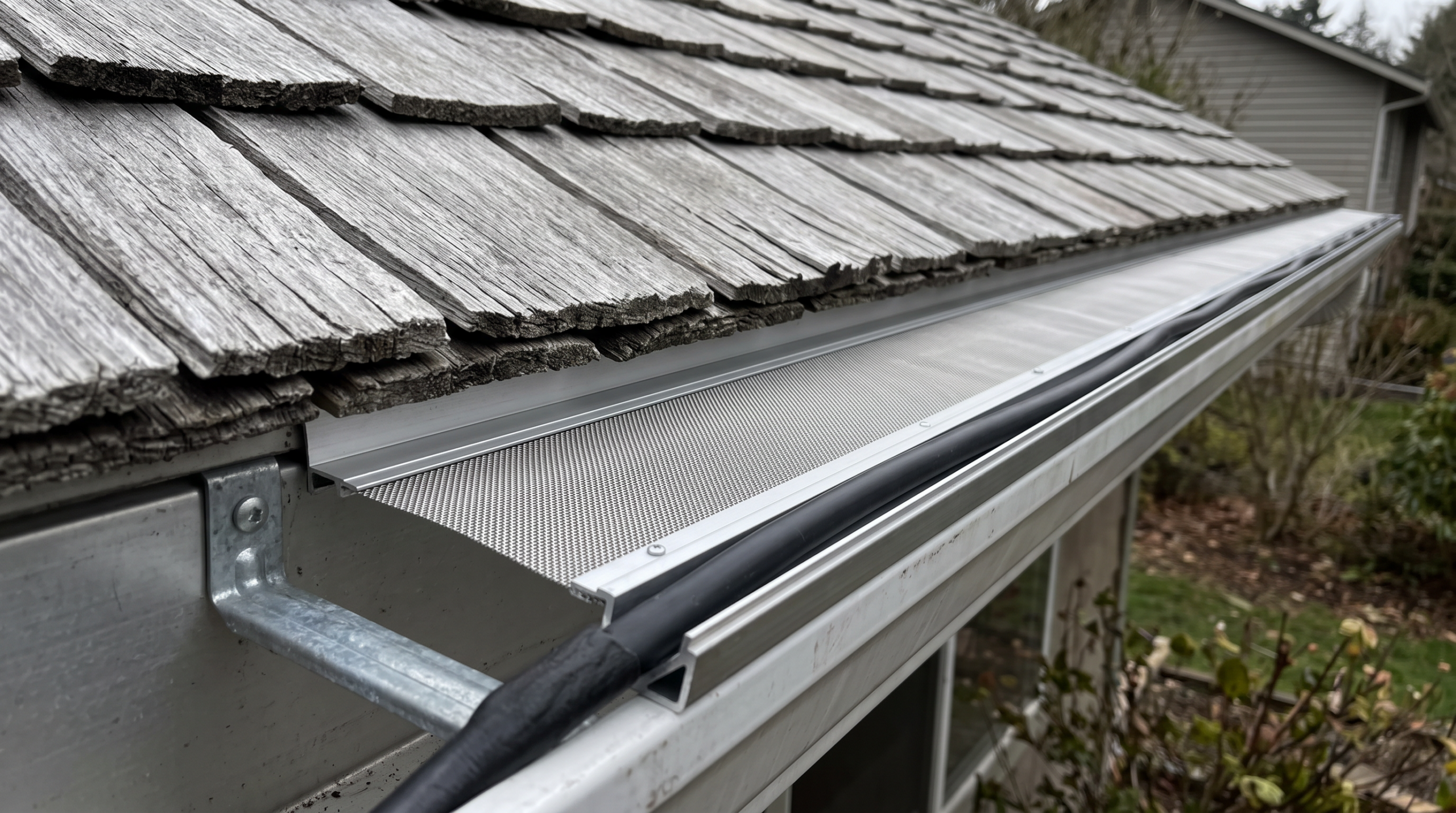
Ice-barrier practice in Warren County
Because ice is not the first thing a homeowner in Bowling Green thinks about, the membrane is the detail most often value-engineered out of a re-roof. It is worth asking for by name on any quote.
Mold Remediation in Bowling Green: How The Work Runs
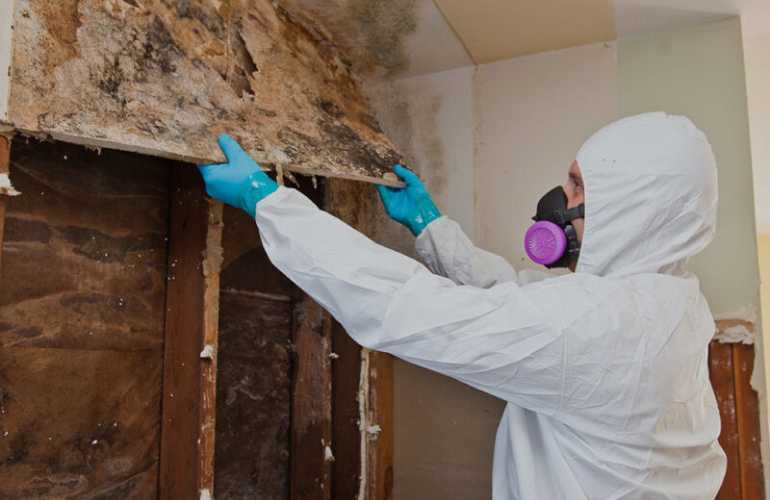
Containment and negative air
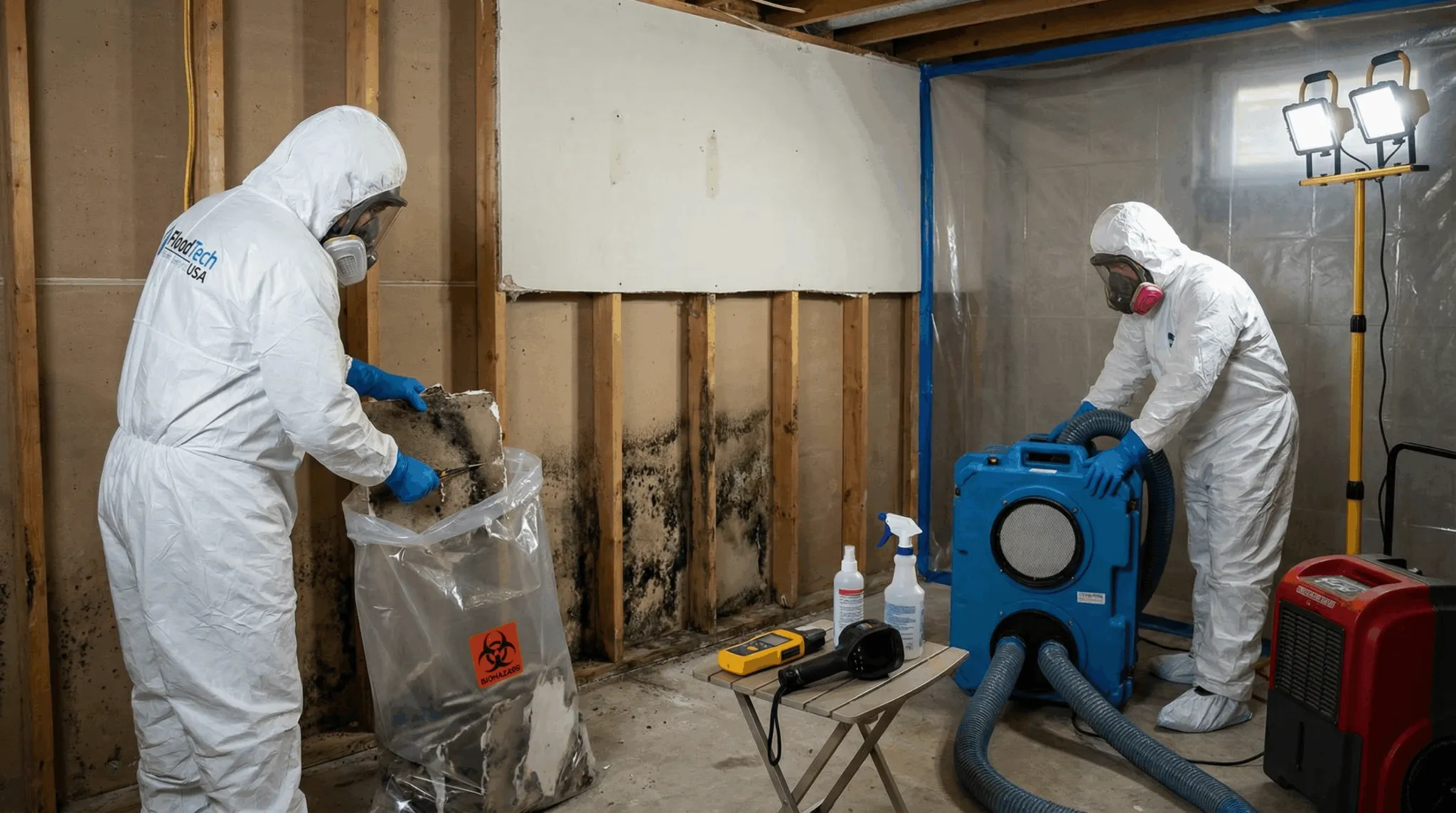
Before anything moldy is disturbed, the work area gets sealed off with poly sheeting and put under negative air pressure with an HEPA air scrubber exhausting it. Air flows into the work area, not out of it. Mold in the Attic After an Ice Dam.
That is the step that keeps a contained attic or ceiling problem from becoming a whole-house problem in Bowling Green. Disturbing mold without it spreads spores to rooms that were clean.
Remediation, then the rebuild, from one company
Removing mold is only half a job if you then have to find someone else to hang drywall, re-insulate and paint. Ice Dam Now does the interior repair as well: new insulation, drywall, texture, trim and paint, so the ceiling that came down to get the mold out goes back up under the same scope and the same claim.
That also means one set of photographs and moisture readings runs from the first visit to the finished room, which is what an adjuster wants to see.
Attic mold: the sheathing, the rafters and the insulation
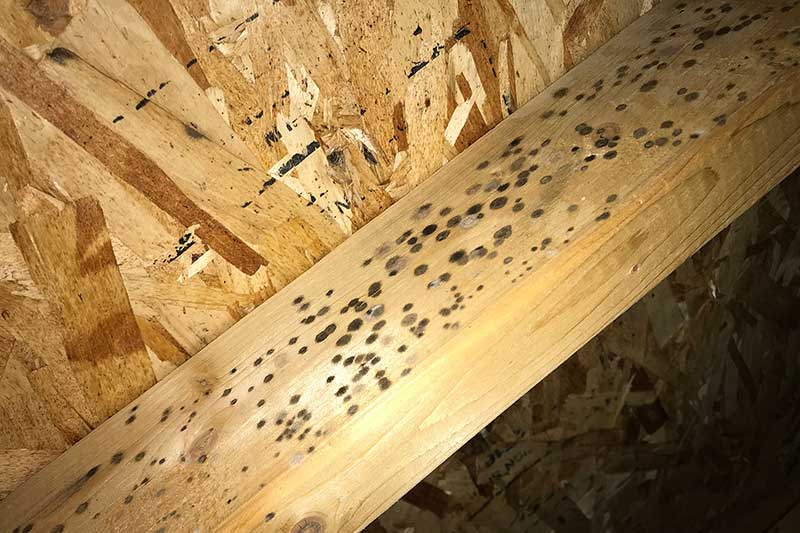
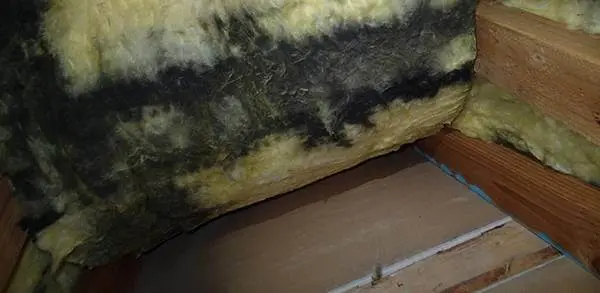
Most ice dam mold is in the attic. Meltwater backs up under the shingles at the eave, wets the roof deck from above, and runs down onto the insulation. Black spotting on the underside of the OSB or plywood along the eave line, darkened rafters and matted, stained insulation are the signs.
Wet insulation comes out and is bagged inside the containment. Affected sheathing and framing are HEPA vacuumed, cleaned and treated, or cut out and replaced where the wood has lost strength. Then the attic is dried to a measured number before anything goes back in.
Clearance before the room is closed up
Before rebuild starts, the cleaned area is inspected again and, where appropriate, tested to confirm it is clear. Containment stays up until that point.
The clearance result goes into the claim file along with the before photographs, the removal photographs and the moisture log.
Why ice dam water turns into mold
Ice dam water does not arrive like a burst pipe. It seeps in over days or weeks, into places nobody looks: the underside of the roof sheathing, the insulation along the eave, the top of an exterior wall. Those spaces are dark, they are full of wood and paper, and in winter they barely dry at all.
That is the whole recipe. Give mold a damp organic surface and a couple of days and it starts. The cold slows it down, the spring warm-up speeds it up, and by the time there is a musty smell upstairs it has usually been growing for weeks.
What you get in Bowling Green
- Interior repair in-houseInsulation, drywall, texture, trim and paint put back by the same crews
- Claim-ready recordsDated photos and Xactimate line items alongside the water loss
- Containment firstPoly barriers and negative air so spores stay in the work area
| Method | Containment, HEPA filtration and drying to a measured IICRC standard |
|---|---|
| Documentation | Dated before and after photos, written scope in Xactimate line items |
| Interior repair | Insulation, drywall, texture, trim and paint, done in-house after drying |
| Dispatch window | Same day to 24 hours |
| Coverage area | Bowling Green and Warren County |
| Primary climate stressor | Repeated thaw-freeze cycling |
| Local ice-barrier practice | Eave membrane on new work, often absent |
Warren County Coverage From Bowling Green
Crews working Bowling Green cover the adjoining communities on the same route — Rockfield, Oakland, Alvaton, Woodburn and Drake — so a storm week usually means one truck handling several addresses in Warren County rather than separate trips.
Nearest hub towns with their own mold remediation pages: Hopkinsville, Elizabethtown, Owensboro, Louisville, Nicholasville, Lexington.
Bowling Green sits inside the regular Kentucky service area, so a crew is usually scheduled the same day or the following morning.
Most jobs do not stop at one service. Mold Remediation in Bowling Green often runs alongside water mitigation & dryout in Bowling Green, and both get written into one scope rather than billed as separate visits.
Active leak right now? Our 24/7 Bowling Green steam ice dam removal crews are dispatched first during a freeze event. Call (888) 561-9664.