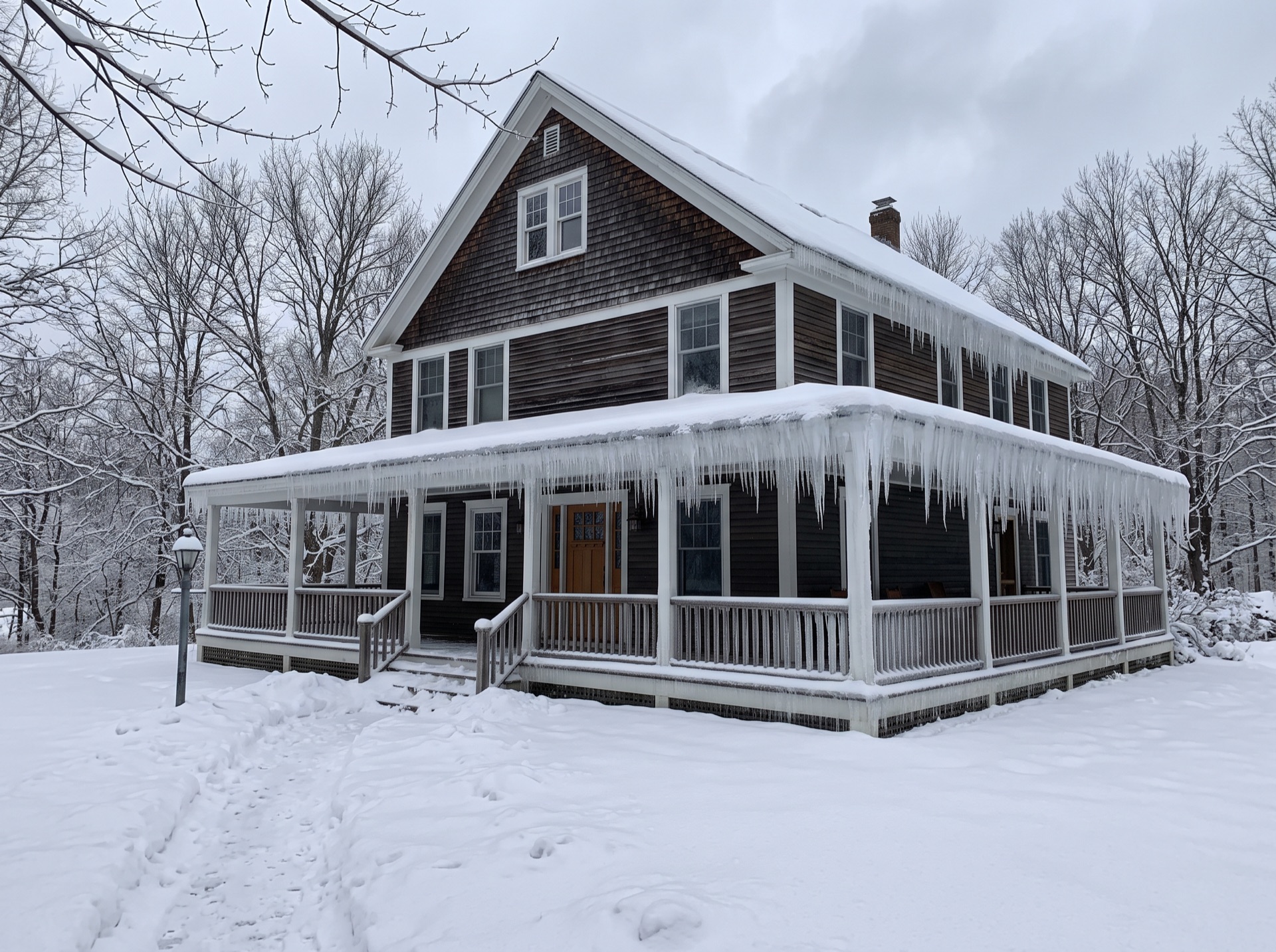
If you are in Waukegan watching icicles grow along the gutter line, what you are really watching is water that no longer has anywhere to drain. As part of our complete Waukegan winter roof services, crews handle ice dam removal across Lake County.
Small Snow, Repeated Cycles: Waukegan Ice Dams
What catches people out in Lake County is that the snow looks harmless. Two or three inches reads as nothing, and it builds ice on an eave just as effectively as a northern storm given enough cycles.

Because the winters read as mild, the building stock is not built for ice. Attic insulation is thinner, eave details are less considered, and ice barrier is more often absent than present on a roof in Waukegan.
Ice-barrier practice in Lake County
Because ice is not the first thing a homeowner in Waukegan thinks about, the membrane is the detail most often value-engineered out of a re-roof. It is worth asking for by name on any quote.
Ice Dam Removal in Waukegan: How The Work Runs
What happens after the ice is off
Once the eave is clear and water is draining, the crew walks the interior with you where there is visible damage and says plainly whether it needs drying. Wet insulation and a damp ceiling cavity do not resolve themselves in a cold Waukegan February. Water Stain on the Ceiling in Winter.
If it does, that is a separate scope and it gets written separately — nobody is upsold a dryout on the strength of one damp patch.
What gets photographed, and why it matters later
Before the lance comes out, the crew shoots the dam from the ground and from the roof, the icicle line, any staining visible inside, and the specific courses where water is tracking under the shingles. Timestamps are on every frame.
That record is the whole case if a claim follows. An adjuster arriving in March sees a dry roof and a stained ceiling; the photographs are what connect the two, and they are what a maintenance-exclusion denial runs into.
If water already got inside
Taking the ice off stops new water. It does nothing about what is already in the insulation, the ceiling and the walls of a Waukegan home.
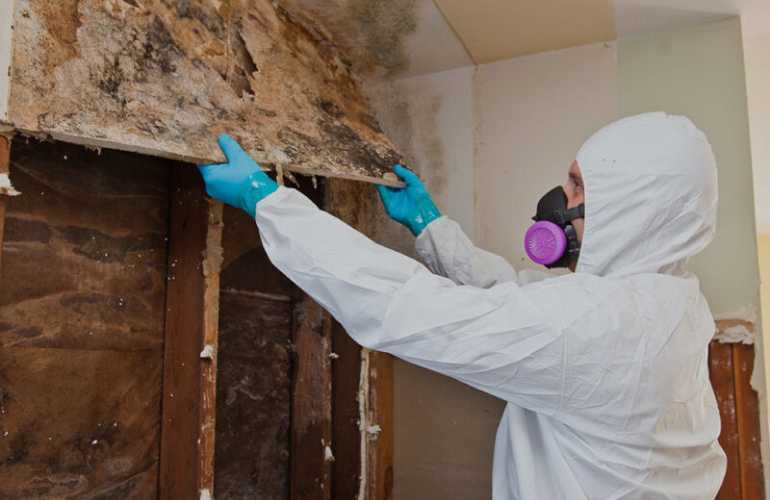
The same company handles the rest: water mitigation and dryout, mold remediation where the water has led to growth, the interior repair, and the roof where the dam damaged it, all documented on one insurance claim.
Access, ladders and what the crew needs on site
Steam equipment needs somewhere to park within hose reach, and ladders need footing that is not a buried flower bed or a sheet of ice. Clearing a path to the affected eave, moving vehicles off the driveway and unlocking a side gate takes ten minutes and saves considerably more than that on the clock.
Where the only access is through a neighbor's property, that conversation is worth having before the crew is in the street rather than while it waits.
Working at night and during an active storm
Freeze events do not keep office hours, and the worst leaks tend to announce themselves in the evening when the day's melt refreezes. Crews run lit, and a roof that is actively collecting snow is worked anyway, because waiting for better weather means the dam is bigger when somebody finally gets to it.
What does stop a crew is wind and lightning. Both are judgment calls made on site in Waukegan, and a postponed start gets explained rather than dressed up.

What you get in Waukegan
- Valleys and dormersThe dead spots that hold the deepest ice get worked specifically
- Same-day dispatchActive interior leaks go to the front of the schedule during a freeze event
- Cleared to the shingleThe dam comes off completely, not just a drainage channel cut through it
| Pricing model | Billed by the crew hour, rate quoted before dispatch |
|---|---|
| Local ice-barrier practice | Eave membrane on new work, often absent |
| Documentation | Dated before and after photos, written scope in Xactimate line items |
| Coverage area | Waukegan and Lake County |
| Typical scope | Steam, 4-8 crew hours typical |
| Dispatch window | Same day to 24 hours |
| Primary climate stressor | Repeated thaw-freeze cycling |
Lake County Coverage From Waukegan
Crews working Waukegan cover the adjoining communities on the same route — Great Lakes, Zion, Lake Bluff, Wadsworth and Libertyville — so a storm week usually means one truck handling several addresses in Lake County rather than separate trips.
Nearest hub towns with their own ice dam removal pages: North Chicago, Gurnee, Mundelein, Highland Park, Deerfield, Buffalo Grove.
Coverage runs across Waukegan and the nearby towns all winter, and capacity is surged into whichever Illinois market the storm actually hits.
Most jobs do not stop at one service. Ice Dam Removal in Waukegan often runs alongside water mitigation & dryout in Waukegan, and both get written into one scope rather than billed as separate visits.
Active leak right now? Our 24/7 Waukegan steam ice dam removal crews are dispatched first during a freeze event. Call (888) 561-9664.