Skip to content
Grand Junction, CO
Permanent Prevention · Mesa County

Heated Roof & Gutter Cables in Grand Junction, CO — Alpine Emergency Crews

Heated Roof & Gutter Cables in Grand Junction, CO from Ice Dam Now: low-pressure steam only, across Mesa County. No chipping, no salt, no pressure washing. Crews carry licensing, insurance and fall-protection certification, bill by the crew hour at a rate quoted on the phone, prioritize active interior leaks the same day, and document the work for insurance.

No fasteners through the roof — Clips and standoffs only, nothing driven through the covering
Complete drain path — Eave zig-zag, valleys, gutter trough and downspout to daylight
Smart controls — Thermostat and moisture sensing so it runs on the conditions that make ice
GFCI-protected circuit — Dedicated circuit and proper terminations, not an extension cord

Get Ice Dam Help Grand Junction

A few quick questions, then pick a time. If water is coming in, call instead.

What is the zip code of the home?

Roof leaking right now? Call (888) 561-9664 — that is faster than any form.
Water coming through the ceiling?Every hour an ice dam sits there, more water gets under the shingles.Call (888) 561-9664
24/7
Dispatch All Winter
Steam
Only — No Pressure
Mesa
County Coverage
Same Day
For Active Leaks
Insured
Licensed & Harness-Certified

Homeowners across Mesa County call about icicles. Icicles are cosmetic. The dam behind them, holding back standing water, is not. As part of our complete Grand Junction winter roof services, crews handle heated roof & gutter cables across Mesa County.

Sun on Cold Snow: The Grand Junction Pattern

Mountain ice dams are a solar problem more than a temperature one. The sun works the pack from above while the air stays cold, so meltwater is produced and refrozen within the same afternoon.

Diagram showing how ice dams form on roofs due to inadequate insulation and poor ventilation
Heat escaping into the attic melts roof snow; the meltwater refreezes at the cold eave and the dam grows a layer every cycle.

Aspect decides which eaves suffer. A sunny plane sheds water across a roof in Grand Junction to a shaded eave that has not been above freezing for weeks, and that is where the ice builds into a wall.

Ice-barrier practice in Mesa County

Design snow loads in Mesa County are among the highest anywhere, and the membrane and retention requirements that go with them are not formalities. On an older Grand Junction cabin or chalet neither may be present.

Heated Roof & Gutter Cables in Grand Junction: How The Work Runs

Self-regulating versus constant wattage

Self-regulating cable varies its output along its own length with the temperature of what it is touching: colder sections draw more, warmer sections throttle back. It can be cut to length on site, it tolerates being overlapped in a gutter, and it cannot cook itself into failure the way constant-wattage cable can. Icicles and a Wet Ceiling.

Constant wattage is cheaper per foot and that is the whole of its case. On a roof in Grand Junction that sees real freeze-thaw cycling, self-regulating is the one worth installing.

What shortens the life of a cable run

Self-regulating cable is generally good for a decade or more. What ends it early is ultraviolet exposure on a run left unshaded through summer, physical damage from somebody raking or shovelling over it, rodents in the gutter, and ice loading on clips that were never rated for it.

A system installed with UV-stable cable, proper clips and a note on the roof plan saying where it runs will usually outlast one that was simply stapled up in a hurry.

Fastening without putting holes in the roof

Clips and standoffs designed for the job, adhered or clipped to the shingle edge. Never a fastener driven through the covering, and never left loose to abrade in the wind.

The failures that give heat cable a bad name are nearly all installation failures of this kind rather than product failures.

Cable is the backstop, not the cure

The underlying cause of an ice dam is heat leaving the house. Air sealing the attic, fixing crushed baffles and topping up insulation addresses that; cable manages what is left.

A Grand Junction property that gets both rarely needs an emergency call again. One that gets only cable usually needs fewer.

Valleys, downspouts and the parts people forget

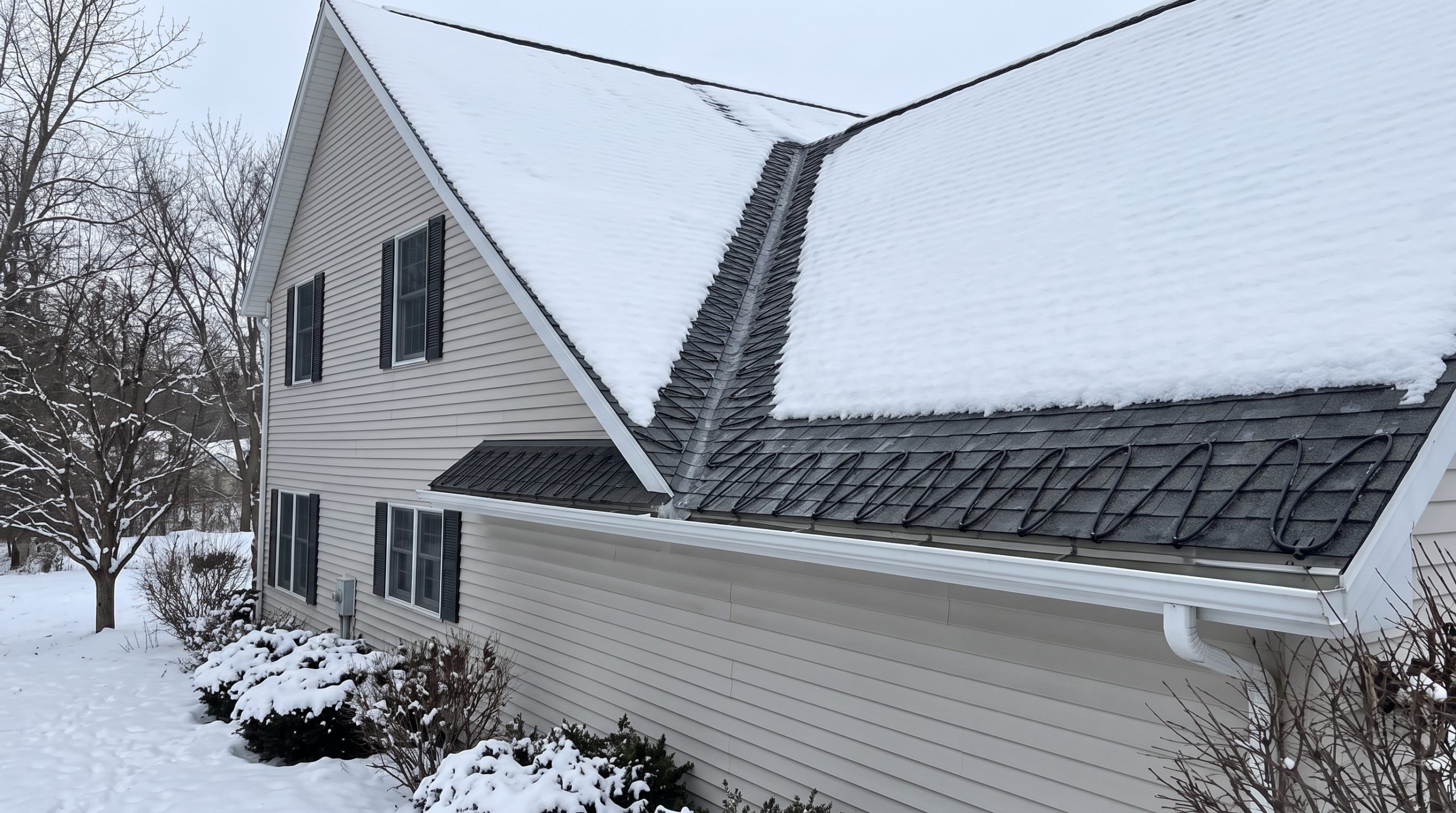
A zig-zag along the eave with nothing in the valley and nothing down the downspout produces a melted strip of roof draining into a solid block of ice. The water still has nowhere to go, and the dam just forms somewhere slightly different.

A system that works runs the full path: eave, valley, gutter trough and all the way down the downspout to daylight. The downspout run is the piece most often left out and the piece most often responsible for the system not working.
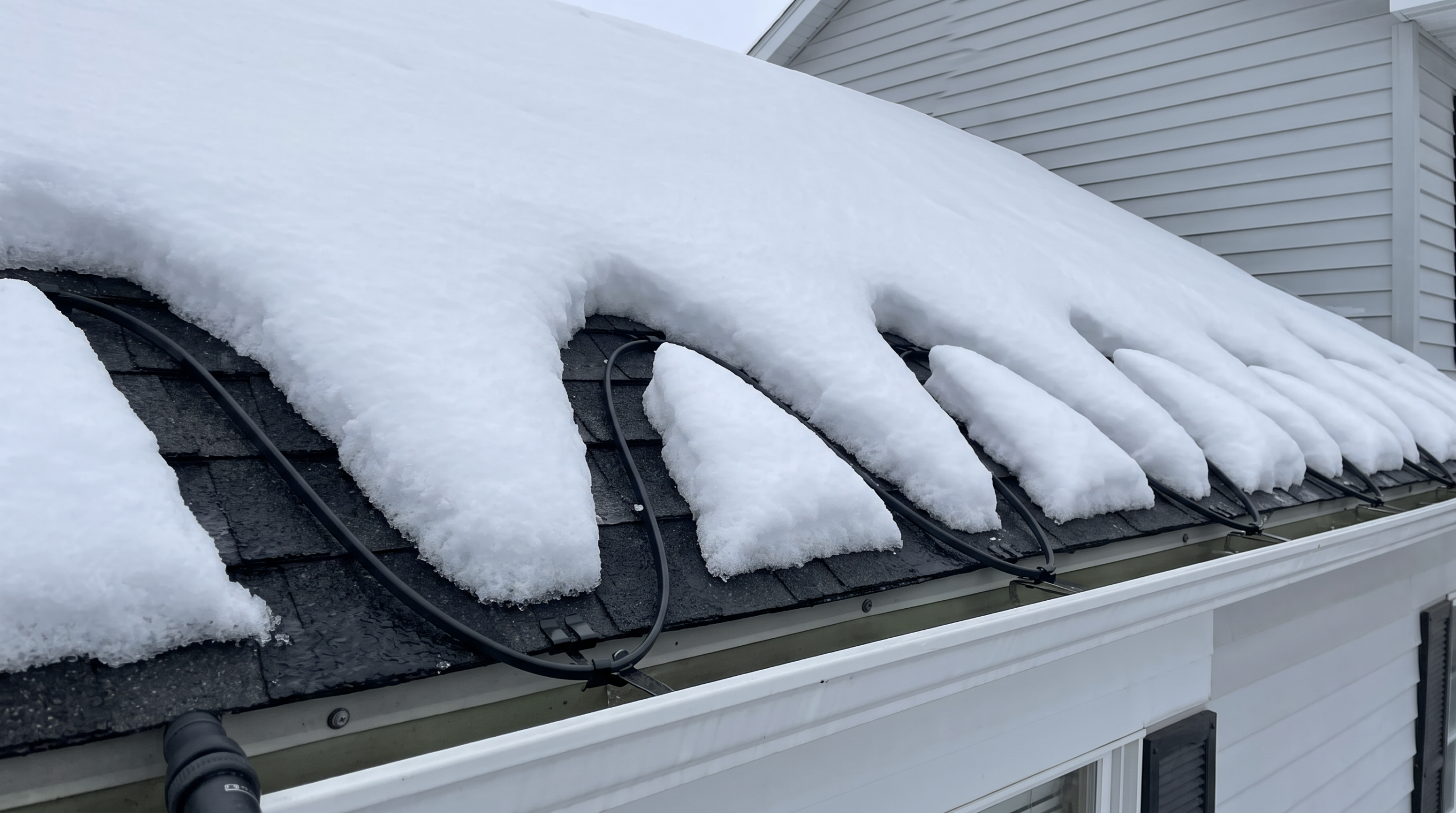
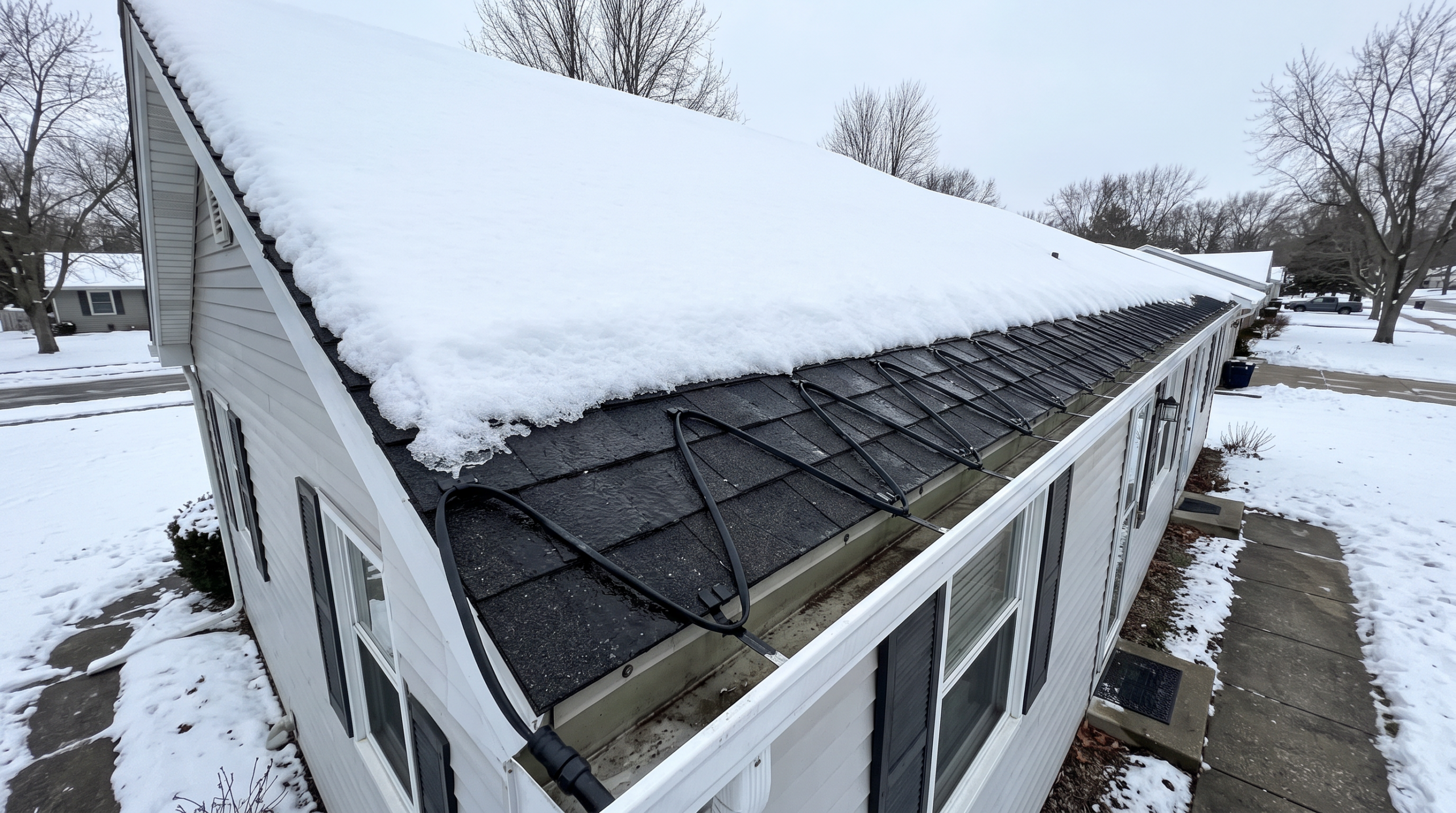
Heat cable melting drainage channels through heavy snow on roof edge
Electric heat cables create distinct melt channels through accumulated snow along a residential roof edge.

What you get in Grand Junction

  • Complete drain pathEave zig-zag, valleys, gutter trough and downspout to daylight
  • Downspout traced to daylightThe drain path ends on the ground, not in a block of ice
  • Zig-zag sized properlyEave coverage measured against the actual cold overhang
Heated Roof & Gutter Cables in Grand Junction, CO — specification
Service specification for Grand Junction, CO
Typical scopeSteam, 8-16 crew hours typical
DocumentationDated before and after photos, written scope in Xactimate line items
Dispatch window24 to 48 hours in mountain terrain
ServiceHeated Roof & Gutter Cables in Grand Junction, CO
Pricing modelBilled by the crew hour, rate quoted before dispatch
Primary climate stressorSolar melt on deep pack, shaded eaves
Local ice-barrier practiceExtended membrane plus snow retention

Mesa County Coverage From Grand Junction

Crews working Grand Junction cover the adjoining communities on the same route — Clifton, Palisade, Whitewater, Fruita and Glade Park — so a storm week usually means one truck handling several addresses in Mesa County rather than separate trips.

Nearest hub towns with their own heat cables pages: Montrose, Glenwood Springs, Crested Butte, Telluride, Aspen, Vail.

Grand Junction sits inside the regular Colorado service area, so a crew is usually scheduled the same day or the following morning.

Most jobs do not stop at one service. Heat Cables in Grand Junction often runs alongside ice dam removal in Grand Junction, and both get written into one scope rather than billed as separate visits.

Active leak right now? Our 24/7 Grand Junction steam ice dam removal crews are dispatched first during a freeze event. Call (888) 561-9664.
Conditions We Work In

Heated Roof & Gutter Cables In Practice

Conditions crews work in across Mesa County. Every job is photographed before and after.

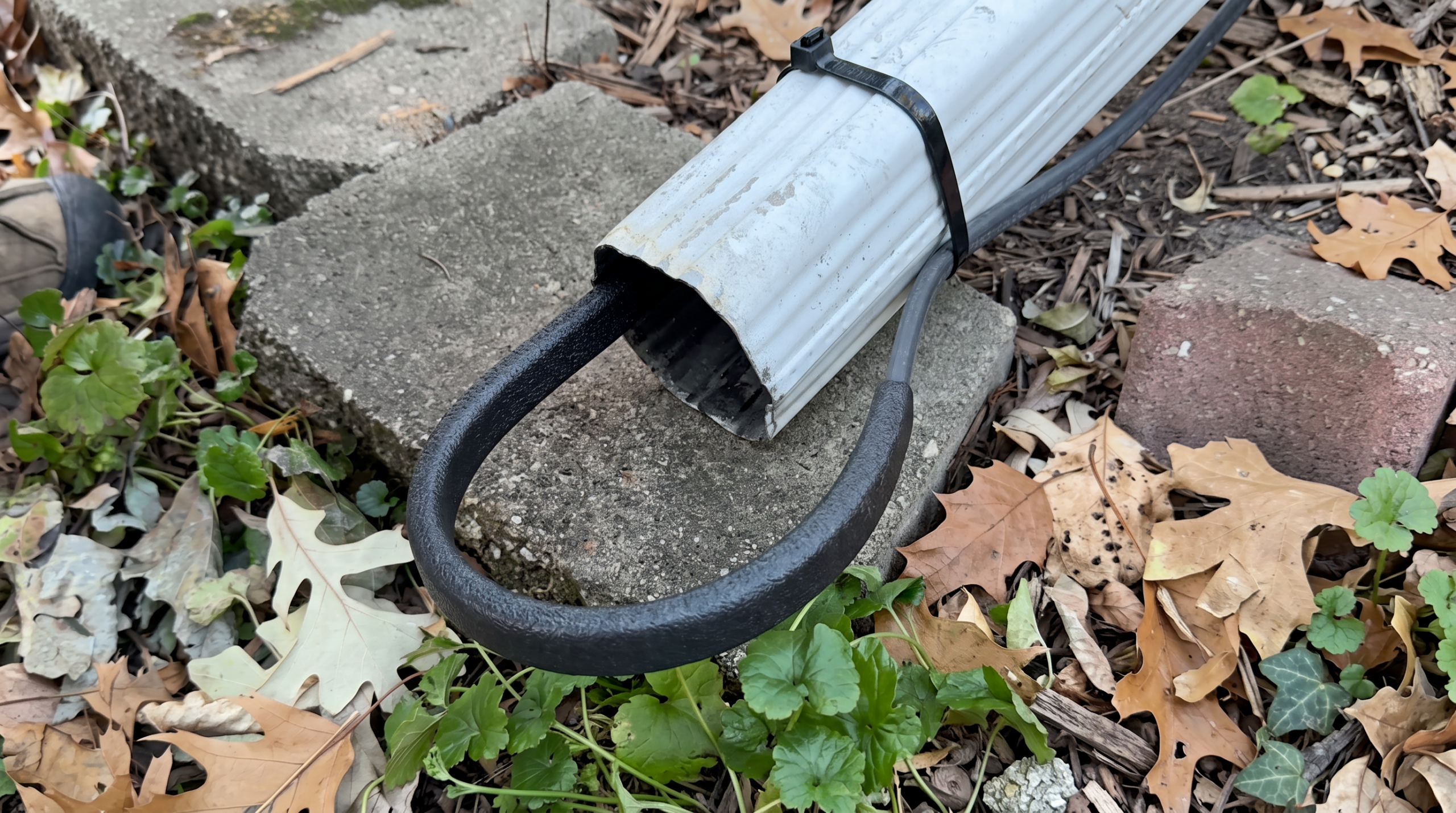
Heated cable loop extending from end of white aluminum downspout over concrete step
A self-regulating heat cable forms a loop at the base of a downspout to prevent ice buildup.
Electric heat cable zigzagging along snowy roof edge for ice dam prevention
A self-regulating heat cable installed along a roof's lower edge helps prevent destructive ice dams from forming.
Roof valley with heat cable preventing ice dams on snow-covered house
Heat cables installed along a roof valley keep ice dams from forming during heavy snowfall.
FAQ

Grand Junction and Mesa County FAQ

It is billed by the crew hour, and the rate plus a realistic time estimate are quoted on the phone before anyone is dispatched.

  • Scope drives the hours: length and thickness of the ice, roof pitch and height, and whether the gutters are frozen solid.
  • Access matters too — a three-story Grand Junction roof takes longer to set up on than a ranch.
  • The invoice matches the quote. There are no surprise add-ons written on the tailgate.

Yes. The dispatch area runs across Mesa County, and several addresses in one area are usually handled in the same run.

  • Adjoining communities are on the same route rather than treated as a separate trip.
  • Rural addresses outside the normal radius get told the travel position on the call.
  • Capacity is moved into whichever part of Colorado the storm actually hits.

Often for the interior water damage, sometimes for the removal itself, but it depends entirely on your carrier and policy wording.

  • Many policies treat emergency mitigation separately under a duty to protect property clause.
  • Denials usually cite the maintenance exclusion, which dated photographs taken during the event are the direct counter to.
  • Crews photograph the dam, the entry points and the interior damage, and write the scope in Xactimate line items.
  • The coverage decision is between you and your carrier — no contractor can promise an outcome there.

No. Steam removal is maintenance work, not construction, so no building permit is pulled for it anywhere in Mesa County.

  • A permit does come into it once the work becomes a repair — new decking, a re-roof or structural work.
  • That is handled through the Grand Junction building department, or the Mesa County building authority where the city has no department of its own.
  • Ask before signing anything: a contractor who says a re-roof in Grand Junction needs no permit is telling you something useful about how they work.

Material coming off a roof has to land somewhere, so drop zones are chosen before anything starts.

  • Shrubs, condensers, railings and low porch roofs get identified and worked around.
  • Walkways and the driveway are cleared again before the crew leaves.
  • On a tight Grand Junction lot material sometimes has to be carried out, which is said in the quote.

Not usefully. Clips cannot be fixed through ice, the layout cannot be set out properly, and a cable energised under a dam melts a cavity rather than a drainage path. The ice comes off first, then the system goes in - often in the same week.

On the gutter and downspout, often yes. Roof-surface work needs the eave accessible and the adhesive and fastening done above freezing, so a mid-winter install is typically staged — the urgent drainage path first, the roof trace finished in spring.

Nearby

Heat Cables In Towns Around Grand Junction

Same-Day Response

Get A Grand Junction Crew Out

Waiting for a thaw is a strategy, but it is an expensive one — the melt has to go somewhere, and it goes into the insulation first.

✓ Licensed & insured✓ Low-pressure steam only✓ Rate quoted up front✓ Photos for your claim
Online Quote(888) 561-9664