Most Germantown homeowners find out about an ice dam from the inside — a damp patch on a bedroom ceiling, or water tracking down the inside of a window frame. As part of our complete Germantown winter roof services, crews handle heated roof & gutter cables across Washington County.
Germantown Ice Dams: What Lake-Effect Snow Does to an Eave
The lake keeps producing snow long after a front has passed, so a roof in Washington County rarely gets the clear stretch it needs to shed. One band follows another and the pack simply deepens.

Melting happens from underneath, not from the sun. Attic heat releases water under the pack, it runs to the overhang where there is no heated space below, and it freezes. That is the engine, and in Germantown it runs most of the winter.
Ice-barrier practice in Washington County
What matters on a Germantown roof is not whether ice barrier exists but how far up it runs. Water backed up behind a foot of ice travels much further than the first course, and a membrane that stops short is a membrane that stops working.
Heated Roof & Gutter Cables in Germantown: How The Work Runs
Retrofit against installing during a roof replacement
Cable can be added to an existing roof at any time and usually is. If a Germantown roof is being replaced anyway, that is the cheaper moment: clips can go under the courses, the downspout run can be planned properly, and the circuit can be brought to the eave while the fascia is open. Icicles and a Wet Ceiling.
Where a replacement is a year or two out, it is worth saying so before the retrofit is designed, so the layout can be reused rather than scrapped.
Layout is most of the job
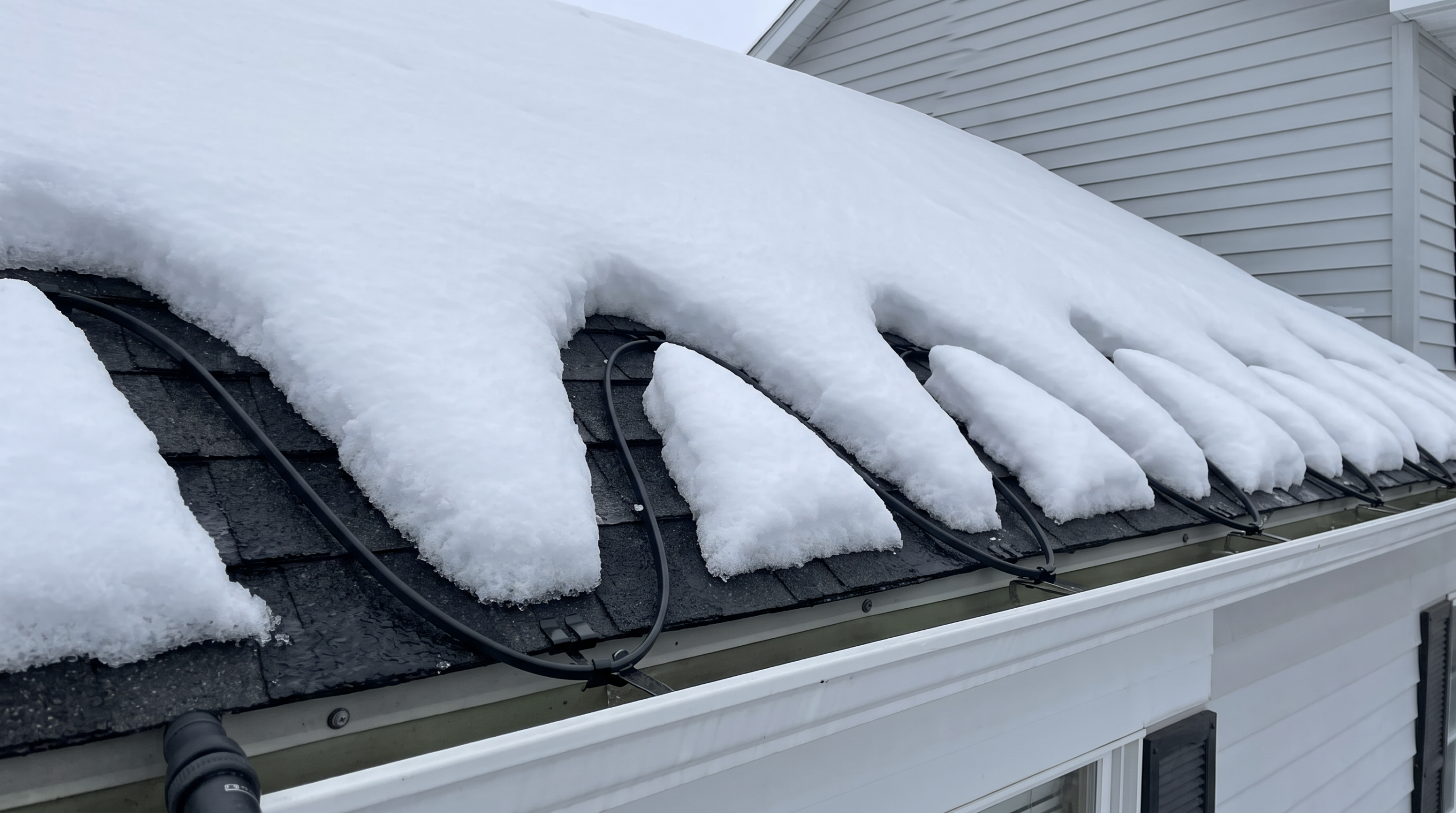
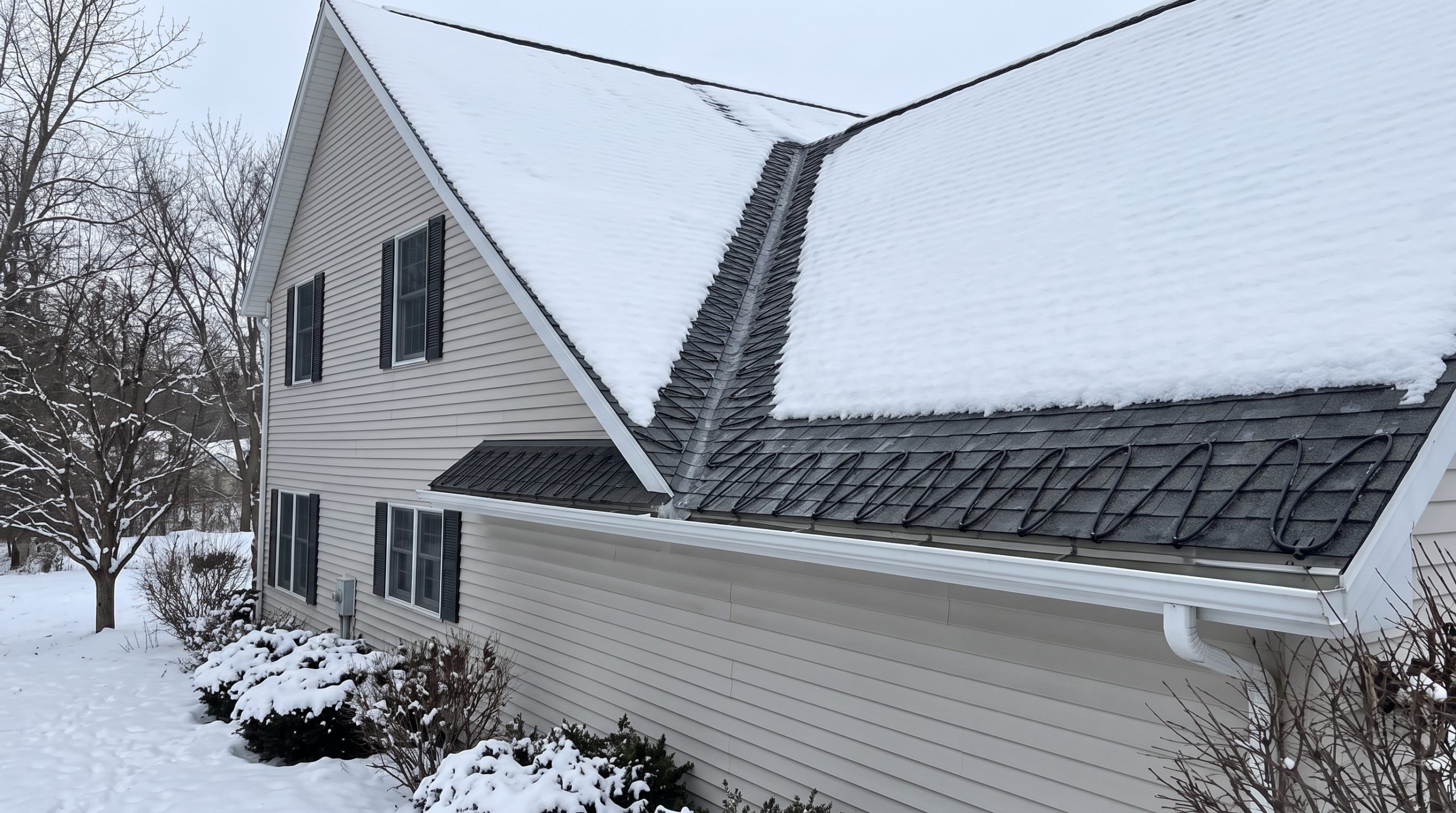
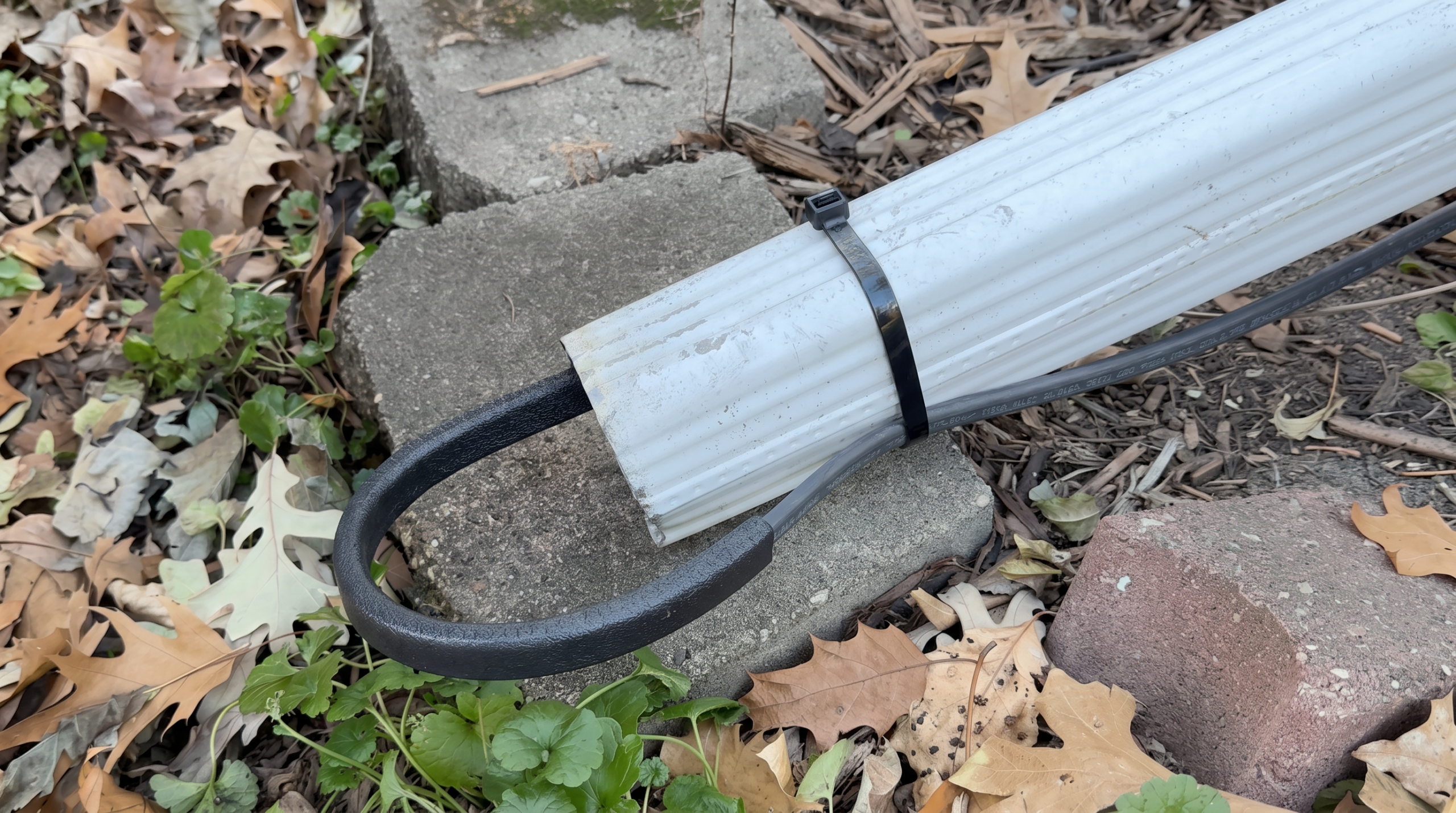
The cable has to trace a complete path: a zig-zag at the eave deep enough to cover the cold overhang, down through the valleys, along the gutter trough and all the way down the downspout to daylight. A zig-zag that stops short of the heated wall line, or a gutter run with no downspout trace, produces a channel that dead-ends into ice.
Systems get a dedicated GFCI-protected circuit, and controls run on a combination thermostat and moisture sensor so the system runs when it matters and not through a dry January cold snap.
Valleys, downspouts and the parts people forget
A zig-zag along the eave with nothing in the valley and nothing down the downspout produces a melted strip of roof draining into a solid block of ice. The water still has nowhere to go, and the dam just forms somewhere slightly different.
A system that works runs the full path: eave, valley, gutter trough and all the way down the downspout to daylight. The downspout run is the piece most often left out and the piece most often responsible for the system not working.
Self-regulating versus constant wattage
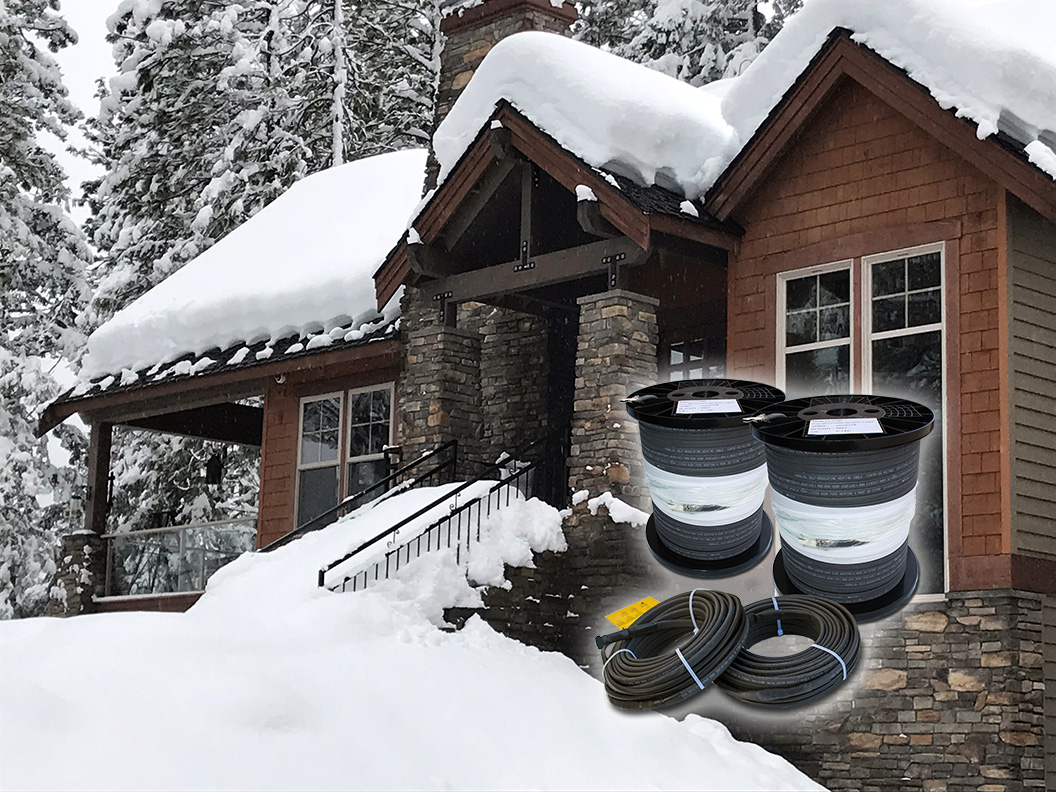
Self-regulating cable varies its output along its own length with the temperature of what it is touching: colder sections draw more, warmer sections throttle back. It can be cut to length on site, it tolerates being overlapped in a gutter, and it cannot cook itself into failure the way constant-wattage cable can.
Constant wattage is cheaper per foot and that is the whole of its case. On a roof in Germantown that sees real freeze-thaw cycling, self-regulating is the one worth installing.
What shortens the life of a cable run
Self-regulating cable is generally good for a decade or more. What ends it early is ultraviolet exposure on a run left unshaded through summer, physical damage from somebody raking or shovelling over it, rodents in the gutter, and ice loading on clips that were never rated for it.
A system installed with UV-stable cable, proper clips and a note on the roof plan saying where it runs will usually outlast one that was simply stapled up in a hurry.
What you get in Germantown
- Downspout traced to daylightThe drain path ends on the ground, not in a block of ice
- Zig-zag sized properlyEave coverage measured against the actual cold overhang
- Complete drain pathEave zig-zag, valleys, gutter trough and downspout to daylight
| Local ice-barrier practice | Eave membrane expected on re-roofs |
|---|---|
| Documentation | Dated before and after photos, written scope in Xactimate line items |
| Primary climate stressor | Lake-effect bands, wet heavy pack |
| Service | Heated Roof & Gutter Cables in Germantown, WI |
| Dispatch window | Same day to 24 hours |
| Typical scope | Steam, 6-12 crew hours typical |
| Removal method | Low-pressure steam only. No chipping, salt or pressure washing. |
Neighborhoods and Towns We Reach From Germantown
Crews working Germantown cover the adjoining communities on the same route — Lannon, Hubertus, Richfield, Colgate and Sussex — so a storm week usually means one truck handling several addresses in Washington County rather than separate trips.
Nearest hub towns with their own heat cables pages: Menomonee Falls, Mequon, Brookfield, Wauwatosa, West Bend, West Allis.
When a storm hits Washington County, crews are dispatched by severity rather than by call order — water already inside the house goes first.
Most jobs do not stop at one service. Heat Cables in Germantown often runs alongside ice dam removal in Germantown, and both get written into one scope rather than billed as separate visits.
Active leak right now? Our 24/7 Germantown steam ice dam removal crews are dispatched first during a freeze event. Call (888) 561-9664.