Skip to content
Franklin, WI
Flat Roof & Parapet · Milwaukee County

Commercial Ice Dam Removal in Franklin, WI — Lake‑Effect Storm Response

Ice Dam Now is a licensed and insured winter roof contractor covering Franklin, WI and Milwaukee County. Commercial Ice Dam Removal is performed with low-pressure steam, which removes ice by heat rather than force. Same-day dispatch for active leaks, crew-hour billing at a rate quoted beforehand, and dated before-and-after photographs on every job.

Drains and scuppers first — Flow restored before the ponded ice is worked
Overnight windows available — Work scheduled outside occupancy where access demands it
Tenant-hours scheduling — Work windows set around occupancy and access
EPDM, TPO and mod-bit — Low-pressure steam only, seams and flashing details avoided

Get Ice Dam Help Franklin

A few quick questions, then pick a time. If water is coming in, call instead.

What is the zip code of the home?

Roof leaking right now? Call (888) 561-9664 — that is faster than any form.
Water coming through the ceiling?Every hour an ice dam sits there, more water gets under the shingles.Call (888) 561-9664
24/7
Dispatch All Winter
Steam
Only — No Pressure
Milwaukee
County Coverage
Same Day
For Active Leaks
Insured
Licensed & Harness-Certified

Every Franklin winter produces the same two calls: the ones who see the ice early, and the ones who see the ceiling stain first. As part of our complete Franklin winter roof services, crews handle commercial ice dam removal across Milwaukee County.

Why Franklin Roofs Dam Up: Lake-Effect Load and Freeze-Thaw

Lake-effect snow arrives in bands rather than fronts, which is why Franklin can take a foot overnight while a town twenty miles inland takes two inches. It falls wet, it compacts fast, and it does not blow off.

Diagram showing how ice dams form on a roof from heat loss and snow melt
Heat escaping into the attic melts roof snow; the meltwater refreezes at the cold eave and the dam grows a layer every cycle.

What turns that pack into a dam is the house underneath it. Warm air finds its way into the attic, the underside of the snow melts, and the water travels to an overhang that has no heated space below it. There it stops.

Ice-barrier practice in Milwaukee County

The relevant detail is how far up the roof the membrane runs — it has to reach past the interior wall line, not just cover the first course. On older Franklin roofs it frequently does neither.

Commercial Ice Dam Removal in Franklin: How The Work Runs

Parapets hold the water in

A parapet is why a commercial deck ponds instead of shedding. Scuppers through the parapet are the only exit, and they are narrow, exposed on three sides and the first thing to freeze solid.

Steaming a scupper throat open is often the single highest-value twenty minutes of a commercial Franklin call.

Internal drains fail differently from gutters

A residential gutter overflows when it blocks. An internal roof drain just stops, and the water stays on the deck at depth until it finds a seam, a flashing detail or a pitch pocket.

Crews open the drain throat and then confirm flow in the leader below before calling it clear. An open drain over a frozen leader is not an open drain, and on a Franklin building that distinction shows up as a tenant ceiling two floors down.

Multiple buildings on one site

Campuses, retail strips and multi-building properties get walked together and prioritized by which deck is closest to trouble, rather than worked in the order the calls came in.

One scope, one invoice, one contact. It is a meaningfully different job from nine separate ones.

Access control, hatches and escorts

Getting onto a commercial roof is a procedure: keys or fobs, a hatch that may be padlocked, a ladder in a locked plant room, sometimes a site induction and an escort for the duration.

Sorting that out with the property manager in advance is the difference between a crew starting at seven and a crew waiting in the parking lot until nine. Where a tenant controls the only access, that conversation happens before the dispatch rather than on the roof.

What the board or the owner gets

A condition report with dated photographs, what was found, what was done and what is still a risk — in a form that can go to a board, an owner or a carrier without being rewritten.

For a managed Franklin property that document is usually the reason the spend gets approved without a second conversation.
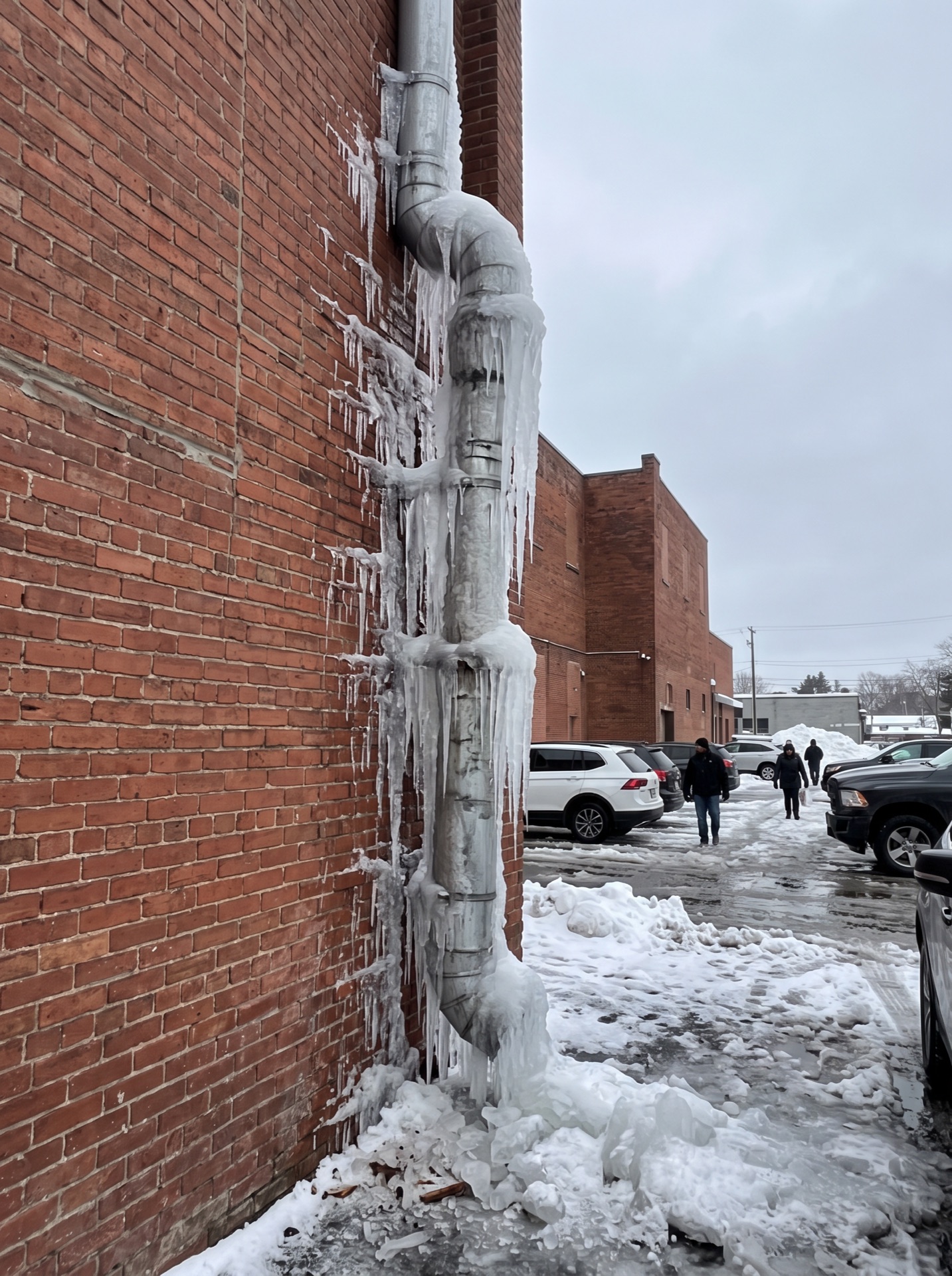
Frozen downspout covered in large icicles on brick commercial building in winter
A heavily iced-over downspout on a brick building shows the effects of extreme winter cold.

What you get in Franklin

  • Tenant-hours schedulingWork windows set around occupancy and access
  • Flow confirmed belowAn open drain throat over a frozen leader is not an open drain
  • Drains and scuppers firstFlow restored before the ponded ice is worked
Commercial Ice Dam Removal in Franklin, WI — specification
Service specification for Franklin, WI
Primary climate stressorLake-effect bands, wet heavy pack
DocumentationDated before and after photos, written scope in Xactimate line items
ServiceCommercial Ice Dam Removal in Franklin, WI
Removal methodLow-pressure steam only. No chipping, salt or pressure washing.
Dispatch windowSame day to 24 hours
Coverage areaFranklin and Milwaukee County
Typical scopeSteam, 6-12 crew hours typical

Milwaukee County Coverage From Franklin

Crews working Franklin cover the adjoining communities on the same route — Greendale, Hales Corners, Franksville, Cudahy and Big Bend — so a storm week usually means one truck handling several addresses in Milwaukee County rather than separate trips.

Nearest hub towns with their own commercial ice dams pages: Greenfield, Oak Creek, Muskego, Caledonia, South Milwaukee, West Allis.

When a storm hits Milwaukee County, crews are dispatched by severity rather than by call order — water already inside the house goes first.

Most jobs do not stop at one service. Commercial Ice Dams in Franklin often runs alongside commercial roof snow removal in Franklin, and both get written into one scope rather than billed as separate visits.

Active leak right now? Our 24/7 Franklin steam ice dam removal crews are dispatched first during a freeze event. Call (888) 561-9664.
Conditions We Work In

Commercial Ice Dam Removal In Practice

Conditions crews work in across Milwaukee County. Every job is photographed before and after.

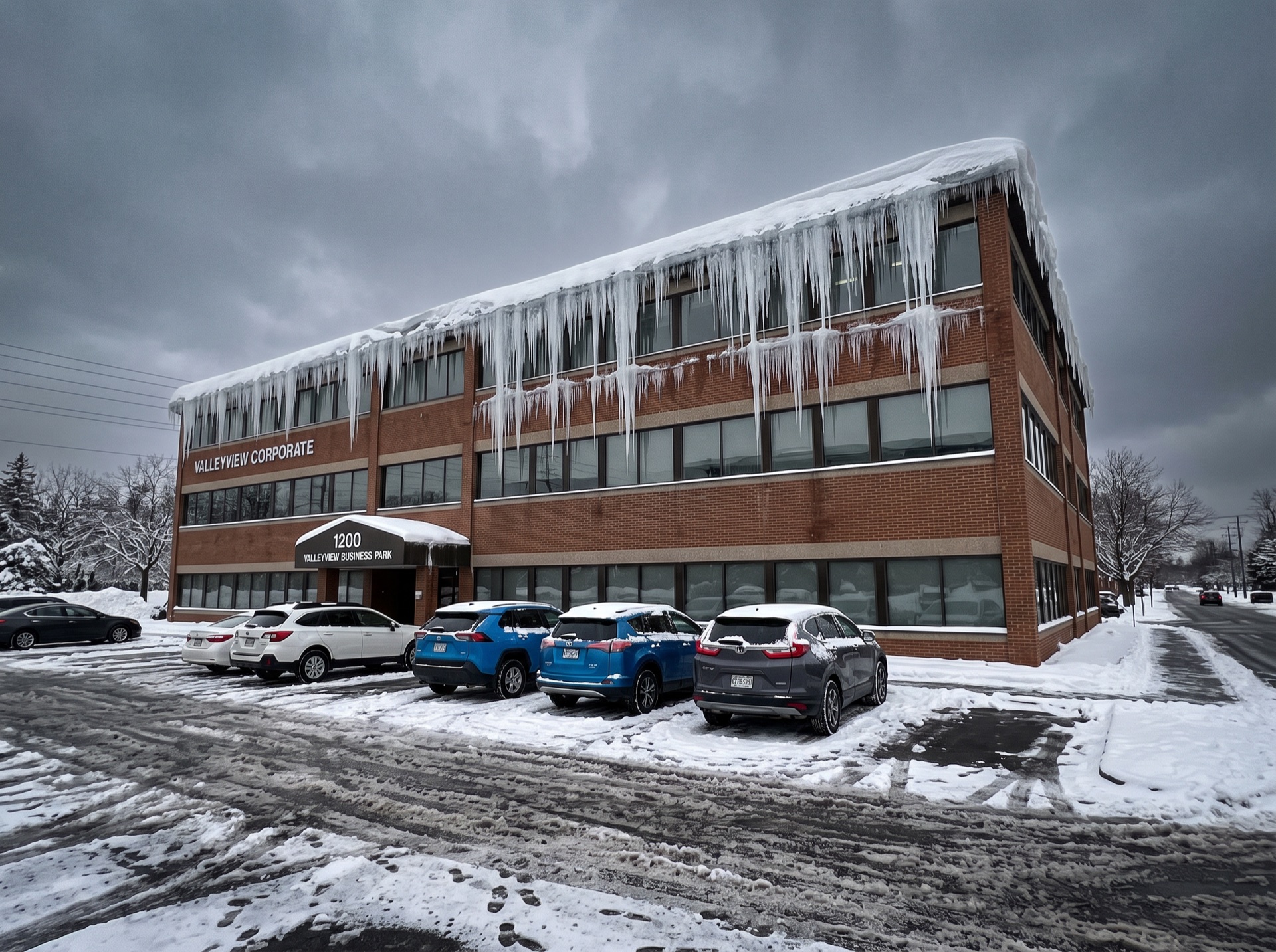
Large icicles hanging from roofline of Valleyview Corporate office building in winter
Massive icicles line the roofline of 1200 Valleyview Business Park following a heavy winter storm.
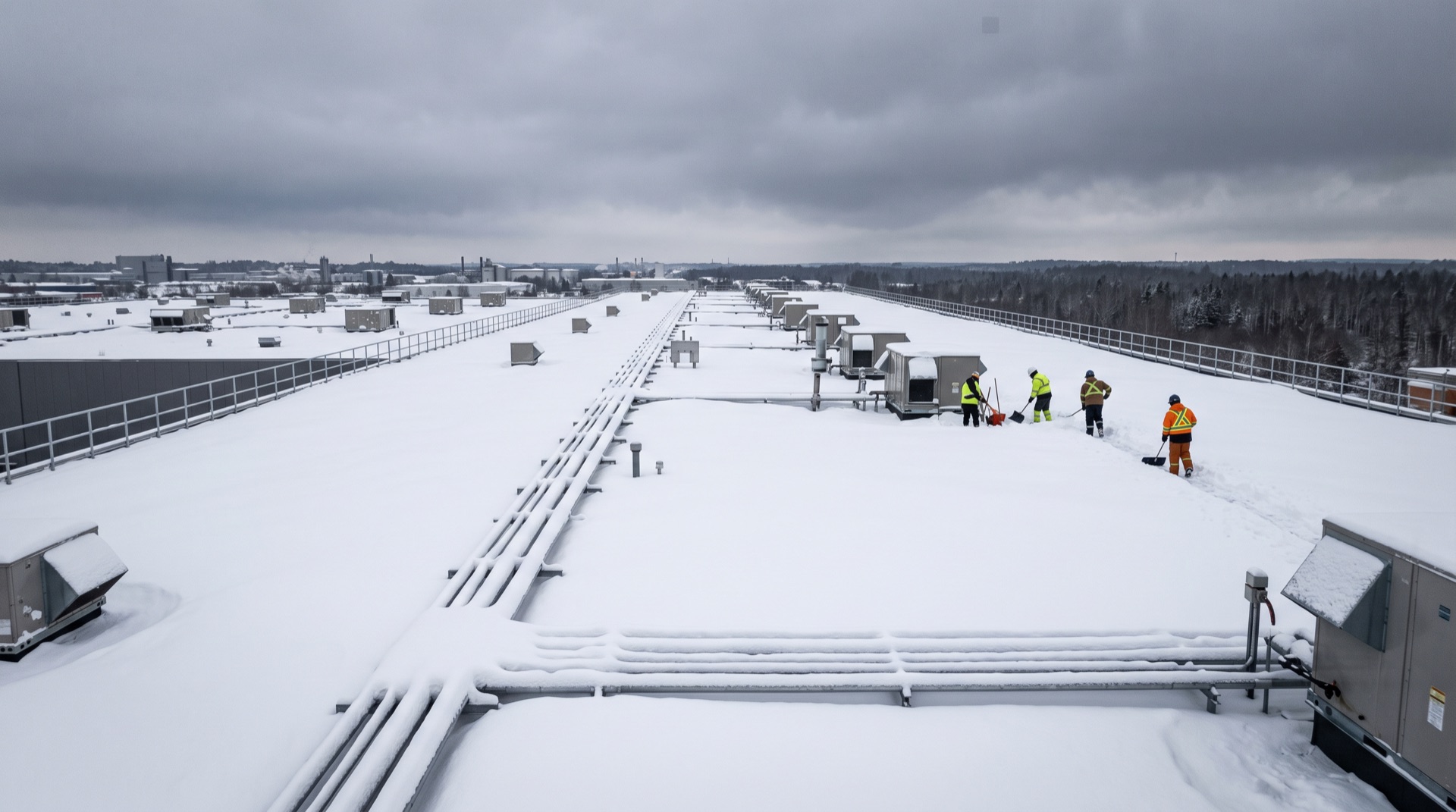
Workers shoveling heavy snow off a large flat commercial roof in winter
A crew of four workers in high-visibility gear clear deep snow accumulation from a vast commercial rooftop.
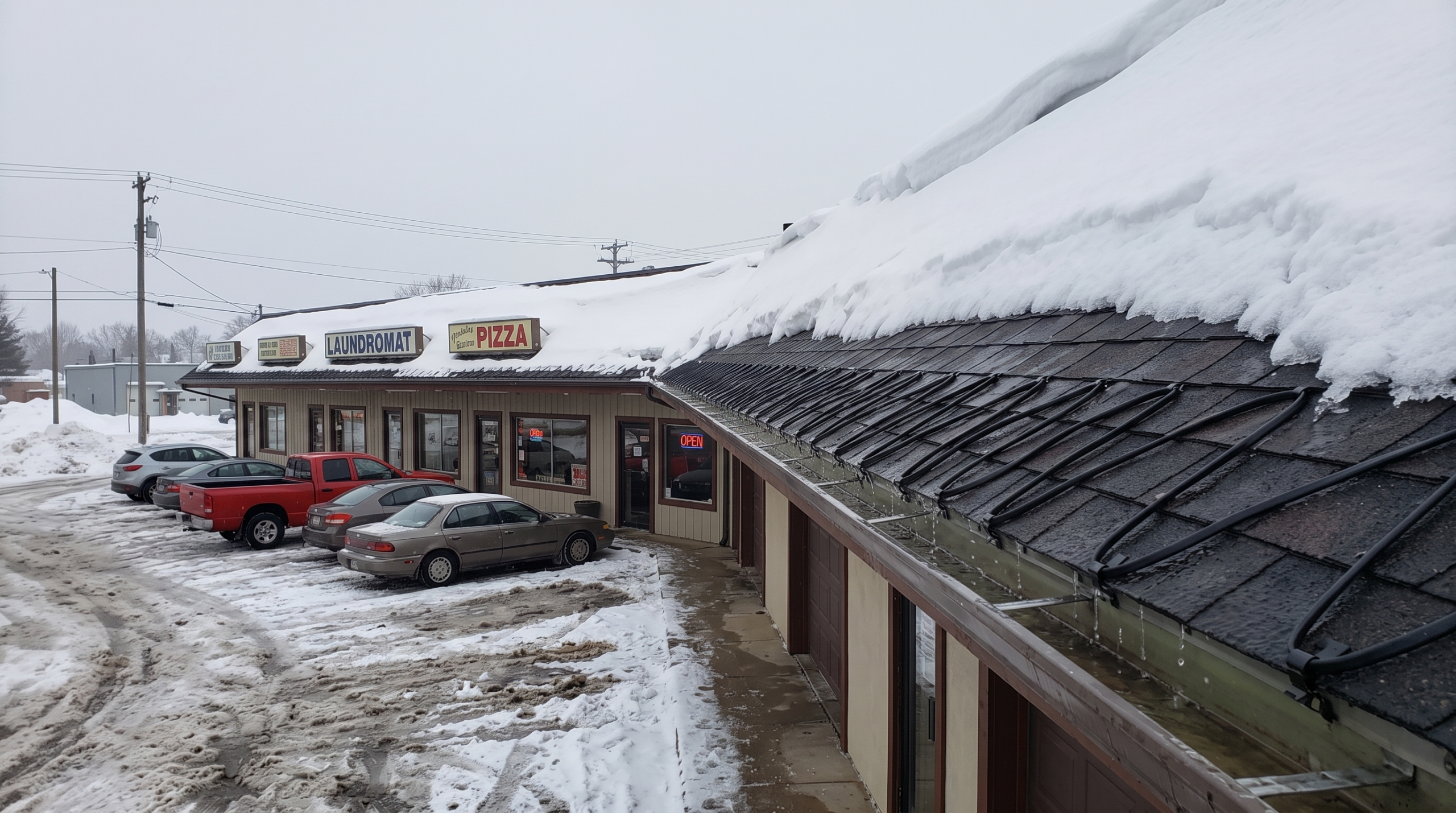
Heavy snow and ice dam buildup on commercial strip mall roofline in winter
A thick ice dam forms along the roofline of a commercial strip mall housing a laundromat and pizza restaurant.
FAQ

What Franklin Homeowners Ask First

It is billed by the crew hour, and the rate plus a realistic time estimate are quoted on the phone before anyone is dispatched.

  • Scope drives the hours: length and thickness of the ice, roof pitch and height, and whether the gutters are frozen solid.
  • Access matters too — a three-story Franklin roof takes longer to set up on than a ranch.
  • The invoice matches the quote. There are no surprise add-ons written on the tailgate.

Usually. The equipment needs a water supply and a place to park within hose reach, which is normally achievable even on a tight lot.

  • Hose runs of a few hundred feet are routine.
  • Street parking in a Milwaukee County residential area is generally workable.
  • Tell dispatch about access on the call so the right setup arrives.

Not for exterior removal, provided access and payment are arranged in advance.

  • Somebody being home helps where there is interior damage to look at or document.
  • Photographs go to you either way, timestamped as the work happens.
  • A gate code or an unlocked side gate is usually all a crew needs on a Franklin property.

Often for the interior water damage, sometimes for the removal itself, but it depends entirely on your carrier and policy wording.

  • Many policies treat emergency mitigation separately under a duty to protect property clause.
  • Denials usually cite the maintenance exclusion, which dated photographs taken during the event are the direct counter to.
  • Crews photograph the dam, the entry points and the interior damage, and write the scope in Xactimate line items.
  • The coverage decision is between you and your carrier — no contractor can promise an outcome there.

Please do not. Salt corrodes flashing, fasteners, gutters and anything metal it drains across, and it damages whatever is planted below.

  • Calcium chloride is less aggressive than rock salt but still ends up in the soil at the drip line.
  • A puck melts a hole, not a drainage path, so the water simply refreezes a few inches further on.
  • Crews use heat and nothing else - no salt, no chemicals, nothing corrosive.

Yes, at the pressures used here. Heat melts ice without force, so there is nothing abrading the membrane or working at the seams. What is not safe on a membrane is a pressure washer, a chipper or any mechanical removal.

Yes. Sites get triaged by risk rather than worked in the order they were listed - occupied buildings with active interior water first, then the largest spans and the deepest loads. You get one report covering all of them with readings and photographs per address.

Nearby

Commercial Ice Dams In Towns Around Franklin

Same-Day Response

Get A Franklin Crew Out

A dam left alone through February is not the same dam in March. It is bigger, and so is the repair behind it.

✓ Licensed & insured✓ Low-pressure steam only✓ Rate quoted up front✓ Photos for your claim
Online Quote(888) 561-9664