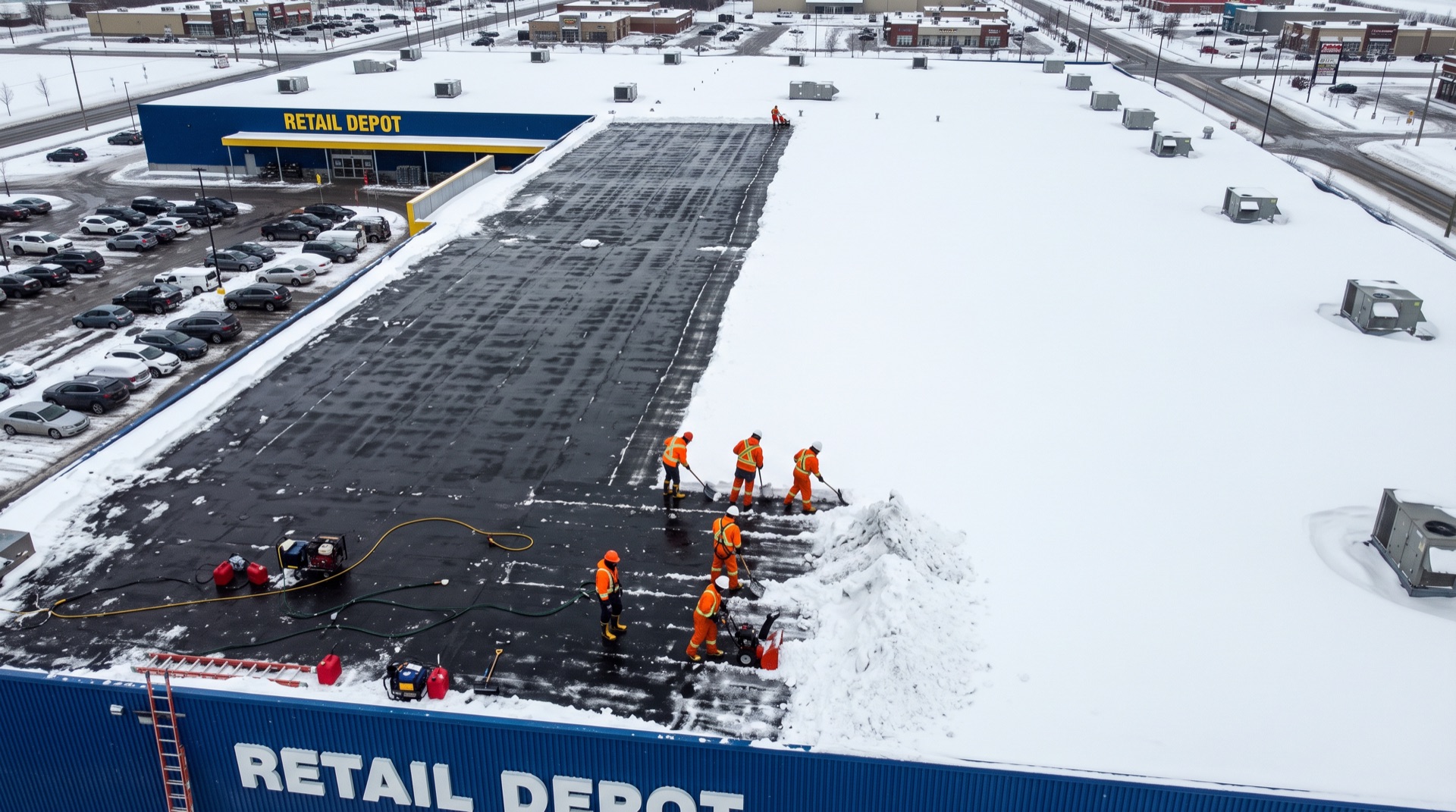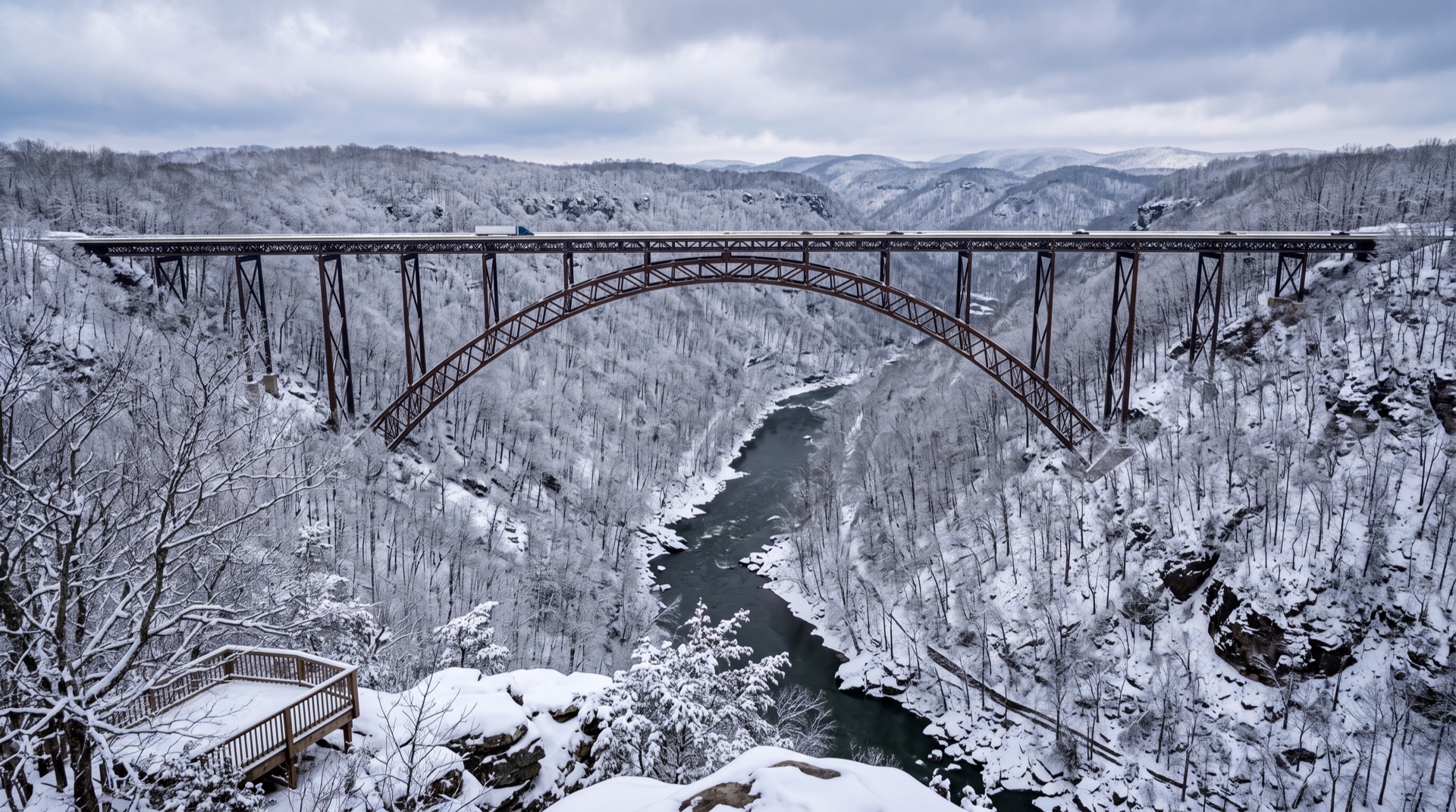
Ice dams are not a Snowshoe problem so much as a West Virginia one, and they show up on the same handful of eaves and valleys year after year. As part of our complete Snowshoe winter roof services, crews handle commercial roof snow removal across Pocahontas County.
Small Snow, Repeated Cycles: Snowshoe Ice Dams
The snow totals here are unremarkable, which is exactly why Snowshoe roofs get caught out. An ice dam needs meltwater and a cold eave, not a record storm.

And the cycling is relentless rather than dramatic. Fifteen or twenty crossings of freezing in a season each add a layer, and the houses with the thinnest attic insulation in Pocahontas County all find out in the same week.
Ice-barrier practice in Pocahontas County
Ice-barrier membrane at the eaves is required on new work under the residential code West Virginia follows, but on a roof built before that it is frequently absent — and this is the region where it is most often skipped.
Commercial Roof Snow Removal in Snowshoe: How The Work Runs
The cost of a shutdown against the cost of a clear
Clearing a large deck is a real number and it is easy to defer. The comparison that matters is not clearing against nothing, it is clearing against the day the building is closed while an engineer inspects it - lost trade, displaced tenants, and an insurer asking what was done beforehand. Ceiling Sagging or Bulging After Snow.
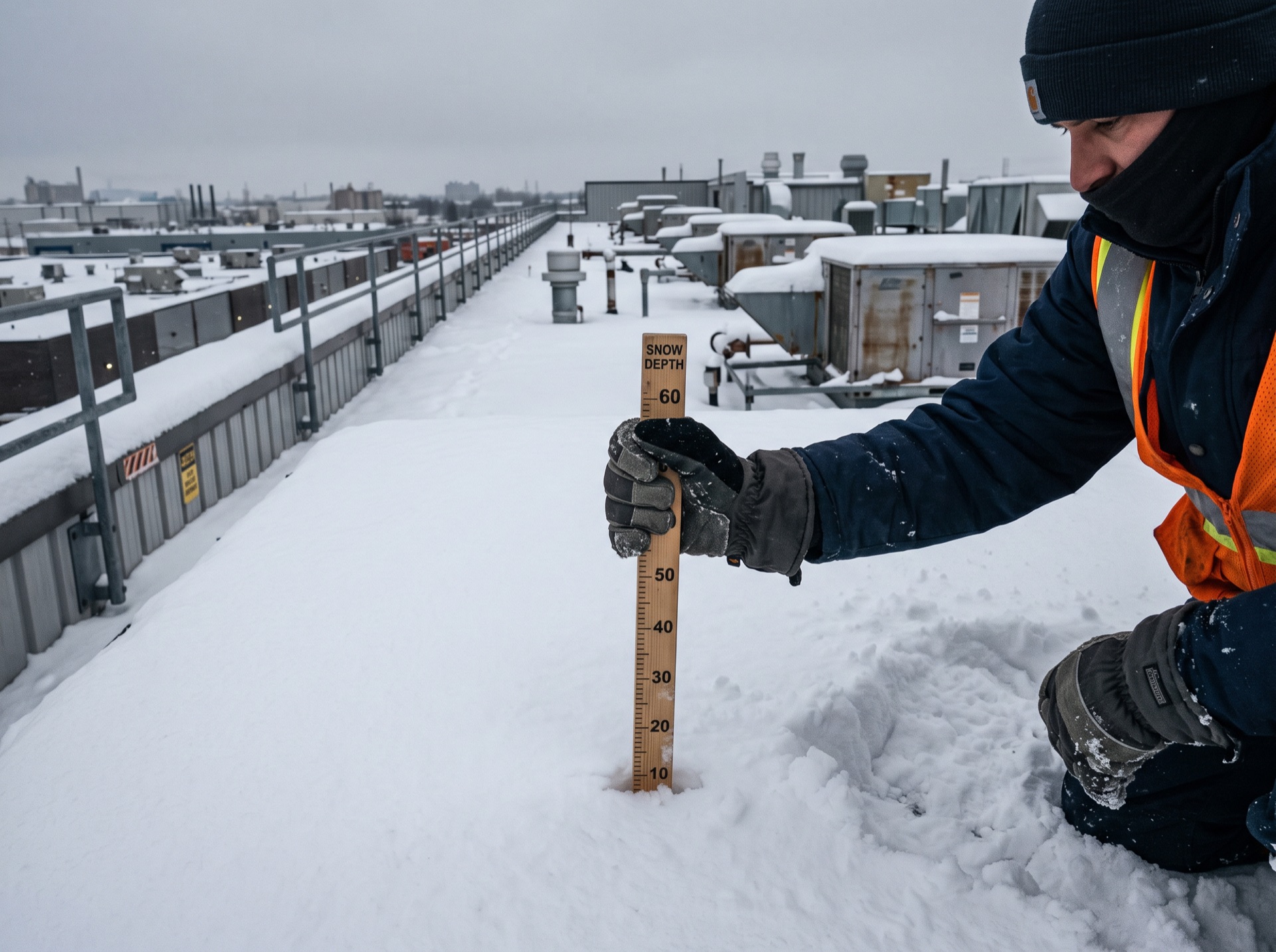
The load reading is what makes that decision for you rather than a feeling about how deep the snow looks.
Reduction to a threshold, not a bare deck
The goal is bringing the load under the structure's capacity safely, with a cushion layer left on the membrane throughout.
Scraping a commercial Snowshoe roof to bare membrane costs more, takes longer and risks the roof covering for no structural benefit.
Reading the design load off the drawings
Where structural drawings exist they state the design ground snow load and the roof's own capacity, and that number turns the whole question from opinion into arithmetic. Measured depth and density against design capacity gives a percentage rather than an argument.
Where the drawings have been lost - common on older Snowshoe stock - the conservative assumption is the code minimum of the era the building went up, which is usually well below what a modern roof would be built to.
What the documentation covers
Depth and density readings, calculated load, dated photographs and a written condition report per visit.
Preventing an imminent failure is treated as loss mitigation by most carriers, and that record is what supports the position if it is ever tested.
Sequencing so the load comes off evenly
Stripping one bay to the deck while the next still carries two feet creates exactly the unbalanced condition that overloads a member. Structures object less to a lot of weight spread evenly than to a moderate weight concentrated on one side.
Crews work in passes across the whole span, reducing everywhere before going deeper anywhere, and the sequence is set before anybody starts rather than left to whoever gets up there first.
What you get in Snowshoe
- Mid-span measuredDepth read over the longest unsupported span, not the average
- Overflows opened firstDrains and scuppers cleared before the load comes off
- Portfolio routesStanding storm schedules with per-visit condition reports
| Primary climate stressor | Repeated thaw-freeze cycling |
|---|---|
| Coverage area | Snowshoe and Pocahontas County |
| Documentation | Dated before and after photos, written scope in Xactimate line items |
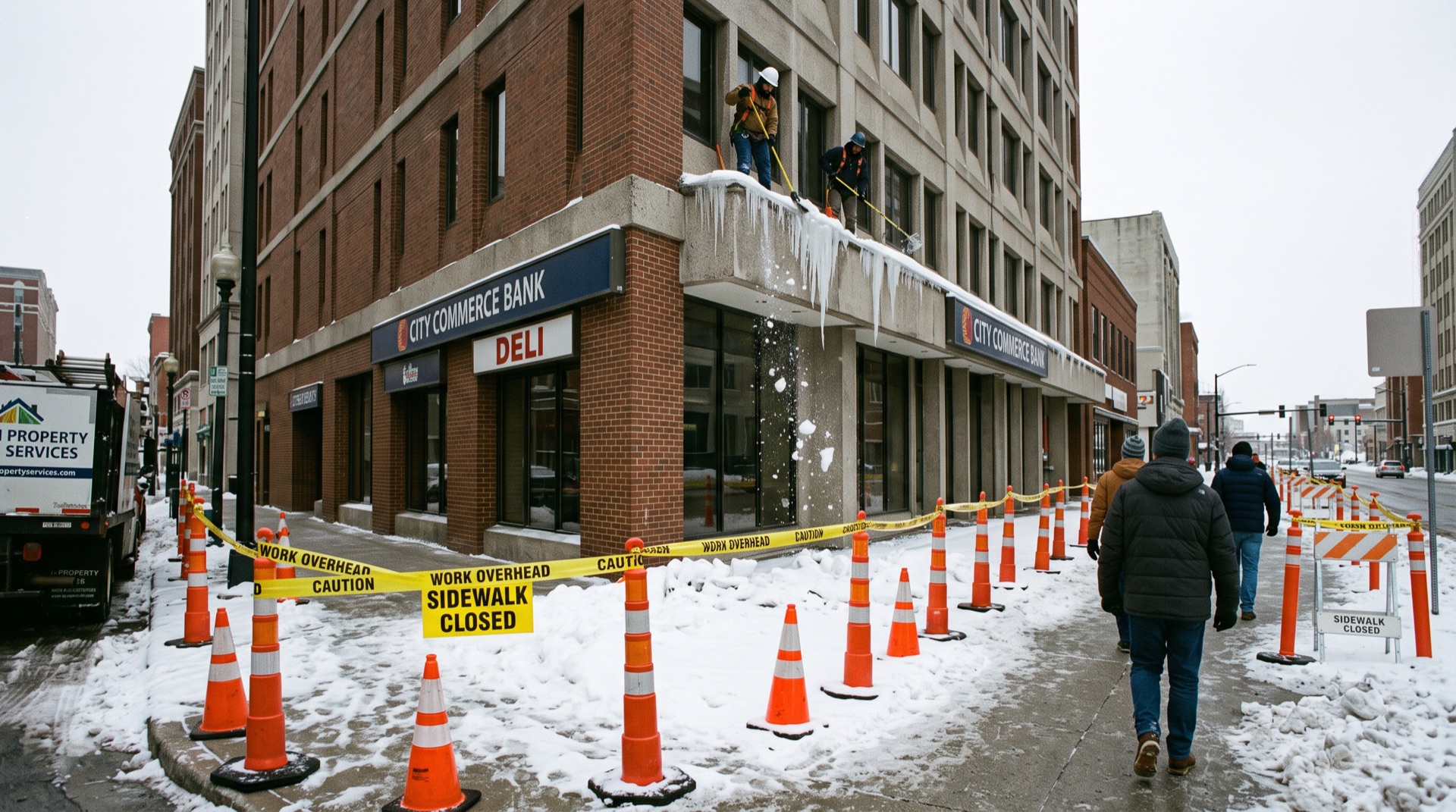
| Removal method | Low-pressure steam only. No chipping, salt or pressure washing. |
| Local ice-barrier practice | Eave membrane on new work, often absent |
| Typical scope | Steam, 4-8 crew hours typical |
| Pricing model | Billed by the crew hour, rate quoted before dispatch |
Neighborhoods and Towns We Reach From Snowshoe
Crews working Snowshoe cover the adjoining communities on the same route — Slatyfork, Bergoo, Monterville, Valley Head and Marlinton — so a storm week usually means one truck handling several addresses in Pocahontas County rather than separate trips.
Nearest hub towns with their own commercial snow pages: Elkins, Lewisburg, Davis (Canaan Valley), Clarksburg, Beckley, Fairmont.
Coverage runs across Snowshoe and the nearby towns all winter, and capacity is surged into whichever West Virginia market the storm actually hits.
Most jobs do not stop at one service. Commercial Snow in Snowshoe often runs alongside crane-assisted snow removal in Snowshoe, and both get written into one scope rather than billed as separate visits.
Active leak right now? Our 24/7 Snowshoe steam ice dam removal crews are dispatched first during a freeze event. Call (888) 561-9664.