Most Moses Lake homeowners find out about an ice dam from the inside — a damp patch on a bedroom ceiling, or water tracking down the inside of a window frame. As part of our complete Moses Lake winter roof services, crews handle crane-assisted snow removal across Grant County.
Moses Lake Ice Dams: Melting on Days It Never Thaws
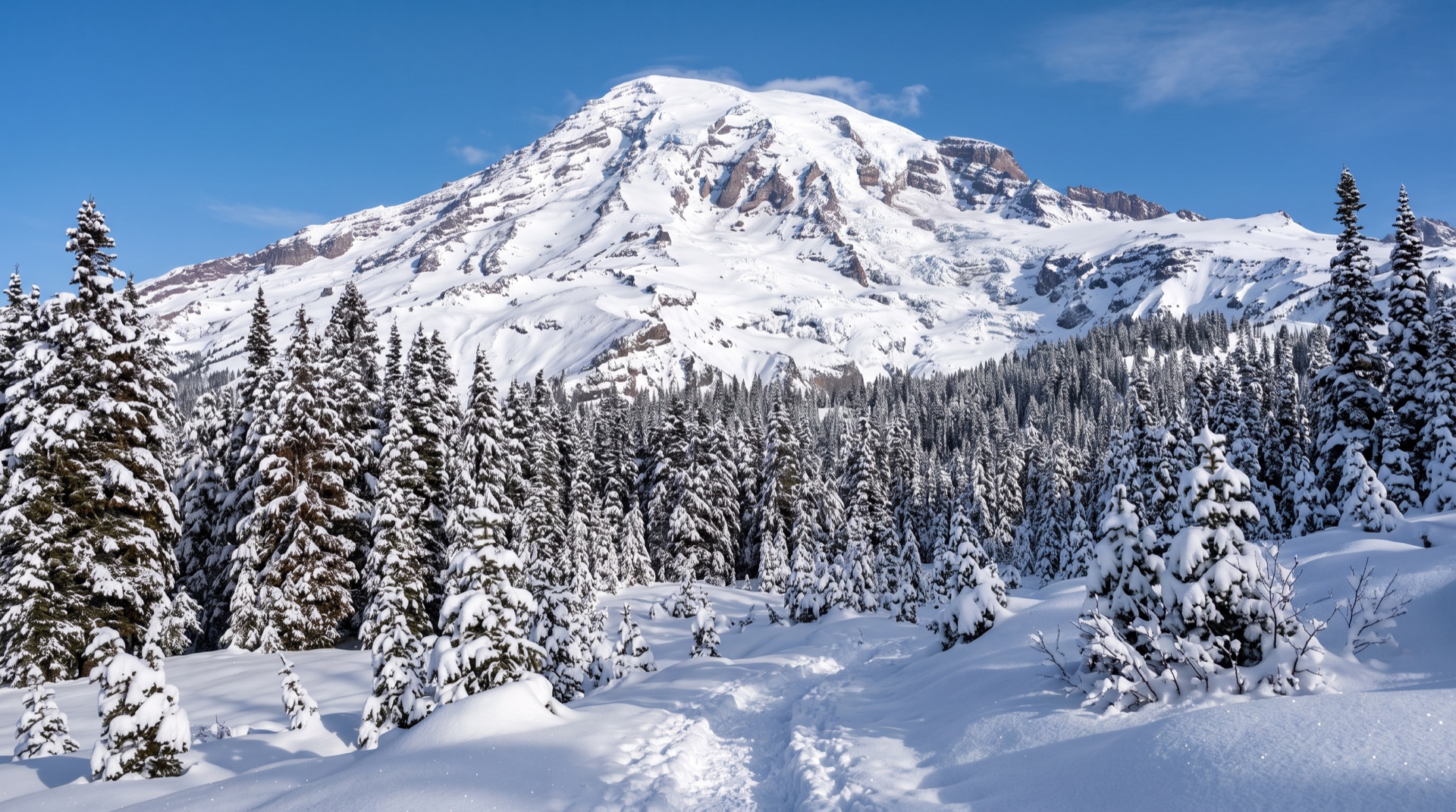
The pack at this elevation is deep enough to act as its own insulation, which means the surface melts under sun while the base stays locked. Water released at the top has to travel through and under all of it.

Aspect decides which eaves suffer. A sunny plane sheds water across a roof in Moses Lake to a shaded eave that has not been above freezing for weeks, and that is where the ice builds into a wall.
Ice-barrier practice in Grant County
Design snow loads in Grant County are among the highest anywhere, and the membrane and retention requirements that go with them are not formalities. On an older Moses Lake cabin or chalet neither may be present.
Crane-Assisted Snow Removal in Moses Lake: How The Work Runs
When a crane is the right call
Multi-story homes and estates where the upper roof cannot be safely reached. Large commercial and industrial decks where the sheer tonnage makes hand clearing a multi-day job. Any roof where deflection is already visible and the load has to come off today rather than over a week. Ceiling Sagging or Bulging After Snow.
The decision is made on numbers, not instinct. Depth, density and area give a working load figure, and that figure against the roof's design capacity is what determines whether a crane gets mobilised to a property in Moses Lake.
The arithmetic that justifies a crane
Snow weight is depth times density times area. Fresh powder is light; settled wet pack can be several times heavier for the same depth, and drifted pack heavier again.
Crews take depth and density readings at the drift points on a roof in Moses Lake, work out the load, and compare it to the structure's design capacity. A crane gets mobilised when that number says hand clearing cannot win the race against the next storm.
Documenting the load for the carrier
Depths, densities, calculated loads and dated photographs are recorded through the operation. Most carriers treat preventing an imminent structural failure as loss mitigation, which is a very different claim from one filed after a deck comes down.
That record is what supports it, and it only exists if somebody took the readings at the time.
How a pick actually works
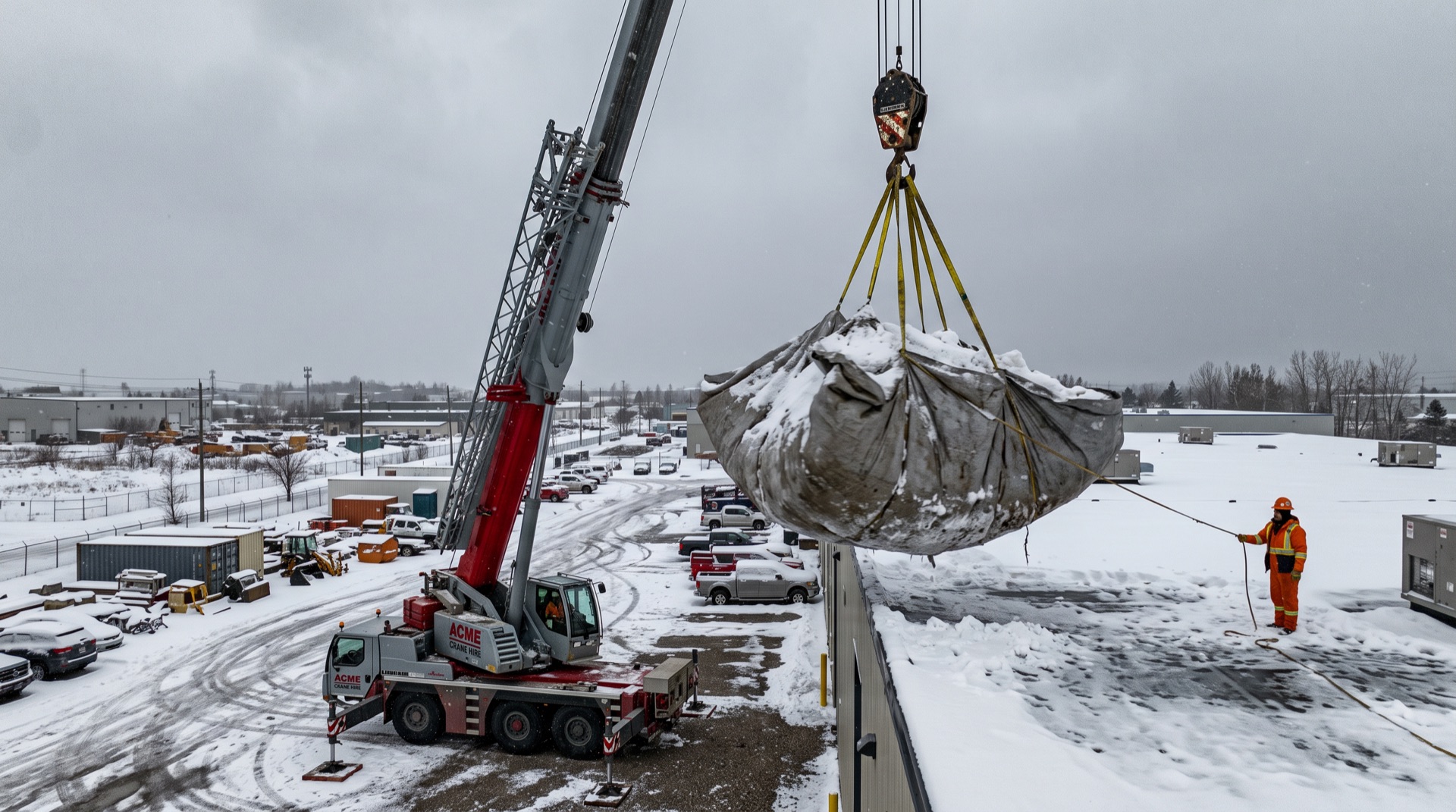
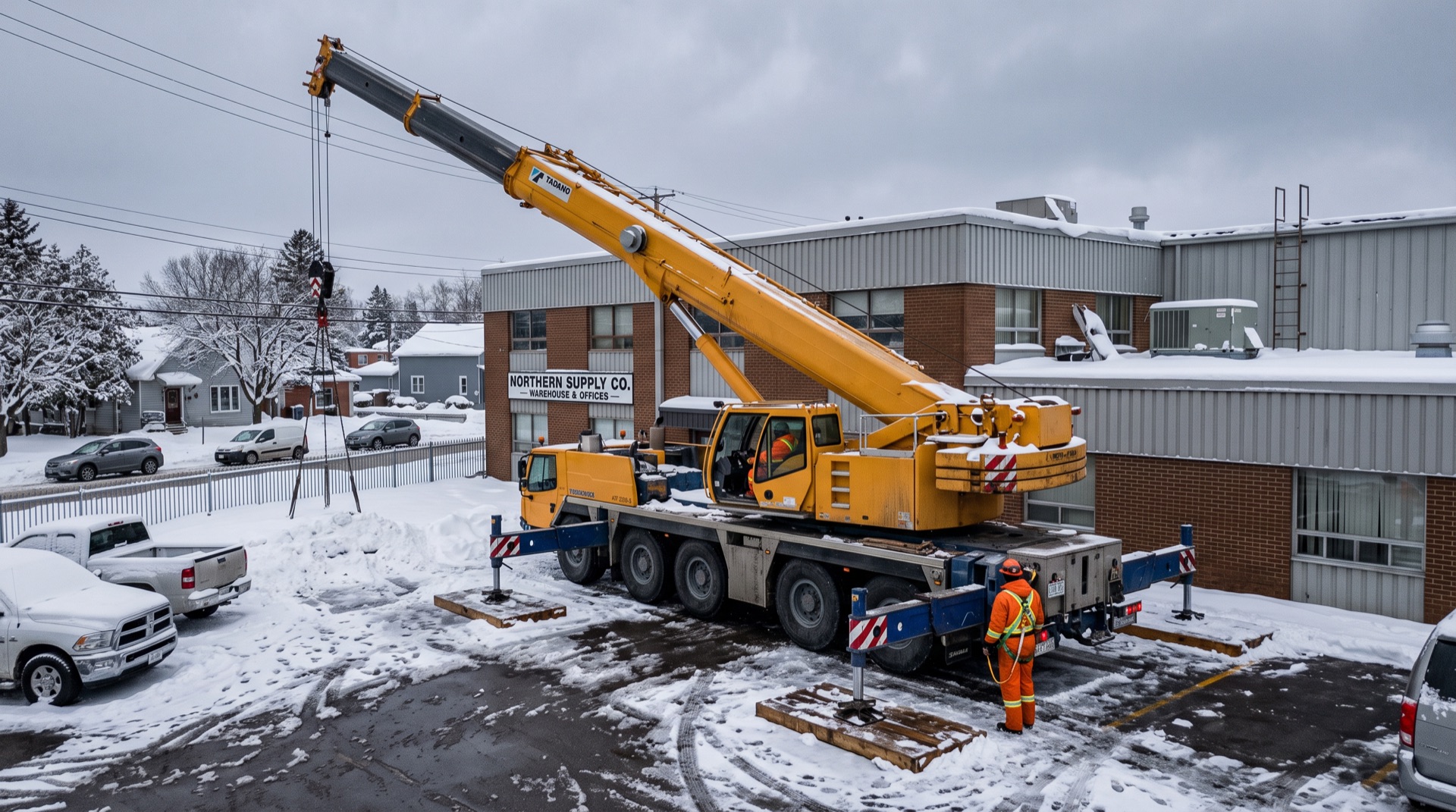
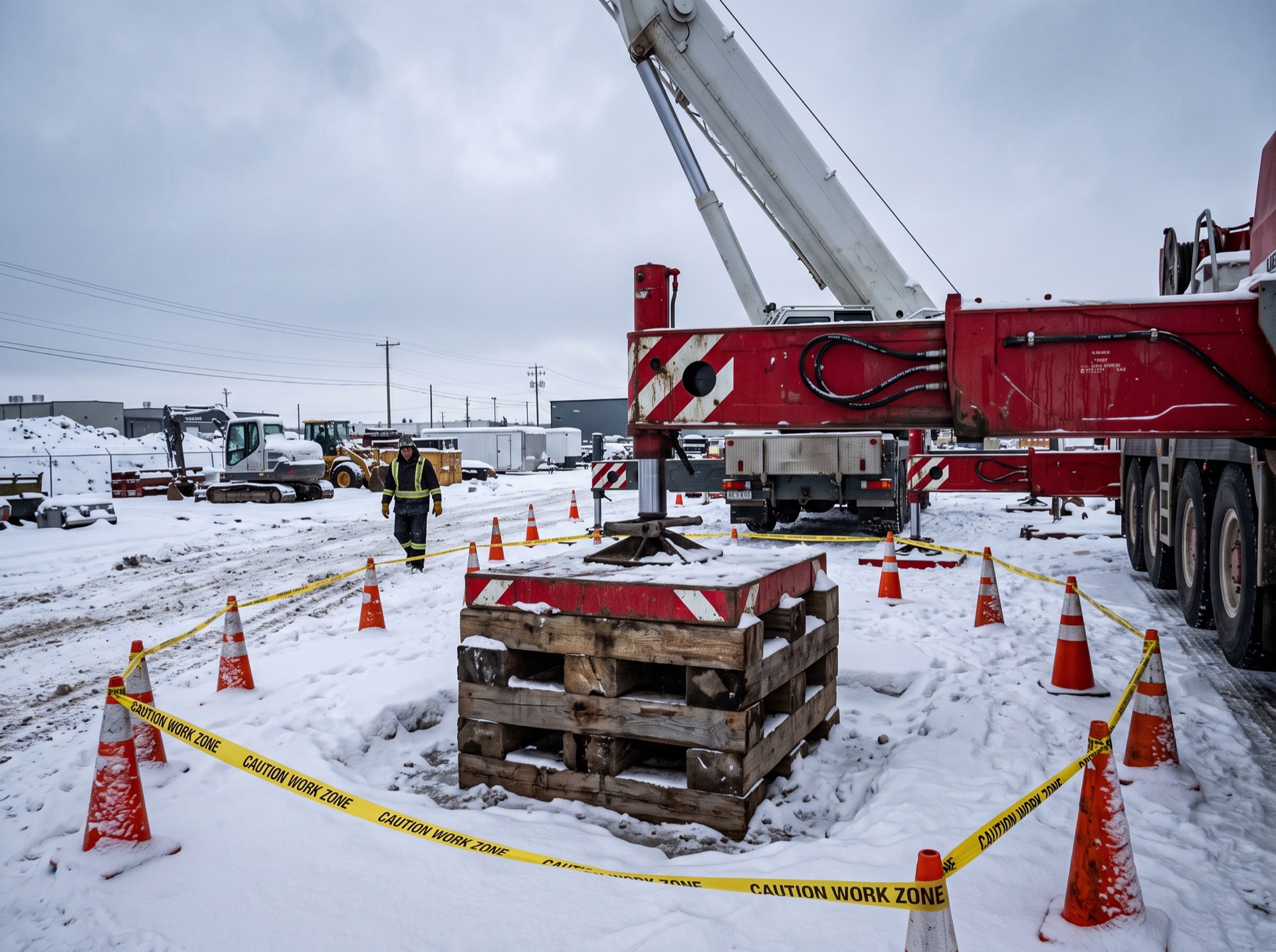
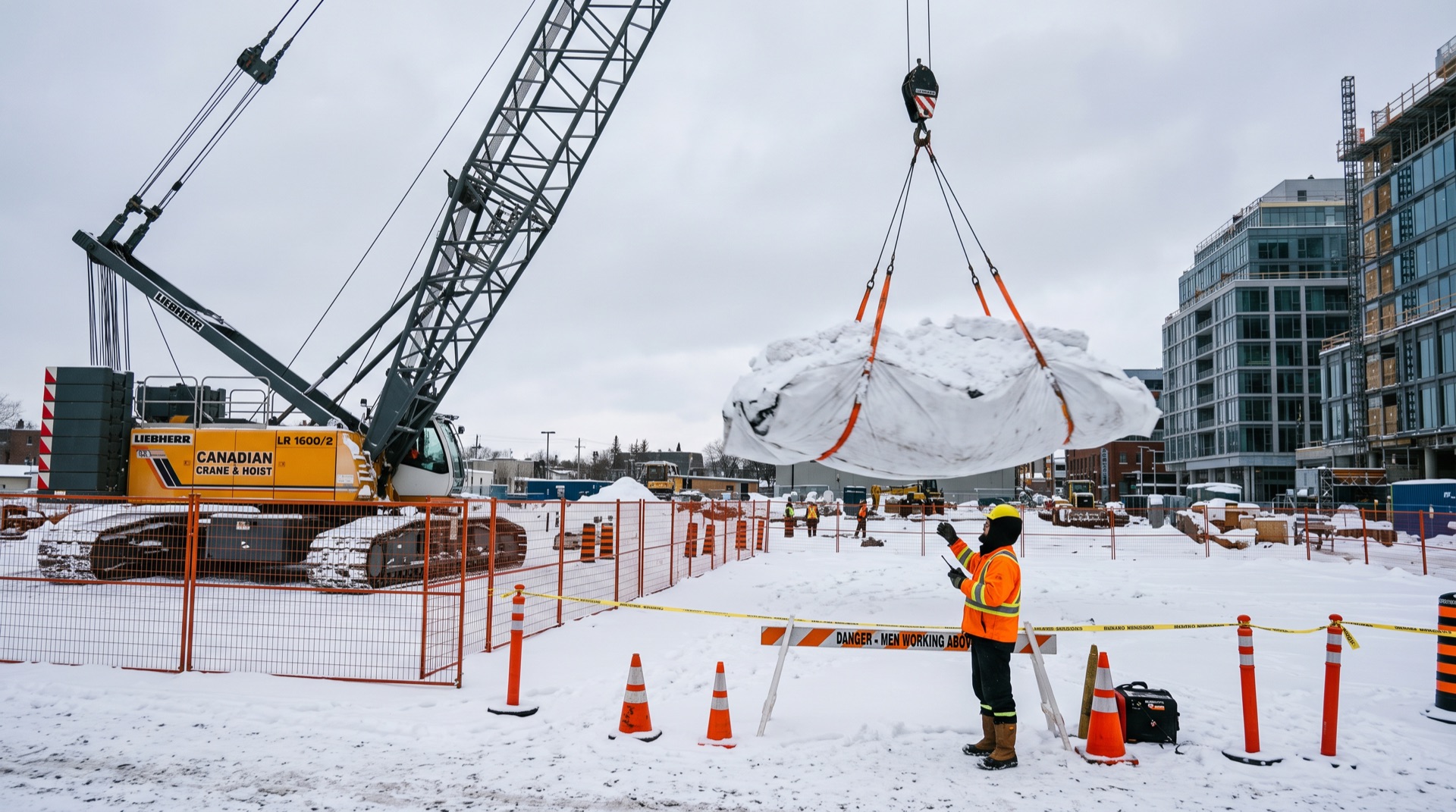
Rip-stop tarps are laid out and anchored on the deck, crews load them, and the boom lifts each loaded tarp clear and sets it down in a designated drop zone on the ground. Outrigger pads are placed on frozen ground rated for the load, and a pedestrian exclusion zone is set and marshalled for the whole operation.
It is a planned lift, not an improvisation. Site access, swing radius, overhead lines, drop zone and ground bearing all get walked before the first tarp goes down.
Keeping people clear of the swing
A loaded tarp overhead is a serious exclusion zone. Pedestrian and vehicle routes get marshalled for the whole operation, and on an occupied building that means talking to whoever controls the doors before the first lift.
On a site in Moses Lake with public frontage this is usually the part that needs the most coordination and the part that gets the least credit.
What you get in Moses Lake
- Permits handledPulled where the municipality requires them for a street setup
- Marshalled exclusion zonePedestrian and vehicle control for the whole operation
- Lift planned firstAccess, swing radius, overhead lines and drop zone walked before scheduling
| Typical scope | Steam, 8-16 crew hours typical |
|---|---|
| Coverage area | Moses Lake and Grant County |
| Local ice-barrier practice | Extended membrane plus snow retention |
| Removal method | Low-pressure steam only. No chipping, salt or pressure washing. |
| Documentation | Dated before and after photos, written scope in Xactimate line items |
| Pricing model | Billed by the crew hour, rate quoted before dispatch |
| Dispatch window | 24 to 48 hours in mountain terrain |
Where We Dispatch Around Moses Lake
Crews working Moses Lake cover the surrounding Grant County addresses on the same route, so a storm week usually means one truck handling several properties rather than separate trips.
Nearest hub towns with their own crane snow removal pages: Wenatchee, Ellensburg, Richland, Pasco, Kennewick, Yakima.
During a cold snap Moses Lake gets worked alongside the neighboring Grant County towns on the same route, with active interior leaks moved to the front of the list.
Most jobs do not stop at one service. Crane Snow Removal in Moses Lake often runs alongside commercial roof snow removal in Moses Lake, and both get written into one scope rather than billed as separate visits.
Active leak right now? Our 24/7 Moses Lake steam ice dam removal crews are dispatched first during a freeze event. Call (888) 561-9664.