Ice dams are not a Lehi problem so much as a Utah one, and they show up on the same handful of eaves and valleys year after year. As part of our complete Lehi winter roof services, crews handle crane-assisted snow removal across Utah County.
Lehi Ice Dams: Melting on Days It Never Thaws
The pack at this elevation is deep enough to act as its own insulation, which means the surface melts under sun while the base stays locked. Water released at the top has to travel through and under all of it.

That is why mountain roofs dam up on clear, cold weeks that look harmless. South and west faces melt, north-facing eaves and shaded valleys hold the ice, and the pack above keeps feeding it.
Ice-barrier practice in Utah County
Design snow loads up here are among the highest in the country, and the membrane and retention details that come with them are not paperwork. On an older Lehi cabin neither is likely to be present.
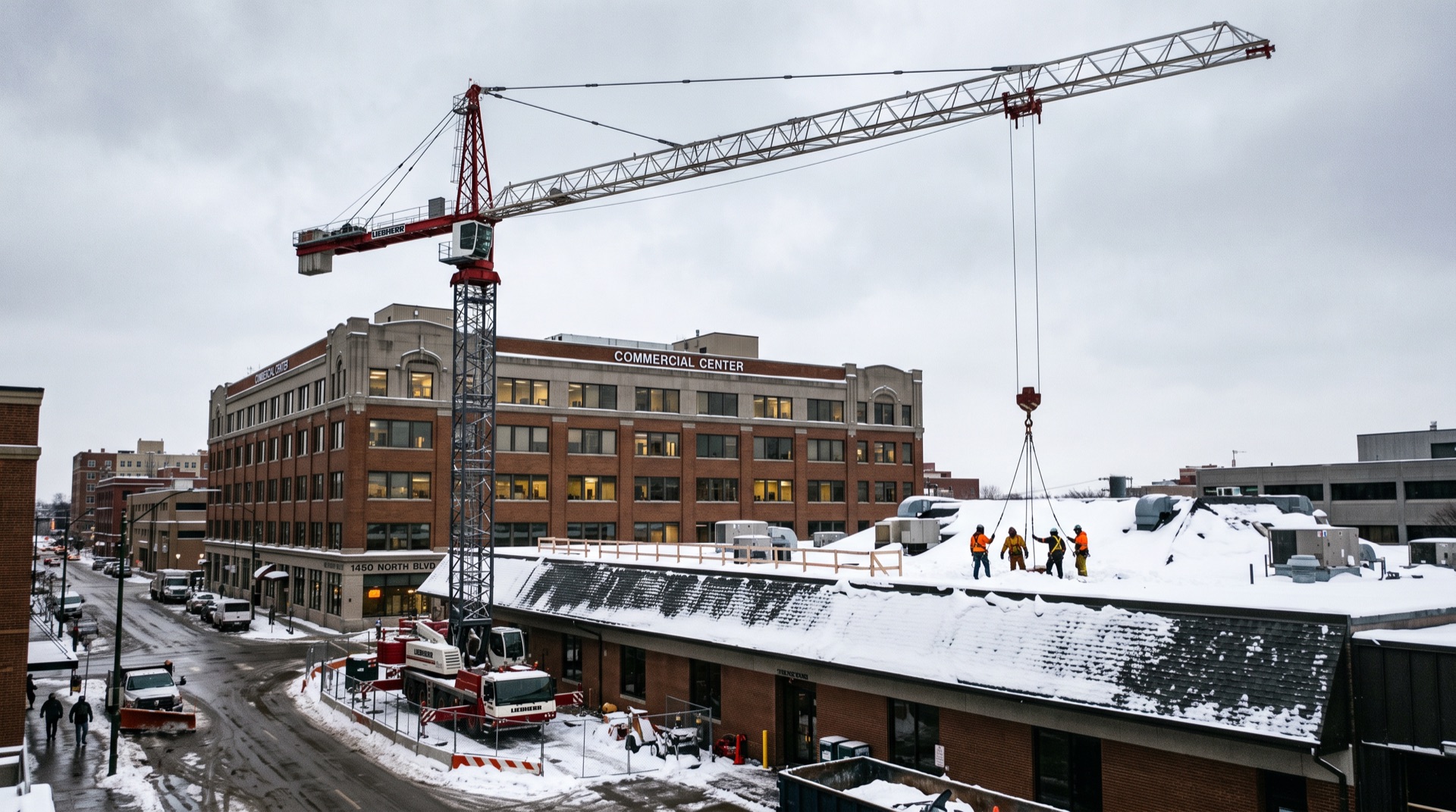
Crane-Assisted Snow Removal in Lehi: How The Work Runs
The arithmetic that justifies a crane
Snow weight is depth times density times area. Fresh powder is light; settled wet pack can be several times heavier for the same depth, and drifted pack heavier again. Ceiling Sagging or Bulging After Snow.
Crews take depth and density readings at the drift points on a roof in Lehi, work out the load, and compare it to the structure's design capacity. A crane gets mobilised when that number says hand clearing cannot win the race against the next storm.
When a crane is the right call
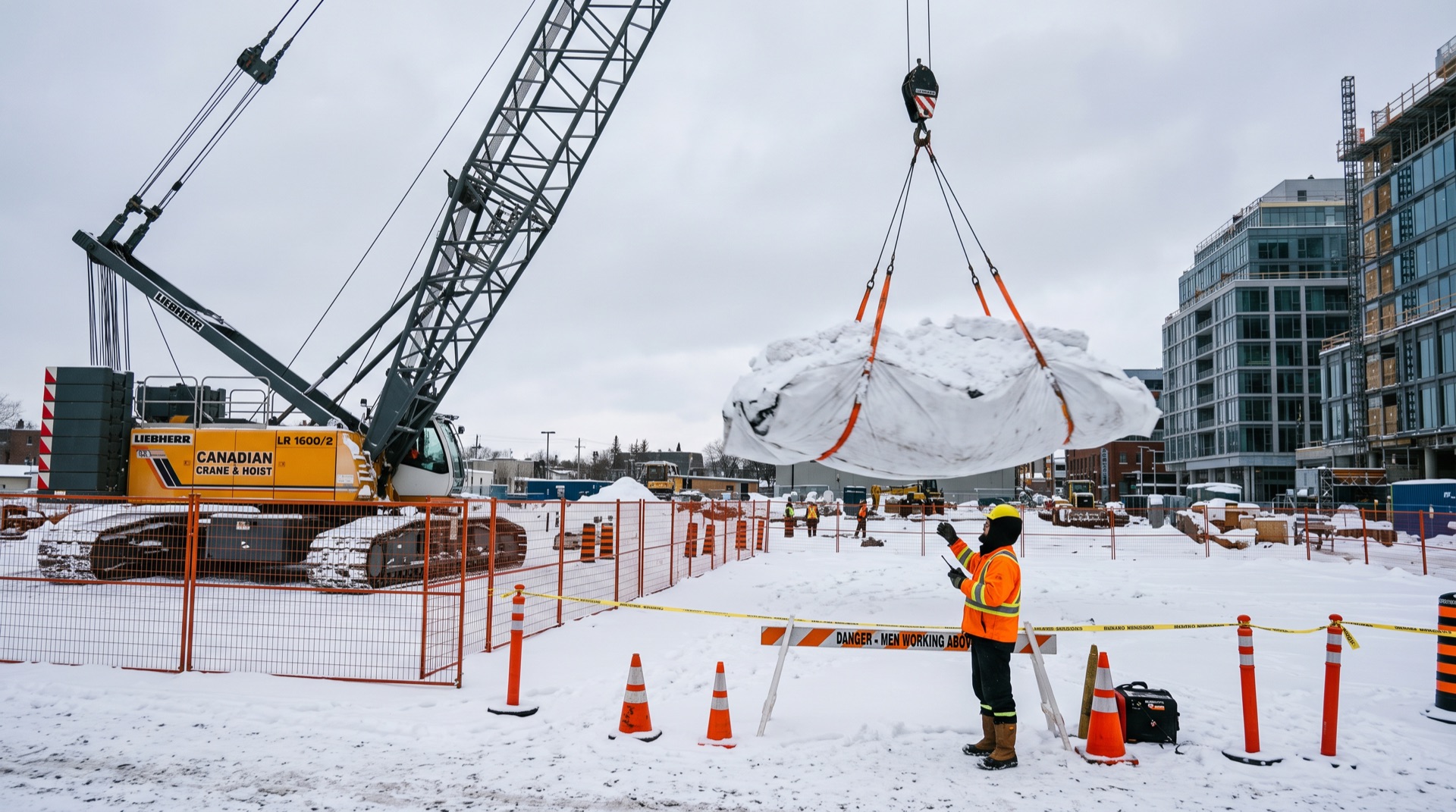
Multi-story homes and estates where the upper roof cannot be safely reached. Large commercial and industrial decks where the sheer tonnage makes hand clearing a multi-day job. Any roof where deflection is already visible and the load has to come off today rather than over a week.
The decision is made on numbers, not instinct. Depth, density and area give a working load figure, and that figure against the roof's design capacity is what determines whether a crane gets mobilised to a property in Lehi.
Planning the lift before anything moves
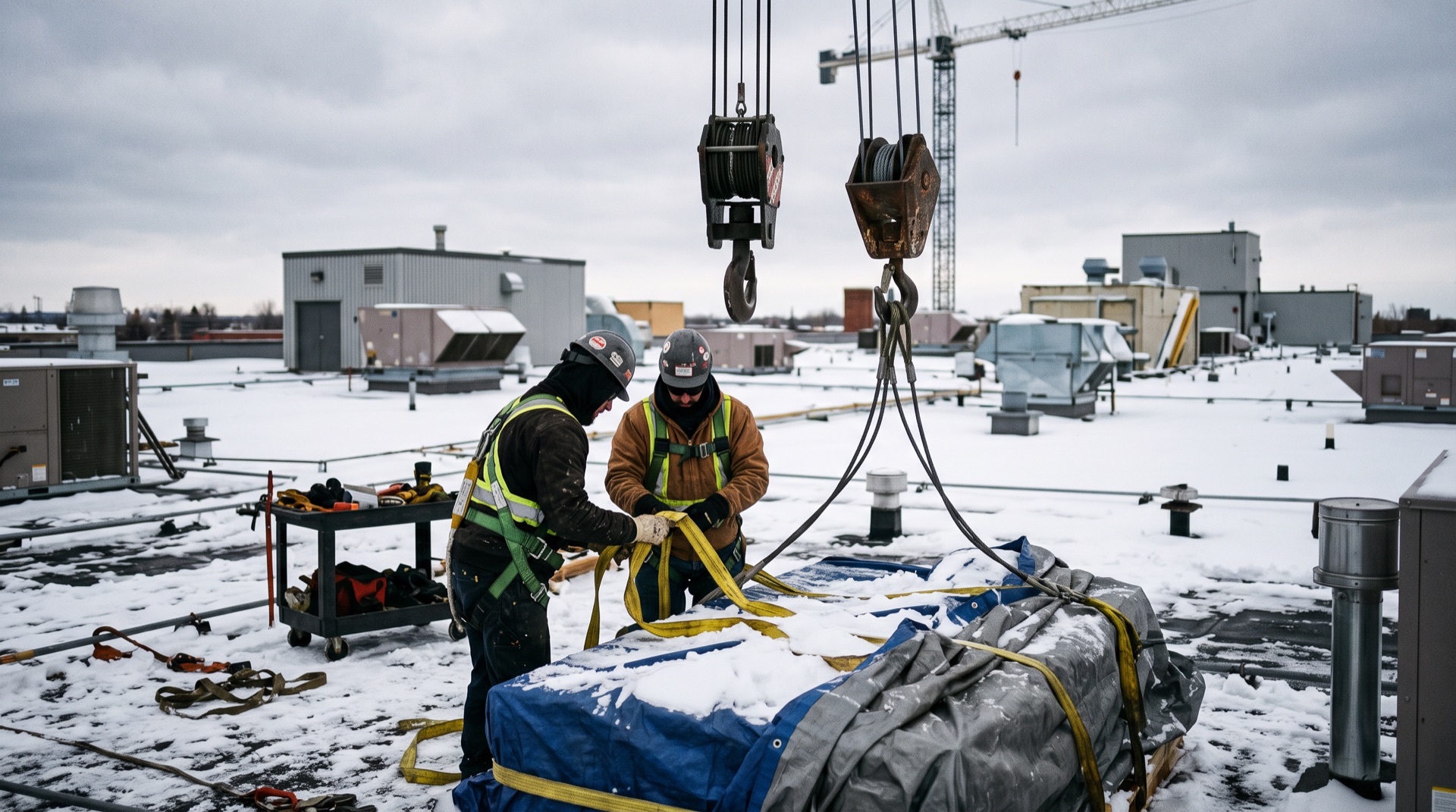
Site access, the swing radius, overhead lines, ground bearing for the outriggers and the ground drop zone all get walked first. On a site in Lehi that walk often determines where the crane can physically sit, which determines everything else.
Permits get pulled where the municipality requires them for a street setup, and that lead time is built into the schedule rather than discovered on the day.
Reach, radius and why the chart decides
Capacity falls away sharply with radius. A machine that lifts comfortably at thirty feet may be well short of the same load at eighty, which is why the far corner of a large deck sometimes needs a bigger crane rather than a longer day.
The chart is run before the quote, so the number given is for a machine that can actually reach the whole roof in Lehi rather than most of it.
What happens if the crane cannot get close enough
Overhead power, a narrow alley, soft ground that will not take outrigger loads, or a neighboring building in the swing path can all rule out a setup after a site visit.
That gets found on the walk rather than on the day. Where a crane genuinely will not work, the honest answer is a larger hand crew over more days with the cost difference laid out - not a pick that was never going to fit.
What you get in Lehi
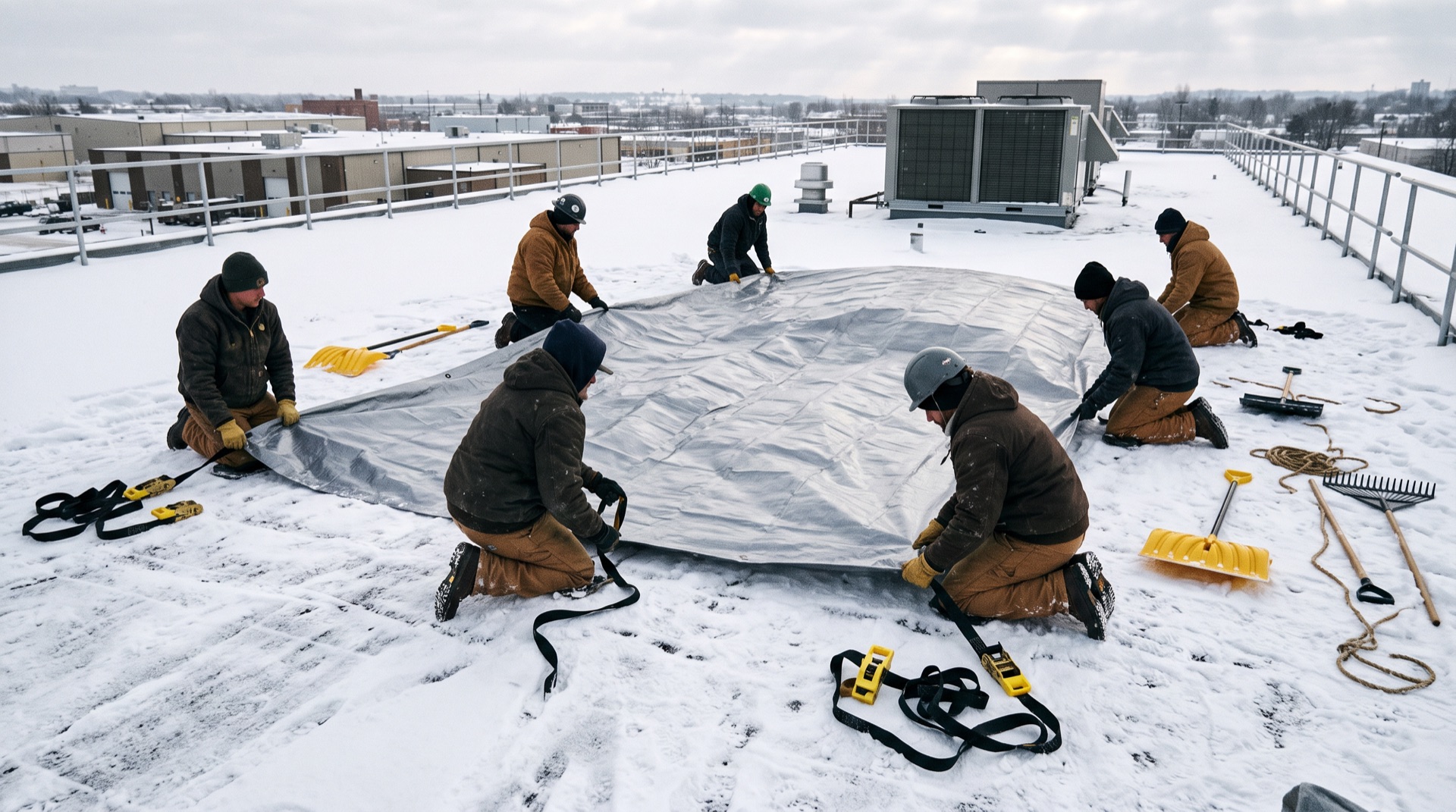
- Rip-stop tarp picksRated tarps and rigging, with lifts planned around the swing radius
- Load calculated firstDepth, density and area against design capacity before anything mobilises
- Lift planned firstAccess, swing radius, overhead lines and drop zone walked before scheduling
| Typical scope | Steam, 8-16 crew hours typical |
|---|---|
| Coverage area | Lehi and Utah County |
| Local ice-barrier practice | Extended membrane plus snow retention |
| Pricing model | Billed by the crew hour, rate quoted before dispatch |
| Documentation | Dated before and after photos, written scope in Xactimate line items |
| Removal method | Low-pressure steam only. No chipping, salt or pressure washing. |
| Primary climate stressor | Solar melt on deep pack, shaded eaves |
Lehi Coverage and the Adjoining Communities
Crews working Lehi cover the adjoining communities on the same route — American Fork, Saratoga Springs, Alpine and Lindon — so a storm week usually means one truck handling several addresses in Utah County rather than separate trips.
Nearest hub towns with their own crane snow removal pages: Pleasant Grove, Draper, Eagle Mountain, South Jordan, Orem, Riverton.
Crews cover Lehi and the surrounding Utah County towns through the whole season, and during a freeze event they run from first light until dark.
Most jobs do not stop at one service. Crane Snow Removal in Lehi often runs alongside commercial roof snow removal in Lehi, and both get written into one scope rather than billed as separate visits.
Active leak right now? Our 24/7 Lehi steam ice dam removal crews are dispatched first during a freeze event. Call (888) 561-9664.