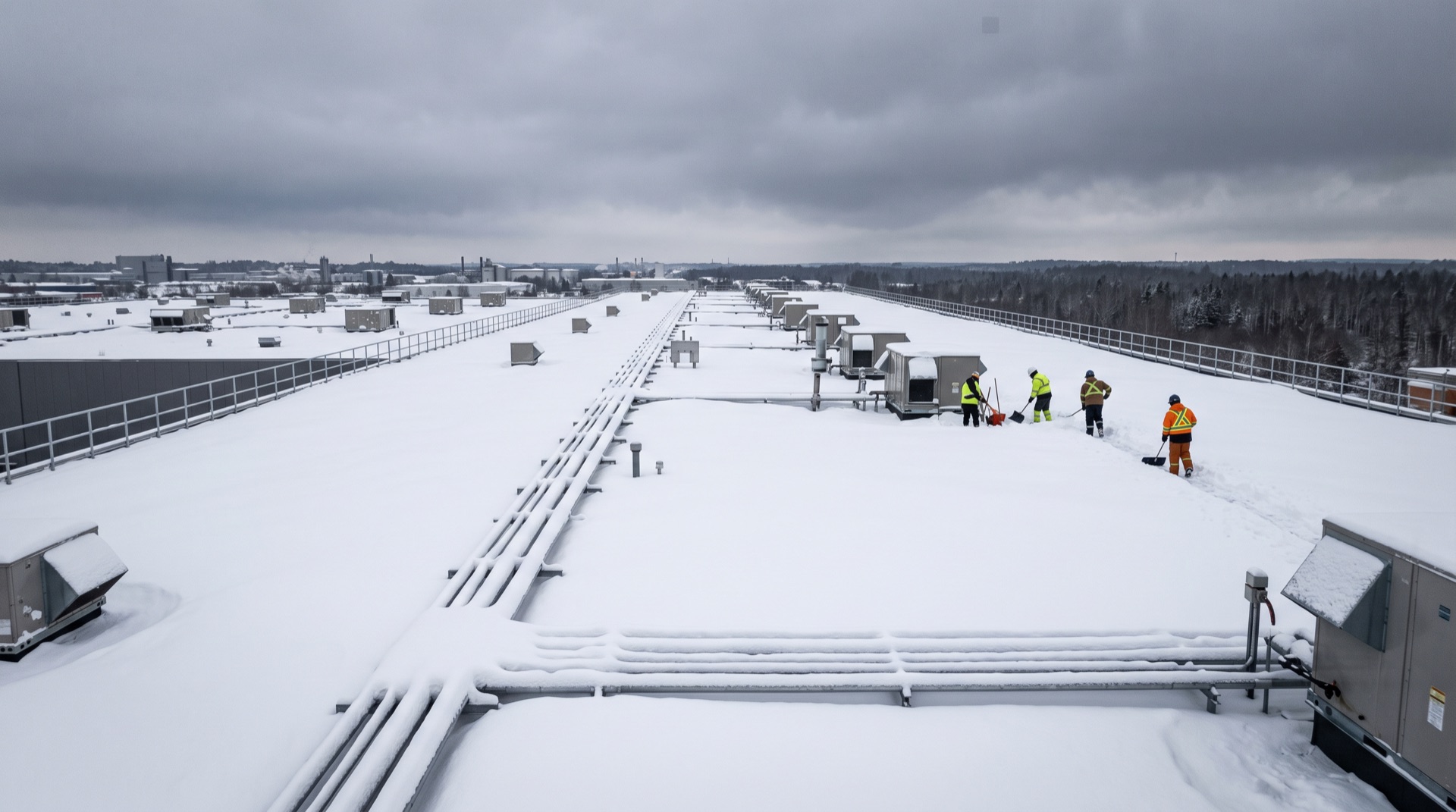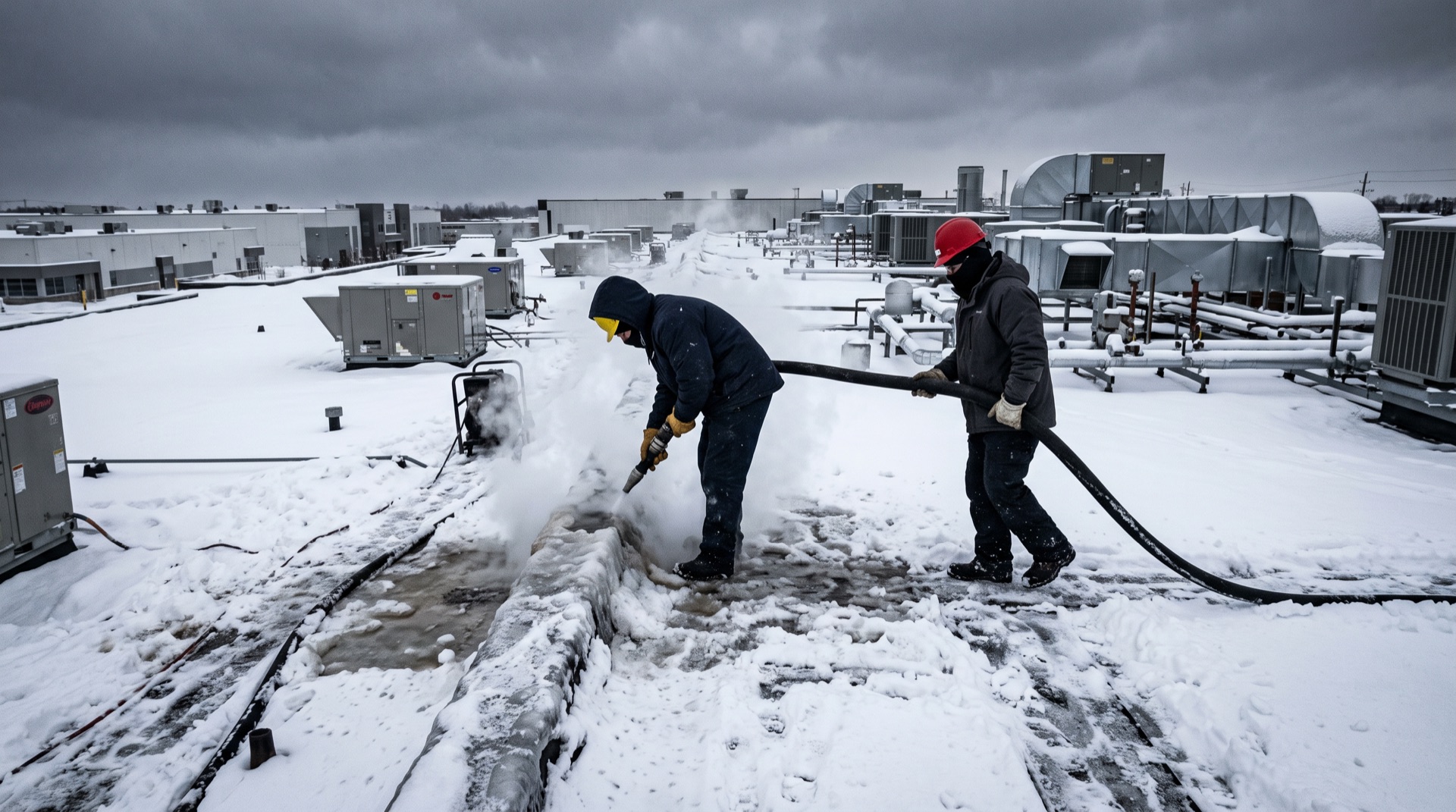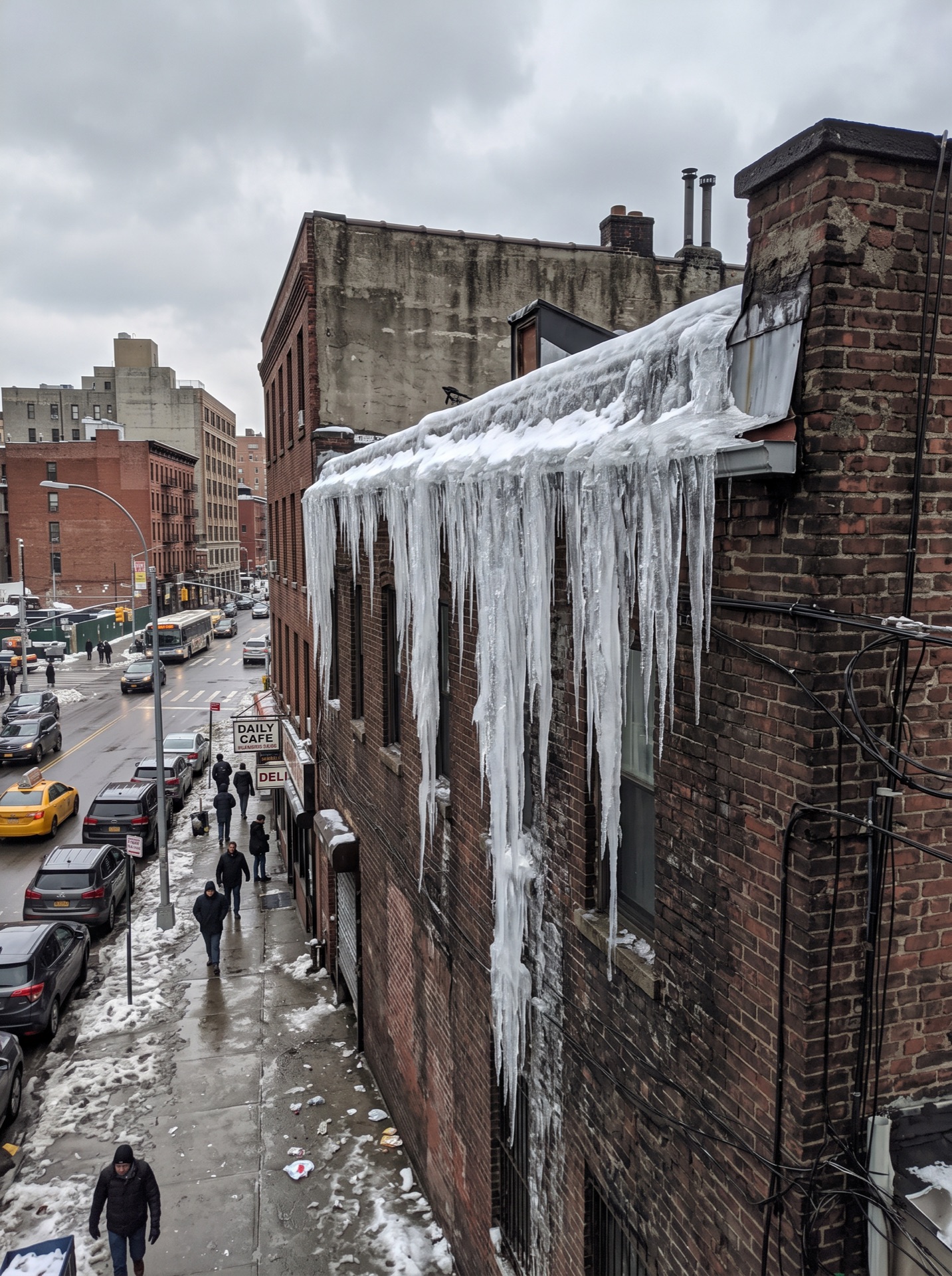
The ice along a roof in Readingline is the symptom. The cause is warm air escaping into the attic, and it is still running right now. As part of our complete Reading winter roof services, crews handle commercial roof snow removal across Berks County.
Why Reading Roofs Dam Up: Nor'easter Load and the Maritime Swing
Berks County gets the worst combination for ice: snow with high water content, followed by temperatures that oscillate rather than settle. The pack does not stay frozen and it does not drain.

Retrofits often made it worse rather than better. Insulation laid on an attic floor without sealing the bypasses underneath it keeps the living space warm and sends the same warm air straight to the roof deck.
Ice-barrier practice in Berks County
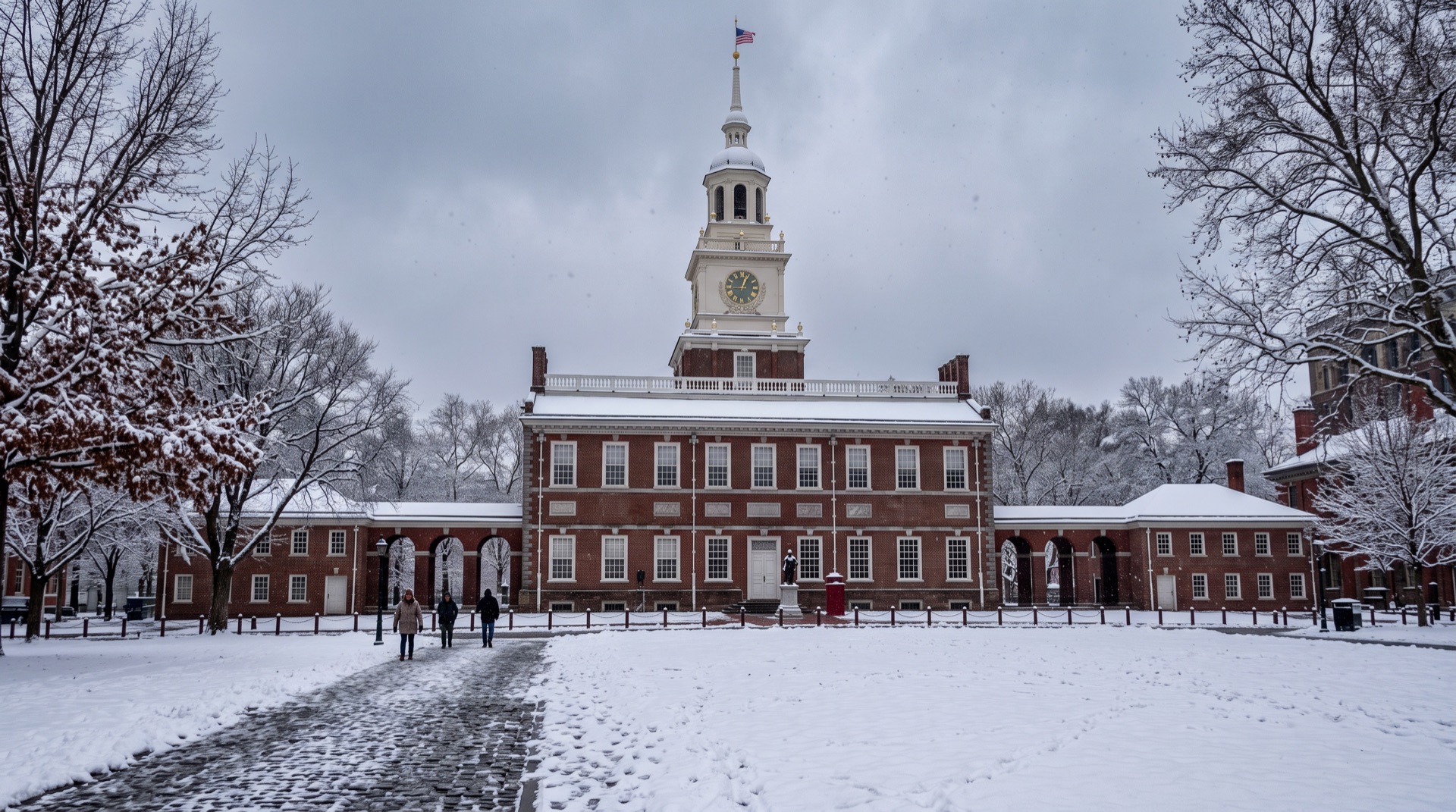
Most Berks County towns require self-adhering ice barrier at the eaves on a re-roof permit. In a historic district there may be additional review on materials, which is worth checking before work is scheduled.
Commercial Roof Snow Removal in Reading: How The Work Runs
Storm routes and standing contracts
Properties on a standing contract get a scheduled clear after each qualifying snowfall, with a single point of contact and a condition report per visit. For a portfolio, that means the clearing order is decided in advance by risk rather than by whoever calls first during the storm. Ceiling Sagging or Bulging After Snow.
Drains and overflows come first
Before anything else comes off, the drains, scuppers and overflow outlets get opened. Otherwise the melt from the clearing has nowhere to go and the roof trades a snow problem for a ponding one.
On a deck in Reading with internal drains that means confirming flow below, not just clearing the grate.
Why large decks carry the most risk
A long-span steel or open-web joist roof has the least margin exactly where the drift is deepest — mid-span. Snow does not settle evenly either: it piles against parapets, behind rooftop units, in the lee of higher adjoining roofs, and in valleys between bays. The average depth across the roof is not the number that matters.
Crews survey depth and density at the drift points rather than the middle of the field, and calculate the working load from that against the structure's design capacity.
Reading the design load off the drawings
Where structural drawings exist they state the design ground snow load and the roof's own capacity, and that number turns the whole question from opinion into arithmetic. Measured depth and density against design capacity gives a percentage rather than an argument.
Where the drawings have been lost - common on older Reading stock - the conservative assumption is the code minimum of the era the building went up, which is usually well below what a modern roof would be built to.
Reduction to a threshold, not a bare deck
The goal is bringing the load under the structure's capacity safely, with a cushion layer left on the membrane throughout.
Scraping a commercial Reading roof to bare membrane costs more, takes longer and risks the roof covering for no structural benefit.
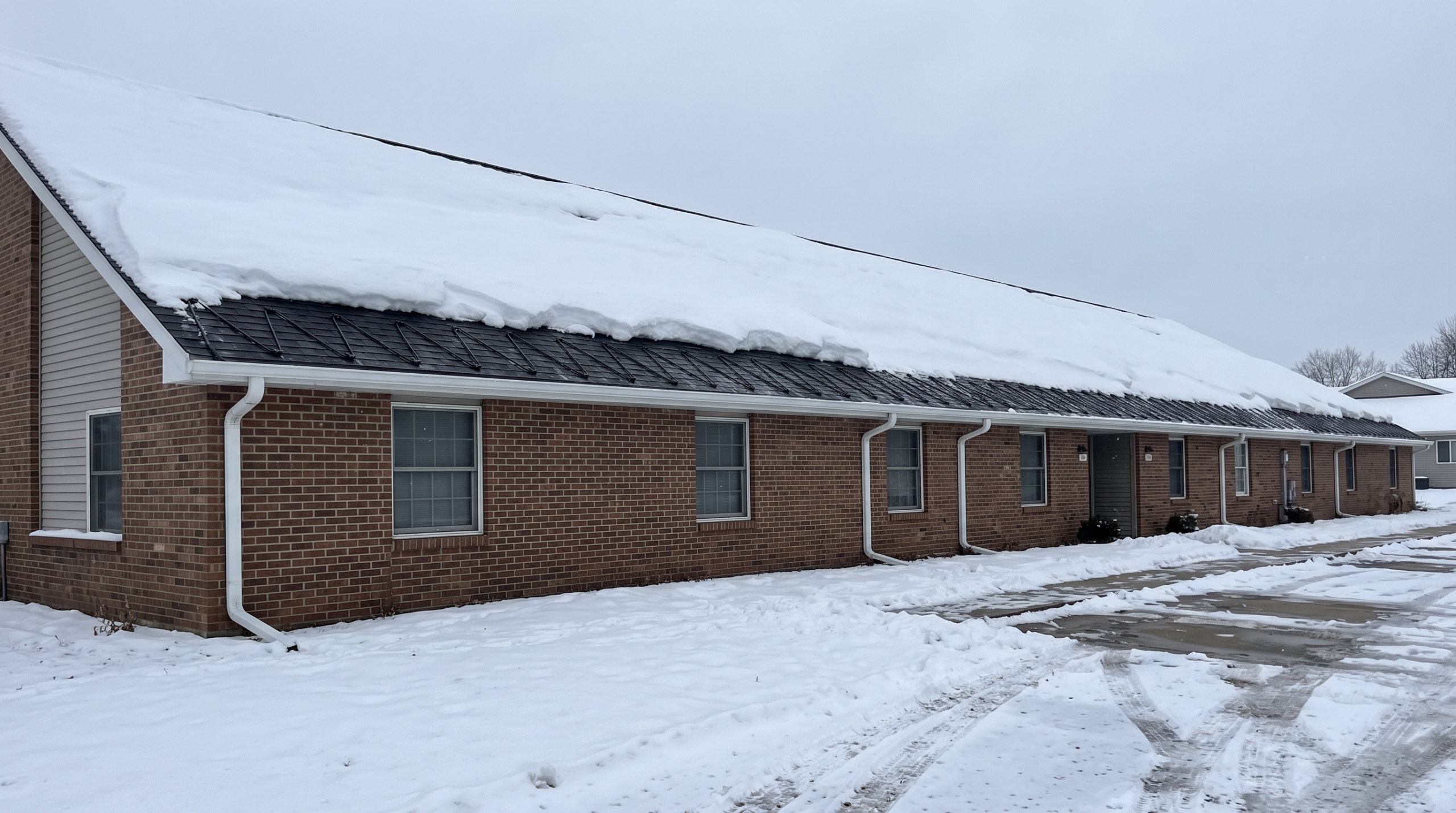
What you get in Reading
- Mid-span measuredDepth read over the longest unsupported span, not the average
- Drift-point surveyDepth and density measured where it collects, not where it is convenient
- Drains kept openScuppers and internal drains cleared so meltwater has an exit
| Dispatch window | Same day to 24 hours |
|---|---|
| Typical scope | Steam, 4-10 crew hours typical |
| Coverage area | Reading and Berks County |
| Primary climate stressor | Nor'easters, rapid thaw-freeze swing |
| Pricing model | Billed by the crew hour, rate quoted before dispatch |
| Removal method | Low-pressure steam only. No chipping, salt or pressure washing. |
| Documentation | Dated before and after photos, written scope in Xactimate line items |
Berks County Coverage From Reading
Crews working Reading cover the adjoining communities on the same route — Temple, Leesport, Mohnton, Blandon and Limekiln — so a storm week usually means one truck handling several addresses in Berks County rather than separate trips.
Nearest hub towns with their own commercial snow pages: Pottstown, Lebanon, Lancaster, Allentown, West Chester, King of Prussia.
When a storm hits Berks County, crews are dispatched by severity rather than by call order — water already inside the house goes first.
Most jobs do not stop at one service. Commercial Snow in Reading often runs alongside crane-assisted snow removal in Reading, and both get written into one scope rather than billed as separate visits.
Active leak right now? Our 24/7 Reading steam ice dam removal crews are dispatched first during a freeze event. Call (888) 561-9664.