Skip to content
Philadelphia, PA
Deep Drifts & Big Roofs · Delaware County

Crane-Assisted Snow Removal in Philadelphia, PA — Coastal Storm Response

Crane-Assisted Snow Removal in Philadelphia, PA from Ice Dam Now: low-pressure steam only, across Delaware County. No chipping, no salt, no pressure washing. Crews carry licensing, insurance and fall-protection certification, bill by the crew hour at a rate quoted on the phone, prioritize active interior leaks the same day, and document the work for insurance.

Load calculated first — Depth, density and area against design capacity before anything mobilises
Rip-stop tarp picks — Rated tarps and rigging, with lifts planned around the swing radius
Lift planned first — Access, swing radius, overhead lines and drop zone walked before scheduling
Marshalled exclusion zone — Pedestrian and vehicle control for the whole operation

Get Ice Dam Help Philadelphia

A few quick questions, then pick a time. If water is coming in, call instead.

What is the zip code of the home?

Roof leaking right now? Call (888) 561-9664 — that is faster than any form.
Water coming through the ceiling?Every hour an ice dam sits there, more water gets under the shingles.Call (888) 561-9664
24/7
Storm Season Dispatch
No Chipping
Steam Only
Delaware
County Coverage
Crew Hour
Rate Quoted Up Front
Documented
Photos On Every Job

Most Philadelphia homeowners find out about an ice dam from the inside — a damp patch on a bedroom ceiling, or water tracking down the inside of a window frame. As part of our complete Philadelphia winter roof services, crews handle crane-assisted snow removal across Delaware County.

Why a Philadelphia Roof Dams Between Storms

Coastal storms deliver the heaviest snow by weight. A single nor'easter can put a wet, dense pack on a roof in Philadelphia in one night, and the maritime air that follows rarely stays on one side of freezing for long.

Diagram showing how ice dams form on a roof from heat loss and snow melt
Heat escaping into the attic melts roof snow; the meltwater refreezes at the cold eave and the dam grows a layer every cycle.

Retrofits often made it worse rather than better. Insulation laid on an attic floor without sealing the bypasses underneath it keeps the living space warm and sends the same warm air straight to the roof deck.

Ice-barrier practice in Delaware County

In most coastal Pennsylvania towns the eave membrane requirement extends past the interior wall line rather than stopping at the first course. On a roof in Philadelphia with a deep overhang, that is further up than it sounds.

Crane-Assisted Snow Removal in Philadelphia: How The Work Runs

When a crane is the right call

Multi-story homes and estates where the upper roof cannot be safely reached. Large commercial and industrial decks where the sheer tonnage makes hand clearing a multi-day job. Any roof where deflection is already visible and the load has to come off today rather than over a week. Ceiling Sagging or Bulging After Snow.

The decision is made on numbers, not instinct. Depth, density and area give a working load figure, and that figure against the roof's design capacity is what determines whether a crane gets mobilised to a property in Philadelphia.

What it protects

Avoiding a structural failure is the obvious part. The less obvious part is that most carriers treat preventing an imminent collapse as loss mitigation, which is a very different conversation from a claim filed after the deck comes down. Weights, depths and dates are documented throughout for exactly that reason.

Why it is often the cheaper number

Per hour a crane costs more than a crew with shovels. Per roof it frequently costs less, because a pick that takes an afternoon can replace several crew-days of hand clearing.

On a large Philadelphia deck the crane is routinely both the faster and the cheaper answer, and the comparison gets shown rather than asserted.

Planning the lift before anything moves

Site access, the swing radius, overhead lines, ground bearing for the outriggers and the ground drop zone all get walked first. On a site in Philadelphia that walk often determines where the crane can physically sit, which determines everything else.

Permits get pulled where the municipality requires them for a street setup, and that lead time is built into the schedule rather than discovered on the day.

Keeping people clear of the swing

A loaded tarp overhead is a serious exclusion zone. Pedestrian and vehicle routes get marshalled for the whole operation, and on an occupied building that means talking to whoever controls the doors before the first lift.

On a site in Philadelphia with public frontage this is usually the part that needs the most coordination and the part that gets the least credit.
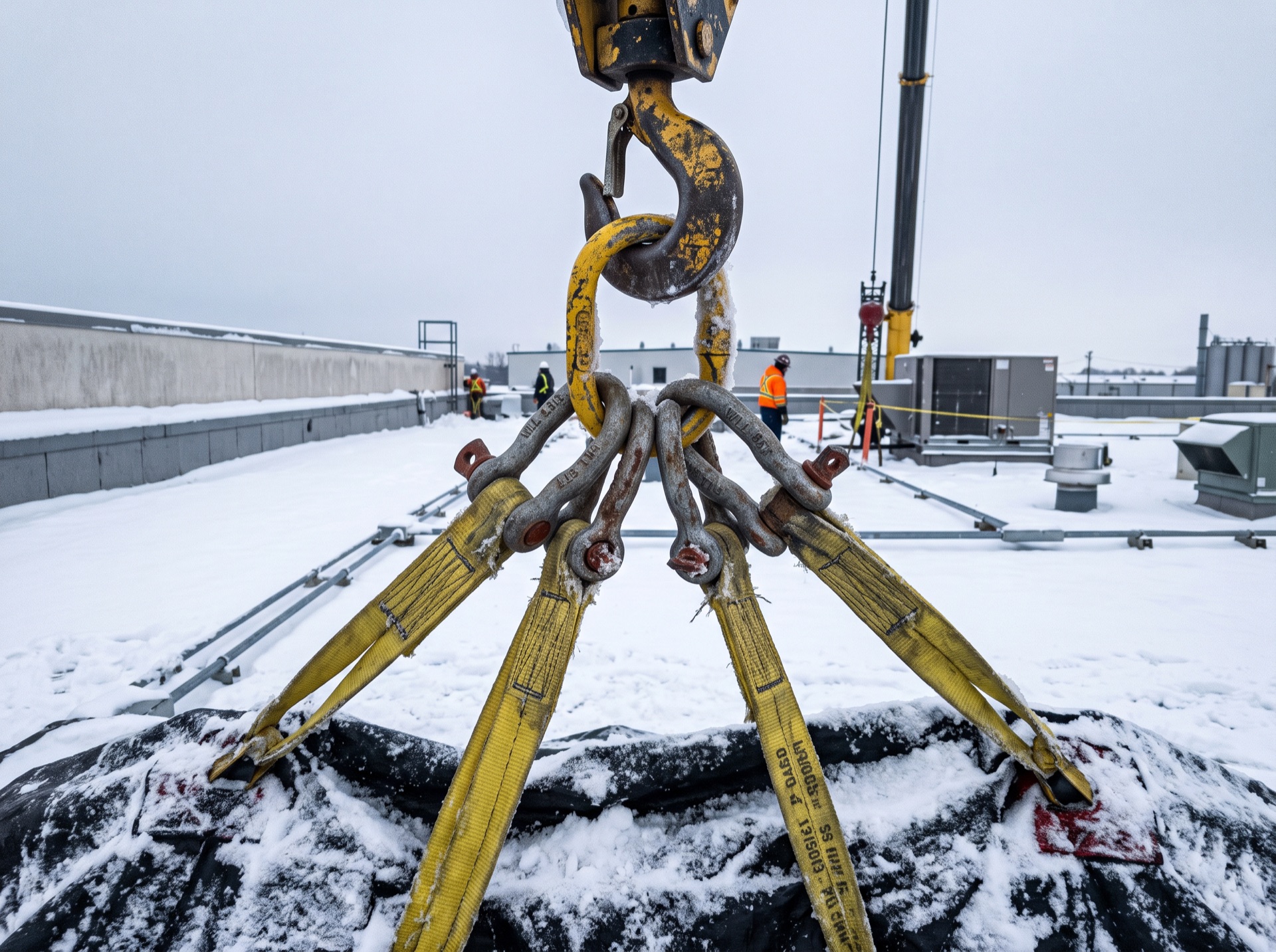
Crane hook with yellow lifting straps and shackles attached to snow-covered tarp on rooftop
Yellow lifting straps and heavy shackles connect a crane hook to a snow-covered tarp during a winter rooftop operation.

What you get in Philadelphia

  • Load calculated firstDepth, density and area against design capacity before anything mobilises
  • Rip-stop tarp picksRated tarps and rigging, with lifts planned around the swing radius
  • Weights documentedDepths, densities and loads recorded for the carrier
Crane-Assisted Snow Removal in Philadelphia, PA — specification
Service specification for Philadelphia, PA
Pricing modelBilled by the crew hour, rate quoted before dispatch
Coverage areaPhiladelphia and Delaware County
Dispatch windowSame day to 24 hours
Typical scopeSteam, 4-10 crew hours typical
DocumentationDated before and after photos, written scope in Xactimate line items
ServiceCrane-Assisted Snow Removal in Philadelphia, PA
Removal methodLow-pressure steam only. No chipping, salt or pressure washing.

Neighborhoods and Towns We Reach From Philadelphia

Crews working Philadelphia cover the adjoining communities on the same route — Essington, Folcroft, Norwood, Prospect Park and Ridley Park — so a storm week usually means one truck handling several addresses in Delaware County rather than separate trips.

Nearest hub towns with their own crane snow removal pages: Upper Darby, King of Prussia, Norristown, West Chester, Pottstown, Reading.

During a cold snap Philadelphia gets worked alongside the neighboring Delaware County towns on the same route, with active interior leaks moved to the front of the list.

Most jobs do not stop at one service. Crane Snow Removal in Philadelphia often runs alongside commercial roof snow removal in Philadelphia, and both get written into one scope rather than billed as separate visits.

Active leak right now? Our 24/7 Philadelphia steam ice dam removal crews are dispatched first during a freeze event. Call (888) 561-9664.
Conditions We Work In

Crane-Assisted Snow Removal In Practice

Conditions crews work in across Delaware County. Every job is photographed before and after.

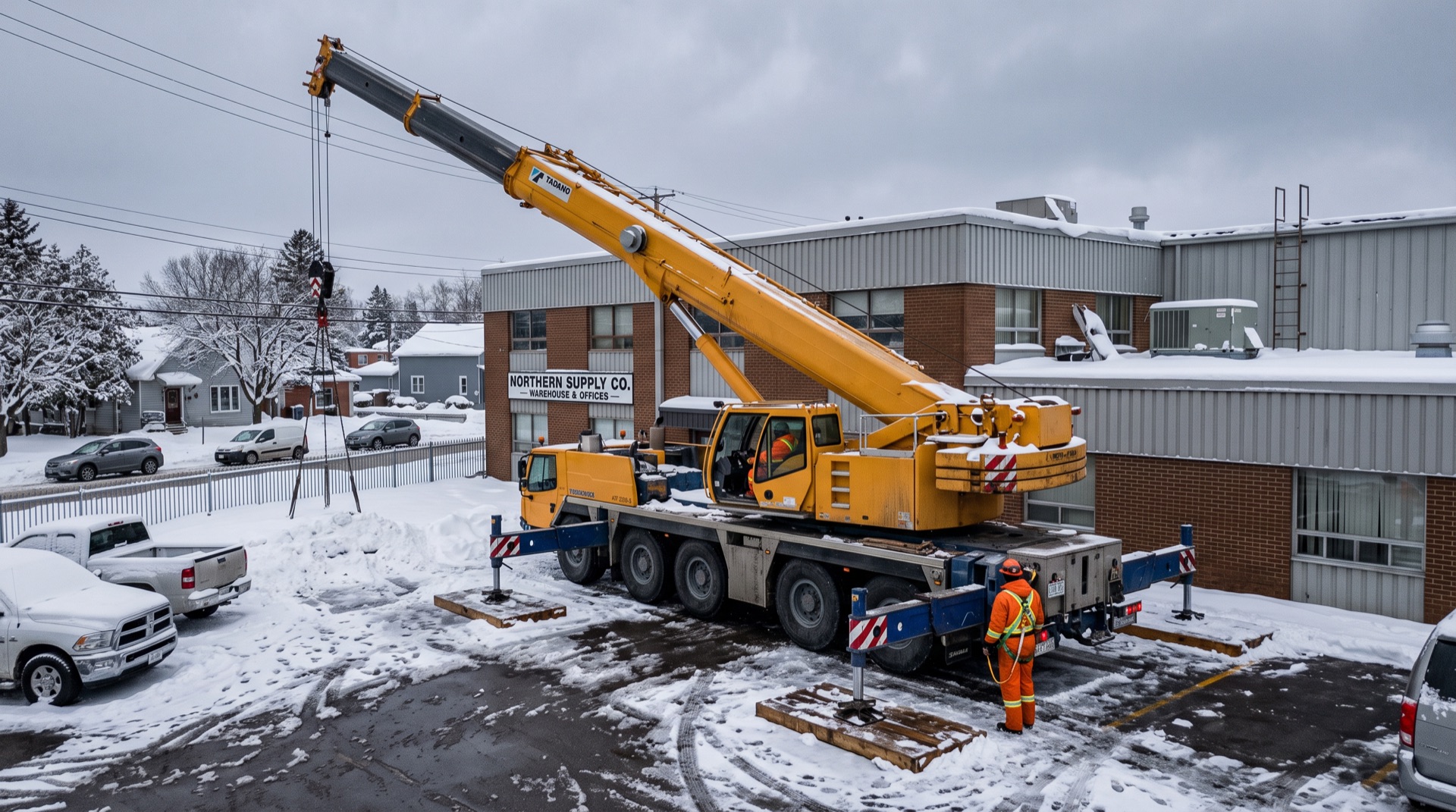
Yellow Tadano mobile crane set up at Northern Supply Co commercial building in winter
A Tadano mobile crane operates in a snowy parking lot outside the Northern Supply Co. warehouse and offices.
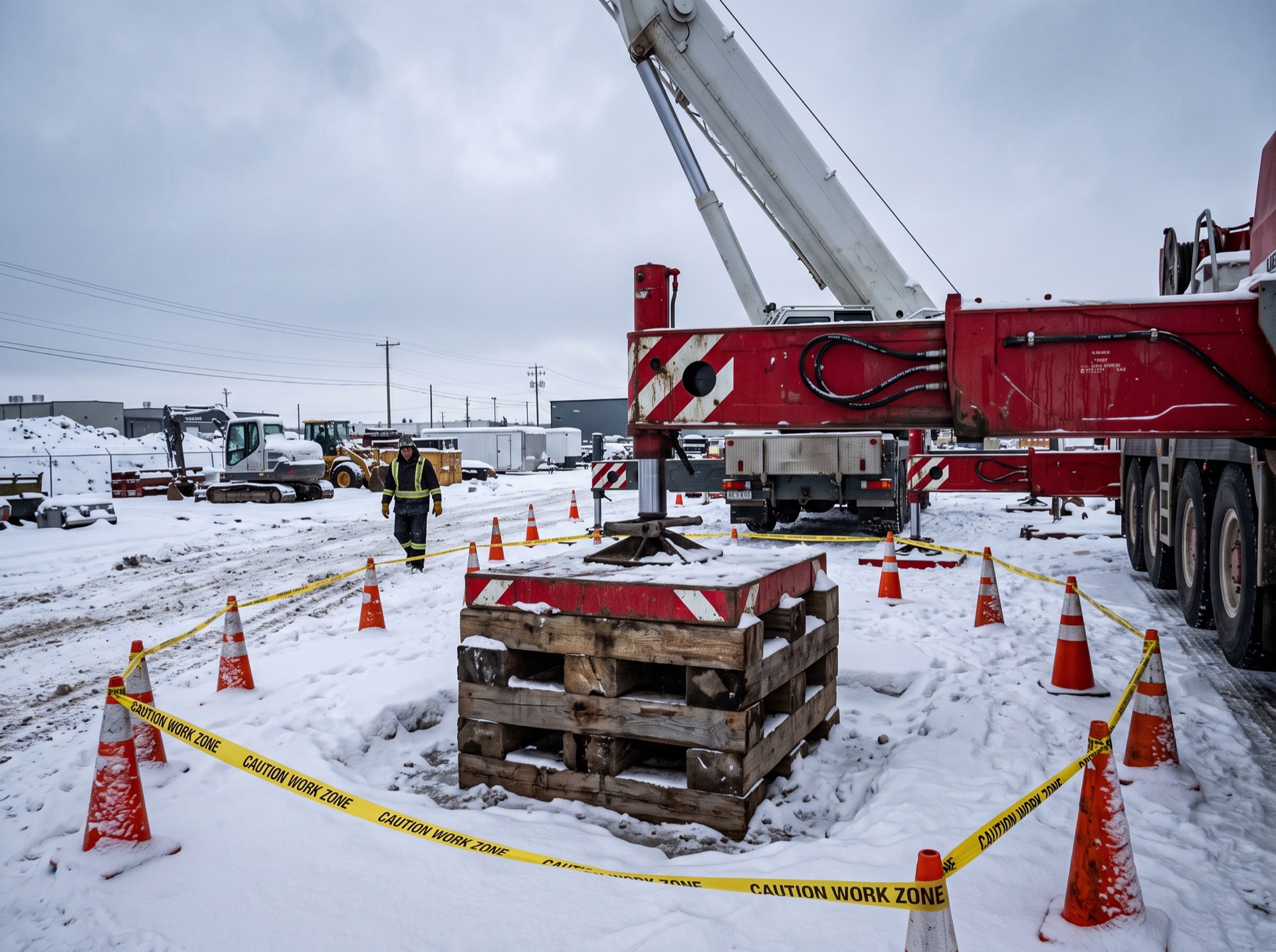
crane outrigger pad set on wood cribbing in snowy work zone
A crane outrigger rests on stacked wood cribbing surrounded by caution tape and traffic cones in winter conditions.
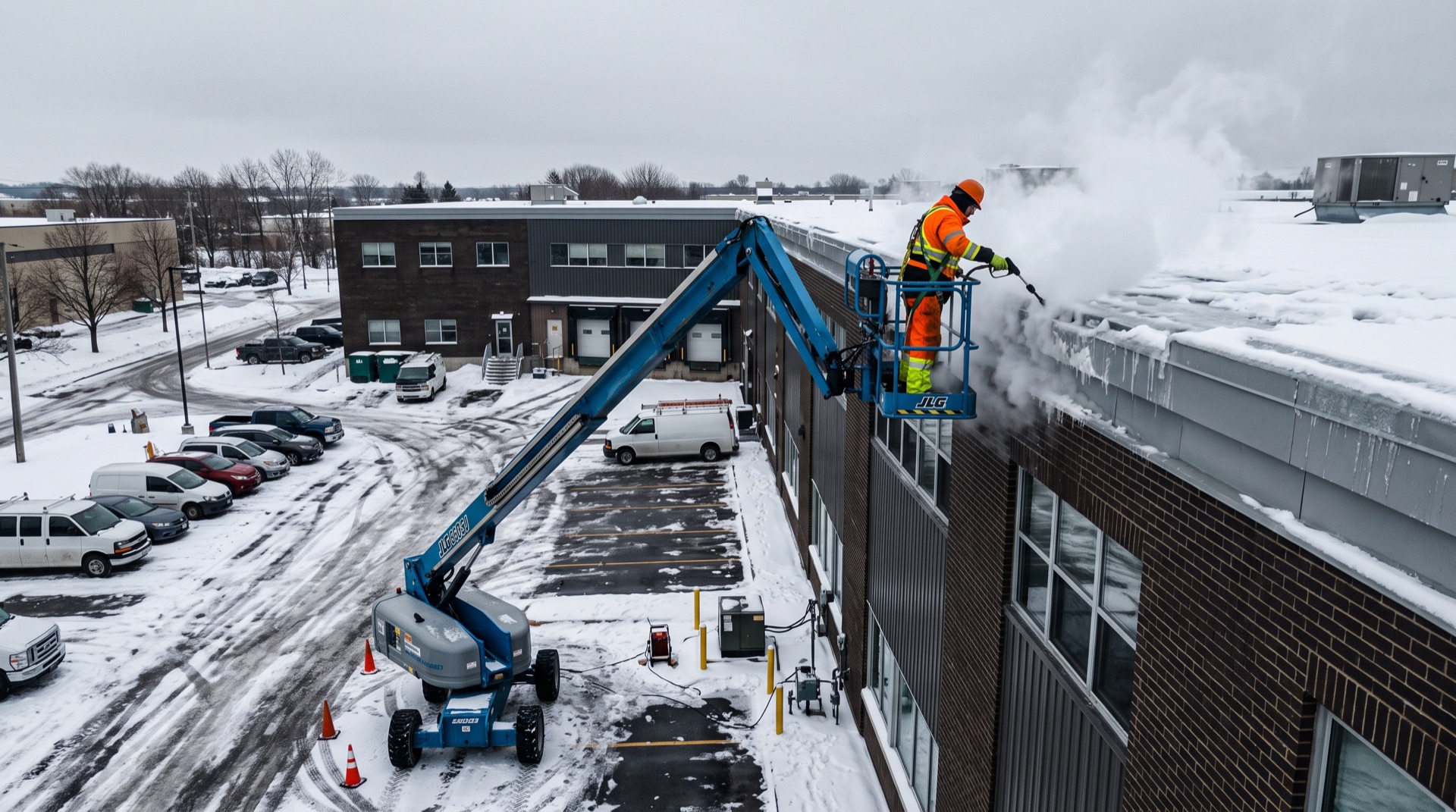
Worker in orange safety gear using boom lift to remove snow and ice from commercial building roof
A worker uses a JLG boom lift and steam equipment to safely remove ice and snow from a commercial rooftop.
FAQ

What Philadelphia Homeowners Ask First

It is billed by the crew hour, and the rate plus a realistic time estimate are quoted on the phone before anyone is dispatched.

  • Scope drives the hours: length and thickness of the ice, roof pitch and height, and whether the gutters are frozen solid.
  • Access matters too — a three-story Philadelphia roof takes longer to set up on than a ranch.
  • The invoice matches the quote. There are no surprise add-ons written on the tailgate.

No, but there is a worse one: after the thaw, when the evidence has melted and the damage is all that is left.

  • Mid-storm calls are fine — crews work through freeze events.
  • An evening call for a leak that started that afternoon usually gets a next-morning slot.
  • Waiting for a weekend to pass is the most common and most expensive delay.

Because ice dams are made by heat loss, and two houses on the same street rarely leak heat the same way.

  • Attic air leaks around can lights, bath fans and the attic hatch are the usual source.
  • Crushed or missing soffit baffles stop the intake ventilation that would otherwise keep the deck cold.
  • An addition or dormer built over unheated space puts warm air right against a cold eave.
  • Local factor: nor'easters and rapid thaw-freeze swings makes the difference show up faster here than it would further south.

More than it looks from the ground - a foot-deep dam across a thirty-foot eave is a few thousand pounds.

  • Depth is measured at the eave rather than estimated from the driveway.
  • The gutter trough underneath is usually frozen solid too and is part of the same mass.
  • That weight is one of the reasons chipping at it from a ladder goes badly.

Please do not. Salt corrodes flashing, fasteners, gutters and anything metal it drains across, and it damages whatever is planted below.

  • Calcium chloride is less aggressive than rock salt but still ends up in the soil at the drip line.
  • A puck melts a hole, not a drainage path, so the water simply refreezes a few inches further on.
  • Crews use heat and nothing else - no salt, no chemicals, nothing corrosive.

Usually yes, with planning. Setup needs clear access, a bearing surface for the outriggers, a swing radius free of overhead lines and a ground drop zone. Those get walked before scheduling, and permits are pulled where the municipality requires them.

Setup and breakdown are a fixed cost of several hours whatever the roof. The lifting itself depends on how much material there is and how quickly the crew can cut it into liftable sections. A large deck that would be several crew-days by hand is commonly an afternoon once the crane is rigged.

Nearby

Crane Snow Removal In Towns Around Philadelphia

Same-Day Response

Get A Philadelphia Crew Out

Waiting for a thaw is a strategy, but it is an expensive one — the melt has to go somewhere, and it goes into the insulation first.

✓ Licensed & insured✓ Low-pressure steam only✓ Rate quoted up front✓ Photos for your claim
Online Quote(888) 561-9664