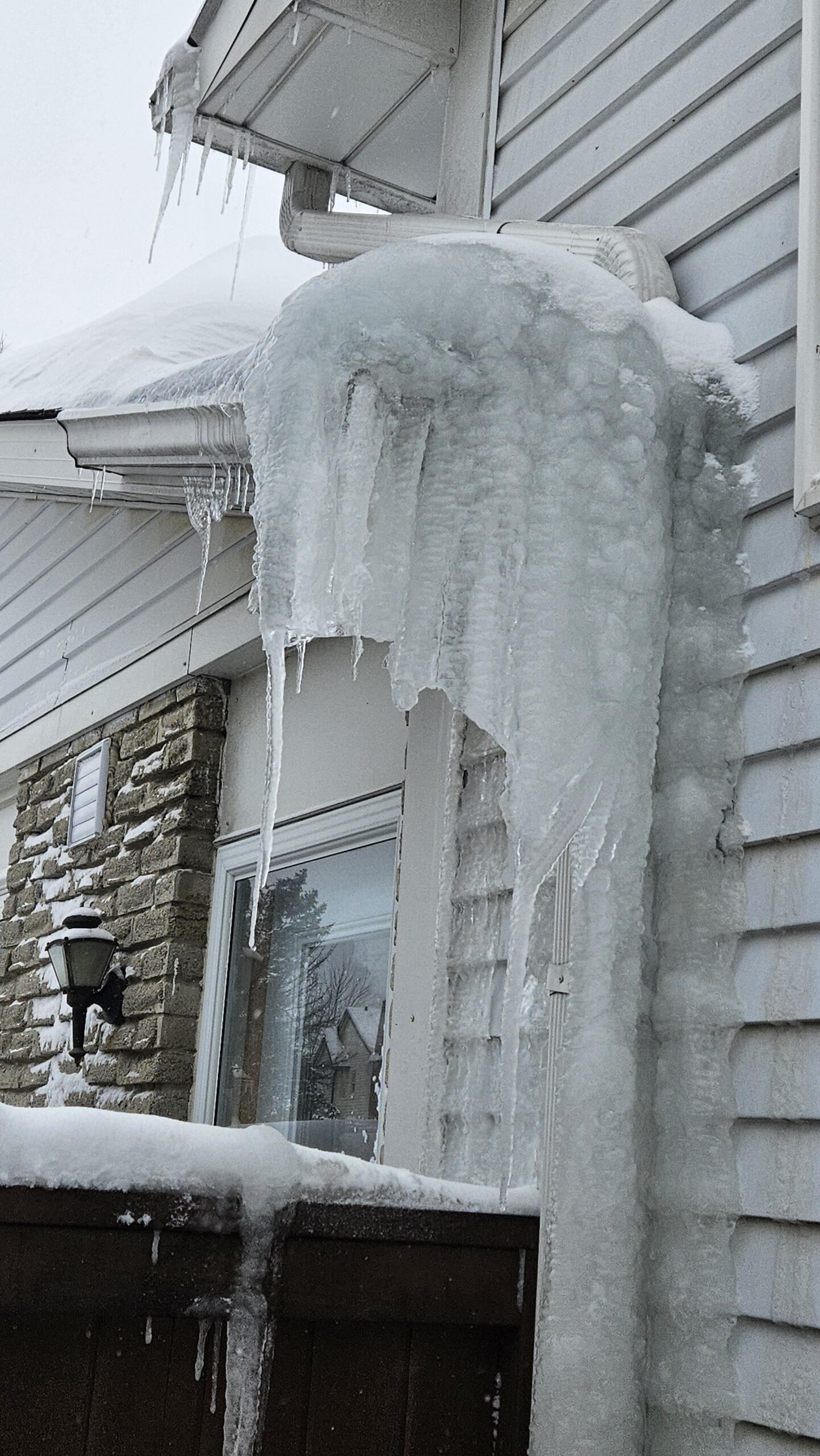
If you are in Black Mountain watching icicles grow along the gutter line, what you are really watching is water that no longer has anywhere to drain. As part of our complete Black Mountain winter roof services, crews handle ice dam removal across Buncombe County.
Small Snow, Repeated Cycles: Black Mountain Ice Dams
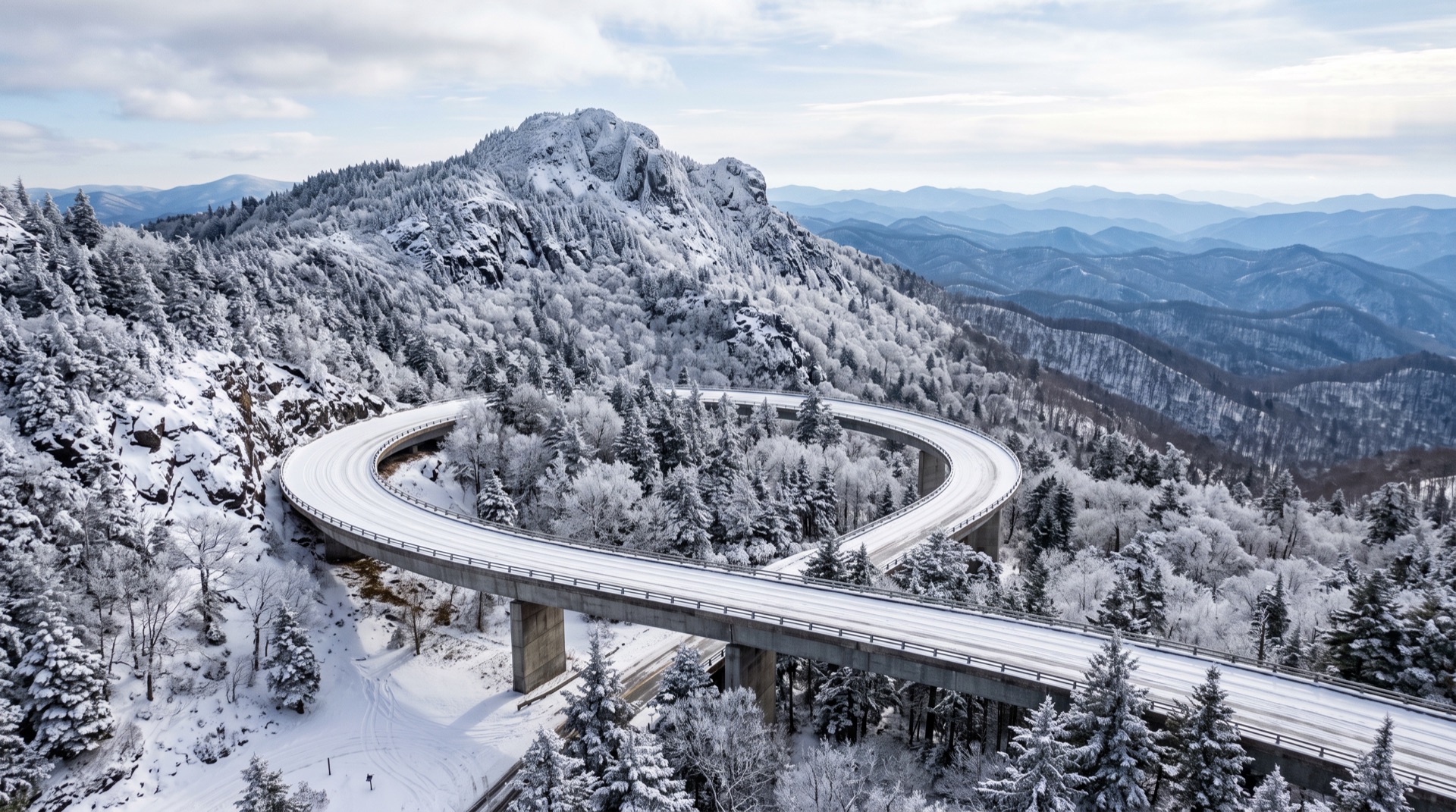
An ice dam needs meltwater and a cold eave, and Black Mountain supplies both on an ordinary week. A thin cover that melts by lunchtime and sets again after dark is a perfectly good dam factory.

That is the part homeowners miss. Total snowfall here is modest compared with the northern belt, so roofs in Buncombe County are often built and insulated as though ice is not a concern. Then a cycling week in January finds every weak eave at once.
Ice-barrier practice in Buncombe County
Ice-barrier membrane at the eaves is required on new work under the residential code North Carolina follows, but on a roof built before that it is frequently absent — and this is the region where it is most often skipped.
Ice Dam Removal in Black Mountain: How The Work Runs
Access, ladders and what the crew needs on site
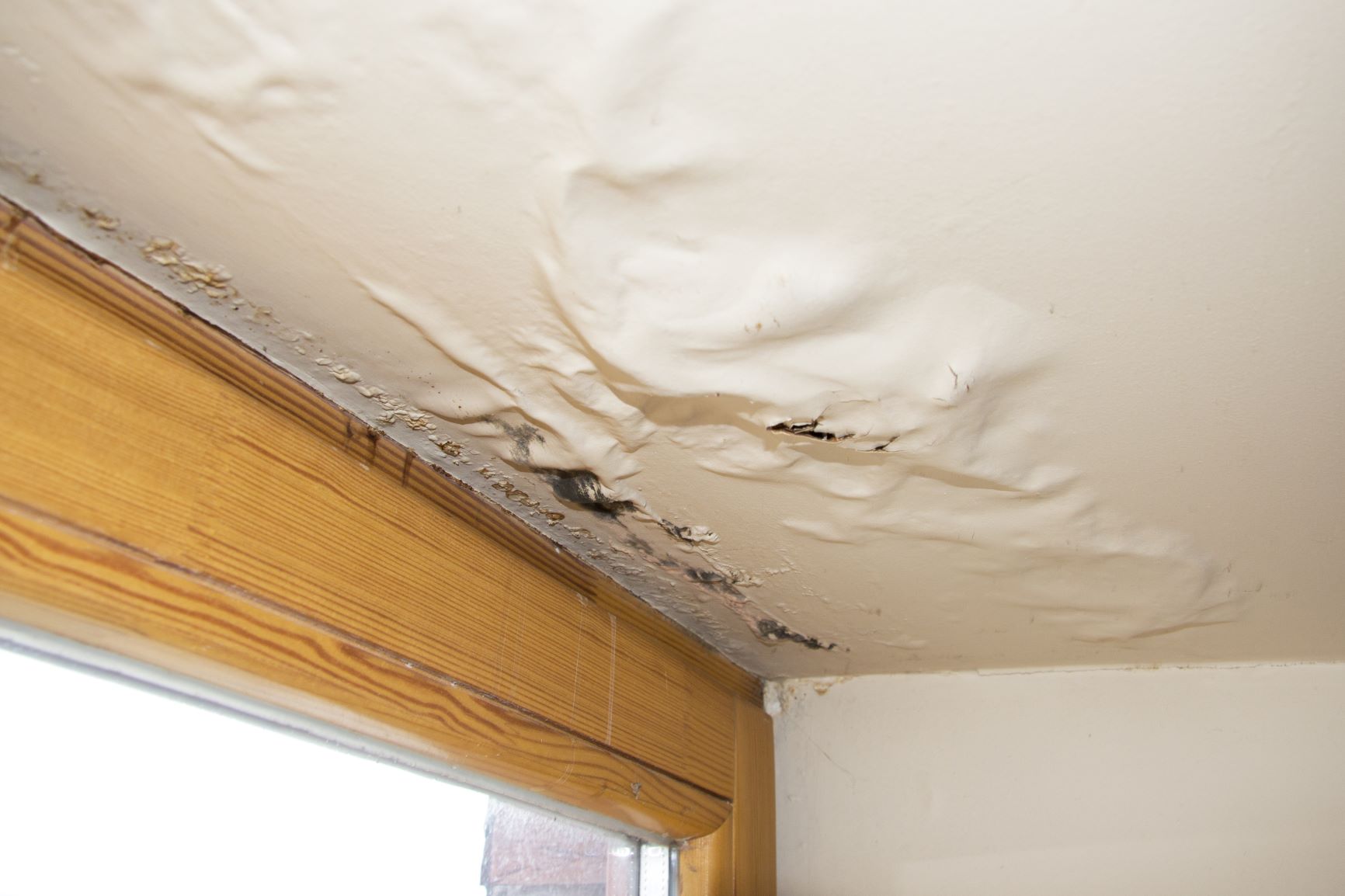
Steam equipment needs somewhere to park within hose reach, and ladders need footing that is not a buried flower bed or a sheet of ice. Clearing a path to the affected eave, moving vehicles off the driveway and unlocking a side gate takes ten minutes and saves considerably more than that on the clock. Water Stain on the Ceiling in Winter.
Where the only access is through a neighbor's property, that conversation is worth having before the crew is in the street rather than while it waits.
What steam actually does
A steam unit delivers water at roughly 290°F at a pressure low enough to rest your hand in the plume. It cuts a channel straight through the ice and lifts the dam off in sections, right down to the shingle. The heat does the work, not force, so granules, seal strips and flashing come through untouched.
That is the whole difference between steam and the hot pressure washers often sold as steam. A pressure washer cuts ice fast because of its pressure — and that same pressure strips the granules off asphalt shingles and drives water up under the courses. One method removes ice. The other removes ice and roof.
What the dam has already done to the gutter and fascia
Ice expands as it forms, and a trough packed solid pushes the gutter away from the fascia a little more every cycle. By the time the dam is thick enough to leak, the hangers are often pulled, the back of the trough has lifted, and the fascia board behind it has been wet for weeks.
None of that is visible until the ice is off. It gets photographed when it appears, because a bent gutter found in February is a great deal easier to argue about with a carrier than one discovered in May.
Why the gutter has to be cleared in the same visit
A dam sitting above a gutter packed solid with ice is only half the problem. Clear the eave and leave the trough frozen, and the next day's meltwater has nowhere to run — it backs up onto the roof and the dam rebuilds from the bottom.
Crews steam the trough and the downspout through to daylight on the same visit. It adds time, which is why the hour estimate given on the phone accounts for it, and it is the difference between a fix and a repeat visit in Black Mountain the following week.
Why salt and ice melt make it worse
Calcium chloride opens a narrow channel and leaves the dam standing. The channel refreezes, the dam does not go anywhere, and in the meantime the runoff corrodes gutter seams, fasteners, flashing and anything growing underneath.
It is a stopgap at best. On a roof in Black Mountain with an active leak it buys hours, not days, and it adds a corrosion problem to the water problem.

What you get in Black Mountain
- No salt, no chippingNothing corrosive and nothing mechanical touches the covering
- Valleys and dormersThe dead spots that hold the deepest ice get worked specifically
- Same-day dispatchActive interior leaks go to the front of the schedule during a freeze event
| Typical scope | Steam, 4-8 crew hours typical |
|---|---|
| Local ice-barrier practice | Eave membrane on new work, often absent |
| Documentation | Dated before and after photos, written scope in Xactimate line items |
| Removal method | Low-pressure steam only. No chipping, salt or pressure washing. |
| Pricing model | Billed by the crew hour, rate quoted before dispatch |
| Service | Ice Dam Removal in Black Mountain, NC |
| Primary climate stressor | Repeated thaw-freeze cycling |
Buncombe County Coverage From Black Mountain
Crews working Black Mountain cover the adjoining communities on the same route — Ridgecrest, Montreat, Swannanoa, Fairview and Old Fort — so a storm week usually means one truck handling several addresses in Buncombe County rather than separate trips.
Nearest hub towns with their own ice dam removal pages: Asheville, Hendersonville, Waynesville, Sugar Mountain, Blowing Rock, Banner Elk.
Coverage runs across Black Mountain and the nearby towns all winter, and capacity is surged into whichever North Carolina market the storm actually hits.
Most jobs do not stop at one service. Ice Dam Removal in Black Mountain often runs alongside water mitigation & dryout in Black Mountain, and both get written into one scope rather than billed as separate visits.
Active leak right now? Our 24/7 Black Mountain steam ice dam removal crews are dispatched first during a freeze event. Call (888) 561-9664.