The ice along a roof in Romeline is the symptom. The cause is warm air escaping into the attic, and it is still running right now. As part of our complete Rome winter roof services, crews handle heated roof & gutter cables across Oneida County.
Rome Ice Dams and the Winter That Does Not Break
Snow that falls on a roof in Rome in December tends to stay there. A pack that never fully clears is a pack that keeps feeding meltwater to the same eave for months on end.

Depth accumulates faster than people expect because nothing in between melts it away. By February a Rome eave can be carrying several hundred pounds of ice with standing water sitting behind the whole length of it.
Ice-barrier practice in Oneida County
Because the ice here does not stay near the edge, the New York requirement generally runs the membrane well up the roof plane. On a house in Rome roofed a few decades ago it is frequently missing entirely.
Heated Roof & Gutter Cables in Rome: How The Work Runs
Why most cable installations underperform
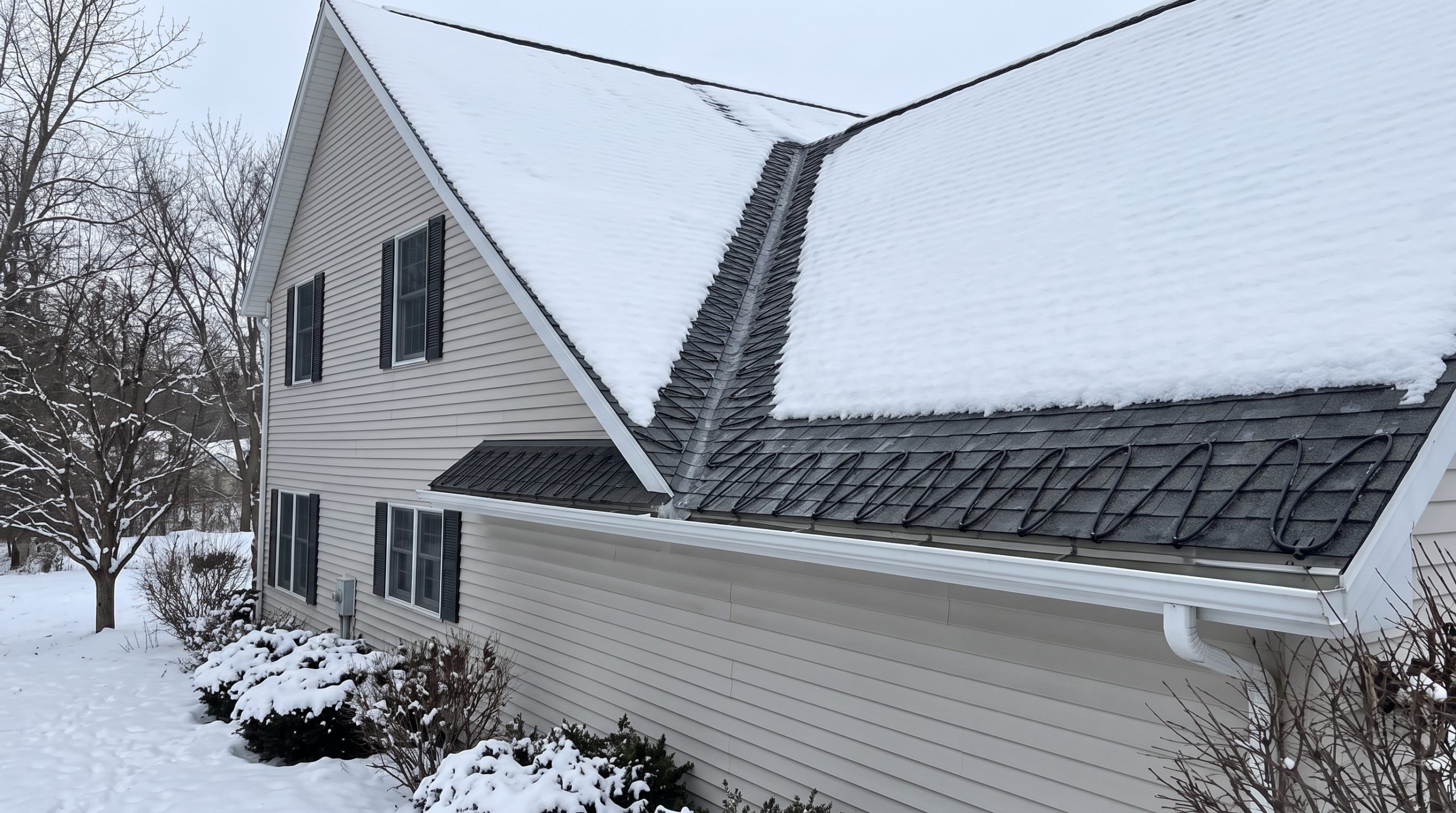
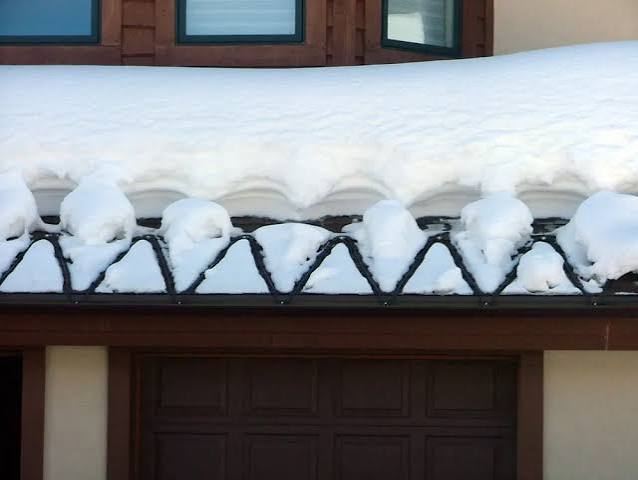
Not because the cable is bad. Because the path is incomplete. A zig-zag along the first few feet of eave that does not continue into the gutter and down the leader melts a channel that ends in a block of ice. Icicles and a Wet Ceiling.
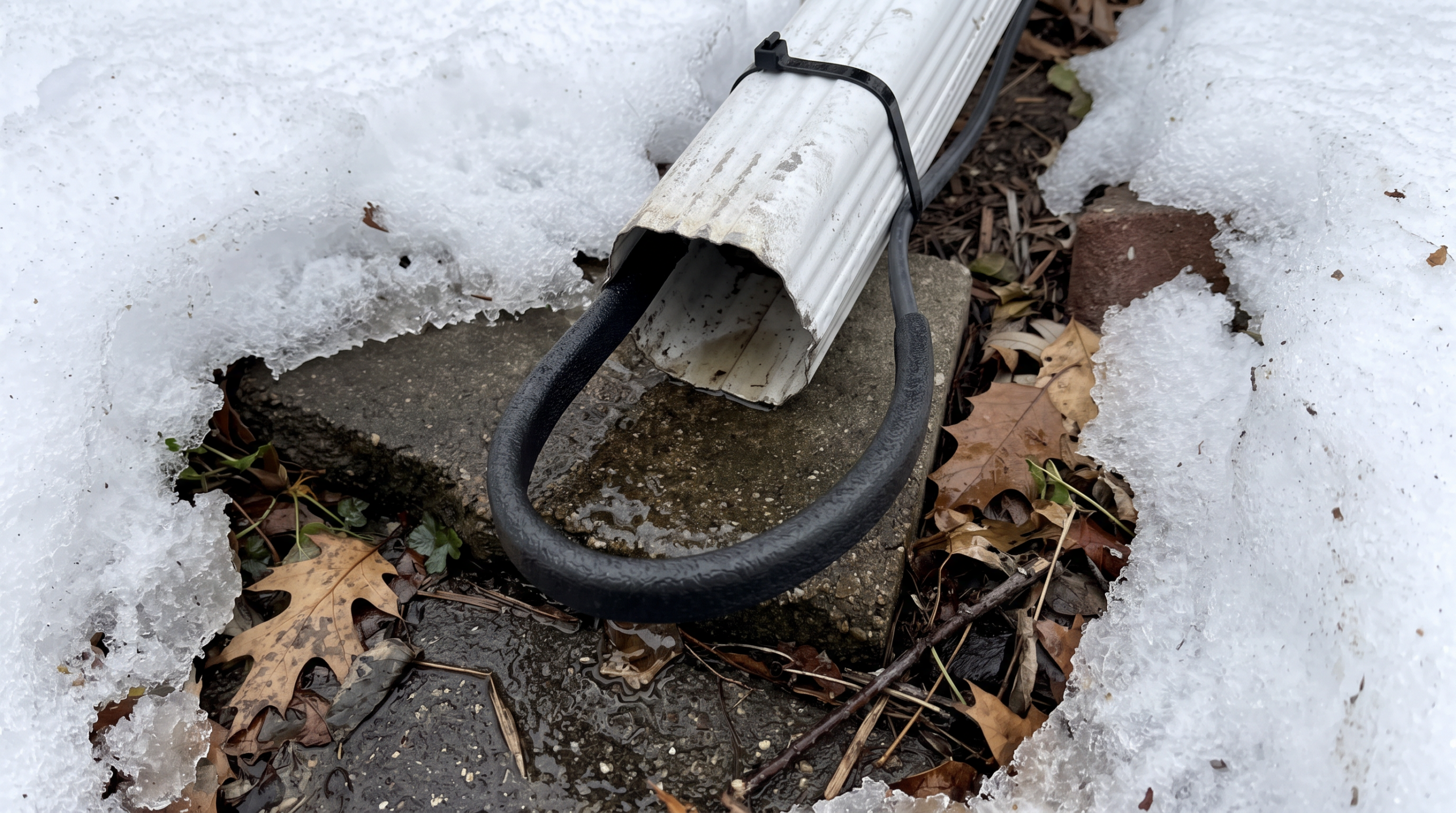
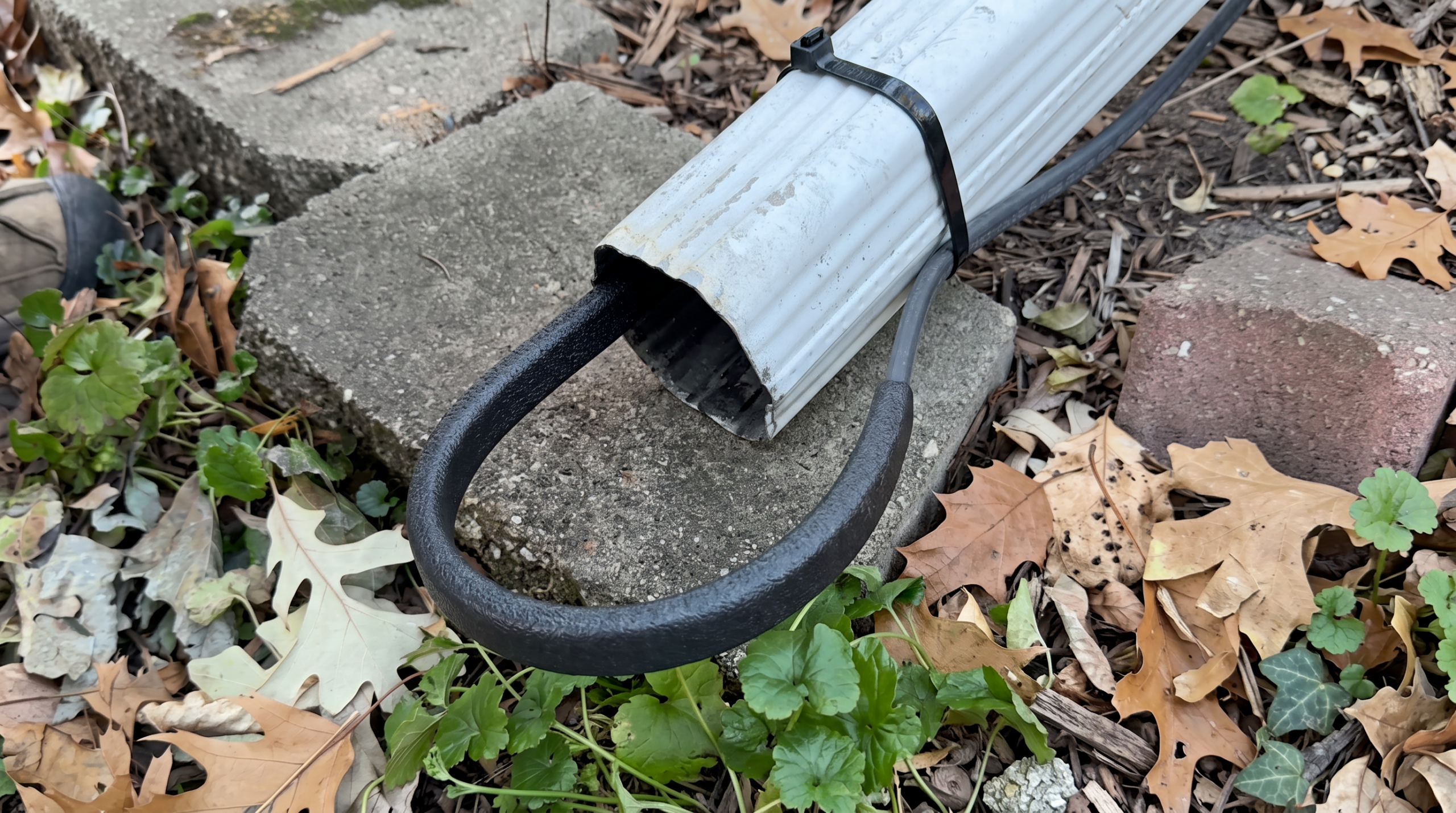
The water has to get all the way to the ground. On a Rome install that means eave, valleys, trough and downspout traced as one continuous path, and it is the single thing that separates a system that works from one that does not.
Self-regulating versus constant wattage
Self-regulating cable varies its output along its own length with the temperature of what it is touching: colder sections draw more, warmer sections throttle back. It can be cut to length on site, it tolerates being overlapped in a gutter, and it cannot cook itself into failure the way constant-wattage cable can.
Constant wattage is cheaper per foot and that is the whole of its case. On a roof in Rome that sees real freeze-thaw cycling, self-regulating is the one worth installing.
What heat trace does and does not do
A properly designed system keeps a continuous drainage channel open from the roof surface through the gutter and down the leader to the ground. Meltwater that would have refrozen at the cold eave instead keeps running. It does not melt the snow off your roof, and it will not remove a dam that has already formed — it prevents the dam from establishing in the first place.
That distinction matters when comparing quotes. Anyone selling cable as an emergency fix for an existing dam is selling the wrong product.
What happens when a section stops working
A dead run is usually one of four things: a tripped ground fault, a failed controller or sensor, physical damage at a specific point, or a connection at the end seal that has let water in.
They are diagnosed with a meter rather than by replacing the whole run. Self-regulating cable can generally be repaired in place with a proper splice kit, so a single damaged section does not mean a new system.
What shortens the life of a cable run
Self-regulating cable is generally good for a decade or more. What ends it early is ultraviolet exposure on a run left unshaded through summer, physical damage from somebody raking or shovelling over it, rodents in the gutter, and ice loading on clips that were never rated for it.
A system installed with UV-stable cable, proper clips and a note on the roof plan saying where it runs will usually outlast one that was simply stapled up in a hurry.
What you get in Rome
- Complete drain pathEave zig-zag, valleys, gutter trough and downspout to daylight
- No fasteners through the roofClips and standoffs only, nothing driven through the covering
- GFCI-protected circuitDedicated circuit and proper terminations, not an extension cord
| Removal method | Low-pressure steam only. No chipping, salt or pressure washing. |
|---|---|
| Primary climate stressor | Sustained sub-freezing, long season |
| Pricing model | Billed by the crew hour, rate quoted before dispatch |
| Service | Heated Roof & Gutter Cables in Rome, NY |
| Typical scope | Steam, 6-14 crew hours typical |
| Documentation | Dated before and after photos, written scope in Xactimate line items |
| Dispatch window | Same day to 24 hours |
Neighborhoods and Towns We Reach From Rome
Crews working Rome cover the adjoining communities on the same route — Oriskany, Lee Center, Verona, Stittville and Westmoreland — so a storm week usually means one truck handling several addresses in Oneida County rather than separate trips.
Nearest hub towns with their own heat cables pages: Utica, Syracuse, Oswego, Oneonta, Cortland, Watertown.
Scheduling for Rome tightens up during a freeze event, which is exactly when the phone beats the form. Water coming in means a call, not an email.
Most jobs do not stop at one service. Heat Cables in Rome often runs alongside ice dam removal in Rome, and both get written into one scope rather than billed as separate visits.
Active leak right now? Our 24/7 Rome steam ice dam removal crews are dispatched first during a freeze event. Call (888) 561-9664.