Skip to content
Batavia, NY
Structural Snow Load · Genesee County

Commercial Roof Snow Removal in Batavia, NY — Northern Winter Crews

Ice Dam Now is a licensed and insured winter roof contractor covering Batavia, NY and Genesee County. Commercial Roof Snow Removal is performed with low-pressure steam, which removes ice by heat rather than force. Same-day dispatch for active leaks, crew-hour billing at a rate quoted beforehand, and dated before-and-after photographs on every job.

Overflows opened first — Drains and scuppers cleared before the load comes off
Drift-point survey — Depth and density measured where it collects, not where it is convenient
Balanced reduction — Load brought under threshold without shifting it onto one bay
Drains kept open — Scuppers and internal drains cleared so meltwater has an exit

Get Ice Dam Help Batavia

A few quick questions, then pick a time. If water is coming in, call instead.

What is the zip code of the home?

Roof leaking right now? Call (888) 561-9664 — that is faster than any form.
Water coming through the ceiling?Every hour an ice dam sits there, more water gets under the shingles.Call (888) 561-9664
24/7
Dispatch All Winter
Steam
Only — No Pressure
Genesee
County Coverage
Same Day
For Active Leaks
Insured
Licensed & Harness-Certified

A Batavia roof can look fine from the driveway and still be backing water under the shingles at the eave, where nobody can see it. As part of our complete Batavia winter roof services, crews handle commercial roof snow removal across Genesee County.

Batavia Ice Dams: What a Five-Month Snow Pack Does

A roof in Genesee County spends most of the year's coldest months under continuous load. That is a different problem from a single heavy storm, and it produces a different kind of ice.

Diagram showing how ice dams form on roofs due to inadequate insulation and poor ventilation
Heat escaping into the attic melts roof snow; the meltwater refreezes at the cold eave and the dam grows a layer every cycle.

Every mild afternoon through that stretch releases a little meltwater, and every cold night sets it at the overhang. Done fifty times, that is how an eave ends up carrying several hundred pounds of ice by March.

Ice-barrier practice in Genesee County

In the colder New York jurisdictions the membrane requirement extends well up the roof plane rather than stopping at the first course, precisely because the ice here does not stay near the edge.

Commercial Roof Snow Removal in Batavia: How The Work Runs

Mid-span is where the margin runs out

Long-span steel and open-web joist roofs carry least where the drift is deepest. The average depth across the field is not the number that matters; the depth over the longest unsupported span is. Ceiling Sagging or Bulging After Snow.

That is where crews measure on a Batavia building, and it is why two roofs with the same snowfall can be in very different trouble.

Ponding after the clear

Taking the snow off a flat roof with frozen drains leaves meltwater with nowhere to go, and water that ponds and refreezes puts load back on a deck that was just relieved.

So drains and overflows are opened as part of the clear rather than afterwards, and the roof is left draining. A clear that stops at the snow is half a job.

Drains and overflows come first

Before anything else comes off, the drains, scuppers and overflow outlets get opened. Otherwise the melt from the clearing has nowhere to go and the roof trades a snow problem for a ponding one.

On a deck in Batavia with internal drains that means confirming flow below, not just clearing the grate.

Unbalanced loading is the real hazard

Snow does not settle evenly on a large deck. It piles against parapets, behind rooftop units, in the lee of a higher adjoining roof and in the valleys between bays.

Clearing has to be balanced for the same reason. Taking it all off one bay and none off the next shifts the load rather than removing it.

Why large decks carry the most risk

A long-span steel or open-web joist roof has the least margin exactly where the drift is deepest — mid-span. Snow does not settle evenly either: it piles against parapets, behind rooftop units, in the lee of higher adjoining roofs, and in valleys between bays. The average depth across the roof is not the number that matters.

Crews survey depth and density at the drift points rather than the middle of the field, and calculate the working load from that against the structure's design capacity.
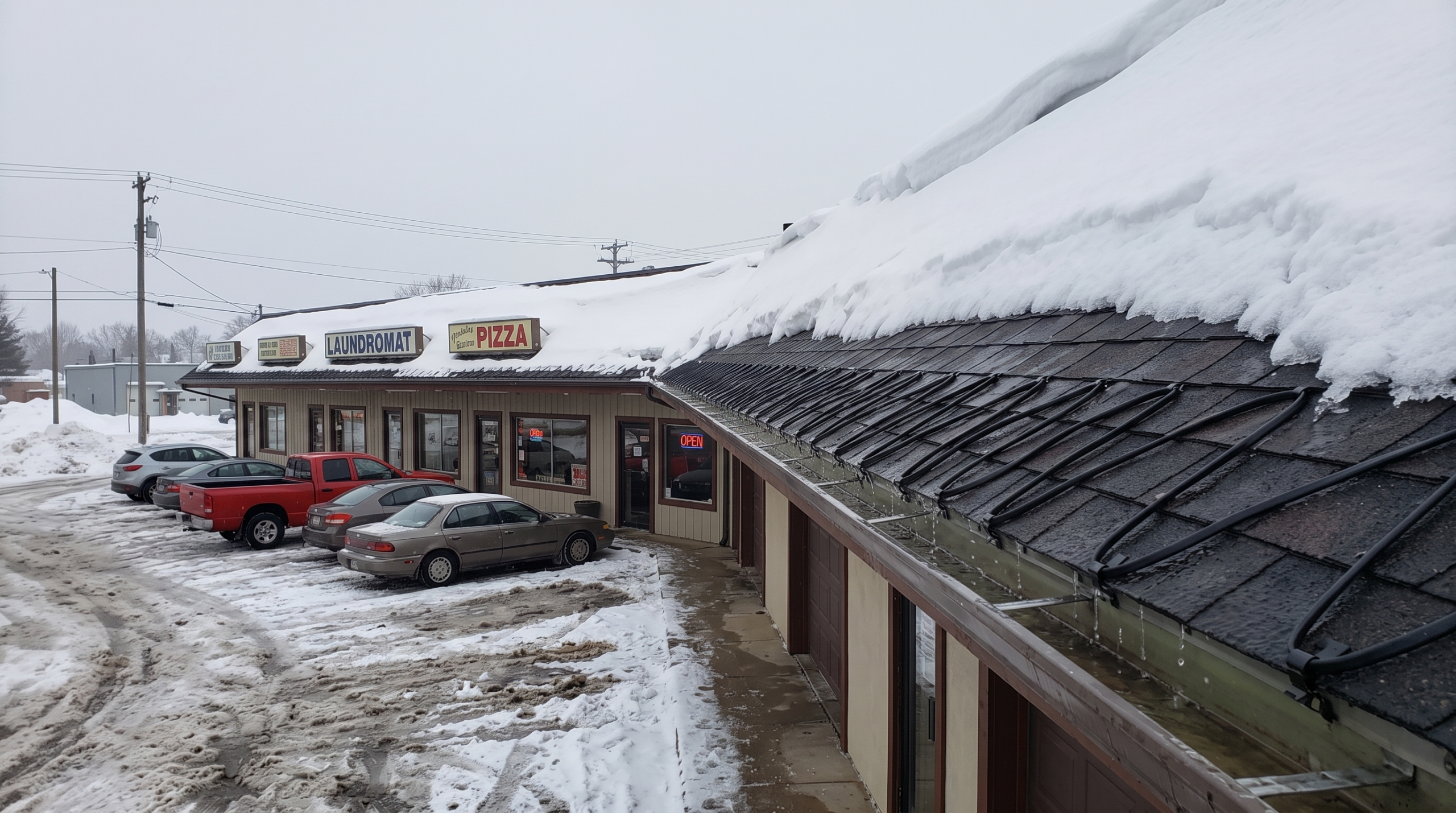
Heavy snow and ice dam buildup on commercial strip mall roofline in winter
A thick ice dam forms along the roofline of a commercial strip mall housing a laundromat and pizza restaurant.

What you get in Batavia

  • One invoice per siteMulti-building properties scoped and billed together
  • Overflows opened firstDrains and scuppers cleared before the load comes off
  • Balanced reductionLoad brought under threshold without shifting it onto one bay
Commercial Roof Snow Removal in Batavia, NY — specification
Service specification for Batavia, NY
Dispatch windowSame day to 24 hours
ServiceCommercial Roof Snow Removal in Batavia, NY
Removal methodLow-pressure steam only. No chipping, salt or pressure washing.
Coverage areaBatavia and Genesee County
Primary climate stressorSustained sub-freezing, long season
DocumentationDated before and after photos, written scope in Xactimate line items
Local ice-barrier practiceEave membrane required on new work

Genesee County Coverage From Batavia

Crews working Batavia cover the adjoining communities on the same route — Stafford, East Pembroke, Elba, Oakfield and East Bethany — so a storm week usually means one truck handling several addresses in Genesee County rather than separate trips.

Nearest hub towns with their own commercial snow pages: Lockport, Rochester, North Tonawanda, Buffalo, Niagara Falls, Geneva.

Scheduling for Batavia tightens up during a freeze event, which is exactly when the phone beats the form. Water coming in means a call, not an email.

Most jobs do not stop at one service. Commercial Snow in Batavia often runs alongside crane-assisted snow removal in Batavia, and both get written into one scope rather than billed as separate visits.

Active leak right now? Our 24/7 Batavia steam ice dam removal crews are dispatched first during a freeze event. Call (888) 561-9664.
Conditions We Work In

Commercial Roof Snow Removal In Practice

Conditions crews work in across Genesee County. Every job is photographed before and after.

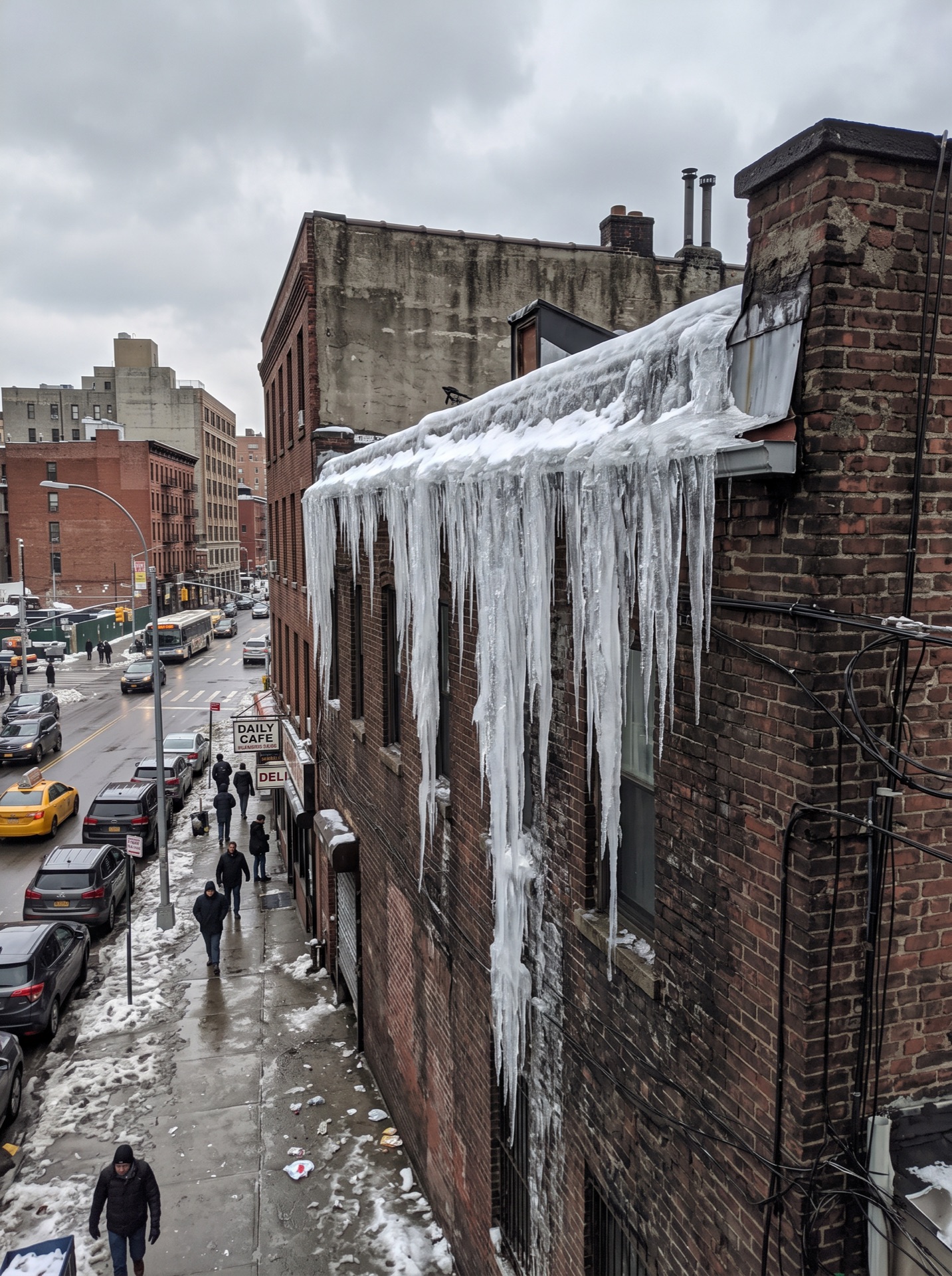
Large icicles hanging from snowy rooftop of brick building on urban New York City street
Massive icicles form along a building's roofline, posing a falling ice hazard to pedestrians below.
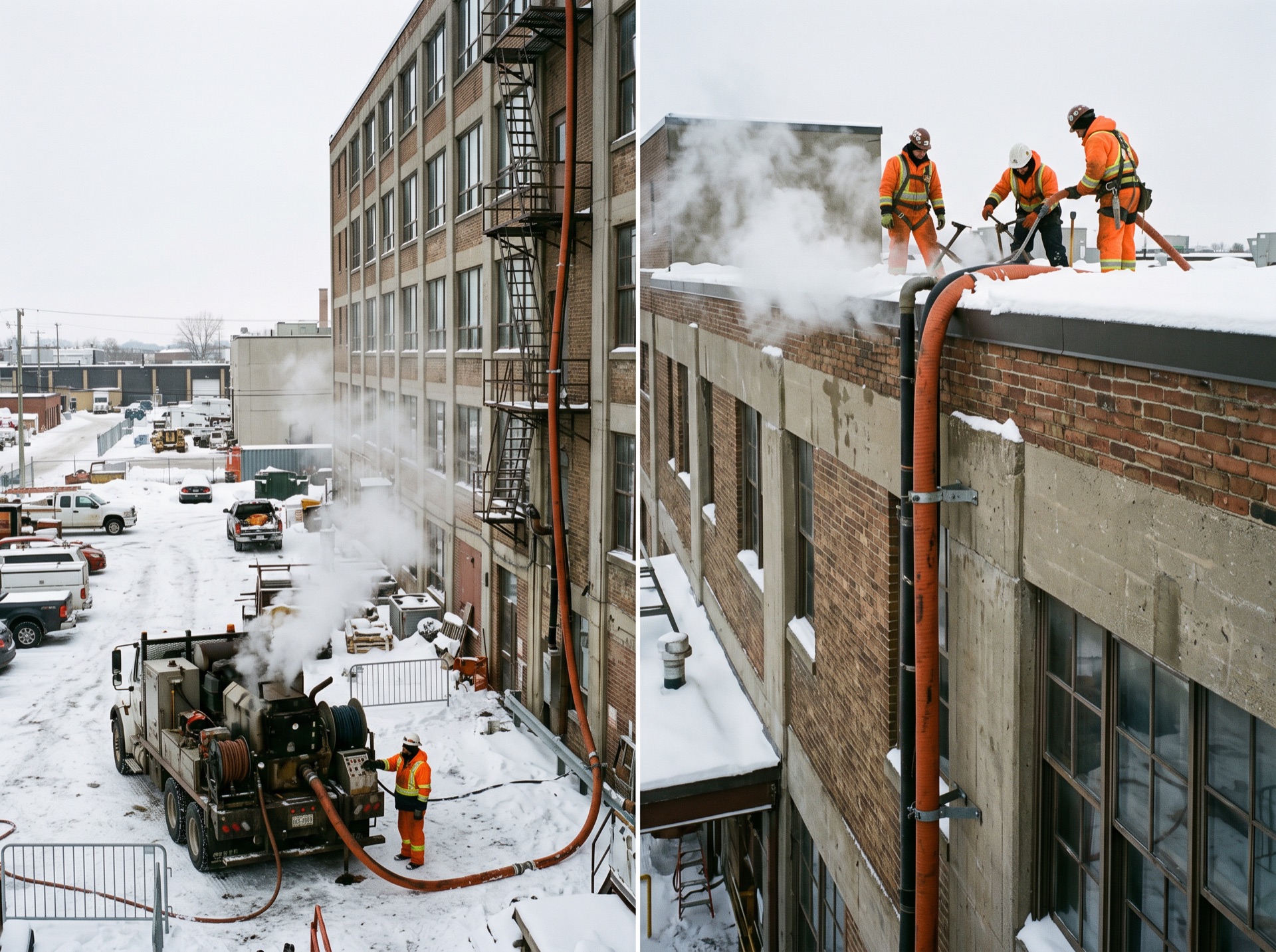
Workers in orange safety gear using steam hose to clear snow from rooftop
A crew uses a steam-powered hose system to remove heavy snow accumulation from a multi-story brick building's rooftop.
Brick apartment block with snow on roof and ice-dam-free eaves in winter
This commercial brick apartment block shows clear, ice-dam-free eaves despite heavy snow accumulation on the roof.
FAQ

What Batavia Homeowners Ask First

It is billed by the crew hour, and the rate plus a realistic time estimate are quoted on the phone before anyone is dispatched.

  • Scope drives the hours: length and thickness of the ice, roof pitch and height, and whether the gutters are frozen solid.
  • Access matters too — a three-story Batavia roof takes longer to set up on than a ranch.
  • The invoice matches the quote. There are no surprise add-ons written on the tailgate.

Often for the interior water damage, sometimes for the removal itself, but it depends entirely on your carrier and policy wording.

  • Many policies treat emergency mitigation separately under a duty to protect property clause.
  • Denials usually cite the maintenance exclusion, which dated photographs taken during the event are the direct counter to.
  • Crews photograph the dam, the entry points and the interior damage, and write the scope in Xactimate line items.
  • The coverage decision is between you and your carrier — no contractor can promise an outcome there.

No, but there is a worse one: after the thaw, when the evidence has melted and the damage is all that is left.

  • Mid-storm calls are fine — crews work through freeze events.
  • An evening call for a leak that started that afternoon usually gets a next-morning slot.
  • Waiting for a weekend to pass is the most common and most expensive delay.

Usually. The equipment needs a water supply and a place to park within hose reach, which is normally achievable even on a tight lot.

  • Hose runs of a few hundred feet are routine.
  • Street parking in a Genesee County residential area is generally workable.
  • Tell dispatch about access on the call so the right setup arrives.

Clear a path to the affected side, move vehicles off the driveway and unlock any side gate.

  • Put something under an active interior drip and move what you can out of the way.
  • Photograph the interior damage yourself as well - more evidence is never a problem.
  • Do not go on the roof or up a ladder. That is the part that sends people to hospital.

Visible deflection between joists, new cracks in interior finishes, doors or roof hatches that suddenly bind, and sprinkler lines or ceiling grid that have moved are all late signals. The reliable method is measuring depth and density at the drift points and comparing the load to the design capacity.

When the measured load approaches a meaningful fraction of design capacity, when rain is forecast onto an existing pack, when drifting has loaded one area far more than the rest, or when the drains have stopped taking water. Depth alone is a poor trigger - density is what matters, and that needs measuring.

Nearby

Commercial Snow In Towns Around Batavia

Same-Day Response

Get A Batavia Crew Out

Every freeze-thaw cycle adds another layer to the dam and pushes a little more water under the shingles. That clock is already running.

✓ Licensed & insured✓ Low-pressure steam only✓ Rate quoted up front✓ Photos for your claim
Online Quote(888) 561-9664