



Older Housing, Heavy Snow: The Essex County Case
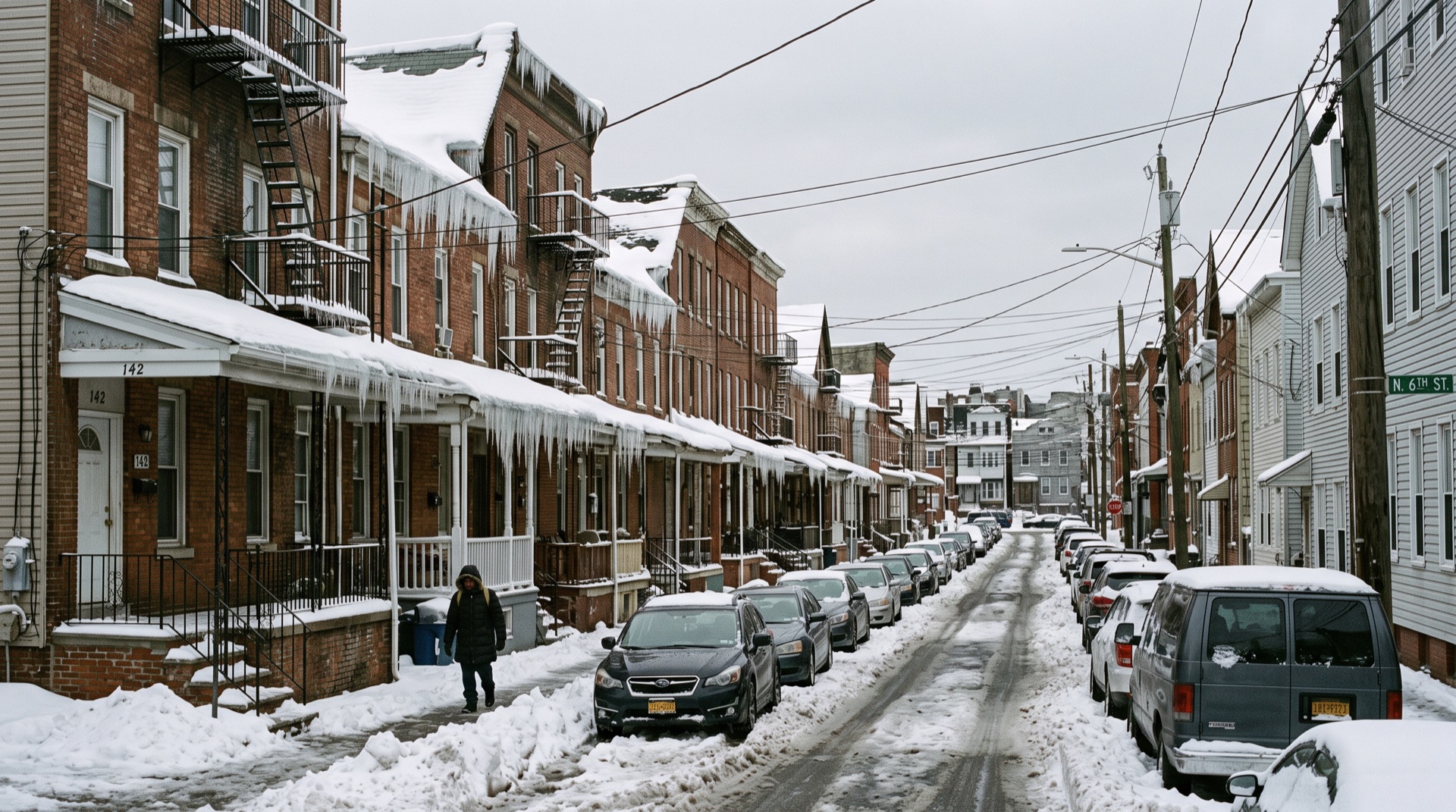
The maritime air is the other half of it. Temperatures in Essex County move either side of freezing within the same day far more often than they do inland, and every crossing moves water down the roof and locks it at the eave.

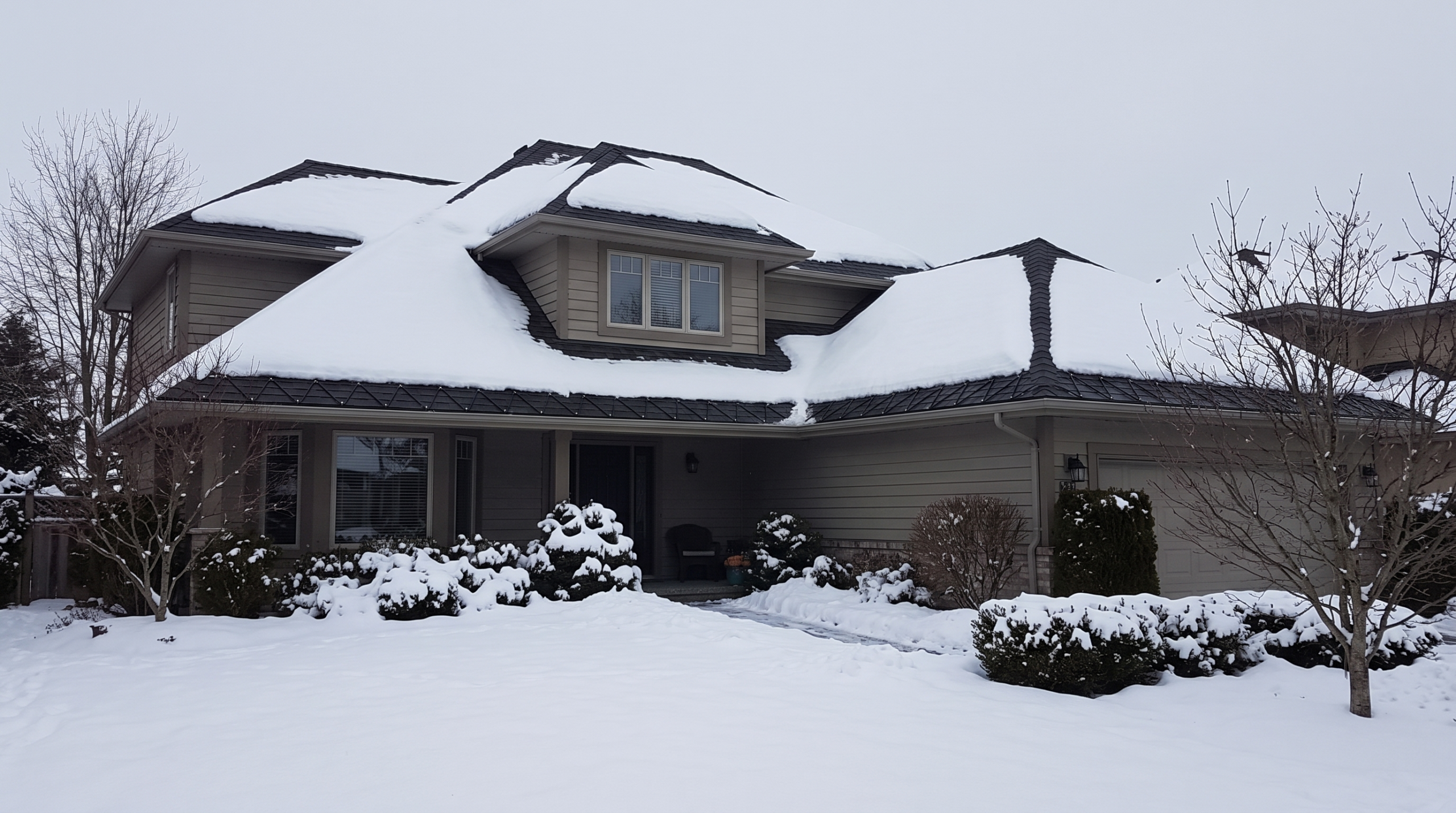
Add the architecture and the problem concentrates. Dormers, ells, knee walls and additions over porches all create pockets where warm air meets cold deck, and those are the eaves that dam first on a roof in Newark.
Ice-barrier practice in Essex County
Most Essex County towns require self-adhering ice barrier at the eaves on a re-roof permit. In a historic district there may be additional review on materials, which is worth checking before work is scheduled.
The Newark Dispatch Process, Step by Step
Crews walk the eaves, valleys and gutter line first and photograph every dam and every point where water is tracking inside, before touching anything. You get shown what they found and quoted the crew-hour rate before work starts.
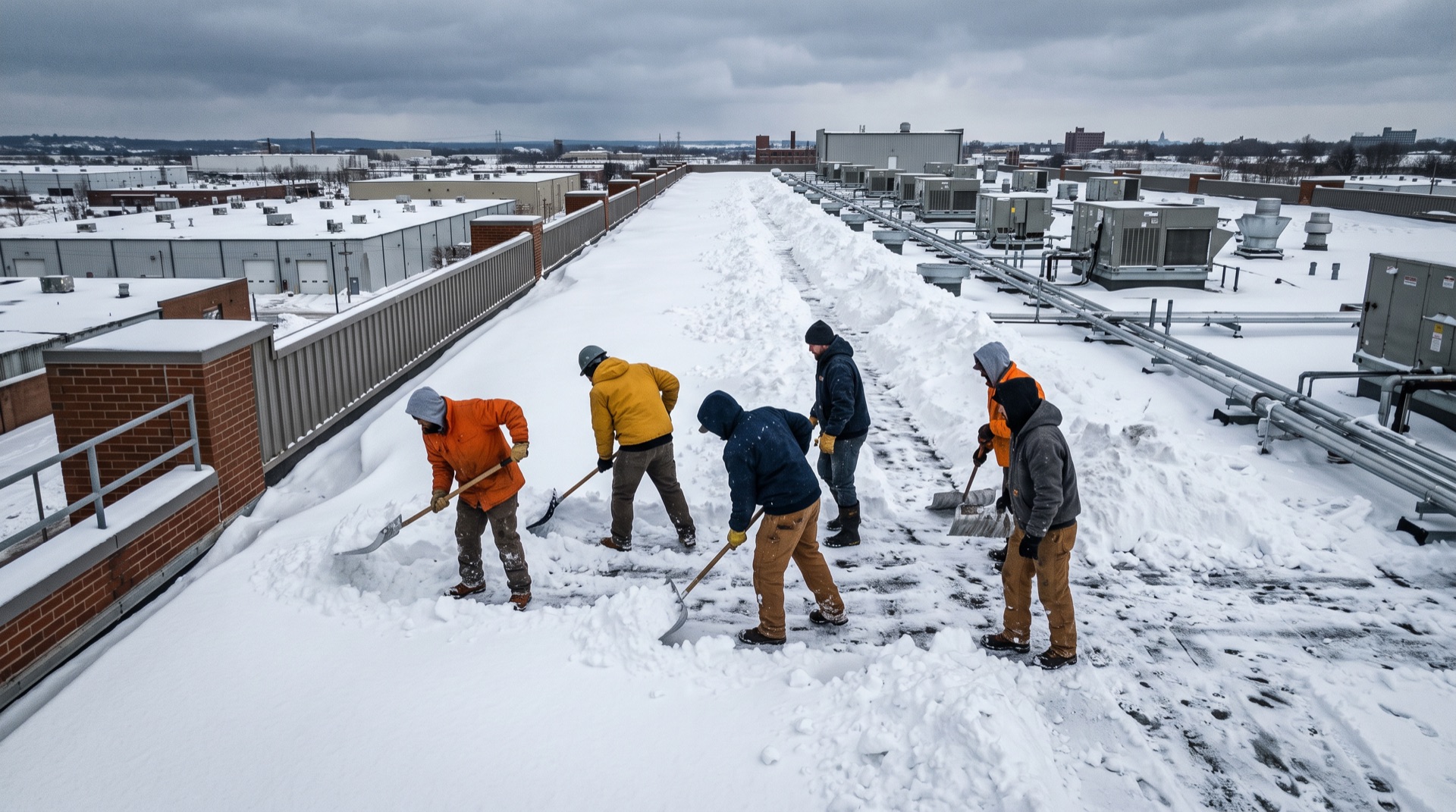
Then the ice comes off with low-pressure steam, starting wherever water is actively backing up so drainage opens early. Frozen gutters and downspouts are cleared in the same visit, because a cleared eave above a solid block of ice in the gutter dams again on the next cold night.
Why salt and ice melt make it worse
Calcium chloride opens a narrow channel and leaves the dam standing. The channel refreezes, the dam does not go anywhere, and in the meantime the runoff corrodes gutter seams, fasteners, flashing and anything growing underneath.
It is a stopgap at best. On a roof in Newark with an active leak it buys hours, not days, and it adds a corrosion problem to the water problem.
What gets photographed, and why it matters later
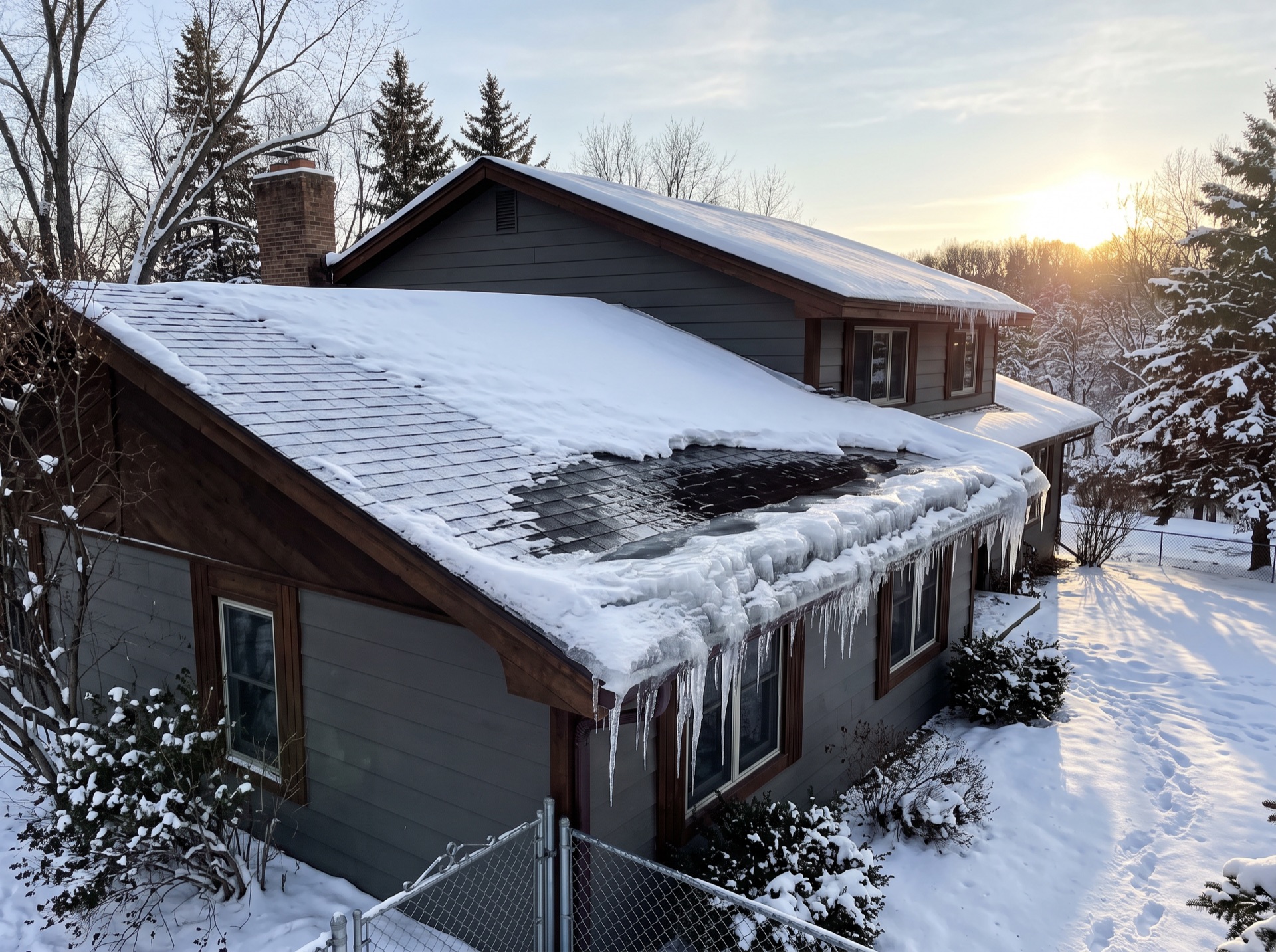
Before the lance comes out, the crew shoots the dam from the ground and from the roof, the icicle line, any staining visible inside, and the specific courses where water is tracking under the shingles. Timestamps are on every frame.
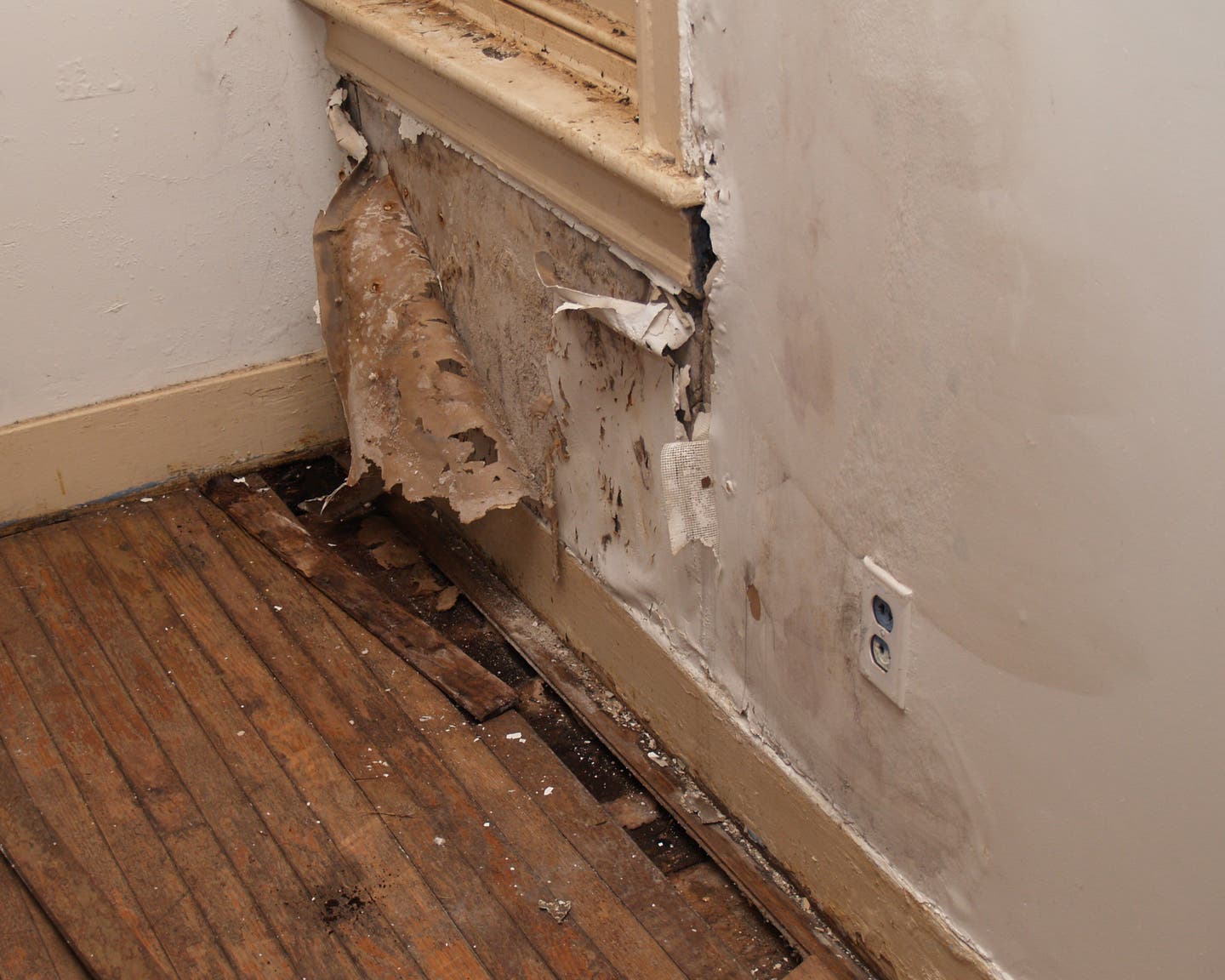
That record is the whole case if a claim follows. An adjuster arriving in March sees a dry roof and a stained ceiling; the photographs are what connect the two, and they are what a maintenance-exclusion denial runs into.
Dormers, valleys and dead spots
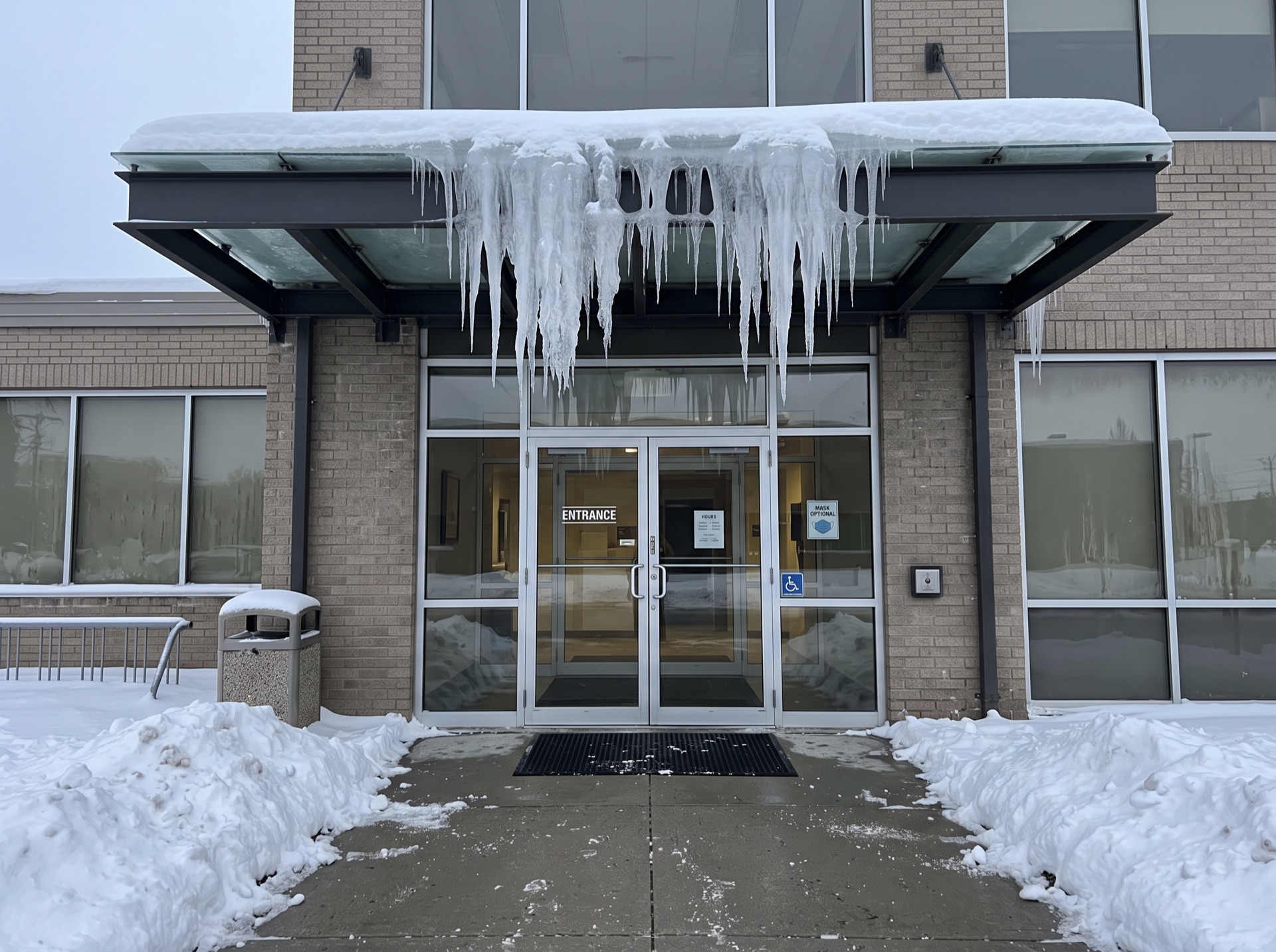
Ice does not distribute evenly. It concentrates where two roof planes meet, behind dormers, in dead valleys that drain nowhere, and along the north face that never sees sun. Those pockets hold water deepest and leak first.
A crew working a roof in Newark clears the full eave line and then goes back through the valleys and dormer pockets specifically, because clearing the easy straight run and calling it done is how a roof leaks again a week later.
| Dispatch window | Same day to 24 hours |
|---|---|
| Typical scope | Steam, 4-10 crew hours typical |
| Local ice-barrier practice | Eave membrane standard on re-roofs |
| Removal method | Low-pressure steam only. No chipping, salt or pressure washing. |
| Service | Ice dam removal in Newark, NJ |
| Pricing model | Billed by the crew hour, rate quoted before dispatch |
| Documentation | Dated before and after photos, written scope in Xactimate line items |
Neighborhoods and Towns We Reach From Newark
Crews working Newark cover the adjoining communities on the same route — Harrison, Hillside, Orange, Belleville and South Orange — so a storm week usually means one truck handling several addresses in Essex County rather than separate trips.
Nearest hub towns with their own crew pages: Kearny, Irvington, East Orange, Elizabeth, Bayonne, Union.
Newark sits inside the regular New Jersey service area, so a crew is usually scheduled the same day or the following morning.
Water coming in right now in Newark? Call (888) 561-9664. Active interior leaks go to the front of the schedule.