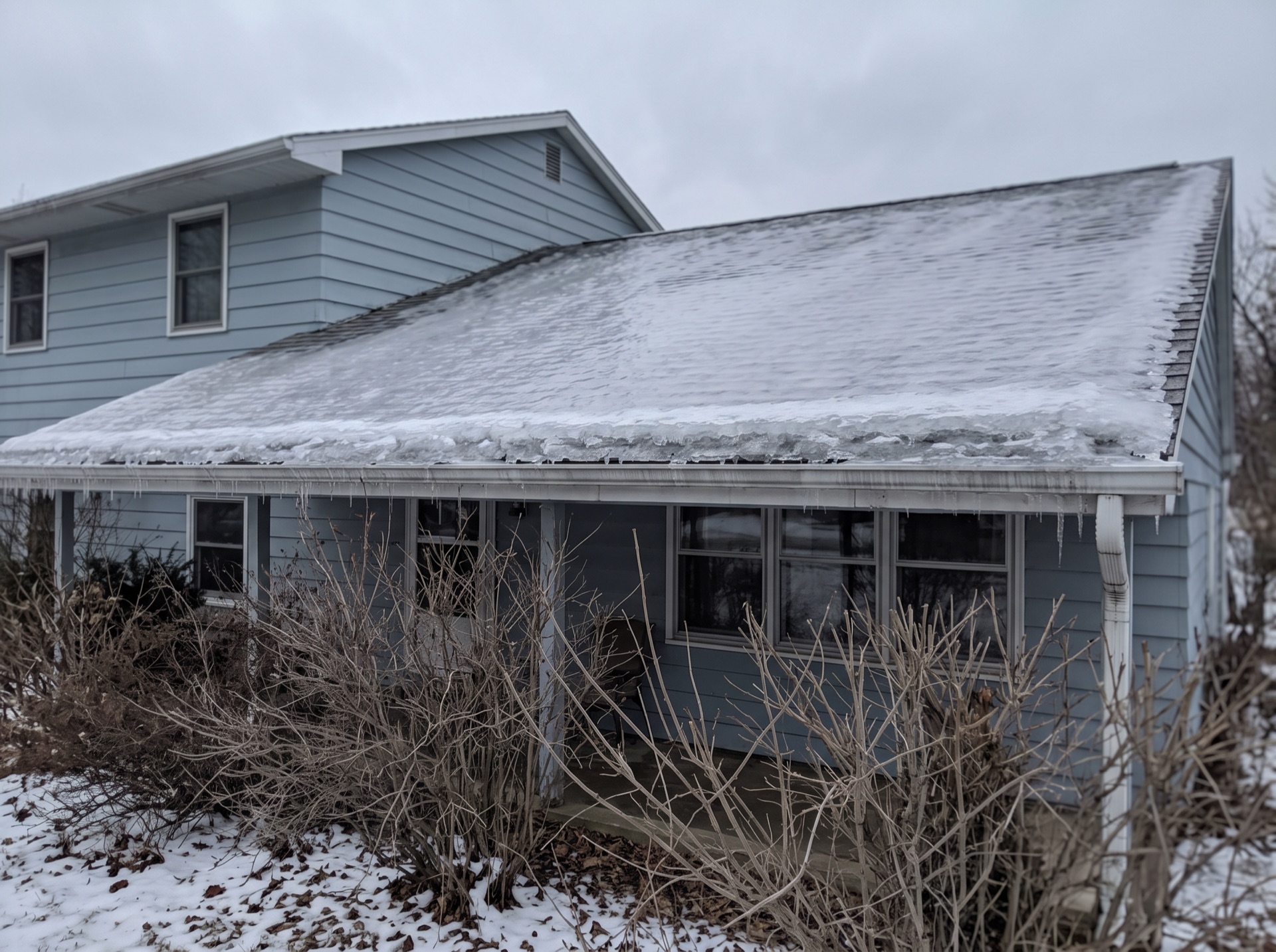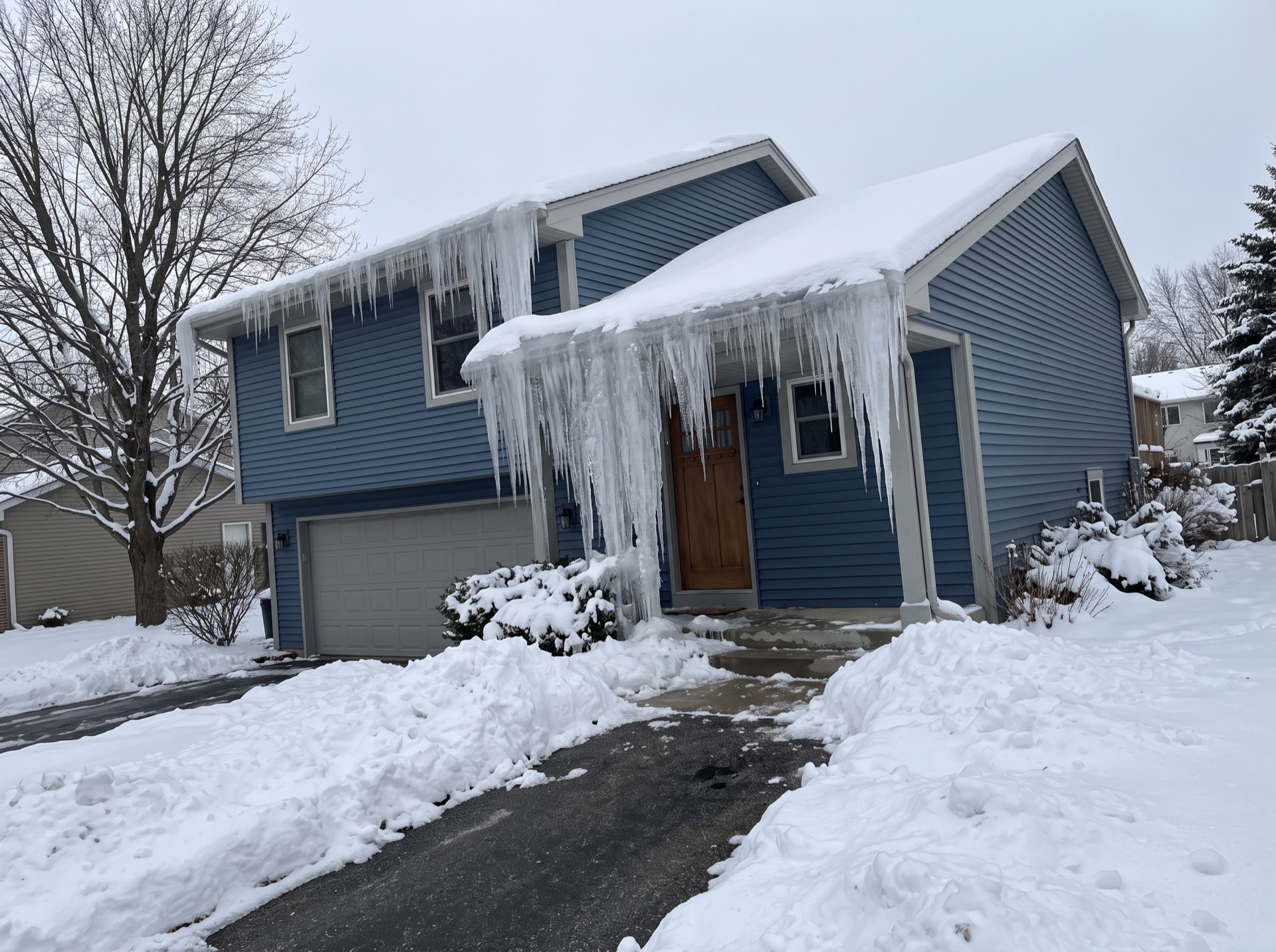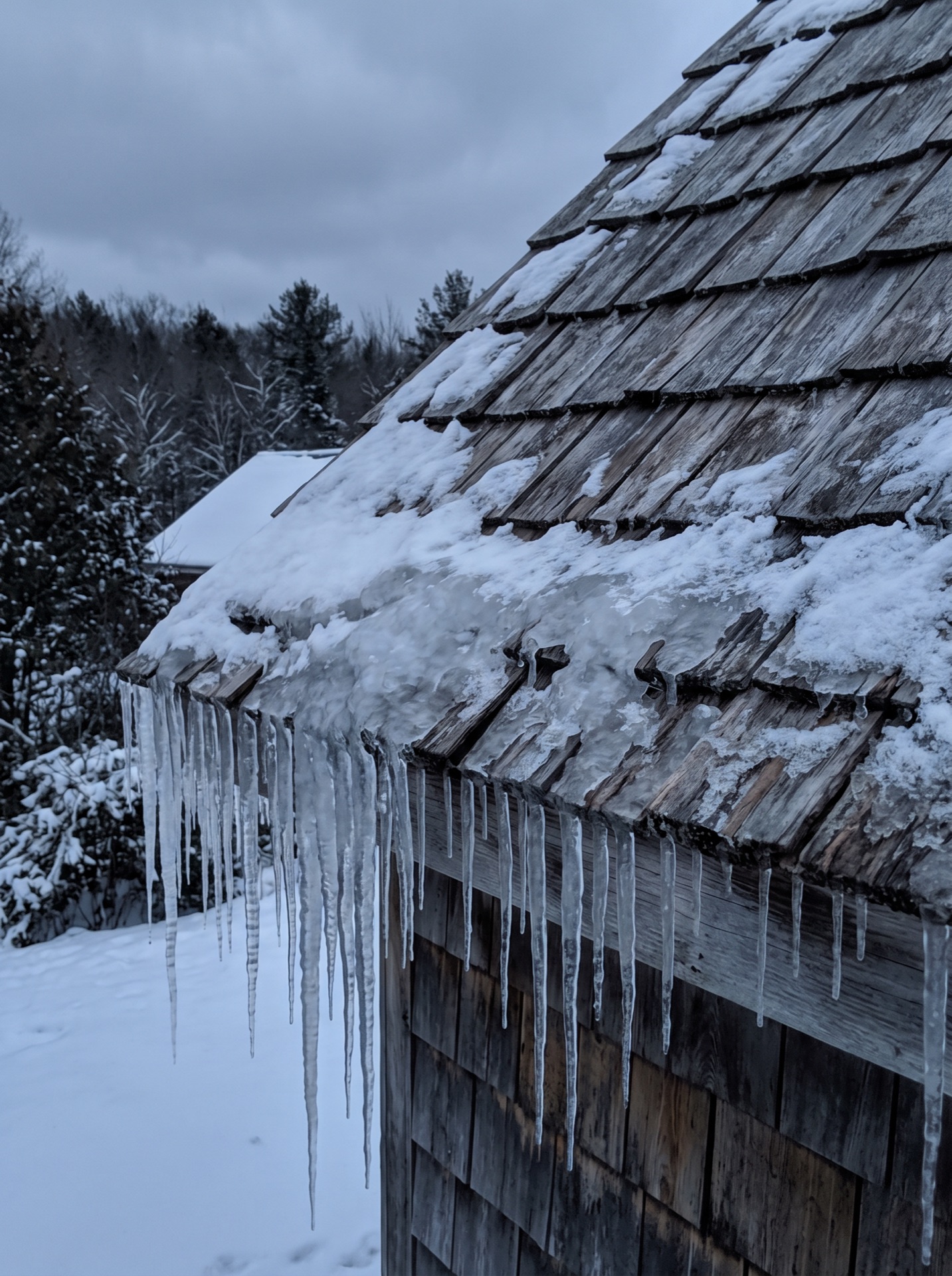




Why a Union Roof Dams Between Storms
The maritime air is the other half of it. Temperatures in Union County move either side of freezing within the same day far more often than they do inland, and every crossing moves water down the roof and locks it at the eave.

The building stock compounds it. A great many Union houses were built long before attic air sealing was a consideration, and the retrofits that followed often insulated the floor while leaving the bypasses wide open.
Ice-barrier practice in Union County
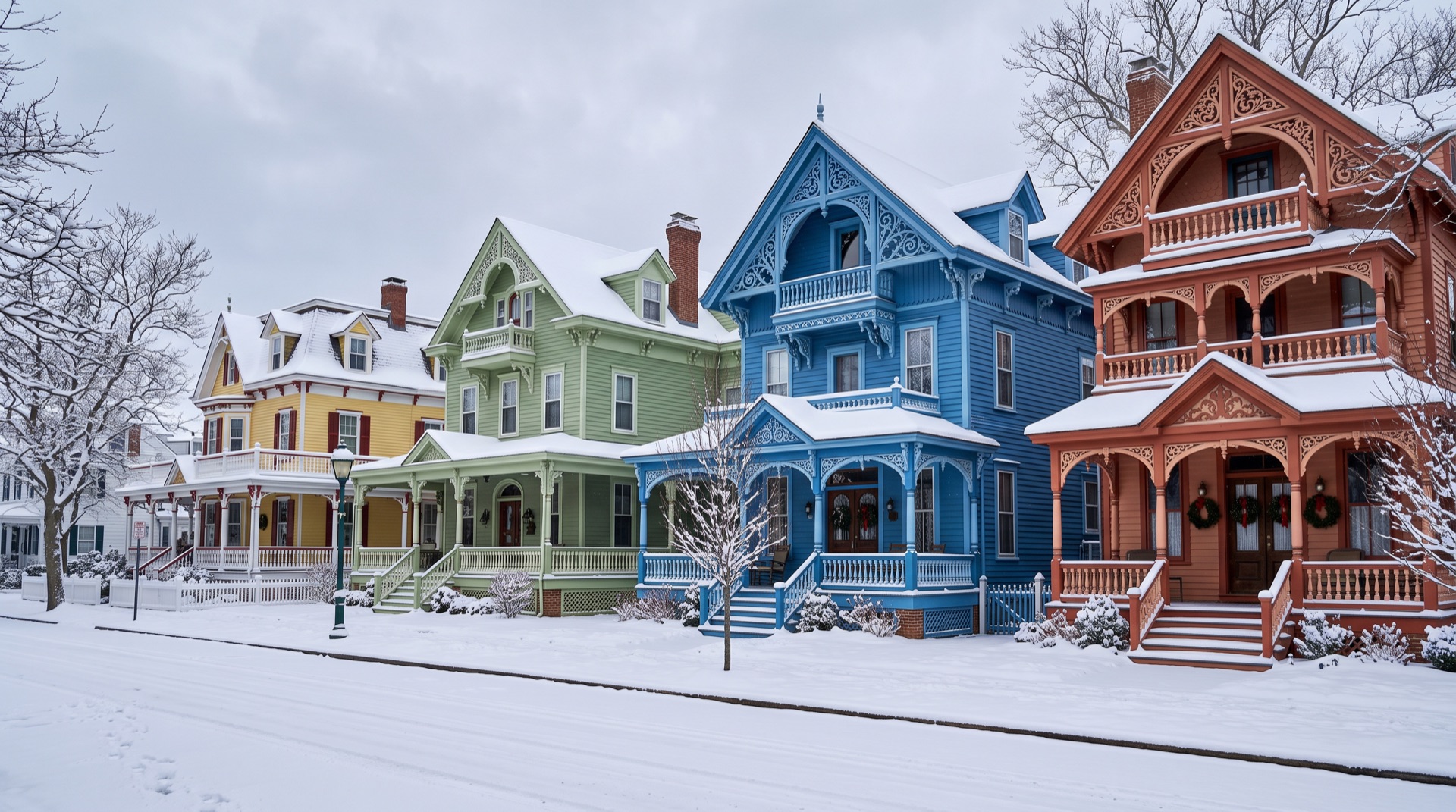
Historic district review in parts of Union County adds a step on materials and sometimes on color, which is worth knowing before a re-roof is scheduled rather than after the permit is refused.
How We Work a Union Ice Dam
The first pass is assessment: eaves, valleys, gutter line and any interior staining, all photographed with timestamps. You see what the crew sees, and the rate and likely hours are agreed before work begins.
Steam then takes the dam off in sections, prioritizing wherever water is actively backing up behind it. The gutter trough and downspout are cleared through to daylight on the same visit, because a clear eave over a frozen gutter is a temporary fix.
Why salt and ice melt make it worse
Calcium chloride opens a narrow channel and leaves the dam standing. The channel refreezes, the dam does not go anywhere, and in the meantime the runoff corrodes gutter seams, fasteners, flashing and anything growing underneath.
It is a stopgap at best. On a roof in Union with an active leak it buys hours, not days, and it adds a corrosion problem to the water problem.
What the dam has already done to the gutter and fascia
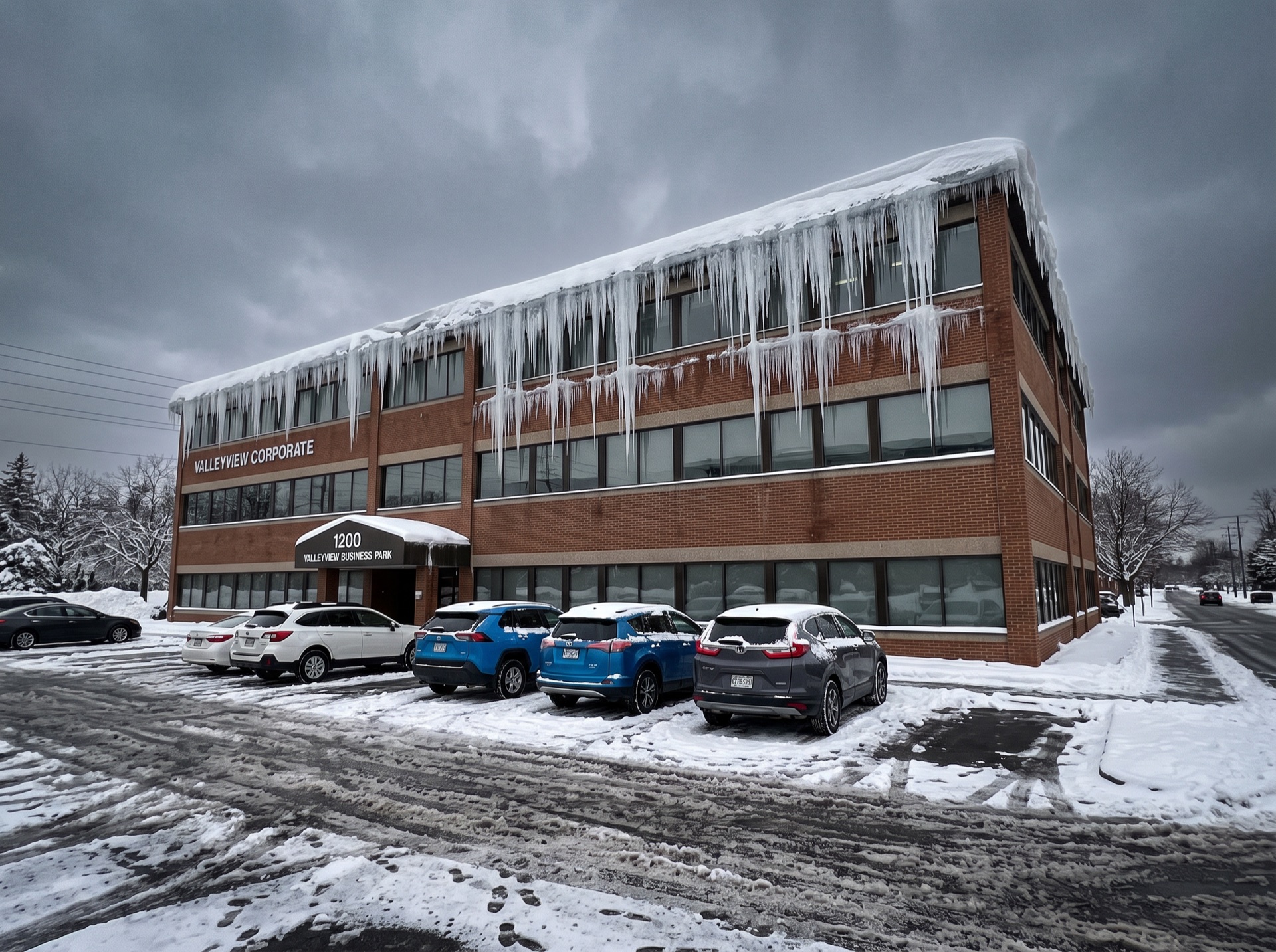
Ice expands as it forms, and a trough packed solid pushes the gutter away from the fascia a little more every cycle. By the time the dam is thick enough to leak, the hangers are often pulled, the back of the trough has lifted, and the fascia board behind it has been wet for weeks.
None of that is visible until the ice is off. It gets photographed when it appears, because a bent gutter found in February is a great deal easier to argue about with a carrier than one discovered in May.
Steep, high and awkward Union roofs
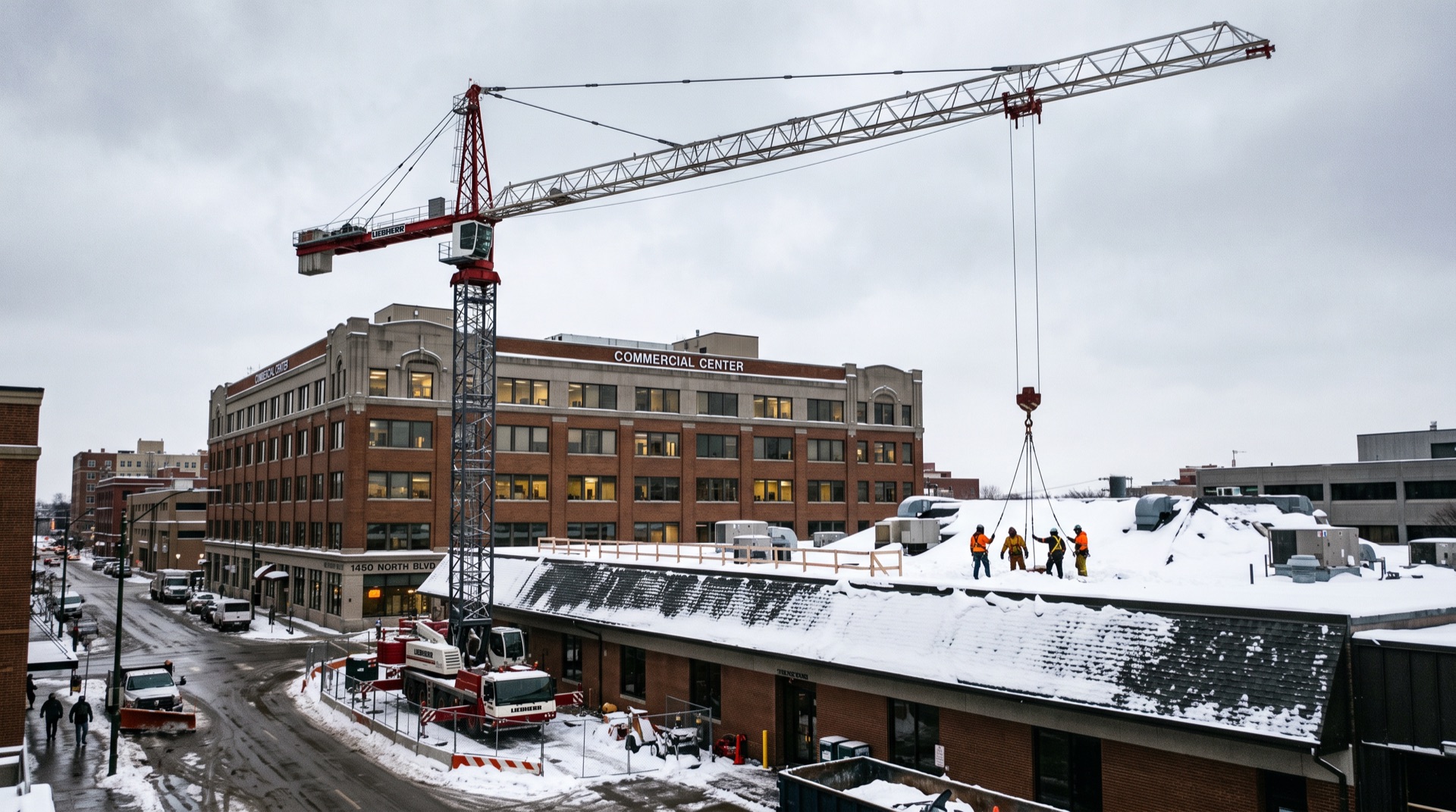
Pitch and height change the job more than ice thickness does. A walkable ranch eave is a ladder and a lance. A three-story roof with a steep pitch means anchors, rope, staging and two people where one would otherwise do.
Crews quote on that honestly. If a property in Union needs a longer setup, it is said on the phone rather than discovered at the end of the invoice.
| Local ice-barrier practice | Eave membrane standard on re-roofs |
|---|---|
| Coverage area | Union and Union County |
| Pricing model | Billed by the crew hour, rate quoted before dispatch |
| Removal method | Low-pressure steam only. No chipping, salt or pressure washing. |
| Dispatch window | Same day to 24 hours |
| Typical scope | Steam, 4-10 crew hours typical |
| Service | Ice dam removal in Union, NJ |
Union County Coverage From Union
Crews working Union cover the adjoining communities on the same route — Vauxhall, Kenilworth, Roselle Park, Hillside and Maplewood — so a storm week usually means one truck handling several addresses in Union County rather than separate trips.
Nearest hub towns with their own crew pages: Union City, Irvington, Elizabeth, Linden, Summit, Newark.
Scheduling for Union tightens up during a freeze event, which is exactly when the phone beats the form. Water coming in means a call, not an email.
Water through a ceiling in Union is a same-day call, not a next-week one. (888) 561-9664 goes straight to dispatch.