Skip to content
Atlantic City, NJ
Permanent Prevention · Atlantic County

Heated Roof & Gutter Cables in Atlantic City, NJ — Coastal Storm Response

Ice Dam Now handles heated roof & gutter cables for Atlantic City, NJ properties and the wider Atlantic County. Removal is by low-pressure steam, never mechanical. Dispatch is same day where water is already inside, pricing is by the crew hour quoted before a crew leaves, and every job is photographed before and after for claim purposes. Crews are licensed, insured and harness-certified.

GFCI-protected circuit — Dedicated circuit and proper terminations, not an extension cord
Zig-zag sized properly — Eave coverage measured against the actual cold overhang
Smart controls — Thermostat and moisture sensing so it runs on the conditions that make ice
Self-regulating cable — Output varies along the run; safe to overlap, cut to length on site

Get Ice Dam Help Atlantic City

A few quick questions, then pick a time. If water is coming in, call instead.

What is the zip code of the home?

Roof leaking right now? Call (888) 561-9664 — that is faster than any form.
Water coming through the ceiling?Every hour an ice dam sits there, more water gets under the shingles.Call (888) 561-9664
Same Day
For Water Already Inside
Steam
Safe On Every Covering
Atlantic
County Coverage
Insured
Harness-Certified On Every Roof
Written
Scope Before Work Starts

A Atlantic City roof can look fine from the driveway and still be backing water under the shingles at the eave, where nobody can see it. As part of our complete Atlantic City winter roof services, crews handle heated roof & gutter cables across Atlantic County.

Wet Snow, Swinging Air: Atlantic City Ice Dams

Coastal snow is heavy with water, and a roof in Atlantic City can take a foot of it in a night. That pack is a full reservoir from the moment it lands, not something that becomes one slowly.

Diagram showing how ice dams form on roofs due to inadequate insulation and poor ventilation
Heat escaping into the attic melts roof snow; the meltwater refreezes at the cold eave and the dam grows a layer every cycle.

Add the architecture and the problem concentrates. Dormers, ells, knee walls and additions over porches all create pockets where warm air meets cold deck, and those are the eaves that dam first on a roof in Atlantic City.

Ice-barrier practice in Atlantic County

Historic district review in parts of Atlantic County adds a step on materials and sometimes on color, which is worth knowing before a re-roof is scheduled rather than after the permit is refused.

Heated Roof & Gutter Cables in Atlantic City: How The Work Runs

Valleys, downspouts and the parts people forget

A zig-zag along the eave with nothing in the valley and nothing down the downspout produces a melted strip of roof draining into a solid block of ice. The water still has nowhere to go, and the dam just forms somewhere slightly different. Icicles and a Wet Ceiling.

A system that works runs the full path: eave, valley, gutter trough and all the way down the downspout to daylight. The downspout run is the piece most often left out and the piece most often responsible for the system not working.

Retrofit against installing during a roof replacement

Cable can be added to an existing roof at any time and usually is. If an Atlantic City roof is being replaced anyway, that is the cheaper moment: clips can go under the courses, the downspout run can be planned properly, and the circuit can be brought to the eave while the fascia is open.

Where a replacement is a year or two out, it is worth saying so before the retrofit is designed, so the layout can be reused rather than scrapped.

Self-regulating versus constant wattage

Self-regulating cable varies its output along its own length with the temperature of what it is touching: colder sections draw more, warmer sections throttle back. It can be cut to length on site, it tolerates being overlapped in a gutter, and it cannot cook itself into failure the way constant-wattage cable can.

Constant wattage is cheaper per foot and that is the whole of its case. On a roof in Atlantic City that sees real freeze-thaw cycling, self-regulating is the one worth installing.

Cable is the backstop, not the cure

The underlying cause of an ice dam is heat leaving the house. Air sealing the attic, fixing crushed baffles and topping up insulation addresses that; cable manages what is left.

A Atlantic City property that gets both rarely needs an emergency call again. One that gets only cable usually needs fewer.

The electrical side

A dedicated GFCI-protected circuit, properly rated terminations and a disconnect somebody can actually reach. Not an extension cord out of a bathroom window, which is what gets found on a surprising number of existing Atlantic City installs.

Done properly it is an ordinary piece of exterior electrical work and it should look like one.
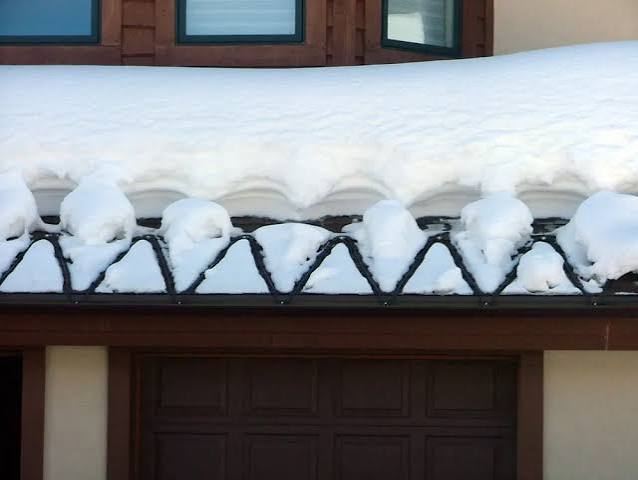
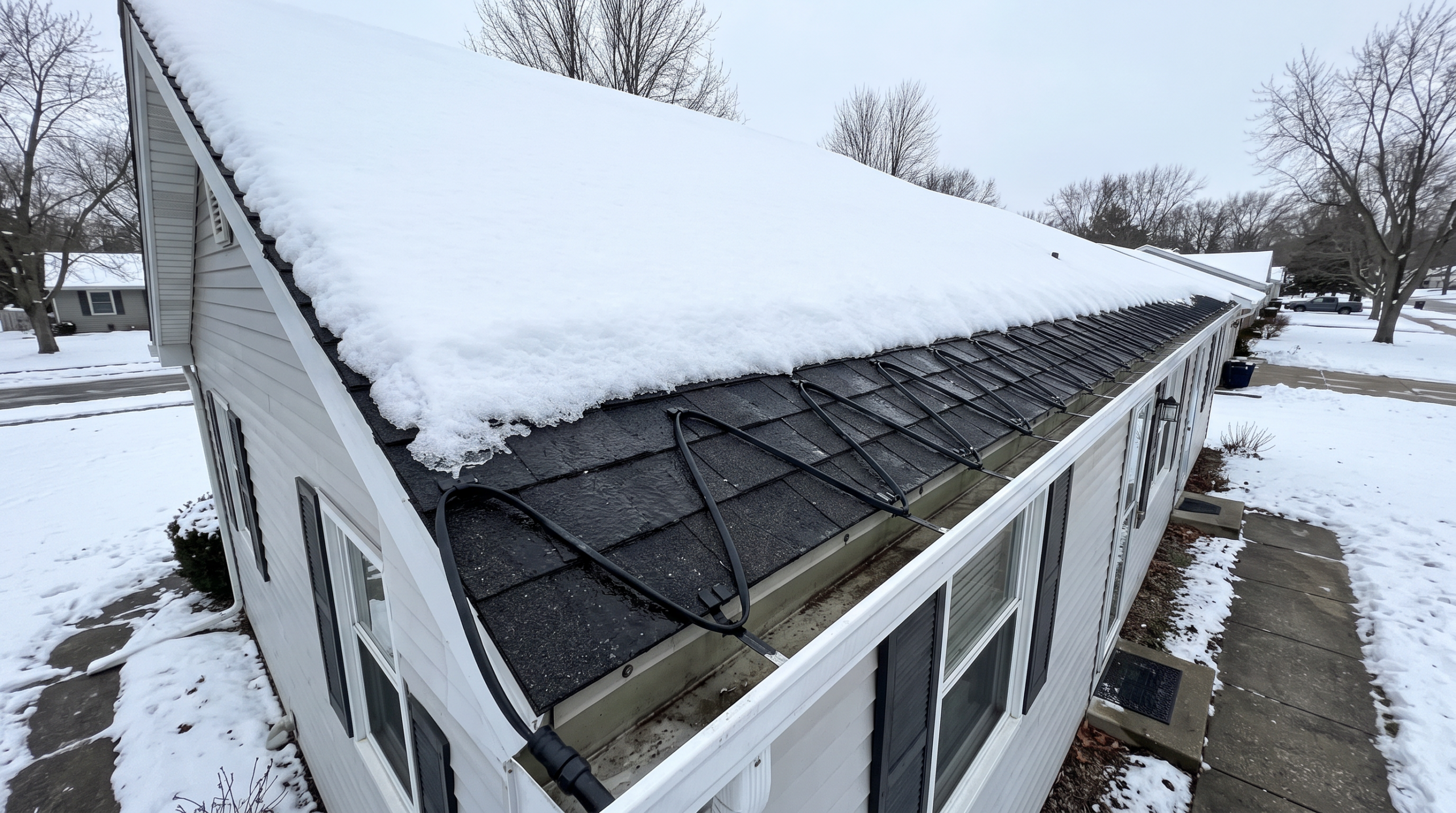
Heat cable installed along snow-covered roof eave and gutter in winter
Heat cables along the roof eave help prevent ice dams from forming during heavy winter snowfall.

What you get in Atlantic City

  • Downspout traced to daylightThe drain path ends on the ground, not in a block of ice
  • Complete drain pathEave zig-zag, valleys, gutter trough and downspout to daylight
  • Smart controlsThermostat and moisture sensing so it runs on the conditions that make ice
Heated Roof & Gutter Cables in Atlantic City, NJ — specification
Service specification for Atlantic City, NJ
Local ice-barrier practiceEave membrane standard on re-roofs
Removal methodLow-pressure steam only. No chipping, salt or pressure washing.
Primary climate stressorNor'easters, rapid thaw-freeze swing
DocumentationDated before and after photos, written scope in Xactimate line items
Pricing modelBilled by the crew hour, rate quoted before dispatch
Dispatch windowSame day to 24 hours
Coverage areaAtlantic City and Atlantic County

Where We Dispatch Around Atlantic City

Crews working Atlantic City cover the adjoining communities on the same route — Ventnor City, Brigantine, Margate City, Northfield and Pleasantville — so a storm week usually means one truck handling several addresses in Atlantic County rather than separate trips.

Nearest hub towns with their own heat cables pages: Gloucester, Toms River, Brick, Cherry Hill, Lakewood, Camden.

During a cold snap Atlantic City gets worked alongside the neighboring Atlantic County towns on the same route, with active interior leaks moved to the front of the list.

Most jobs do not stop at one service. Heat Cables in Atlantic City often runs alongside ice dam removal in Atlantic City, and both get written into one scope rather than billed as separate visits.

Active leak right now? Our 24/7 Atlantic City steam ice dam removal crews are dispatched first during a freeze event. Call (888) 561-9664.
Conditions We Work In

Heated Roof & Gutter Cables In Practice

Conditions crews work in across Atlantic County. Every job is photographed before and after.

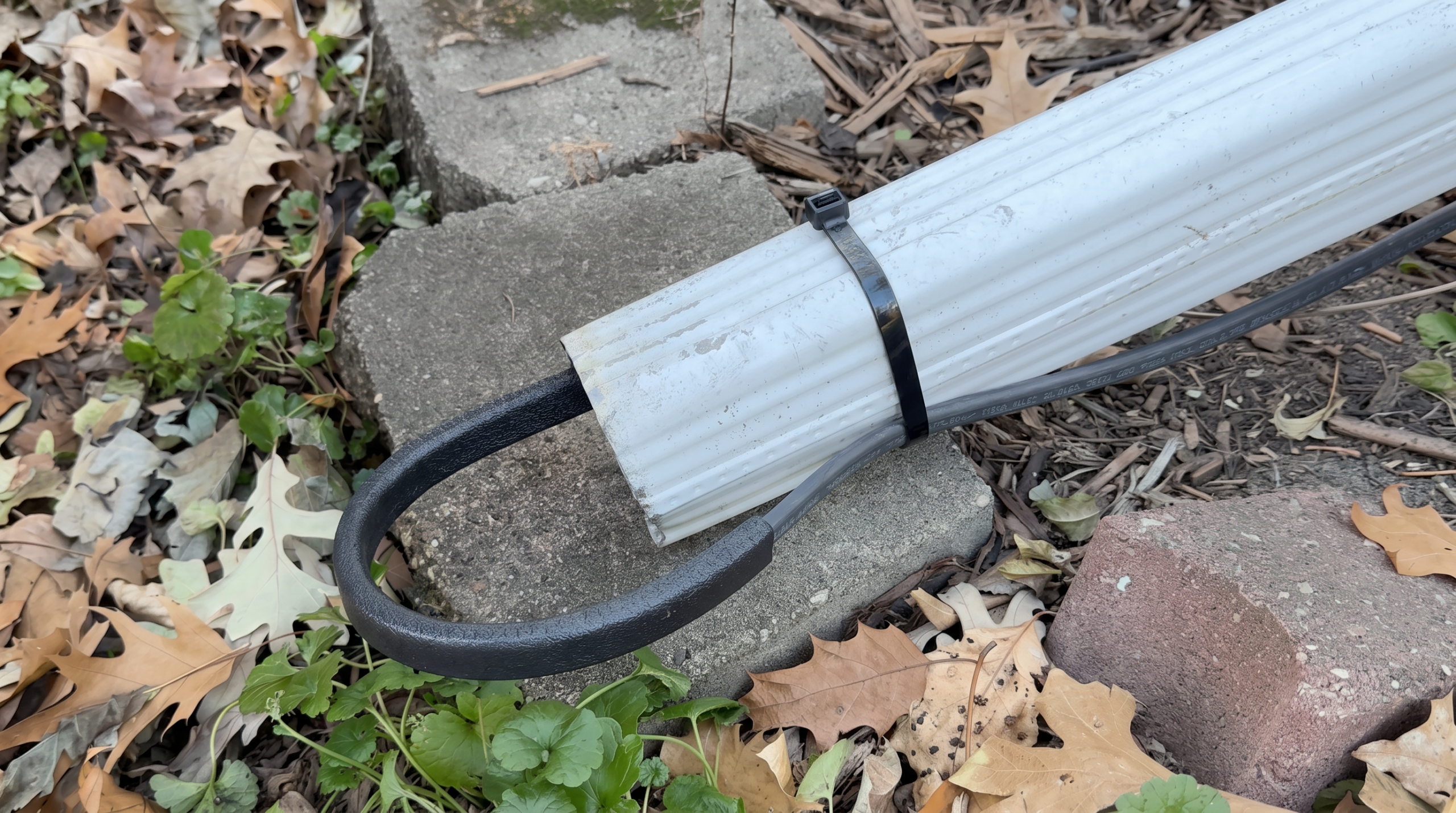
Heated downspout cable secured with black zip tie on white corrugated drain pipe
A self-regulating heat cable is zip-tied to a corrugated white downspout extension resting on concrete pavers.
Electric heat cable zigzagging along snowy roof edge for ice dam prevention
A self-regulating heat cable installed along a roof's lower edge helps prevent destructive ice dams from forming.
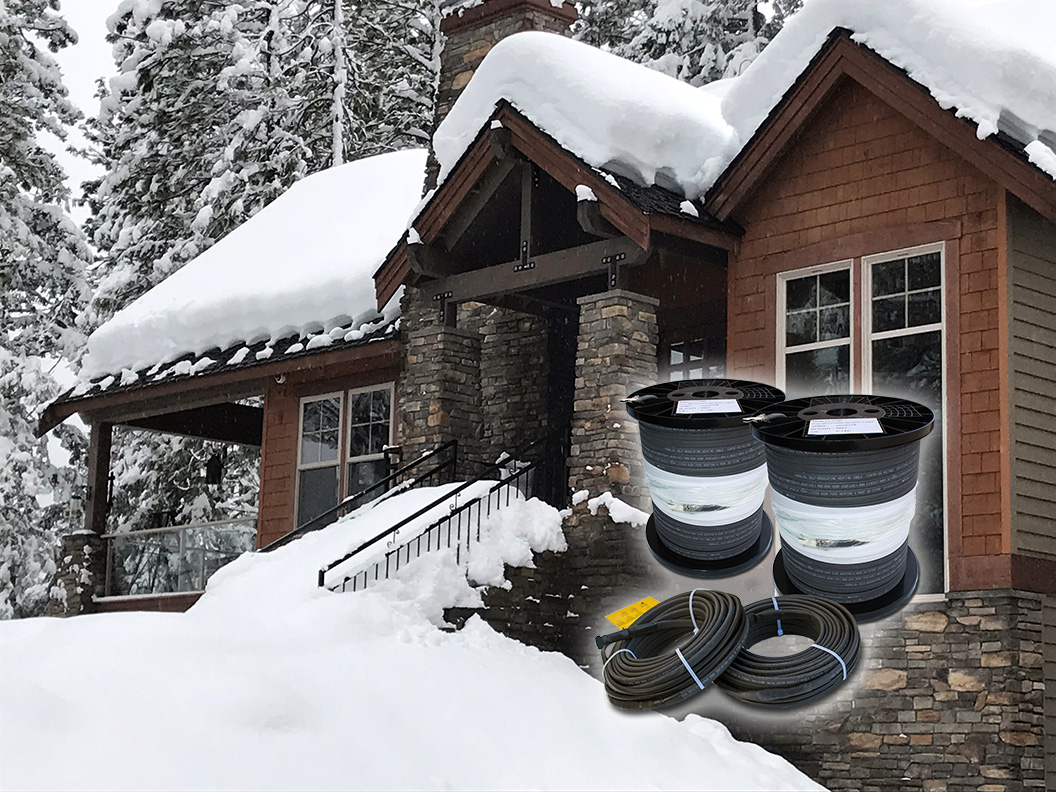
Snow-covered cabin in winter with roof edge heat cable spools and pre-terminated cable sets
Self-regulating roof edge heating cables help prevent ice dams and protect your home through harsh winter conditions.
FAQ

Local Questions About Atlantic City Roofs

It is billed by the crew hour, and the rate plus a realistic time estimate are quoted on the phone before anyone is dispatched.

  • Scope drives the hours: length and thickness of the ice, roof pitch and height, and whether the gutters are frozen solid.
  • Access matters too — a three-story Atlantic City roof takes longer to set up on than a ranch.
  • The invoice matches the quote. There are no surprise add-ons written on the tailgate.

Often for the interior water damage, sometimes for the removal itself, but it depends entirely on your carrier and policy wording.

  • Many policies treat emergency mitigation separately under a duty to protect property clause.
  • Denials usually cite the maintenance exclusion, which dated photographs taken during the event are the direct counter to.
  • Crews photograph the dam, the entry points and the interior damage, and write the scope in Xactimate line items.
  • The coverage decision is between you and your carrier — no contractor can promise an outcome there.

Not for exterior removal, provided access and payment are arranged in advance.

  • Somebody being home helps where there is interior damage to look at or document.
  • Photographs go to you either way, timestamped as the work happens.
  • A gate code or an unlocked side gate is usually all a crew needs on an Atlantic City property.

Yes. The dispatch area runs across Atlantic County, and several addresses in one area are usually handled in the same run.

  • Adjoining communities are on the same route rather than treated as a separate trip.
  • Rural addresses outside the normal radius get told the travel position on the call.
  • Capacity is moved into whichever part of New Jersey the storm actually hits.

Because ice dams are made by heat loss, and two houses on the same street rarely leak heat the same way.

  • Attic air leaks around can lights, bath fans and the attic hatch are the usual source.
  • Crushed or missing soffit baffles stop the intake ventilation that would otherwise keep the deck cold.
  • An addition or dormer built over unheated space puts warm air right against a cold eave.
  • Local factor: nor'easters and rapid thaw-freeze swings makes the difference show up faster here than it would further south.

Not usefully. Clips cannot be fixed through ice, the layout cannot be set out properly, and a cable energised under a dam melts a cavity rather than a drainage path. The ice comes off first, then the system goes in - often in the same week.

On the gutter and downspout, often yes. Roof-surface work needs the eave accessible and the adhesive and fastening done above freezing, so a mid-winter install is typically staged — the urgent drainage path first, the roof trace finished in spring.

Nearby

Heat Cables In Towns Around Atlantic City

Same-Day Response

Get A Atlantic City Crew Out

Every freeze-thaw cycle adds another layer to the dam and pushes a little more water under the shingles. That clock is already running.

✓ Licensed & insured✓ Low-pressure steam only✓ Rate quoted up front✓ Photos for your claim
Online Quote(888) 561-9664