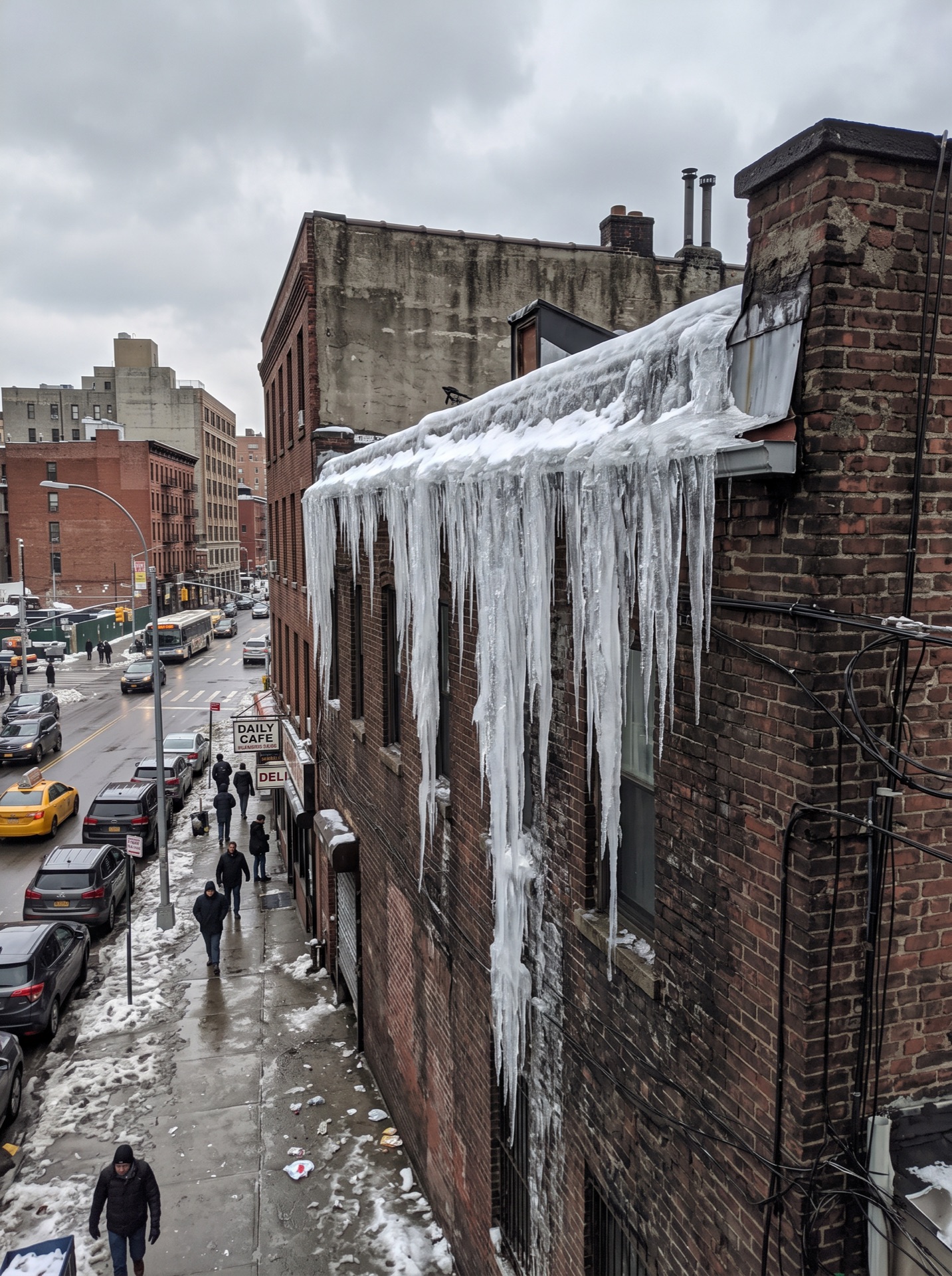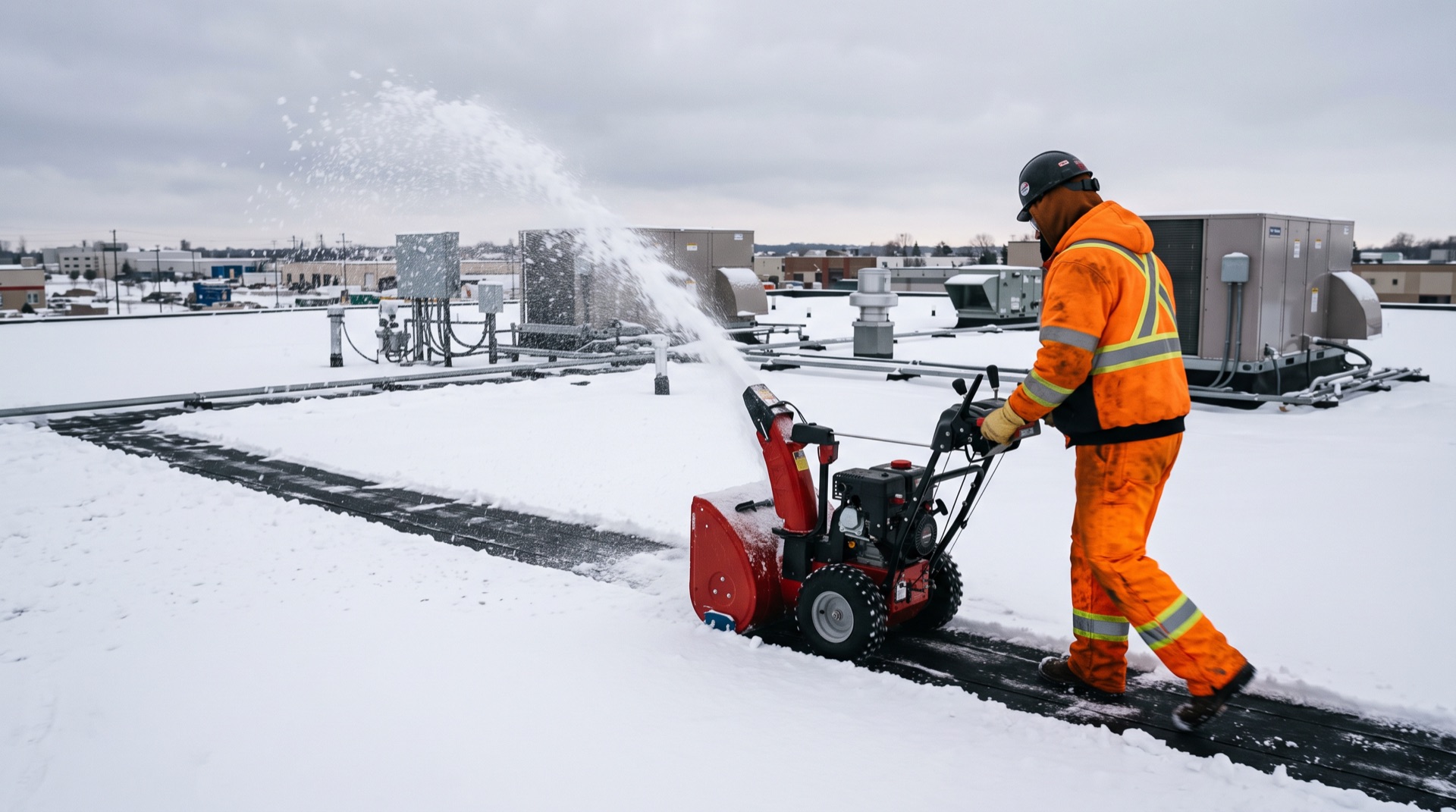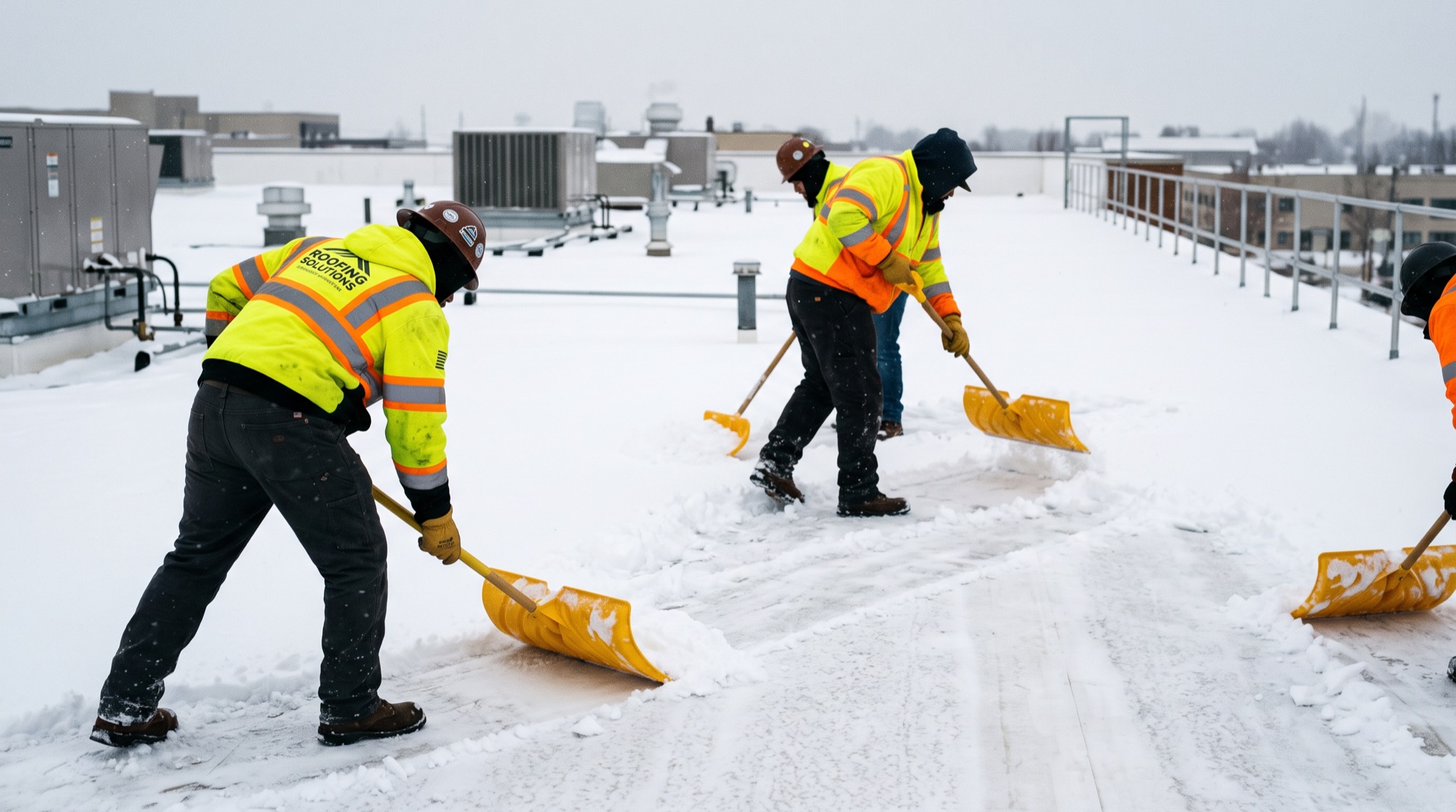
Ice dams are not a Columbia Falls problem so much as a Montana one, and they show up on the same handful of eaves and valleys year after year. As part of our complete Columbia Falls winter roof services, crews handle commercial ice dam removal across Flathead County.
Elevation, Aspect and Ice: The Flathead County Pattern
Mountain ice dams are a solar problem more than a temperature one. The sun works the pack from above while the air stays cold, so meltwater is produced and refrozen within the same afternoon.

Aspect decides everything here. The sunny plane sheds water that the shaded plane and the shaded eave then lock up, so one side of a roof in Columbia Falls is clear while the other carries a wall of ice.
Ice-barrier practice in Flathead County
Design snow loads up here are among the highest in the country, and the membrane and retention details that come with them are not paperwork. On an older Columbia Falls cabin neither is likely to be present.
Commercial Ice Dam Removal in Columbia Falls: How The Work Runs
Roof warranties and who is allowed up there
Most commercial membranes carry a manufacturer's warranty with conditions about who may work on the roof and what methods are permitted. Snow removal is generally fine; mechanical ice removal very often is not, and the wrong contractor with the wrong tool can void cover worth considerably more than the clearing.
The warranty gets read before the roof is walked, and the method used is one the document permits.
Working around rooftop plant
HVAC curbs, exhaust fans, conduit, gas lines, solar racking and railing are all obstacles and all drift traps. The snow behind a large unit is usually the deepest on the roof and the ice under it the thickest.
Crews work around and under them rather than over, and anything running stays running.
Access control, hatches and escorts
Getting onto a commercial roof is a procedure: keys or fobs, a hatch that may be padlocked, a ladder in a locked plant room, sometimes a site induction and an escort for the duration.
Sorting that out with the property manager in advance is the difference between a crew starting at seven and a crew waiting in the parking lot until nine. Where a tenant controls the only access, that conversation happens before the dispatch rather than on the roof.
Overflow scuppers are the tell
Water running out of an overflow scupper in winter means the primary drains are not taking it. On a Columbia Falls building that is a sign the roof is holding standing water somewhere above a frozen drain, and the load is being carried rather than shed.
Scuppers are checked first for exactly that reason, and a dry scupper above a wet roof is as informative as a running one.
What the board or the owner gets
A condition report with dated photographs, what was found, what was done and what is still a risk — in a form that can go to a board, an owner or a carrier without being rewritten.
For a managed Columbia Falls property that document is usually the reason the spend gets approved without a second conversation.
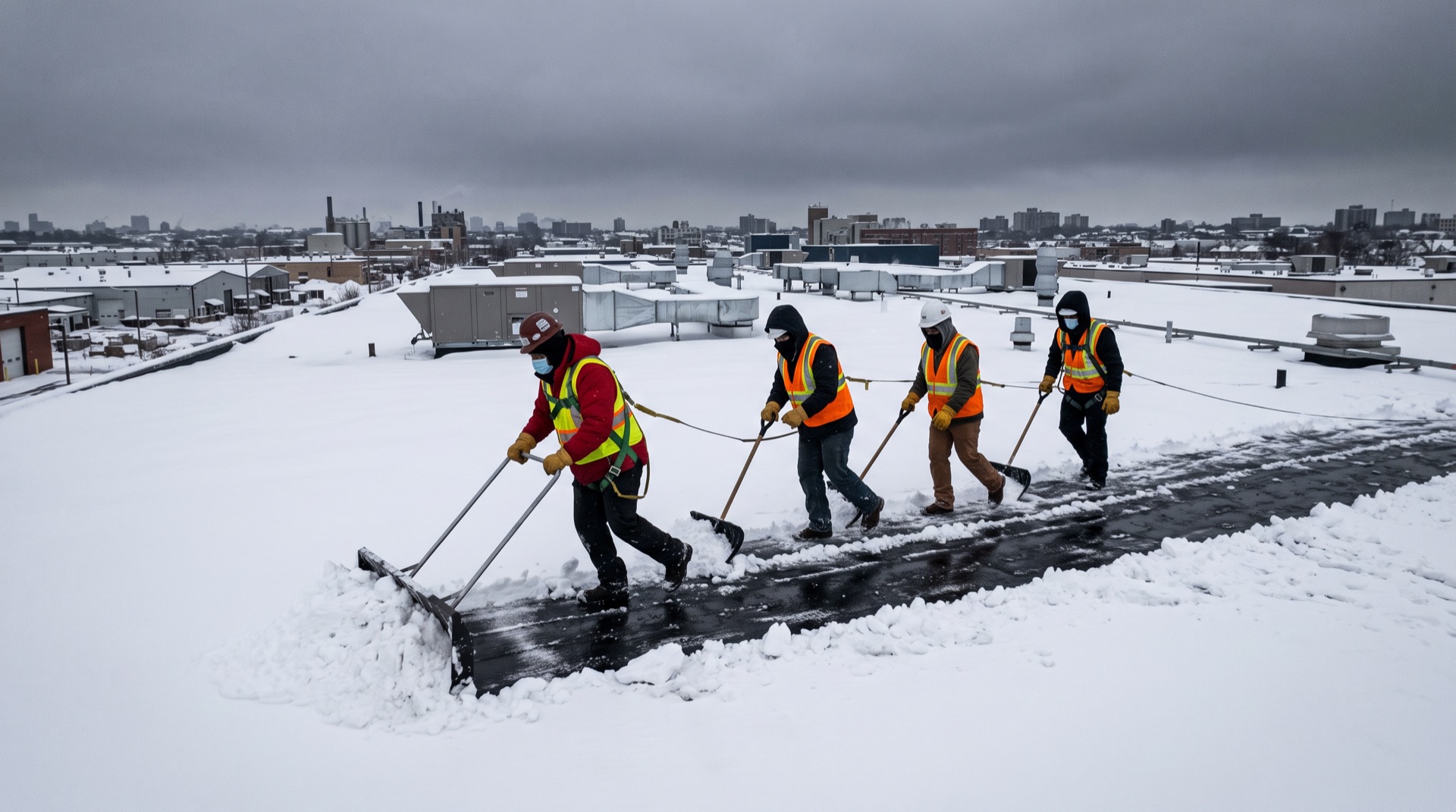
What you get in Columbia Falls
- Plant worked aroundHVAC curbs, conduit, racking and railing avoided, not cleared over
- EPDM, TPO and mod-bitLow-pressure steam only, seams and flashing details avoided
- Flow confirmed belowAn open drain throat over a frozen leader is not an open drain
| Documentation | Dated before and after photos, written scope in Xactimate line items |
|---|---|
| Removal method | Low-pressure steam only. No chipping, salt or pressure washing. |
| Coverage area | Columbia Falls and Flathead County |
| Pricing model | Billed by the crew hour, rate quoted before dispatch |
| Dispatch window | 24 to 48 hours in mountain terrain |
| Local ice-barrier practice | Extended membrane plus snow retention |
| Typical scope | Steam, 8-16 crew hours typical |
Where We Dispatch Around Columbia Falls
Crews working Columbia Falls cover the adjoining communities on the same route — Hungry Horse, Martin City, Coram and West Glacier — so a storm week usually means one truck handling several addresses in Flathead County rather than separate trips.
Nearest hub towns with their own commercial ice dams pages: Whitefish, Kalispell, Missoula, Hamilton, Great Falls, Helena.
Coverage runs across Columbia Falls and the nearby towns all winter, and capacity is surged into whichever Montana market the storm actually hits.
Most jobs do not stop at one service. Commercial Ice Dams in Columbia Falls often runs alongside commercial roof snow removal in Columbia Falls, and both get written into one scope rather than billed as separate visits.
Active leak right now? Our 24/7 Columbia Falls steam ice dam removal crews are dispatched first during a freeze event. Call (888) 561-9664.