A Midland roof can look fine from the driveway and still be backing water under the shingles at the eave, where nobody can see it. As part of our complete Midland winter roof services, crews handle crane-assisted snow removal across Midland County.
Snow Bands, Warm Attics and the Midland Eave
The lake keeps producing snow long after a front has passed, so a roof in Midland County rarely gets the clear stretch it needs to shed. One band follows another and the pack simply deepens.

Melting happens from underneath, not from the sun. Attic heat releases water under the pack, it runs to the overhang where there is no heated space below, and it freezes. That is the engine, and in Midland it runs most of the winter.
Ice-barrier practice in Midland County
What matters on a Midland roof is not whether ice barrier exists but how far up it runs. Water backed up behind a foot of ice travels much further than the first course, and a membrane that stops short is a membrane that stops working.
Crane-Assisted Snow Removal in Midland: How The Work Runs
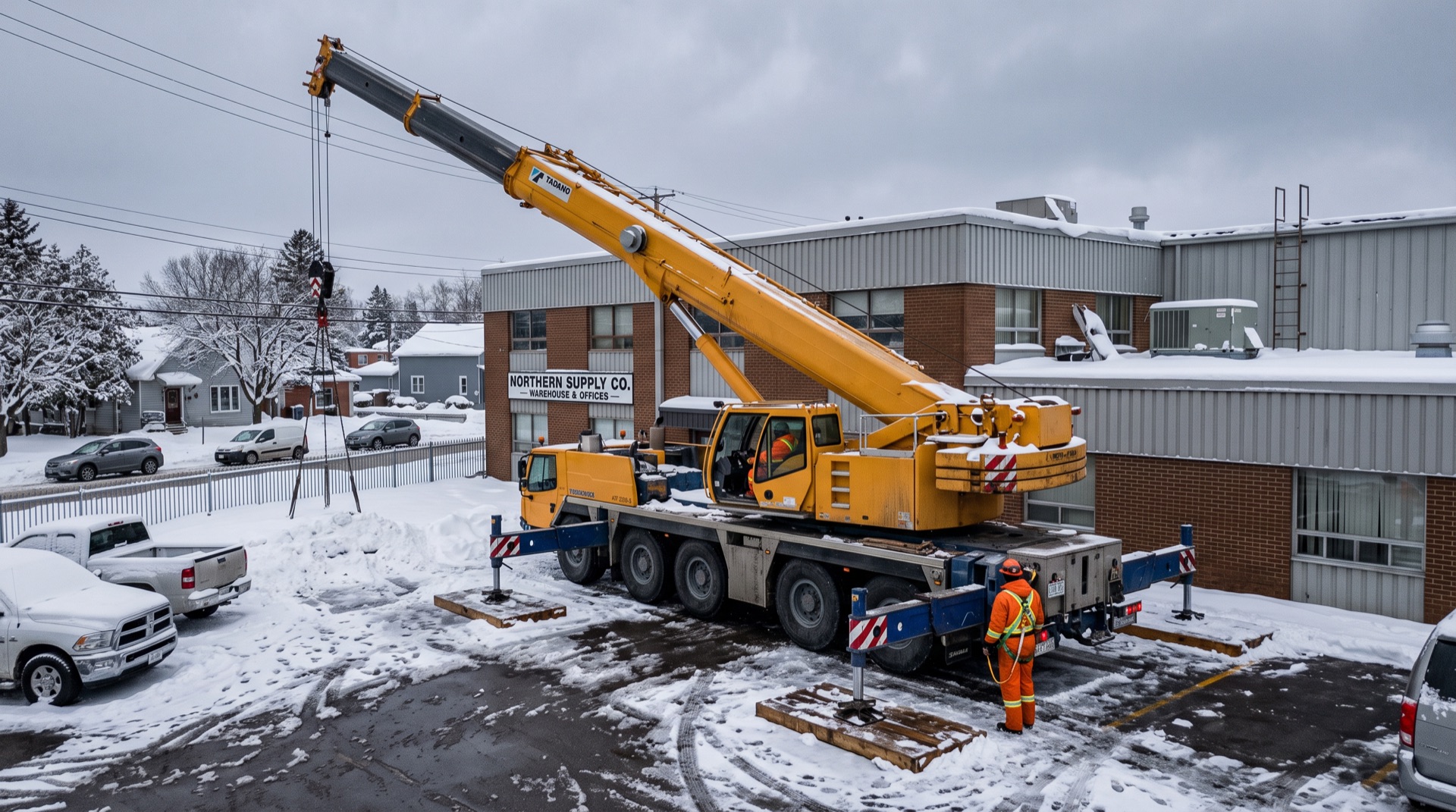
Outriggers on frozen and uneven ground
Frozen ground is not automatically good bearing. Frost heave, buried utilities, septic fields, soft fill under a lawn and anything that thaws mid-job all change what the pads are sitting on. Ceiling Sagging or Bulging After Snow.
Pads are sized for the load and placed deliberately. It is the least visible part of a pick in Midland and the part with the least margin for improvisation.
How a pick actually works
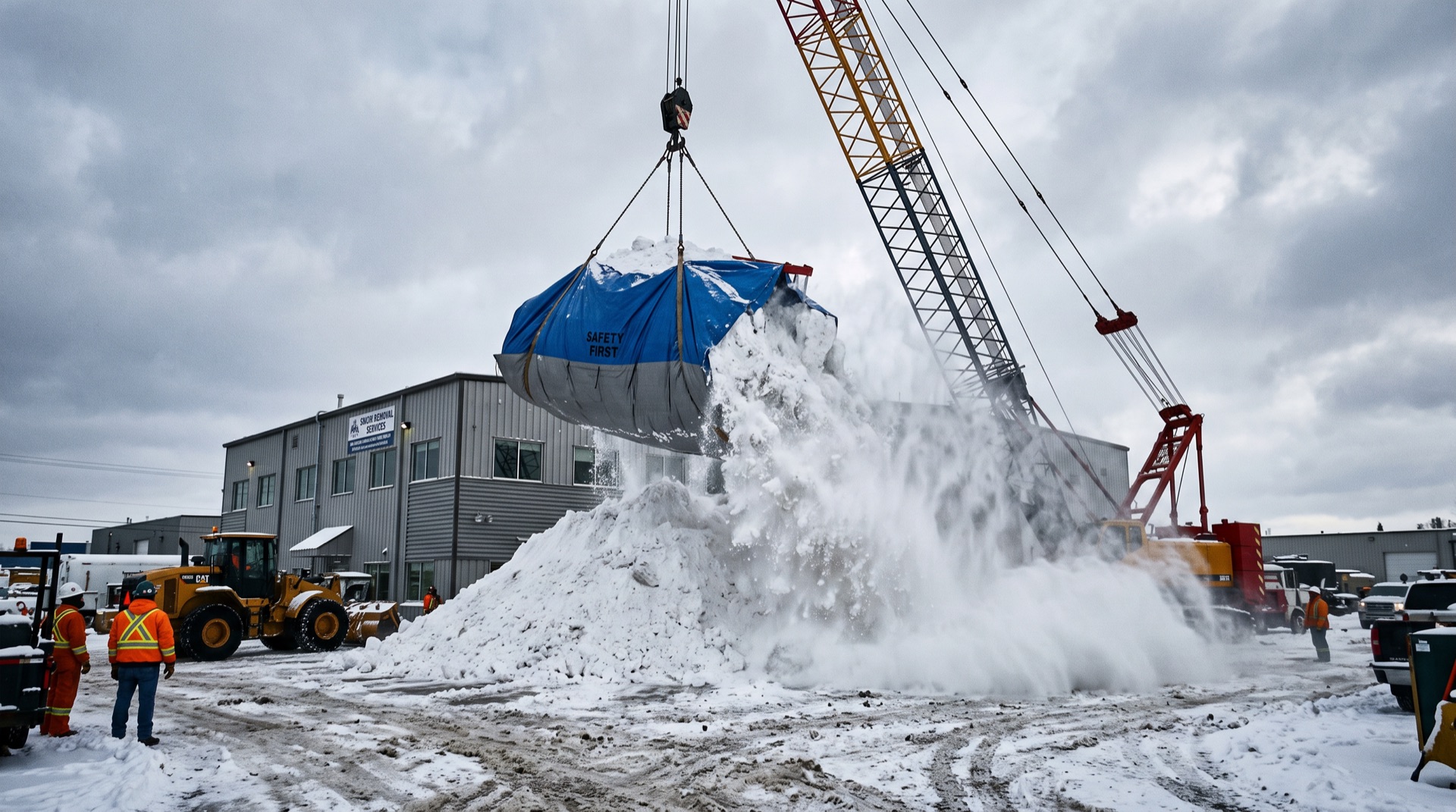
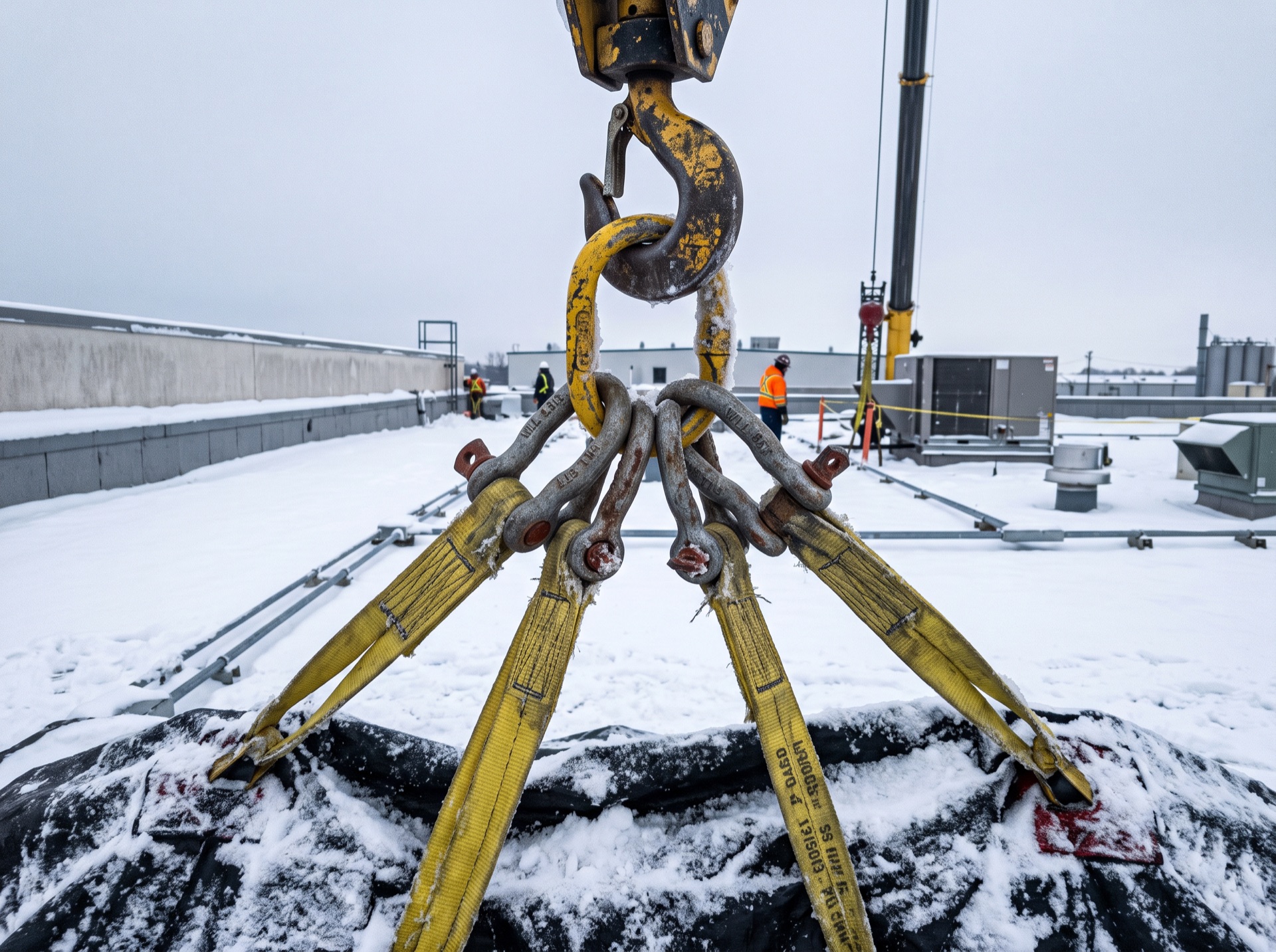
Rip-stop tarps are laid out and anchored on the deck, crews load them, and the boom lifts each loaded tarp clear and sets it down in a designated drop zone on the ground. Outrigger pads are placed on frozen ground rated for the load, and a pedestrian exclusion zone is set and marshalled for the whole operation.
It is a planned lift, not an improvisation. Site access, swing radius, overhead lines, drop zone and ground bearing all get walked before the first tarp goes down.
Reach, radius and why the chart decides
Capacity falls away sharply with radius. A machine that lifts comfortably at thirty feet may be well short of the same load at eighty, which is why the far corner of a large deck sometimes needs a bigger crane rather than a longer day.
The chart is run before the quote, so the number given is for a machine that can actually reach the whole roof in Midland rather than most of it.
What goes in the tarp and what does not
A pick lifts loose and broken snow. It does not lift a solid sheet of ice frozen to the membrane, and trying to make it do so is how a tarp takes the roof covering with it.
So the sequence is crews cutting and breaking the pack into liftable material, the crane moving it, and steam dealing with whatever is bonded to the surface. The crane is the transport, not the demolition.
Planning the lift before anything moves
Site access, the swing radius, overhead lines, ground bearing for the outriggers and the ground drop zone all get walked first. On a site in Midland that walk often determines where the crane can physically sit, which determines everything else.
Permits get pulled where the municipality requires them for a street setup, and that lead time is built into the schedule rather than discovered on the day.
What you get in Midland
- Permits handledPulled where the municipality requires them for a street setup
- Load calculated firstDepth, density and area against design capacity before anything mobilises
- Lift planned firstAccess, swing radius, overhead lines and drop zone walked before scheduling
| Pricing model | Billed by the crew hour, rate quoted before dispatch |
|---|---|
| Documentation | Dated before and after photos, written scope in Xactimate line items |
| Local ice-barrier practice | Eave membrane expected on re-roofs |
| Typical scope | Steam, 6-12 crew hours typical |
| Dispatch window | Same day to 24 hours |
| Removal method | Low-pressure steam only. No chipping, salt or pressure washing. |
| Primary climate stressor | Lake-effect bands, wet heavy pack |
Neighborhoods and Towns We Reach From Midland
Crews working Midland cover the adjoining communities on the same route — Auburn, Sanford, Freeland, Hope and Edenville — so a storm week usually means one truck handling several addresses in Midland County rather than separate trips.
Nearest hub towns with their own crane snow removal pages: Bay City, Saginaw, Mount Pleasant, Flint, East Lansing, Lansing.
During a cold snap Midland gets worked alongside the neighboring Midland County towns on the same route, with active interior leaks moved to the front of the list.
Most jobs do not stop at one service. Crane Snow Removal in Midland often runs alongside commercial roof snow removal in Midland, and both get written into one scope rather than billed as separate visits.
Active leak right now? Our 24/7 Midland steam ice dam removal crews are dispatched first during a freeze event. Call (888) 561-9664.