




Snow Bands, Warm Attics and the Saginaw Eave
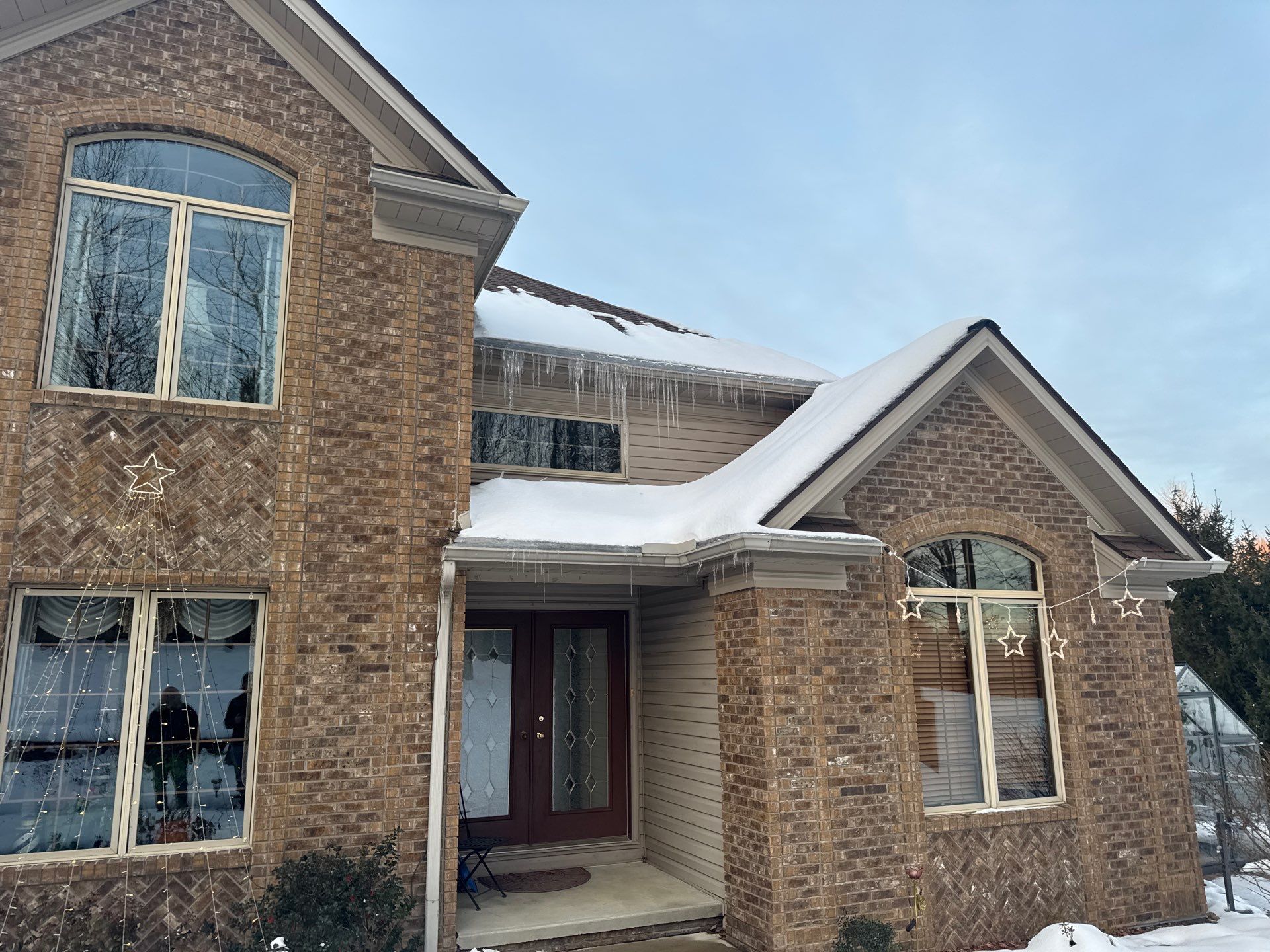
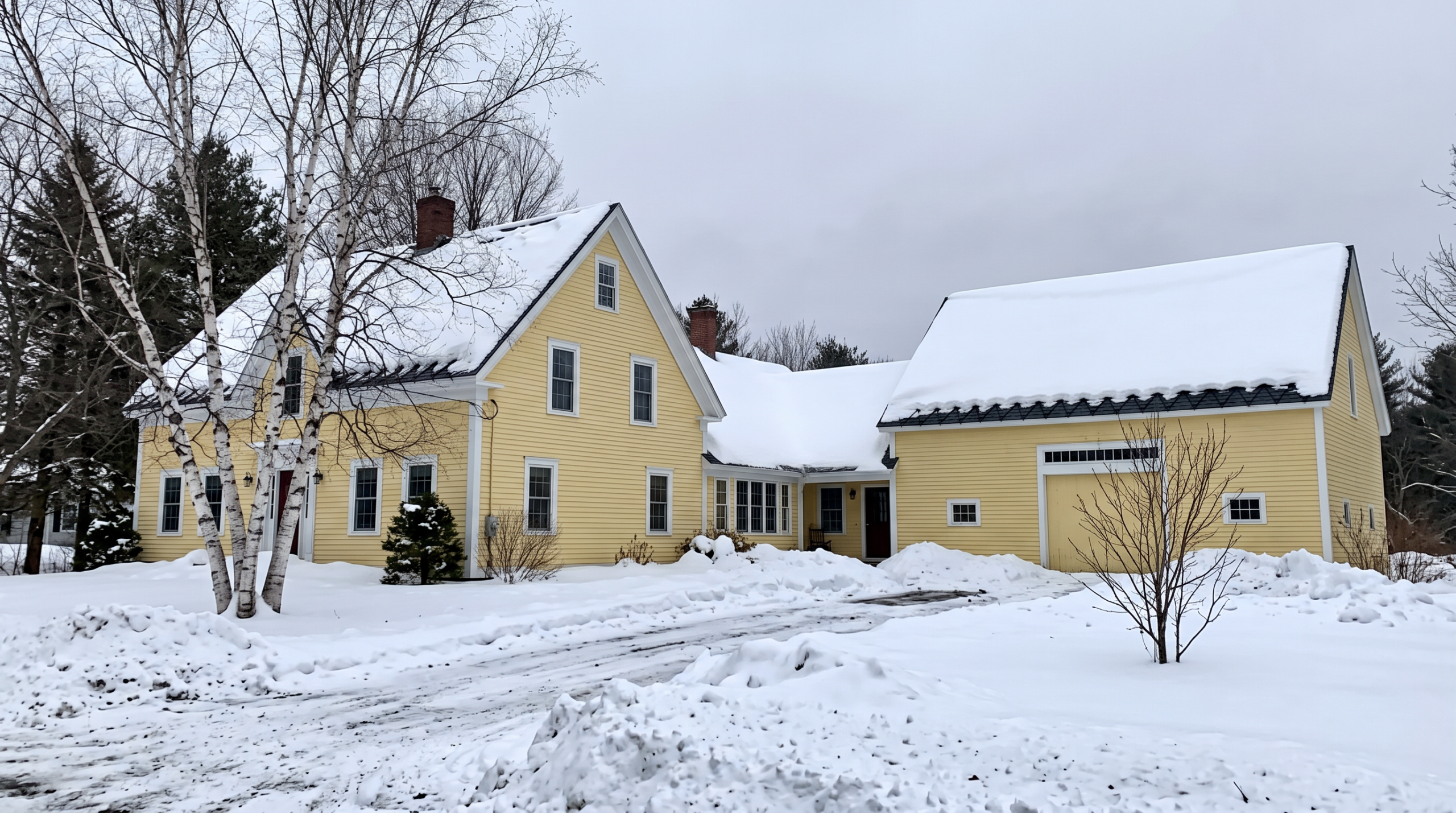
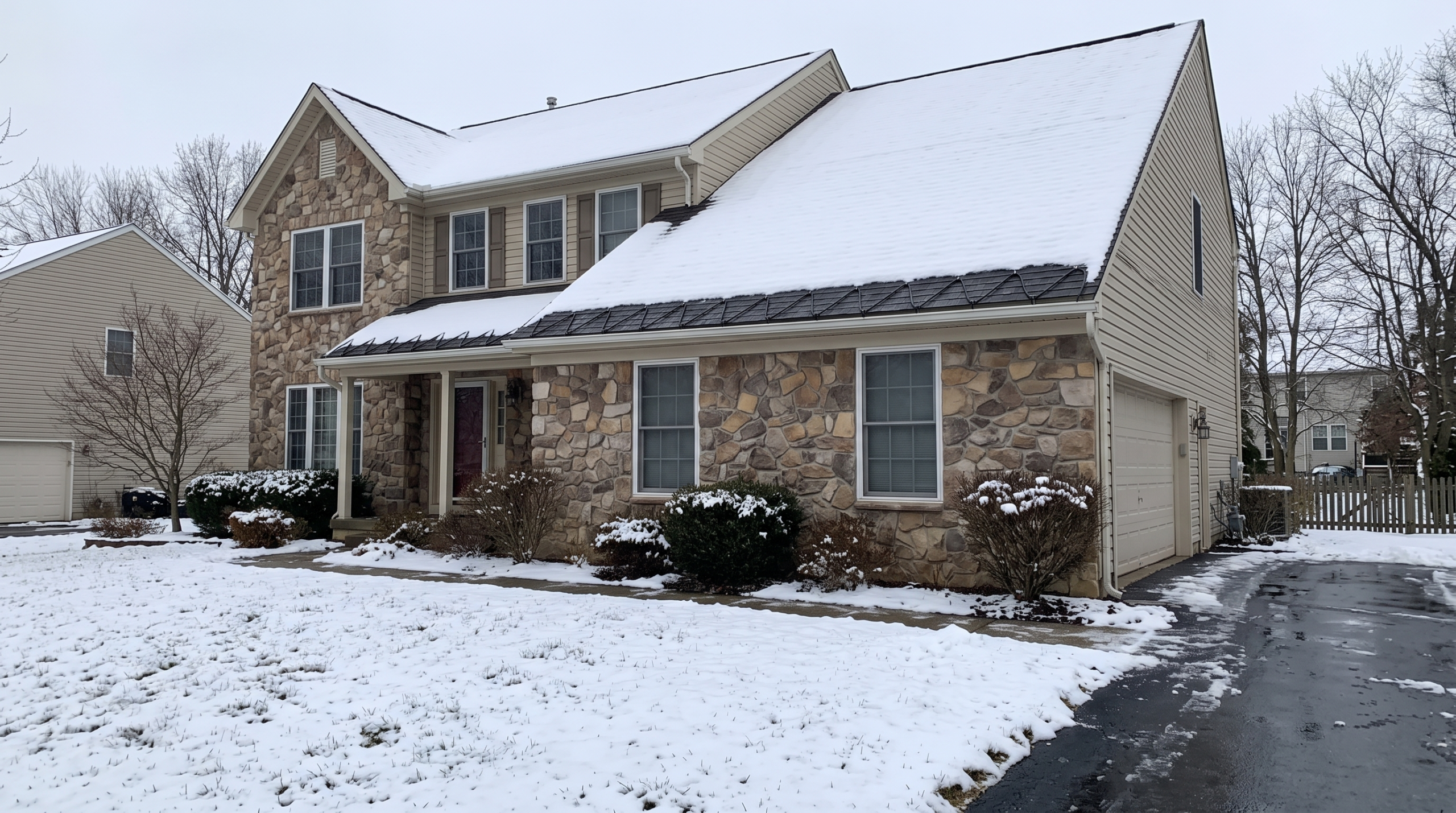
What makes Saginaw County roofs dam is not the seasonal total, it is how the snow arrives. Bands dump a heavy, saturated pack in hours, and that pack becomes a water reservoir sitting on a heated surface.

Each band is followed by a clearance and a cold night, and that is the cycle doing the damage. Meltwater released during the day sets at the eave after dark, and the ridge at the gutter line gains a layer every time.
Ice-barrier practice in Saginaw County
The relevant detail is how far up the roof the membrane runs — it has to reach past the interior wall line, not just cover the first course. On older Saginaw roofs it frequently does neither.
What a Crew Does on a Saginaw Roof
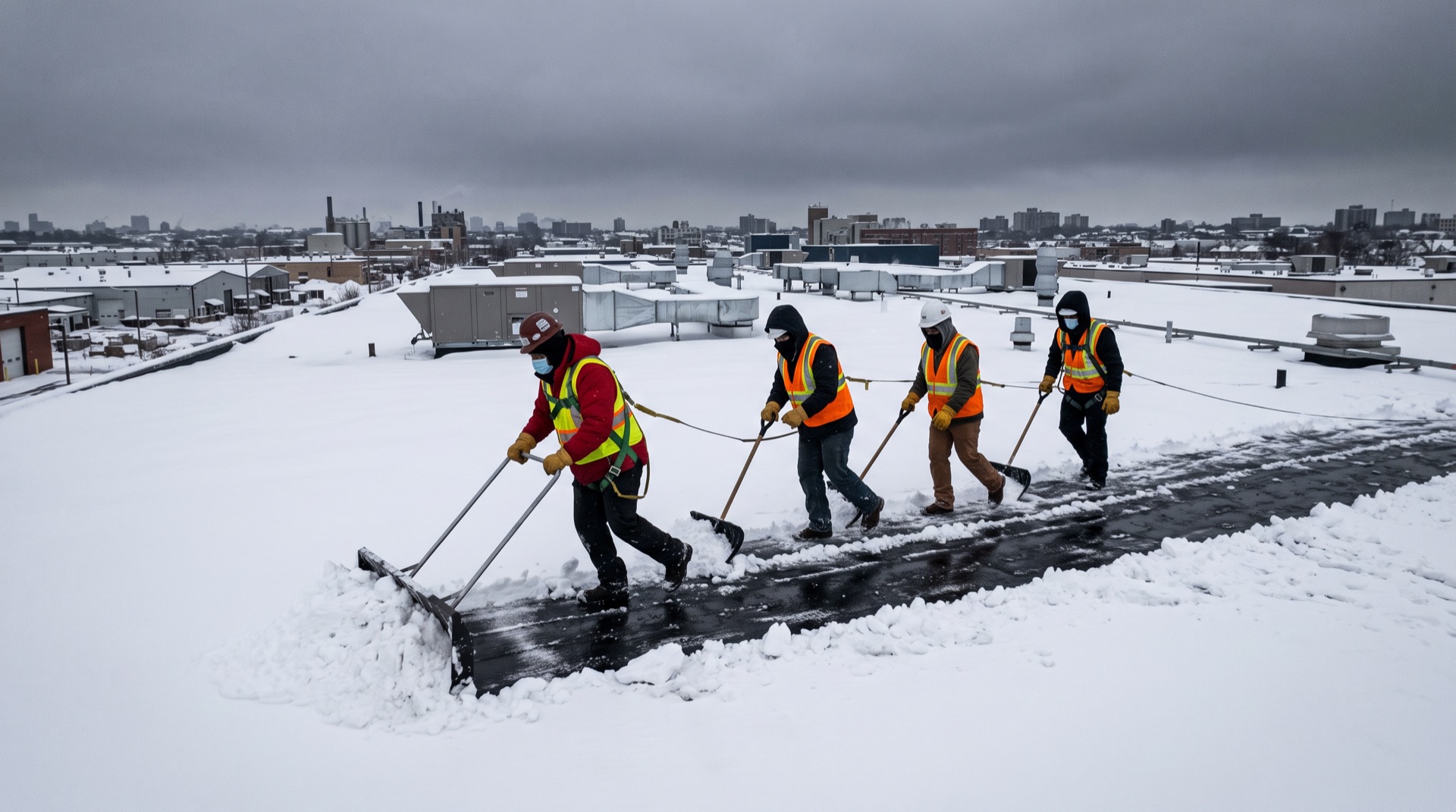
Nothing gets touched until the roof has been walked and photographed. The crew finds every dam, locates where water is getting in, shows you, and gives you the crew-hour rate and a time estimate before the equipment comes off the truck.
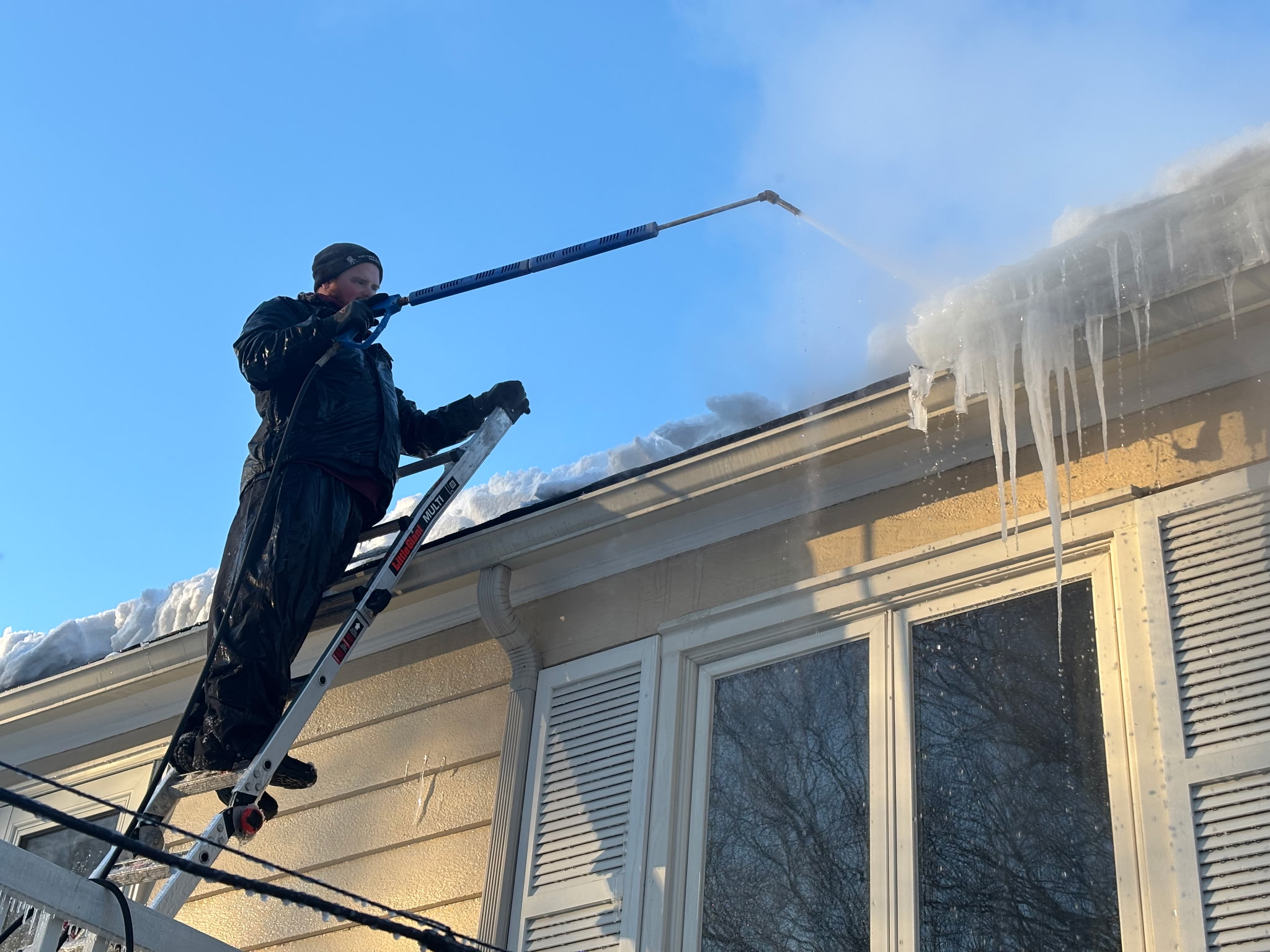
Removal then works from the worst point outward, so water starts draining early rather than at the end. Gutters and downspouts frozen solid get steamed through in the same visit — leaving them means the eave dams again within days.
Access, ladders and what the crew needs on site
Steam equipment needs somewhere to park within hose reach, and ladders need footing that is not a buried flower bed or a sheet of ice. Clearing a path to the affected eave, moving vehicles off the driveway and unlocking a side gate takes ten minutes and saves considerably more than that on the clock.
Where the only access is through a neighbor's property, that conversation is worth having before the crew is in the street rather than while it waits.
Why the gutter has to be cleared in the same visit
A dam sitting above a gutter packed solid with ice is only half the problem. Clear the eave and leave the trough frozen, and the next day's meltwater has nowhere to run — it backs up onto the roof and the dam rebuilds from the bottom.
Crews steam the trough and the downspout through to daylight on the same visit. It adds time, which is why the hour estimate given on the phone accounts for it, and it is the difference between a fix and a repeat visit in Saginaw the following week.
How long a removal actually takes
A single-story eave with a thin dam and clear gutters is often an hour or two. A two-story Saginaw house with ice standing a foot deep across the front, frozen downspouts and a valley packed solid is most of a day for a two-man crew. The honest answer on the phone is a range and the reason for it, not a number designed to win the booking.
The estimate is revised out loud if the roof turns out worse than it looked from the ground, before the extra hours are worked rather than after they appear on the invoice.
| Primary climate stressor | Lake-effect bands, wet heavy pack |
|---|---|
| Service | Ice dam removal in Saginaw, MI |
| Documentation | Dated before and after photos, written scope in Xactimate line items |
| Typical scope | Steam, 6-12 crew hours typical |
| Pricing model | Billed by the crew hour, rate quoted before dispatch |
| Coverage area | Saginaw and Saginaw County |
| Local ice-barrier practice | Eave membrane expected on re-roofs |
Saginaw County Coverage From Saginaw
Crews working Saginaw cover the adjoining communities on the same route — Carrollton, Bridgeport, Frankenmuth, Reese and Munger — so a storm week usually means one truck handling several addresses in Saginaw County rather than separate trips.
Nearest hub towns with their own crew pages: Bay City, Midland, Flint, Mount Pleasant, East Lansing, Lansing.
During a cold snap Saginaw gets worked alongside the neighboring Saginaw County towns on the same route, with active interior leaks moved to the front of the list.
If water is already inside a property in Saginaw, call (888) 561-9664 rather than filling in a form — the phone is faster and leaks jump the line.