


Small Snow, Repeated Cycles: Burlington Ice Dams
Three inches of snow and a week of days above freezing and nights below it will build ice on a Des Moines County eave just as reliably as a foot of snow further north.

And the cycling is relentless rather than dramatic. Fifteen or twenty crossings of freezing in a season each add a layer, and the houses with the thinnest attic insulation in Des Moines County all find out in the same week.
Ice-barrier practice in Des Moines County
The residential code Iowa follows calls for eave ice barrier on new work. Enforcement in Des Moines County is real but recent, so the age of the roof is what decides whether it is there.
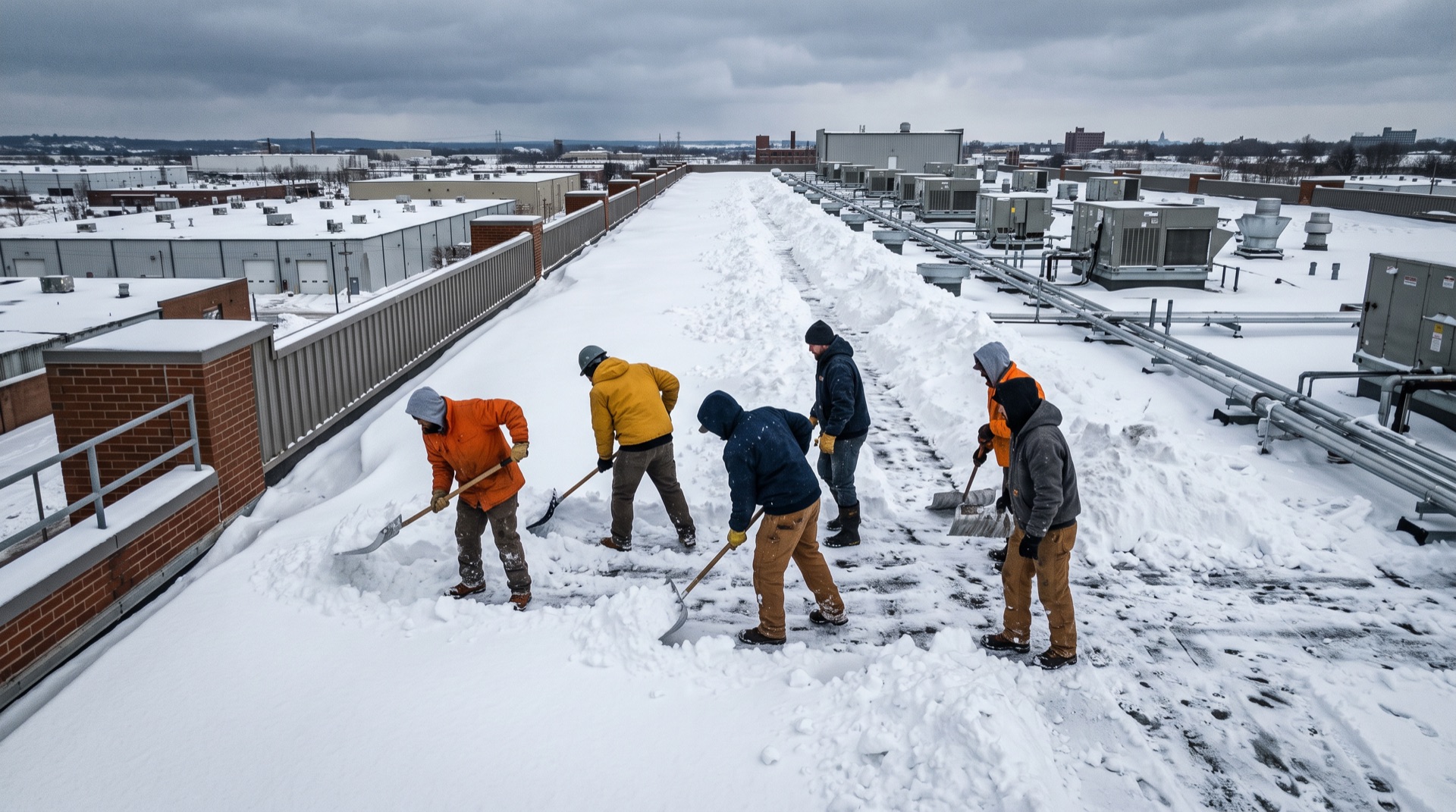
What a Crew Does on a Burlington Roof
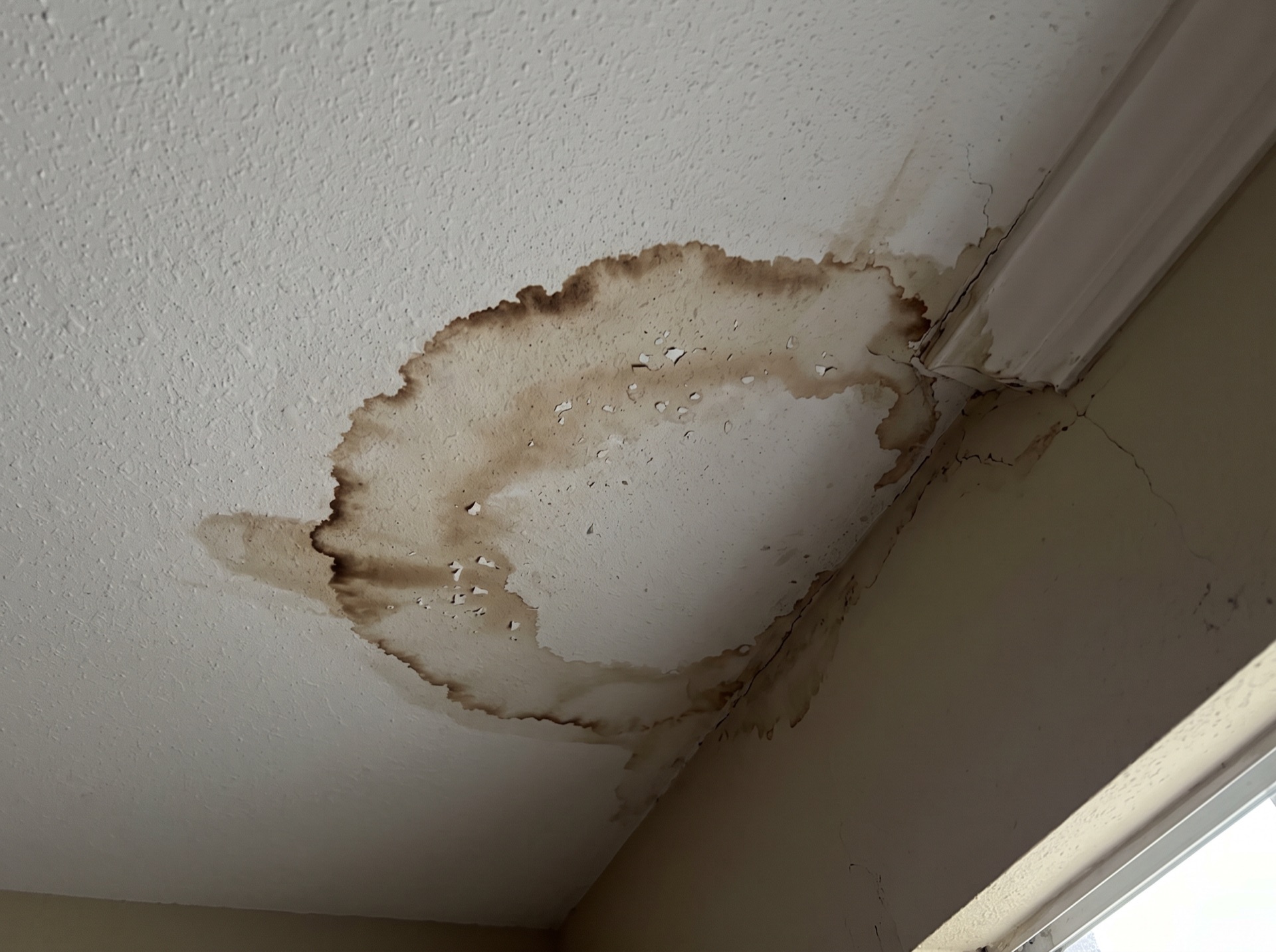
Crews walk the eaves, valleys and gutter line first and photograph every dam and every point where water is tracking inside, before touching anything. You get shown what they found and quoted the crew-hour rate before work starts.
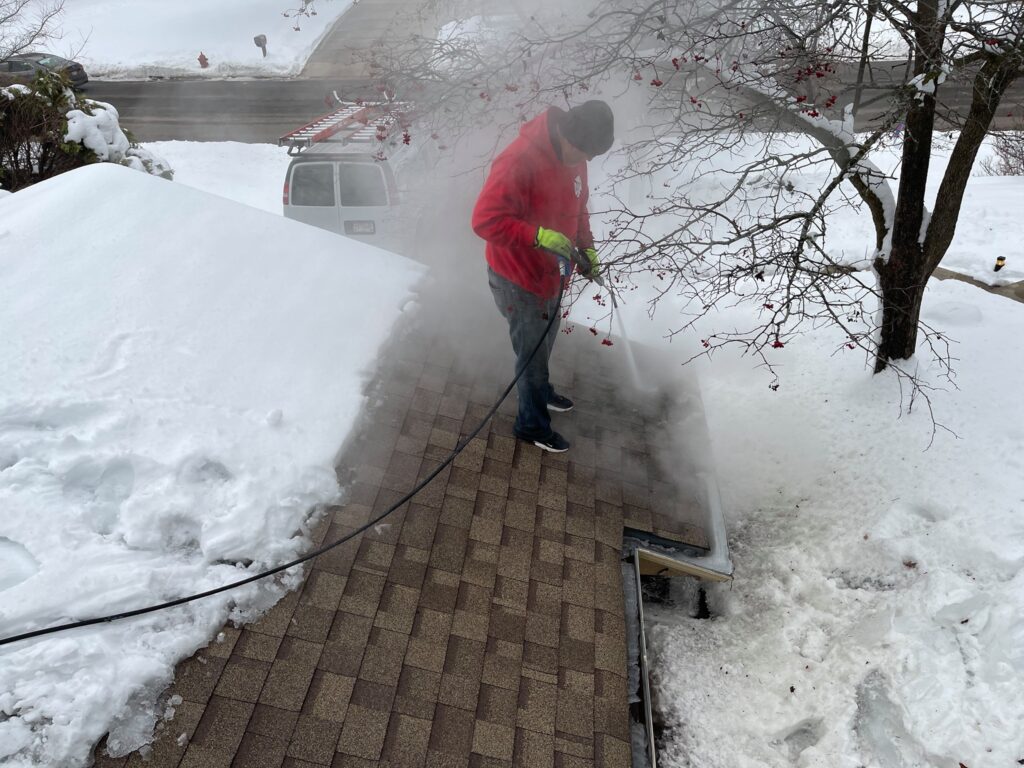
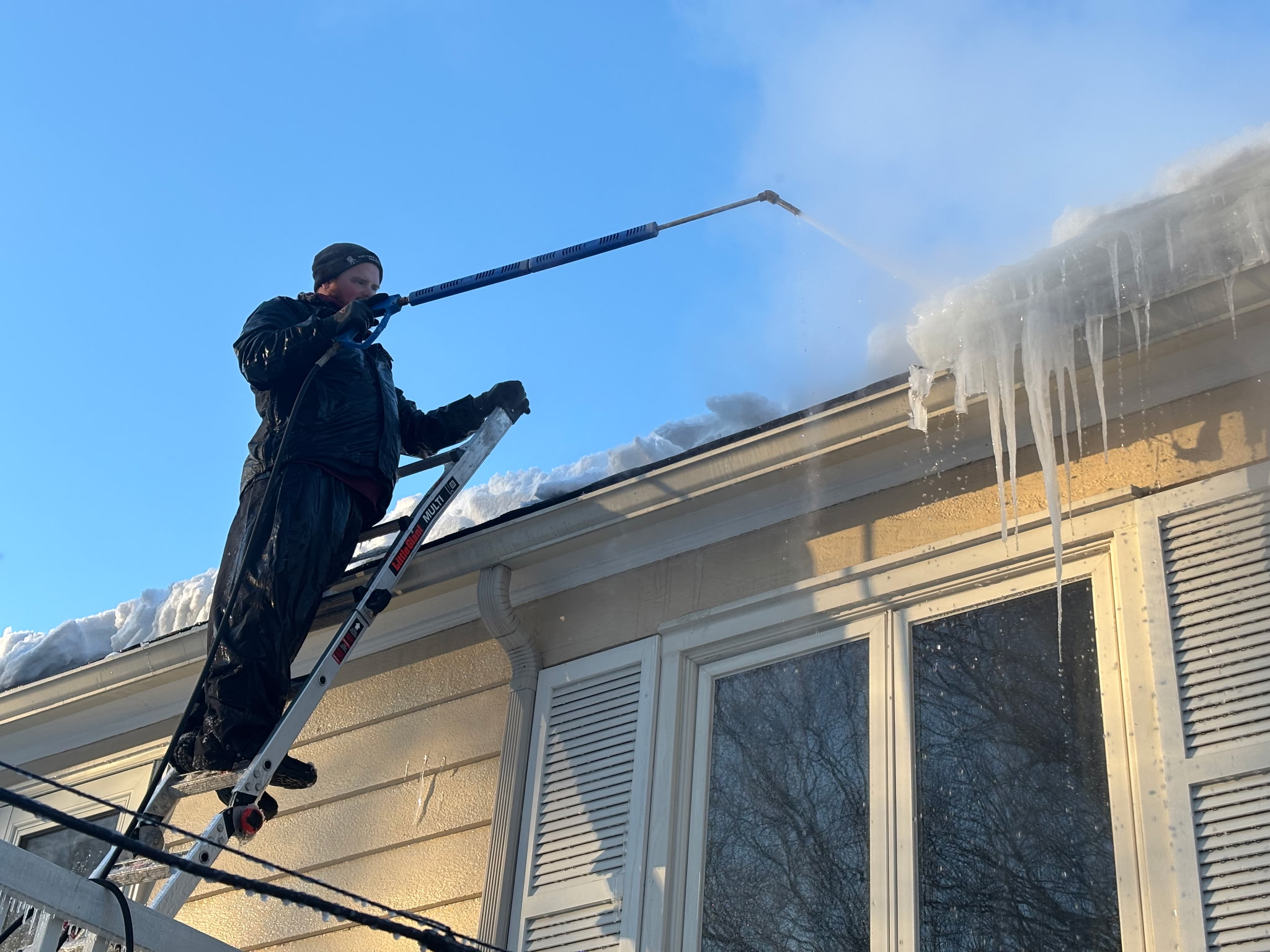
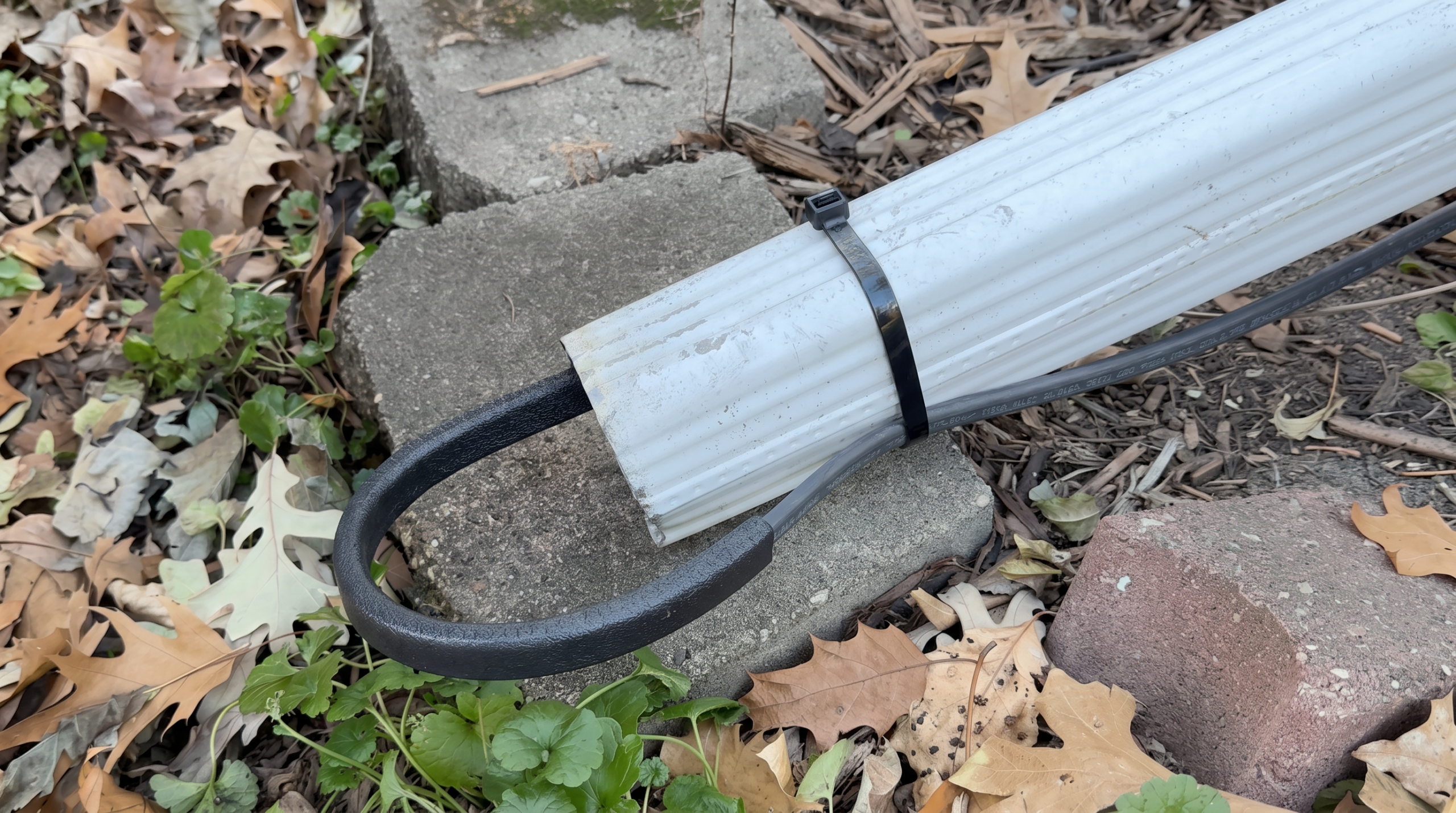
Then the ice comes off with low-pressure steam, starting wherever water is actively backing up so drainage opens early. Frozen gutters and downspouts are cleared in the same visit, because a cleared eave above a solid block of ice in the gutter dams again on the next cold night.
Why the dam formed in the first place
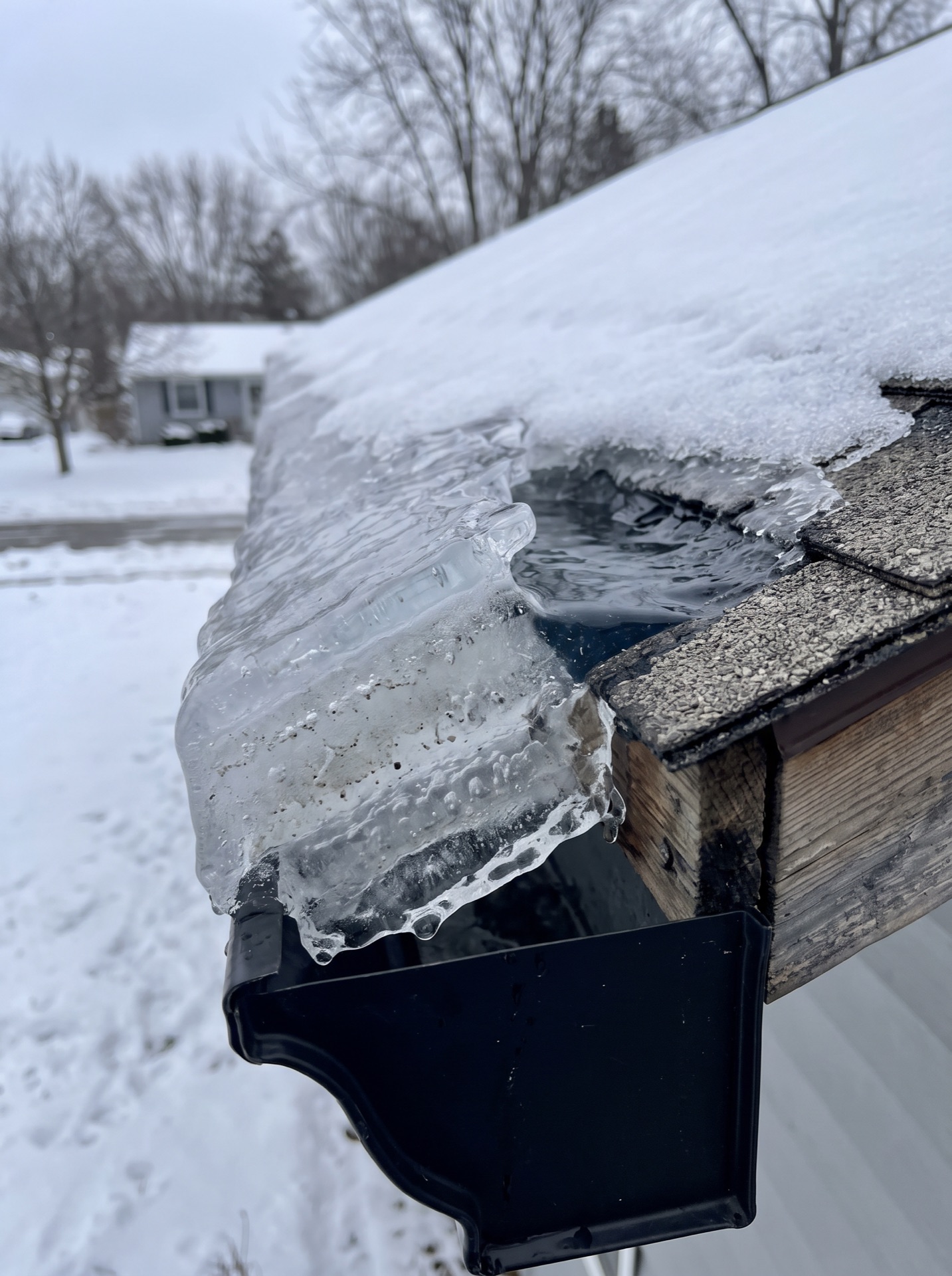
Ice dams are a heat problem wearing a weather costume. Warm air escaping into the attic melts snow on the upper roof; that meltwater runs to the eave, which hangs past the heated envelope and stays below freezing; it refreezes there, and the ridge of ice grows a layer every cycle. Removal is the emergency fix. Before the crew leaves you will know which part of your attic is feeding it.
What the crew does on arrival
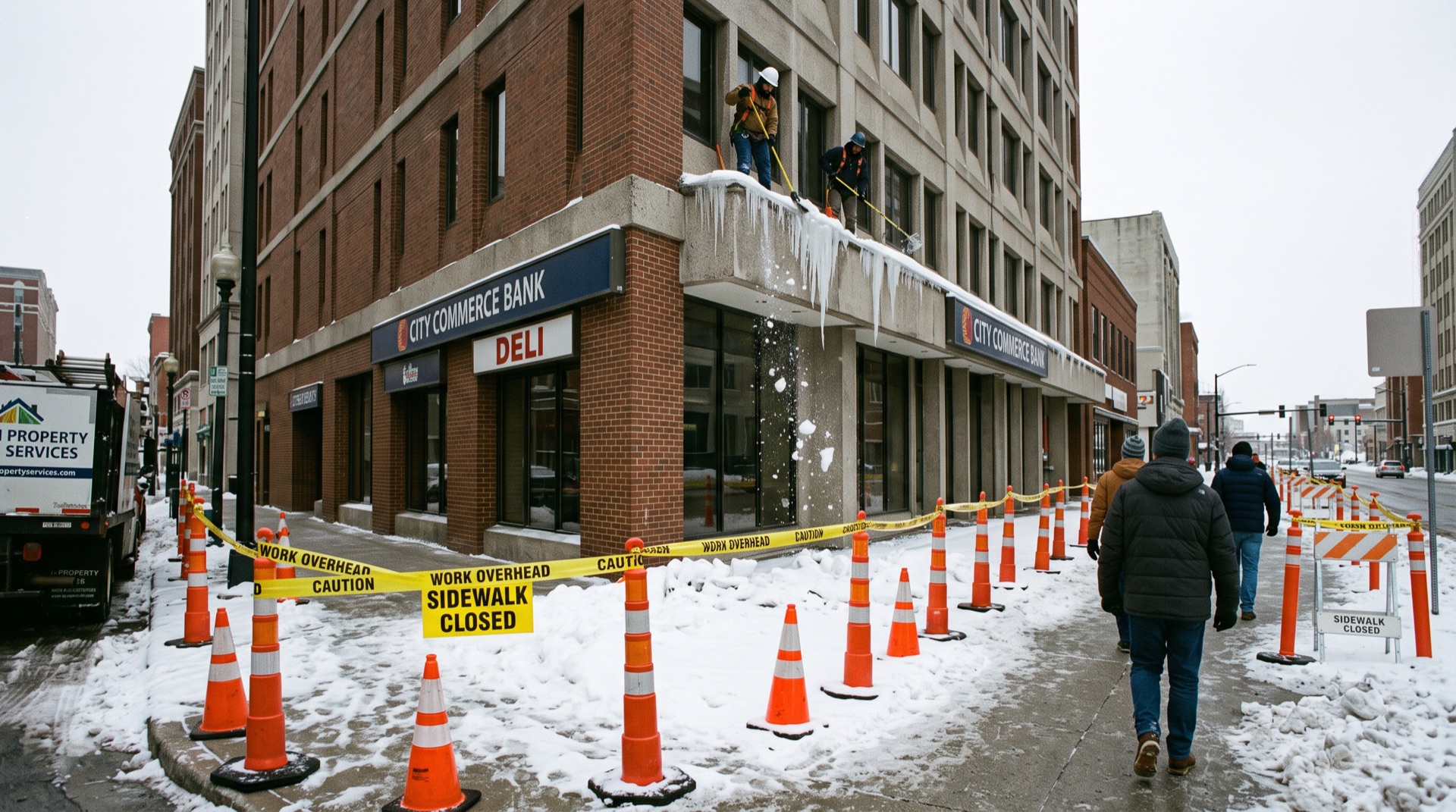
Before anything is touched, the crew walks the eaves, valleys and gutter line and photographs every dam and every point where water is tracking inside. You get shown what they found. Then the dam comes off in sections, starting wherever water is actively backing up, so drainage opens early rather than at the end.
Downspouts and gutter troughs get cleared in the same visit where they are frozen, because a dam removed above a solid block of ice in the gutter just reforms in the next cold night.
What the dam has already done to the gutter and fascia
Ice expands as it forms, and a trough packed solid pushes the gutter away from the fascia a little more every cycle. By the time the dam is thick enough to leak, the hangers are often pulled, the back of the trough has lifted, and the fascia board behind it has been wet for weeks.
None of that is visible until the ice is off. It gets photographed when it appears, because a bent gutter found in February is a great deal easier to argue about with a carrier than one discovered in May.
| Removal method | Low-pressure steam only. No chipping, salt or pressure washing. |
|---|---|
| Primary climate stressor | Repeated thaw-freeze cycling |
| Typical scope | Steam, 4-8 crew hours typical |
| Documentation | Dated before and after photos, written scope in Xactimate line items |
| Dispatch window | Same day to 24 hours |
| Local ice-barrier practice | Eave membrane on new work, often absent |
| Coverage area | Burlington and Des Moines County |
Des Moines County Coverage From Burlington
Crews working Burlington cover the adjoining communities on the same route — West Burlington, Middletown, Wever, Sperry and Danville — so a storm week usually means one truck handling several addresses in Des Moines County rather than separate trips.
Nearest hub towns with their own crew pages: Muscatine, Davenport, Bettendorf, Iowa City, Ottumwa, Cedar Rapids.
During a cold snap Burlington gets worked alongside the neighboring Des Moines County towns on the same route, with active interior leaks moved to the front of the list.
If water is already inside a property in Burlington, call (888) 561-9664 rather than filling in a form — the phone is faster and leaks jump the line.