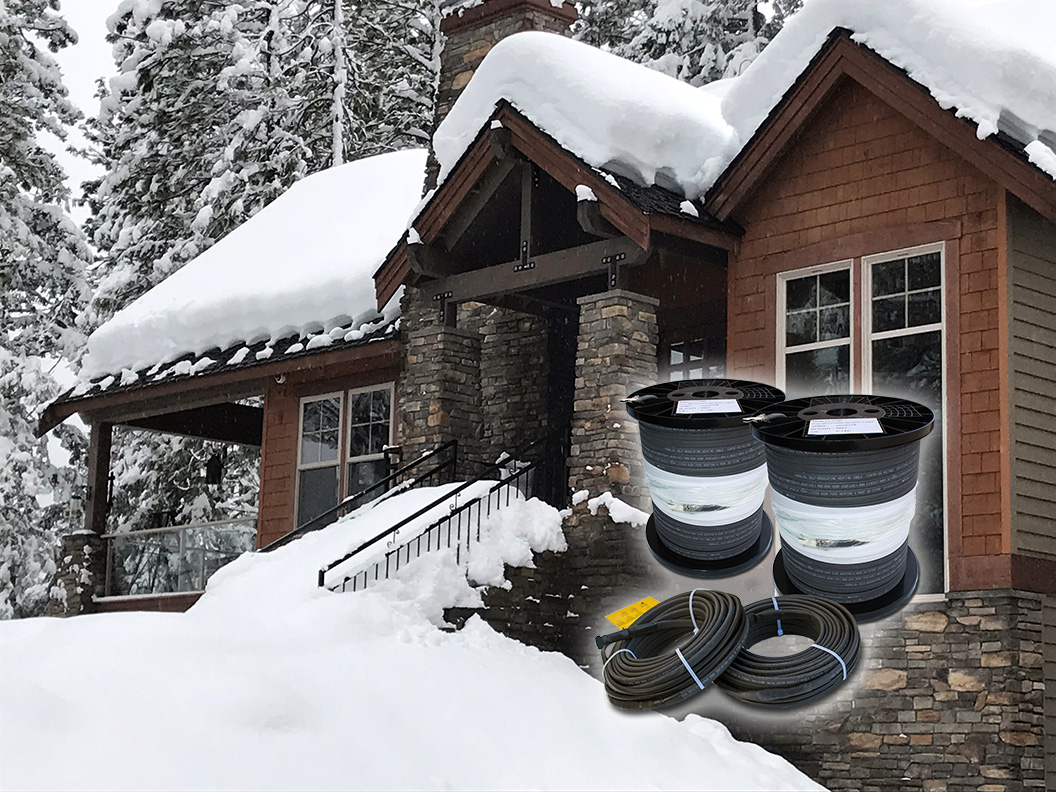
The ice along a roof in St. Charlesline is the symptom. The cause is warm air escaping into the attic, and it is still running right now. As part of our complete St. Charles winter roof services, crews handle heated roof & gutter cables across Kane County.
The St. Charles Problem Is the Thermometer, Not the Snowfall
Three inches of snow and a week of days above freezing and nights below it will build ice on a Kane County eave just as reliably as a foot of snow further north.

That is the part homeowners miss. Total snowfall here is modest compared with the northern belt, so roofs in Kane County are often built and insulated as though ice is not a concern. Then a cycling week in January finds every weak eave at once.
Ice-barrier practice in Kane County
Because ice is not the first thing a homeowner in St. Charles thinks about, the membrane is the detail most often value-engineered out of a re-roof. It is worth asking for by name on any quote.
Heated Roof & Gutter Cables in St. Charles: How The Work Runs
Cable is the backstop, not the cure
The underlying cause of an ice dam is heat leaving the house. Air sealing the attic, fixing crushed baffles and topping up insulation addresses that; cable manages what is left. Icicles and a Wet Ceiling.
A St. Charles property that gets both rarely needs an emergency call again. One that gets only cable usually needs fewer.
What happens when a section stops working
A dead run is usually one of four things: a tripped ground fault, a failed controller or sensor, physical damage at a specific point, or a connection at the end seal that has let water in.
They are diagnosed with a meter rather than by replacing the whole run. Self-regulating cable can generally be repaired in place with a proper splice kit, so a single damaged section does not mean a new system.
Layout is most of the job
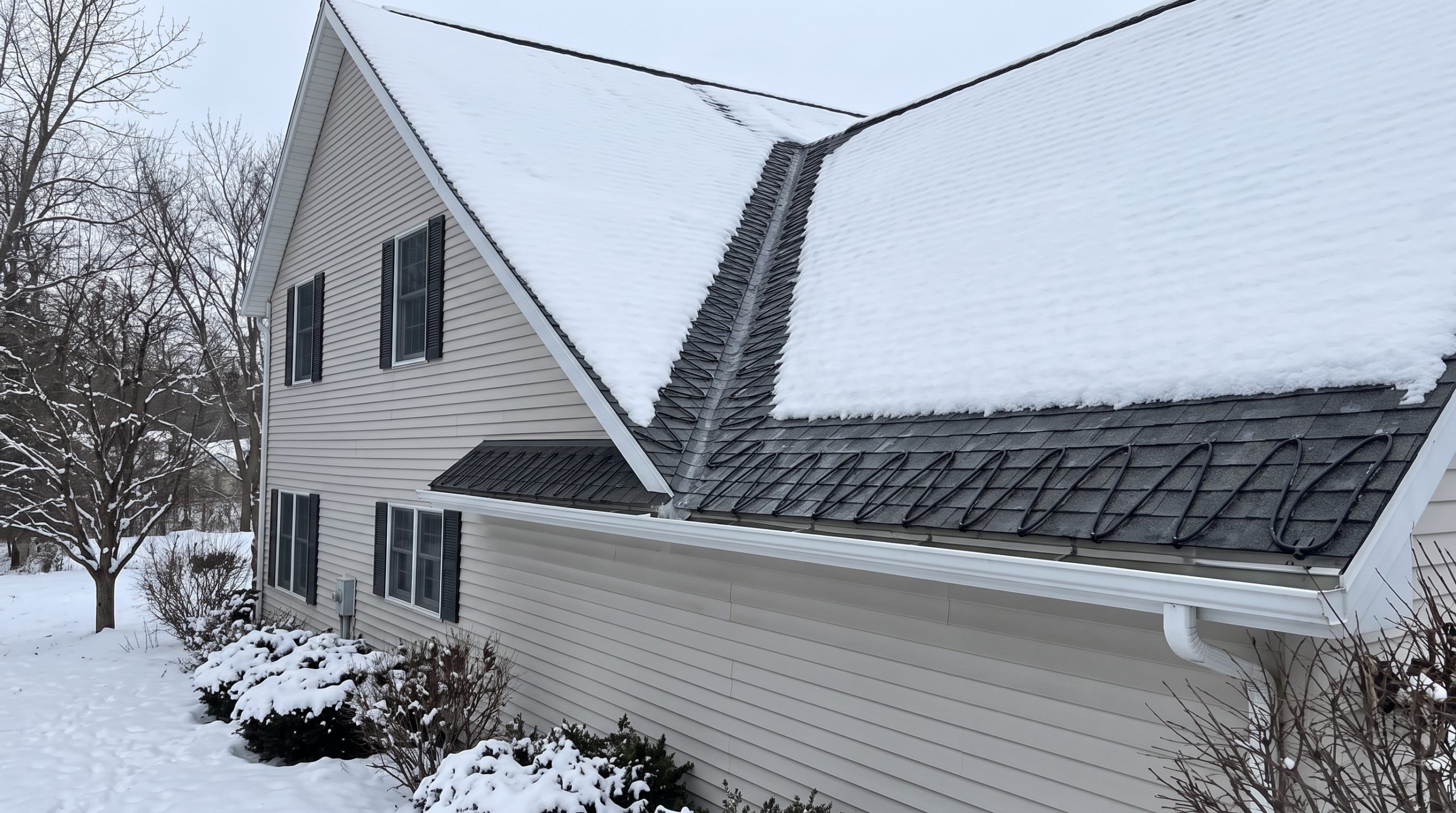
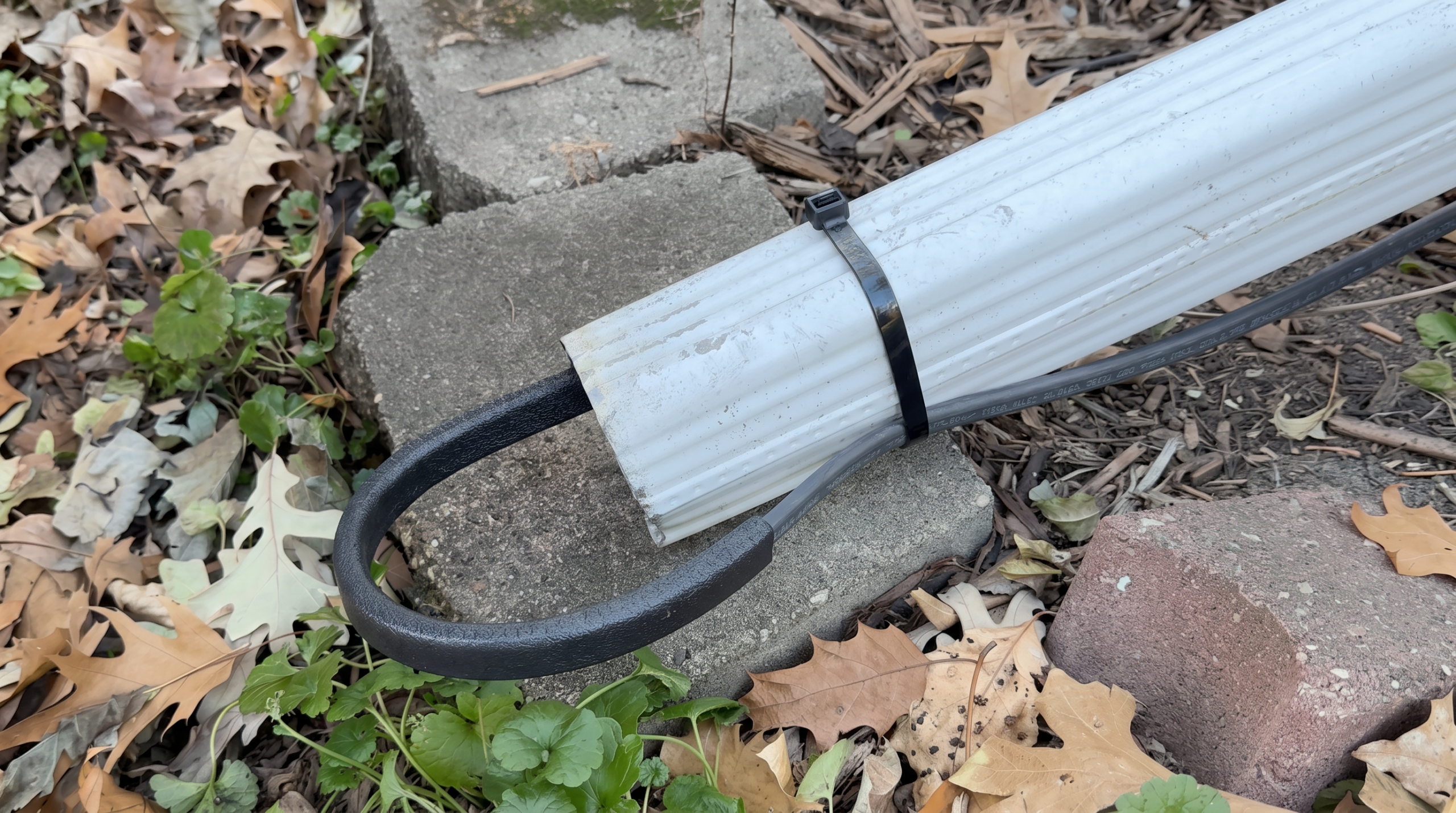
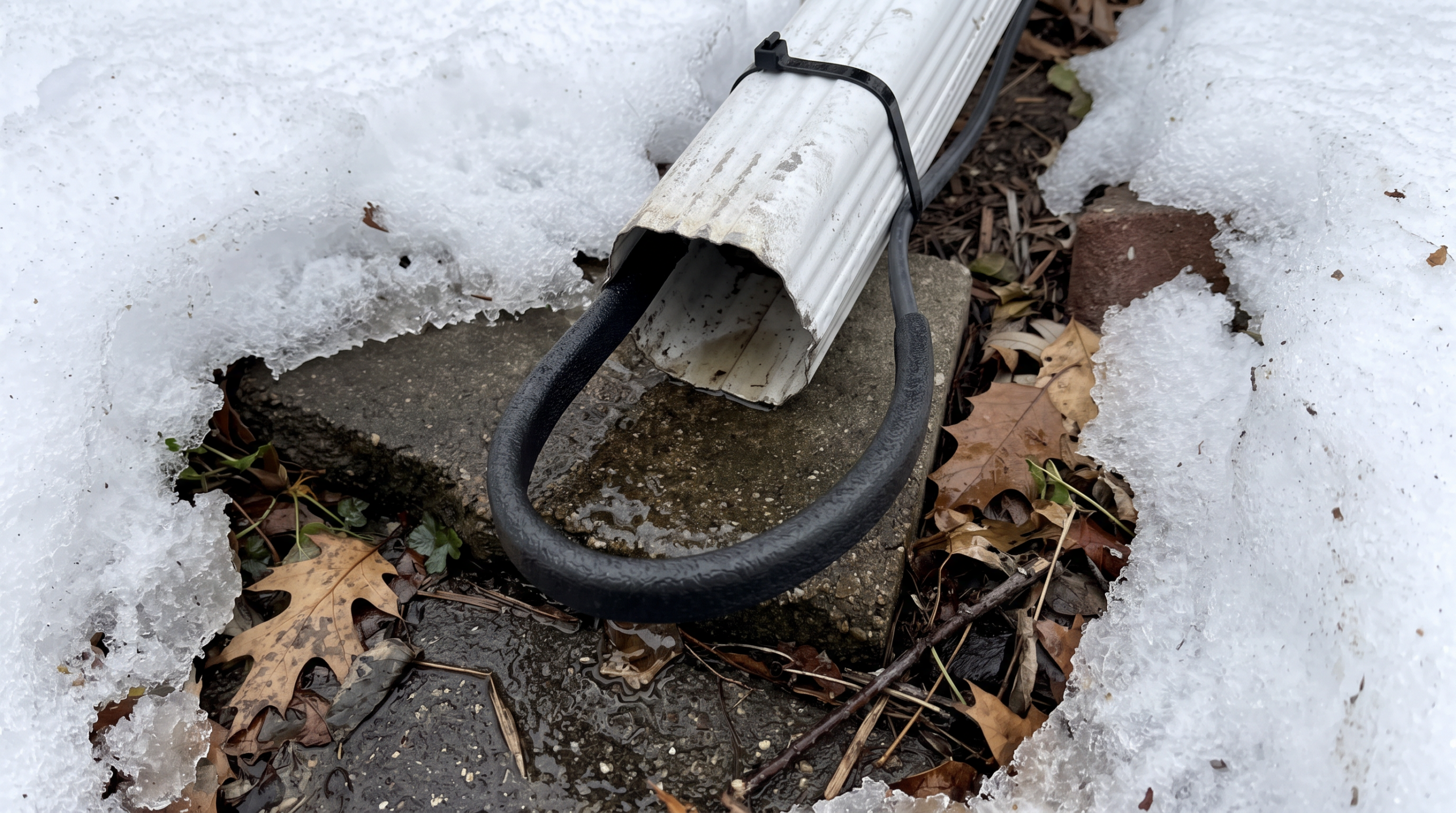
The cable has to trace a complete path: a zig-zag at the eave deep enough to cover the cold overhang, down through the valleys, along the gutter trough and all the way down the downspout to daylight. A zig-zag that stops short of the heated wall line, or a gutter run with no downspout trace, produces a channel that dead-ends into ice.
Systems get a dedicated GFCI-protected circuit, and controls run on a combination thermostat and moisture sensor so the system runs when it matters and not through a dry January cold snap.
Sizing the eave zig-zag to the cold overhang
The zig-zag has to extend far enough up the roof to cover the part of the deck that sits past the heated wall line, because that is the part that stays below freezing.
Measured from inside the attic rather than guessed from the ground. On a house in St. Charles with a deep overhang or a cantilever that distance is often further up than people expect.
Self-regulating versus constant wattage
Self-regulating cable varies its output along its own length with the temperature of what it is touching: colder sections draw more, warmer sections throttle back. It can be cut to length on site, it tolerates being overlapped in a gutter, and it cannot cook itself into failure the way constant-wattage cable can.
Constant wattage is cheaper per foot and that is the whole of its case. On a roof in St. Charles that sees real freeze-thaw cycling, self-regulating is the one worth installing.
What you get in St. Charles
- GFCI-protected circuitDedicated circuit and proper terminations, not an extension cord
- Smart controlsThermostat and moisture sensing so it runs on the conditions that make ice
- Self-regulating cableOutput varies along the run; safe to overlap, cut to length on site
| Documentation | Dated before and after photos, written scope in Xactimate line items |
|---|---|
| Local ice-barrier practice | Eave membrane on new work, often absent |
| Service | Heated Roof & Gutter Cables in St. Charles, IL |
| Removal method | Low-pressure steam only. No chipping, salt or pressure washing. |
| Typical scope | Steam, 4-8 crew hours typical |
| Pricing model | Billed by the crew hour, rate quoted before dispatch |
| Coverage area | St. Charles and Kane County |
Neighborhoods and Towns We Reach From St. Charles
Crews working St. Charles cover the adjoining communities on the same route — Saint Charles, Geneva, Wayne, Wasco and South Elgin — so a storm week usually means one truck handling several addresses in Kane County rather than separate trips.
Nearest hub towns with their own heat cables pages: Batavia, Elgin, Bartlett, Carol Stream, Streamwood, Wheaton.
When a storm hits Kane County, crews are dispatched by severity rather than by call order — water already inside the house goes first.
Most jobs do not stop at one service. Heat Cables in St. Charles often runs alongside ice dam removal in St. Charles, and both get written into one scope rather than billed as separate visits.
Active leak right now? Our 24/7 St. Charles steam ice dam removal crews are dispatched first during a freeze event. Call (888) 561-9664.