


The Batavia Problem Is the Thermometer, Not the Snowfall
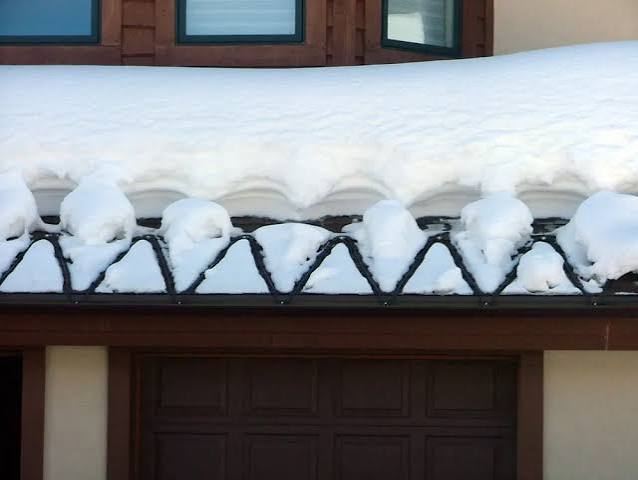
Three inches of snow and a week of days above freezing and nights below it will build ice on a Kane County eave just as reliably as a foot of snow further north.

That is the part homeowners miss. Total snowfall here is modest compared with the northern belt, so roofs in Kane County are often built and insulated as though ice is not a concern. Then a cycling week in January finds every weak eave at once.
Ice-barrier practice in Kane County
Ice-barrier membrane at the eaves is required on new work under the residential code Illinois follows, but on a roof built before that it is frequently absent — and this is the region where it is most often skipped.
The Batavia Dispatch Process, Step by Step
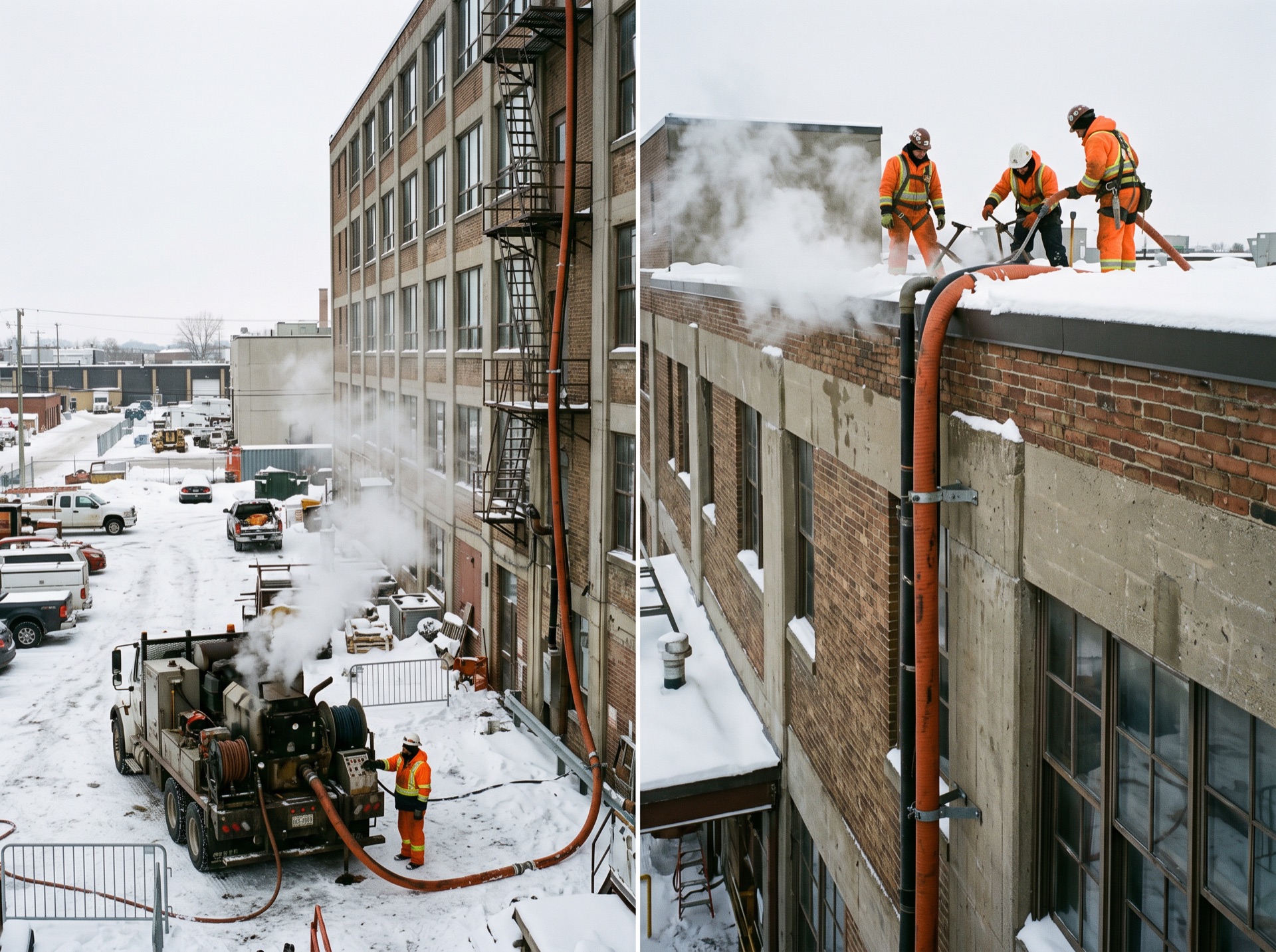
Nothing gets touched until the roof has been walked and photographed. The crew finds every dam, locates where water is getting in, shows you, and gives you the crew-hour rate and a time estimate before the equipment comes off the truck.
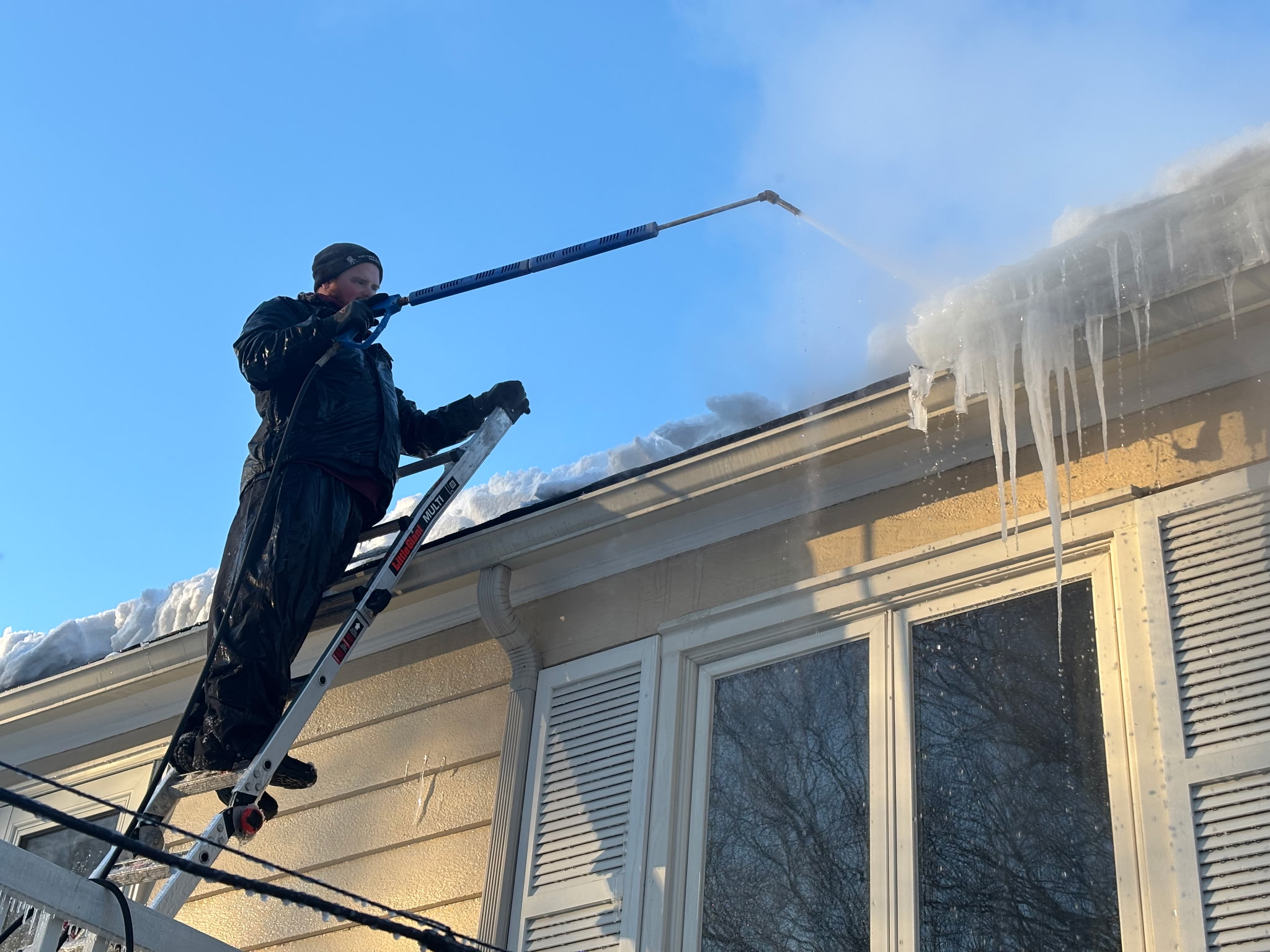
Removal then works from the worst point outward, so water starts draining early rather than at the end. Gutters and downspouts frozen solid get steamed through in the same visit — leaving them means the eave dams again within days.
Dormers, valleys and dead spots
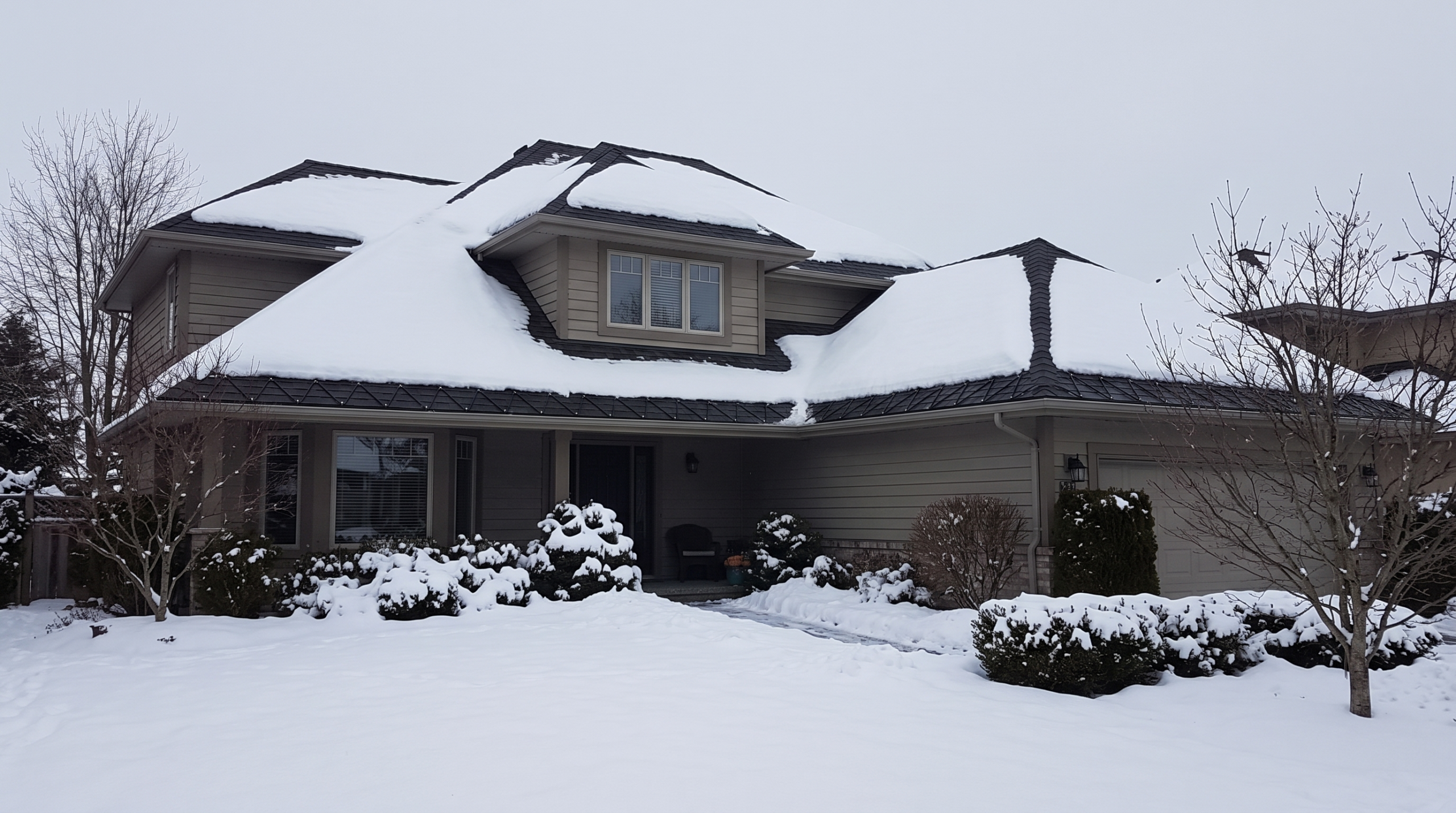
Ice does not distribute evenly. It concentrates where two roof planes meet, behind dormers, in dead valleys that drain nowhere, and along the north face that never sees sun. Those pockets hold water deepest and leak first.
A crew working a roof in Batavia clears the full eave line and then goes back through the valleys and dormer pockets specifically, because clearing the easy straight run and calling it done is how a roof leaks again a week later.
What happens after the ice is off
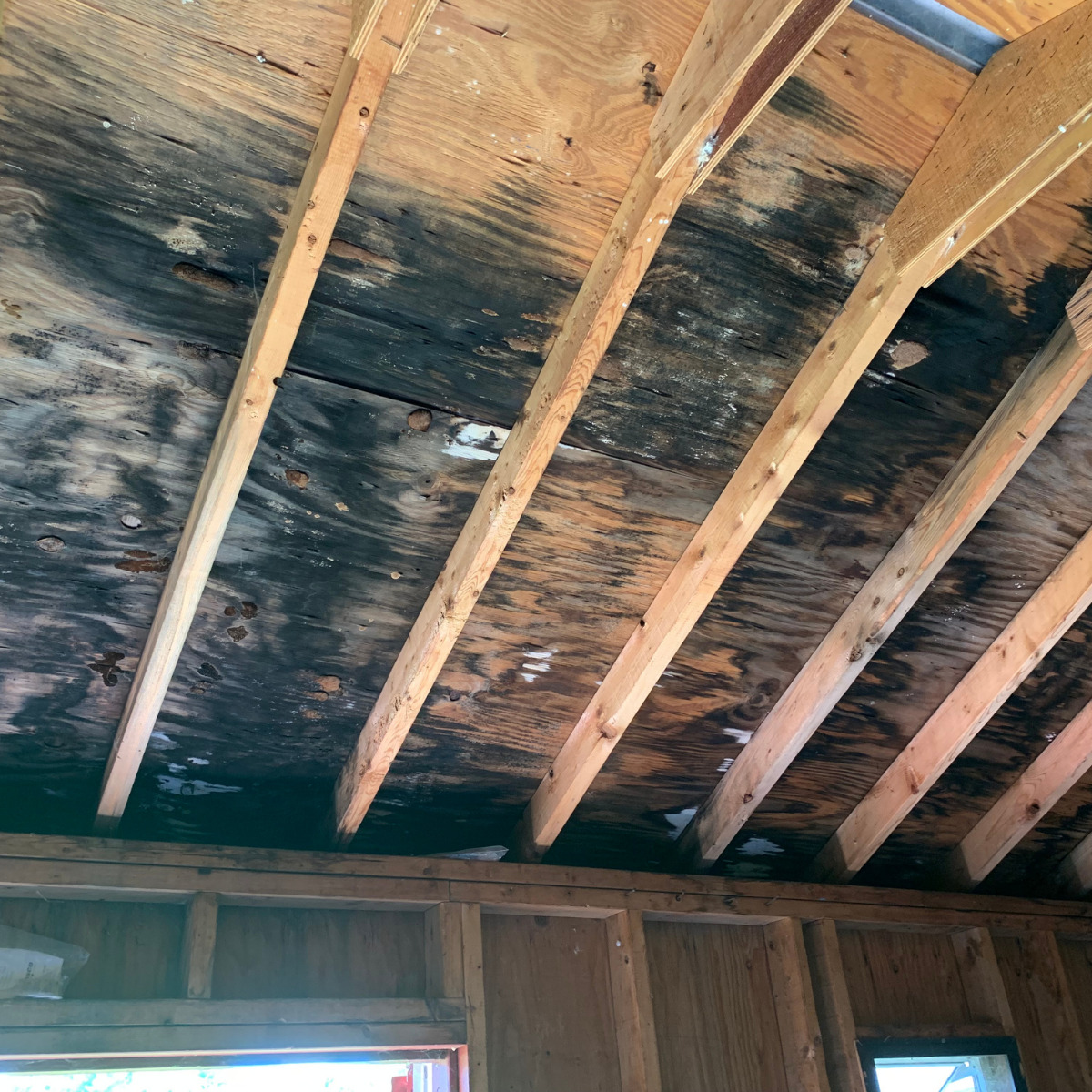
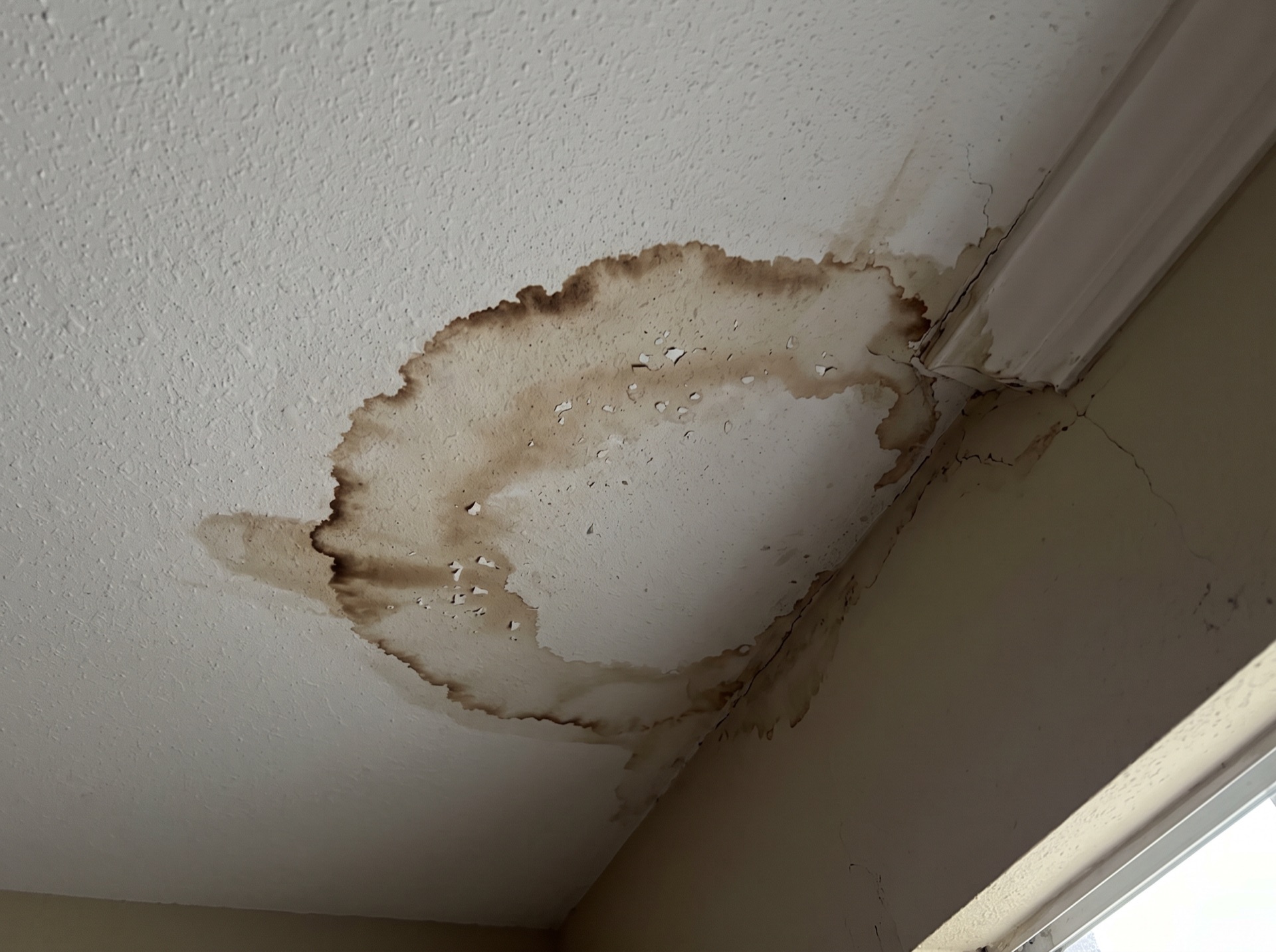
Once the eave is clear and water is draining, the crew walks the interior with you where there is visible damage and says plainly whether it needs drying. Wet insulation and a damp ceiling cavity do not resolve themselves in a cold Batavia February.
If it does, that is a separate scope and it gets written separately — nobody is upsold a dryout on the strength of one damp patch.
Steep, high and awkward Batavia roofs
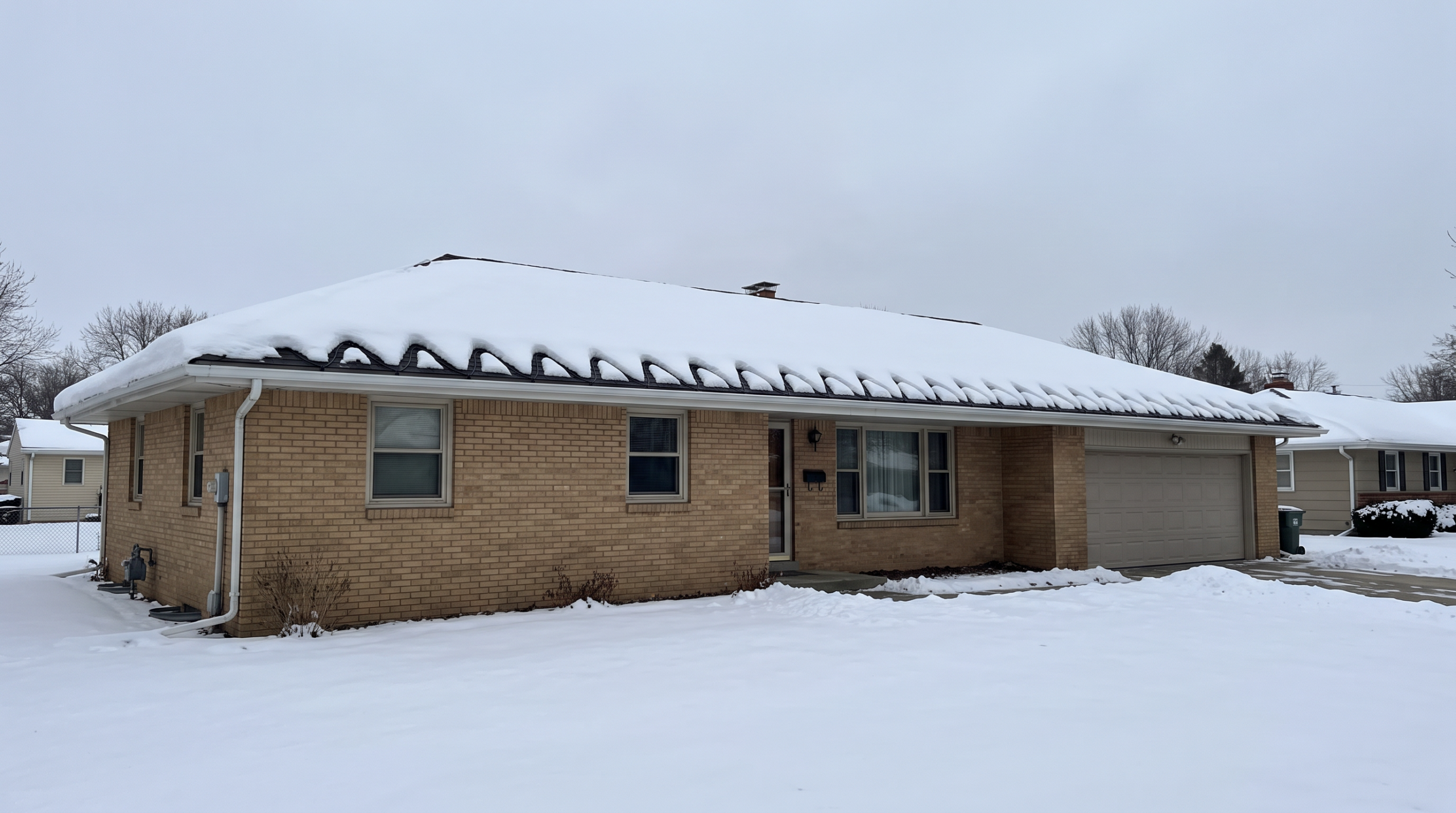
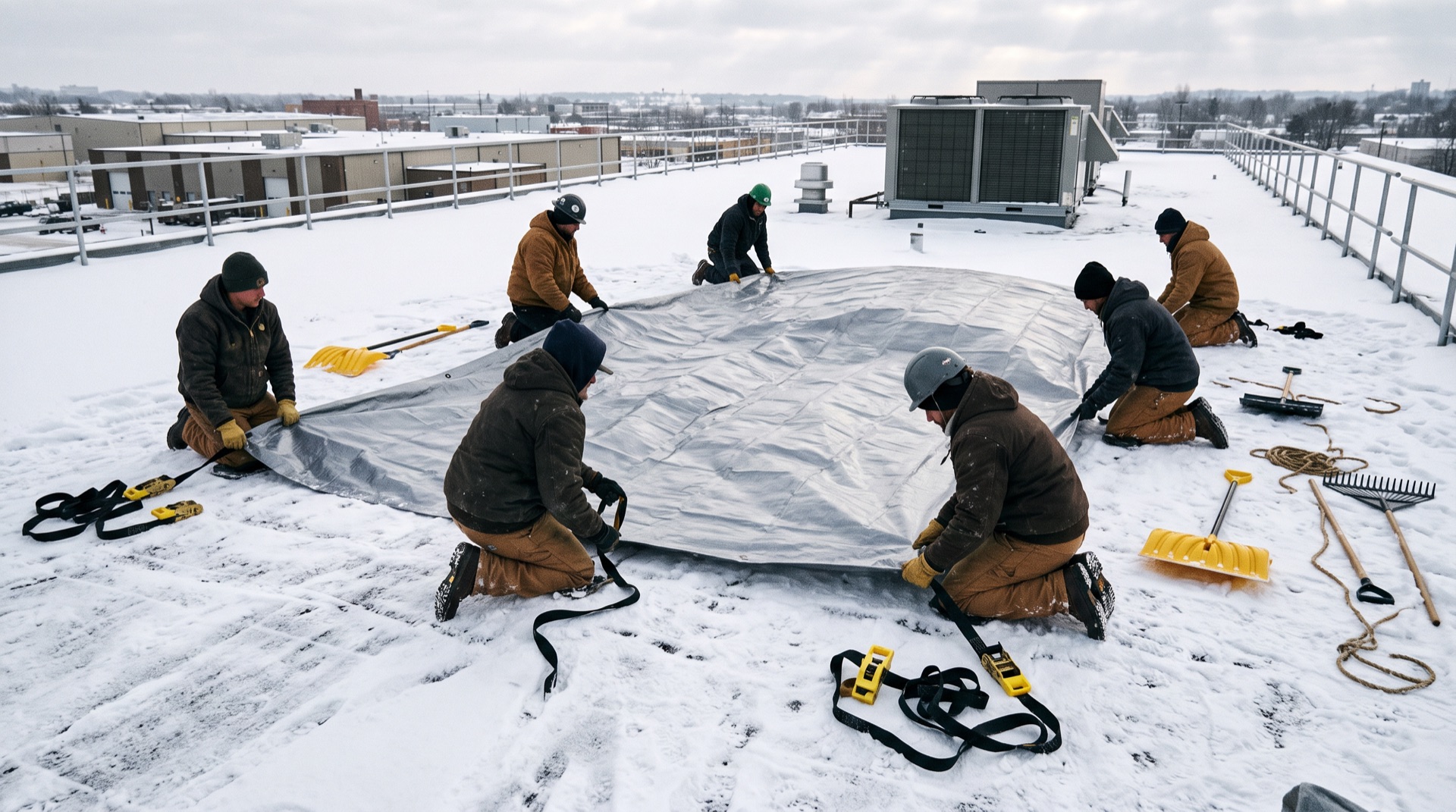
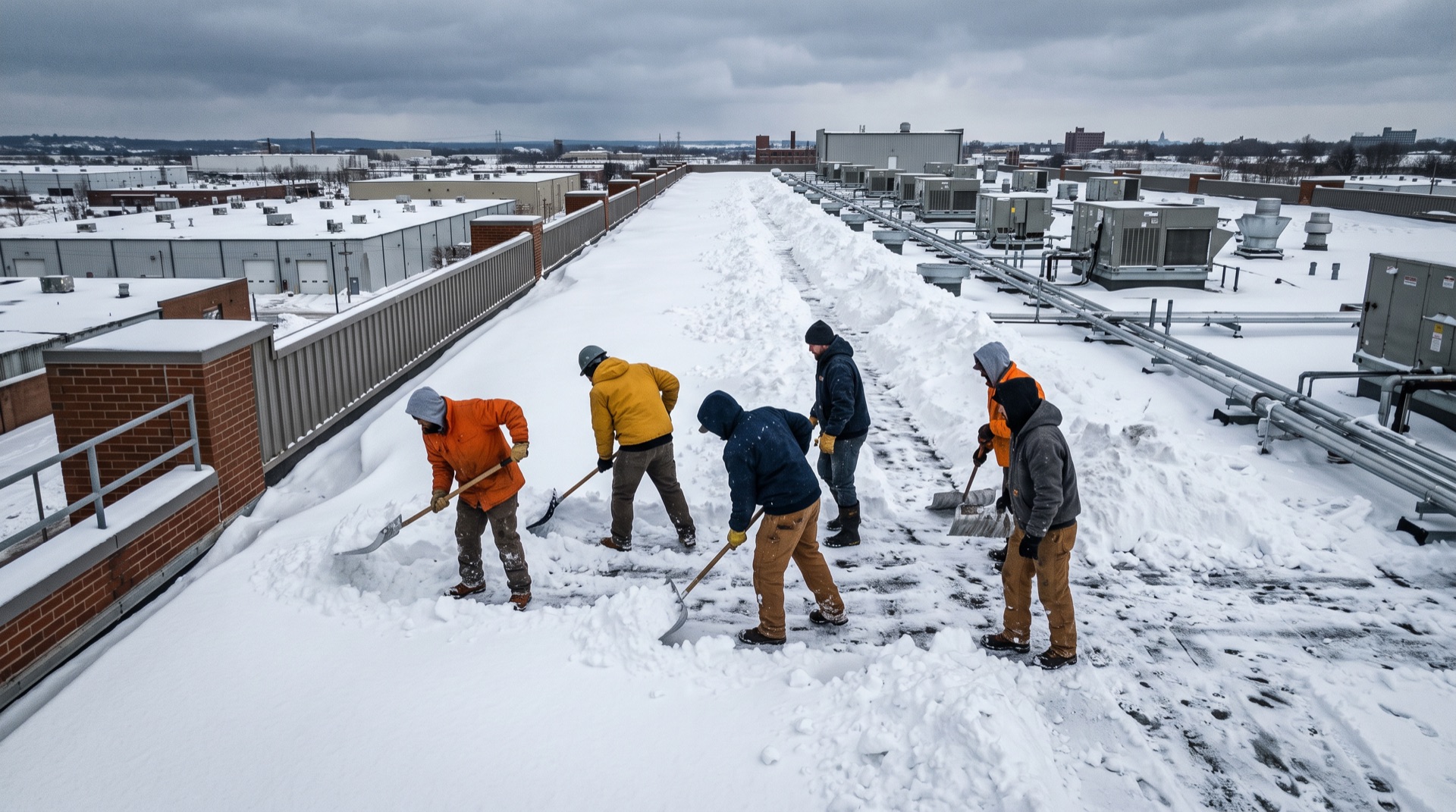
Pitch and height change the job more than ice thickness does. A walkable ranch eave is a ladder and a lance. A three-story roof with a steep pitch means anchors, rope, staging and two people where one would otherwise do.
Crews quote on that honestly. If a property in Batavia needs a longer setup, it is said on the phone rather than discovered at the end of the invoice.
| Primary climate stressor | Repeated thaw-freeze cycling |
|---|---|
| Dispatch window | Same day to 24 hours |
| Pricing model | Billed by the crew hour, rate quoted before dispatch |
| Documentation | Dated before and after photos, written scope in Xactimate line items |
| Coverage area | Batavia and Kane County |
| Removal method | Low-pressure steam only. No chipping, salt or pressure washing. |
| Service | Ice dam removal in Batavia, IL |
Neighborhoods and Towns We Reach From Batavia
Crews working Batavia cover the adjoining communities on the same route — Mooseheart, Geneva, North Aurora, Saint Charles and Lafox — so a storm week usually means one truck handling several addresses in Kane County rather than separate trips.
Nearest hub towns with their own crew pages: St. Charles, Aurora, Naperville, Wheaton, Carol Stream, Oswego.
Coverage runs across Batavia and the nearby towns all winter, and capacity is surged into whichever Illinois market the storm actually hits.
Water coming in right now in Batavia? Call (888) 561-9664. Active interior leaks go to the front of the schedule.