Skip to content
Louisville, CO
Flat Roof & Parapet · Boulder County

Commercial Ice Dam Removal in Louisville, CO — Mountain Storm Response

Ice Dam Now provides commercial ice dam removal in Louisville, CO and the surrounding Boulder County, using low-pressure steam only — never chipping, salt or pressure washing. Crews are licensed, insured and harness-certified, dispatch same day for active interior leaks, and bill by the crew hour at a rate quoted before dispatch. Dated photo documentation is supplied for insurance claims.

Flow confirmed below — An open drain throat over a frozen leader is not an open drain
Plant worked around — HVAC curbs, conduit, racking and railing avoided, not cleared over
Documentation for the board — Condition report and photo record with every invoice
Overnight windows available — Work scheduled outside occupancy where access demands it

Get Ice Dam Help Louisville

A few quick questions, then pick a time. If water is coming in, call instead.

What is the zip code of the home?

Roof leaking right now? Call (888) 561-9664 — that is faster than any form.
Water coming through the ceiling?Every hour an ice dam sits there, more water gets under the shingles.Call (888) 561-9664
Same Day
For Water Already Inside
Steam
Safe On Every Covering
Boulder
County Coverage
Insured
Harness-Certified On Every Roof
Written
Scope Before Work Starts

If you are in Louisville watching icicles grow along the gutter line, what you are really watching is water that no longer has anywhere to drain. As part of our complete Louisville winter roof services, crews handle commercial ice dam removal across Boulder County.

Elevation, Aspect and Ice: The Boulder County Pattern

At Louisville's elevation the air can stay below freezing all day while direct sun still melts the top of the snowpack. That meltwater runs down under the pack, reaches a shaded eave, and refreezes — on a day the thermometer never rose above freezing.

Diagram showing how ice dams form on a roof from heat loss and snow melt
Heat escaping into the attic melts roof snow; the meltwater refreezes at the cold eave and the dam grows a layer every cycle.

Aspect decides which eaves suffer. A sunny plane sheds water across a roof in Louisville to a shaded eave that has not been above freezing for weeks, and that is where the ice builds into a wall.

Ice-barrier practice in Boulder County

Snow retention above doors, walkways and parking is a requirement in most Boulder County jurisdictions for good reason: a release off a metal mountain roof is a serious event, not an inconvenience.

Commercial Ice Dam Removal in Louisville: How The Work Runs

The pitched sections nobody plans for

Very few commercial buildings are flat all the way across. Entrance canopies, mansard faces, dormers over older frontages and the sloped transitions between roof levels all shed onto places where people walk.

Those sections behave like a residential roof and get worked like one - steam at the eave, snow guards noted where they are missing, and the pavement below cordoned while material is coming down.

Insulation above the deck changes the melt pattern

A modern commercial assembly puts most of its insulation above the deck, so very little building heat reaches the membrane. That is good for energy and it means the snow that lands mostly stays - the roof does not self-clear the way an under-insulated one does.

Where dams do form on those roofs it is almost always at a thermal bridge: a parapet, a curb, a drain bowl or a line of fasteners. Those are the spots crews work first.

Access control, hatches and escorts

Getting onto a commercial roof is a procedure: keys or fobs, a hatch that may be padlocked, a ladder in a locked plant room, sometimes a site induction and an escort for the duration.

Sorting that out with the property manager in advance is the difference between a crew starting at seven and a crew waiting in the parking lot until nine. Where a tenant controls the only access, that conversation happens before the dispatch rather than on the roof.

Working around rooftop plant

HVAC curbs, exhaust fans, conduit, gas lines, solar racking and railing are all obstacles and all drift traps. The snow behind a large unit is usually the deepest on the roof and the ice under it the thickest.

Crews work around and under them rather than over, and anything running stays running.

Membrane-safe means something specific

EPDM, TPO and modified bitumen all tolerate steam at low pressure and none of them tolerate chipping, scraping or a pressure washer. Crews steam the drains and scuppers open first to restore flow, then work the ponded ice, and they stay off seams and flashing details with the lance.

Mechanical units, conduit runs, solar racking and safety railing all get worked around rather than over.
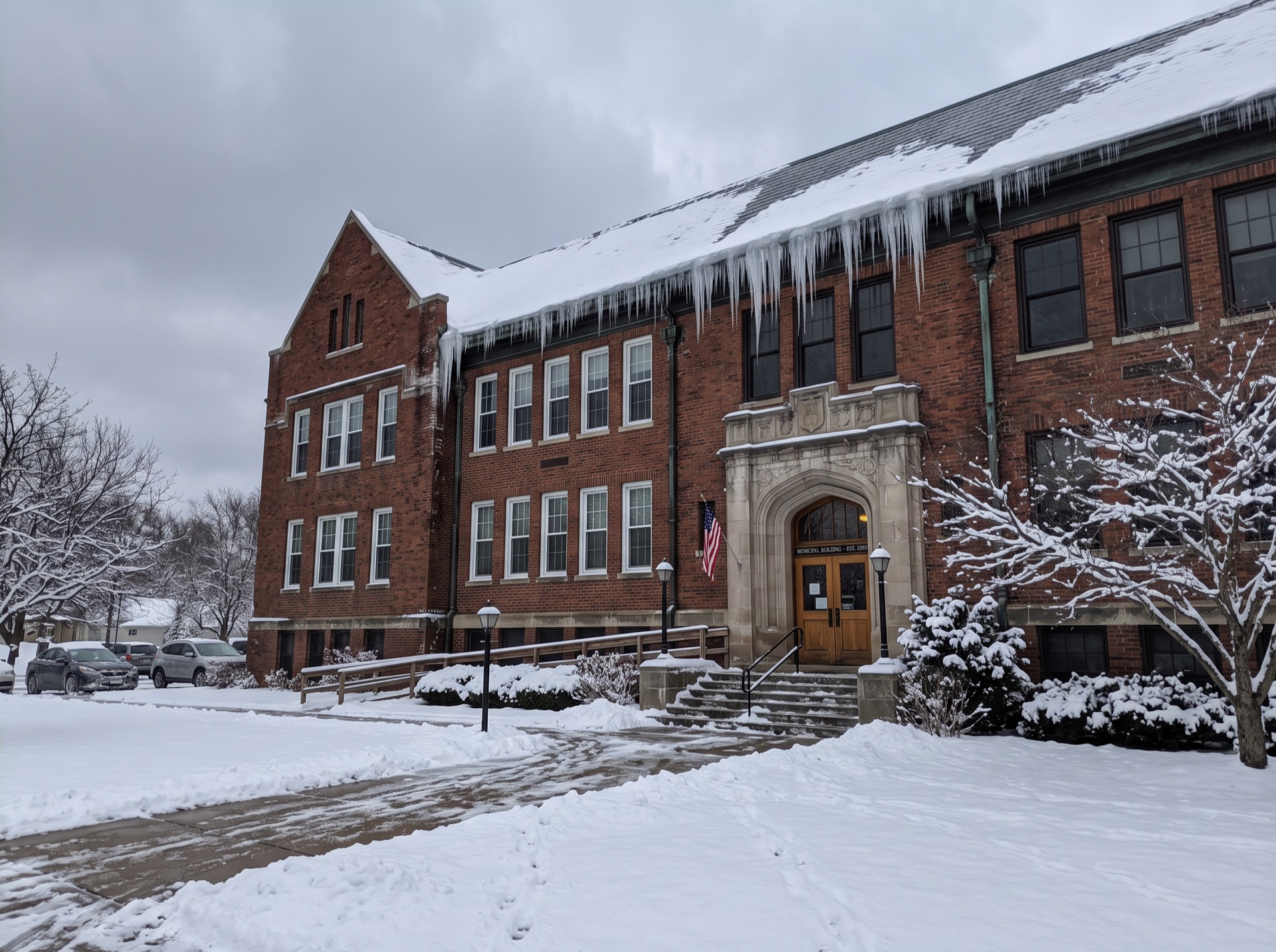
Large icicles hanging from brick municipal building roofline covered in snow
Massive icicles form along the roofline of a historic brick municipal building after a heavy winter snowfall.

What you get in Louisville

  • Flow confirmed belowAn open drain throat over a frozen leader is not an open drain
  • Drains and scuppers firstFlow restored before the ponded ice is worked
  • Overnight windows availableWork scheduled outside occupancy where access demands it
Commercial Ice Dam Removal in Louisville, CO — specification
Service specification for Louisville, CO
Coverage areaLouisville and Boulder County
Pricing modelBilled by the crew hour, rate quoted before dispatch
Removal methodLow-pressure steam only. No chipping, salt or pressure washing.
DocumentationDated before and after photos, written scope in Xactimate line items
Primary climate stressorSolar melt on deep pack, shaded eaves
Local ice-barrier practiceExtended membrane plus snow retention
ServiceCommercial Ice Dam Removal in Louisville, CO

Neighborhoods and Towns We Reach From Louisville

Crews working Louisville cover the adjoining communities on the same route — Eldorado Springs, Niwot, Eastlake, Pinecliffe and Dacono — so a storm week usually means one truck handling several addresses in Boulder County rather than separate trips.

Nearest hub towns with their own commercial ice dams pages: Lafayette, Broomfield, Boulder, Erie, Westminster, Northglenn.

Coverage runs across Louisville and the nearby towns all winter, and capacity is surged into whichever Colorado market the storm actually hits.

Most jobs do not stop at one service. Commercial Ice Dams in Louisville often runs alongside commercial roof snow removal in Louisville, and both get written into one scope rather than billed as separate visits.

Active leak right now? Our 24/7 Louisville steam ice dam removal crews are dispatched first during a freeze event. Call (888) 561-9664.
Conditions We Work In

Commercial Ice Dam Removal In Practice

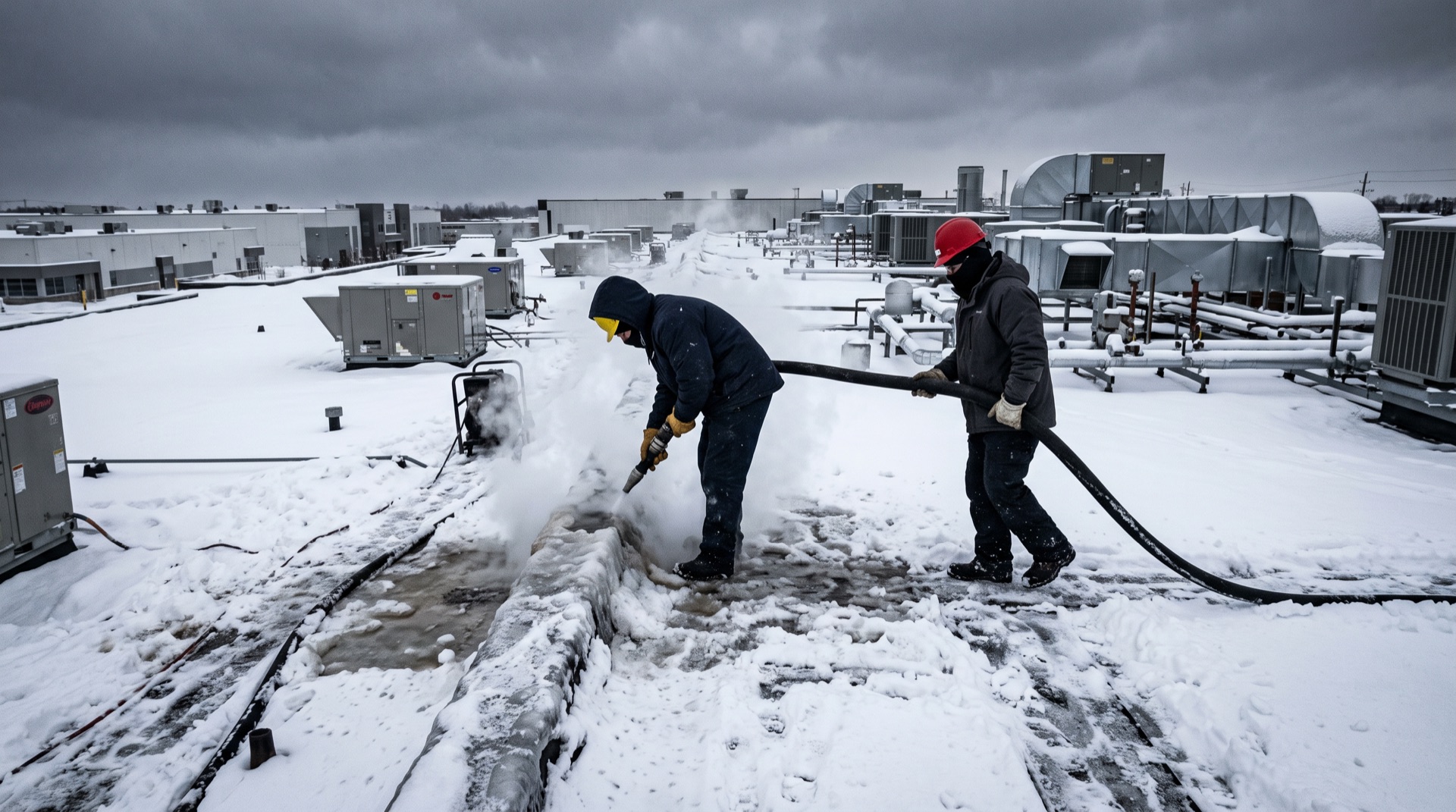
Conditions crews work in across Boulder County. Every job is photographed before and after.

Two workers using steam equipment to clear ice from a snow-covered commercial flat roof
A two-man crew uses steam lancing equipment to remove heavy ice buildup from a large commercial flat roof.
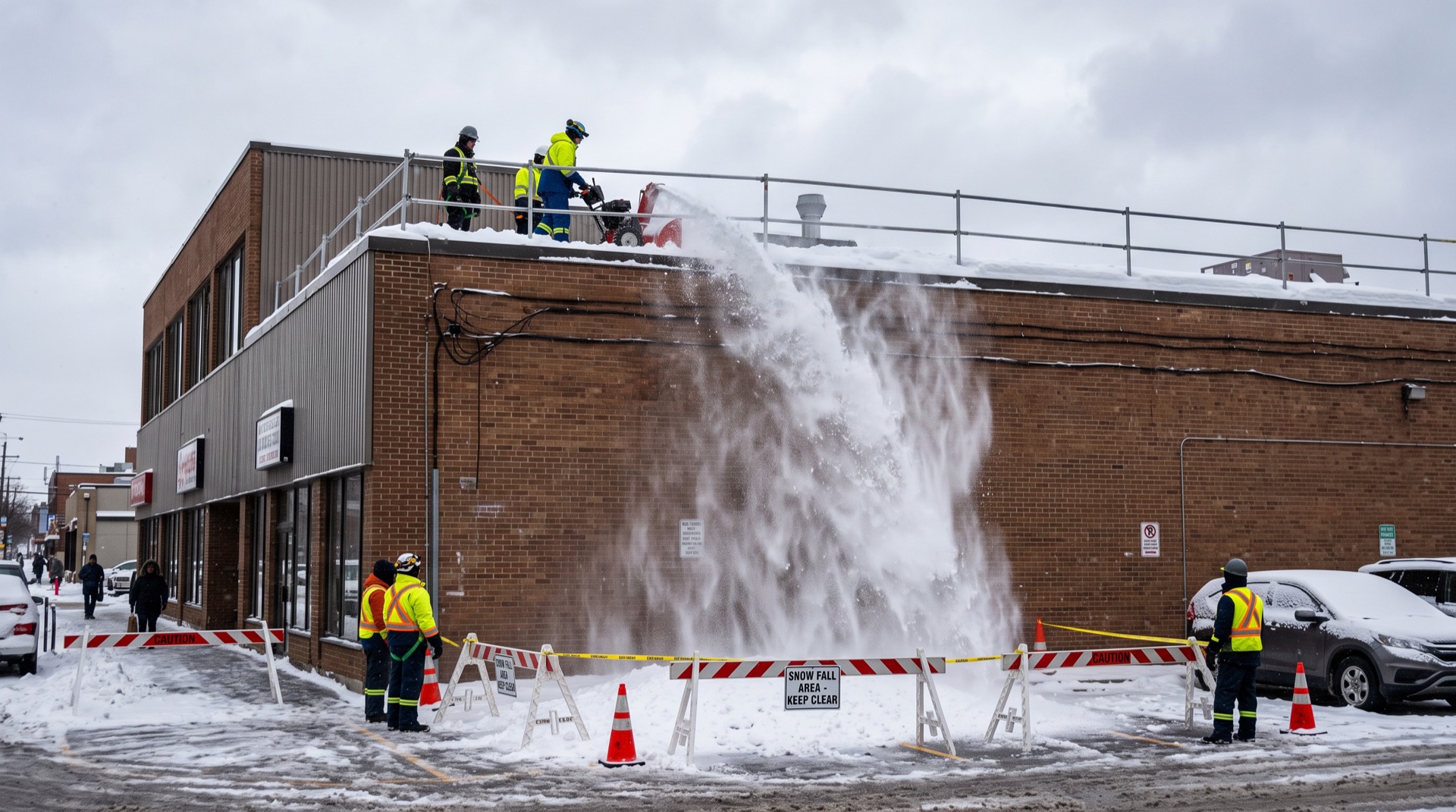
Workers use snow blower on commercial rooftop discharging snow over parapet wall onto blocked sidewalk
A rooftop crew uses a snow blower to clear a commercial building roof, discharging snow to the cordoned-off street below.
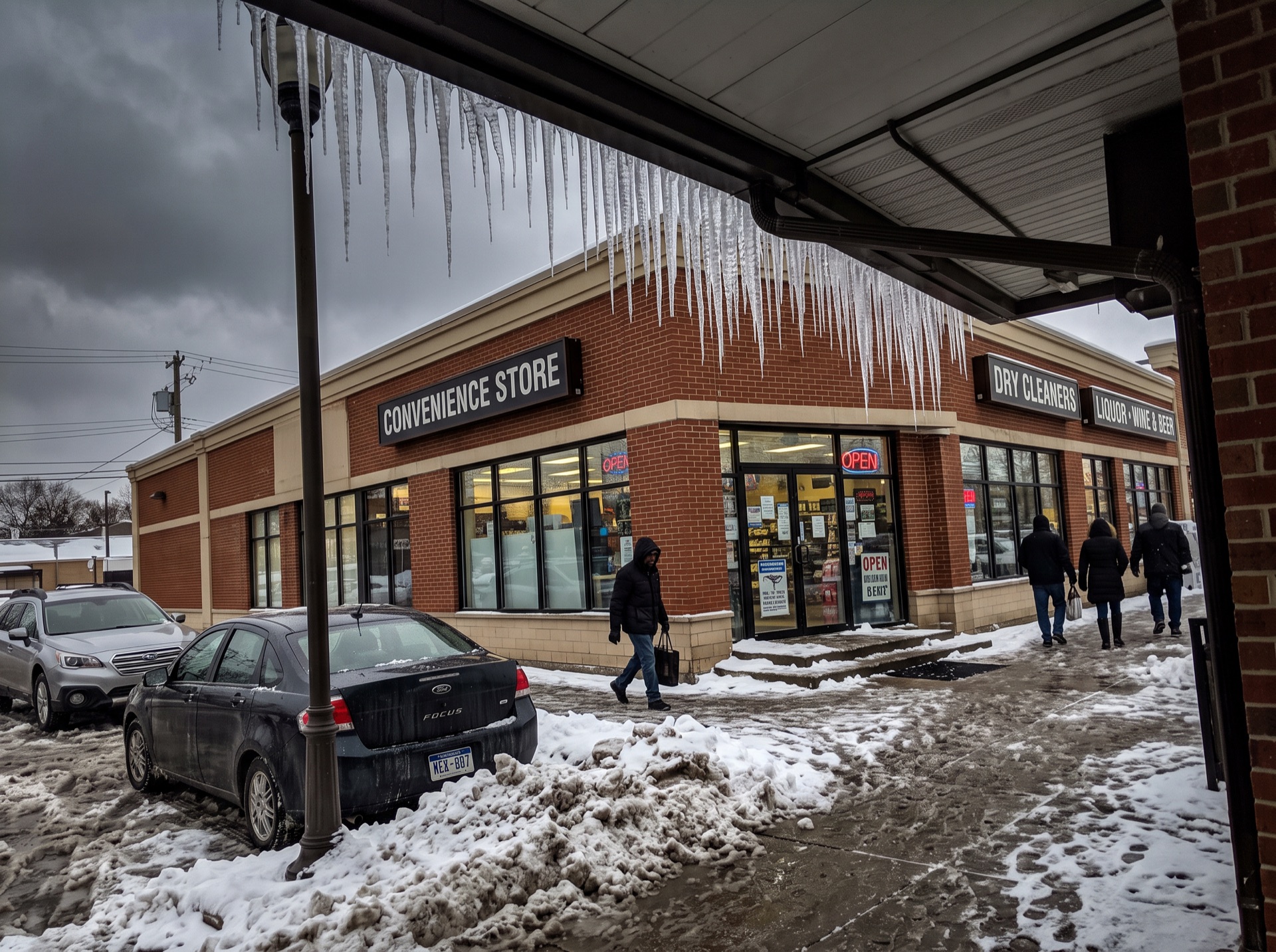
Large icicles hanging from strip mall canopy over snowy parking lot in winter
Dramatic icicles line the canopy of a brick strip mall during a cold winter day.
FAQ

Louisville Questions We Actually Get Asked

It is billed by the crew hour, and the rate plus a realistic time estimate are quoted on the phone before anyone is dispatched.

  • Scope drives the hours: length and thickness of the ice, roof pitch and height, and whether the gutters are frozen solid.
  • Access matters too — a three-story Louisville roof takes longer to set up on than a ranch.
  • The invoice matches the quote. There are no surprise add-ons written on the tailgate.

Same day or next morning for most Louisville calls, with active interior leaks moved to the front of the schedule.

  • During a freeze event crews run from first light until dark across Boulder County.
  • The same route covers Eldorado Springs, Niwot, Eastlake, so several addresses are usually handled in one run.
  • Call rather than using the form if water is coming in — the phone is always faster.

More than it looks from the ground - a foot-deep dam across a thirty-foot eave is a few thousand pounds.

  • Depth is measured at the eave rather than estimated from the driveway.
  • The gutter trough underneath is usually frozen solid too and is part of the same mass.
  • That weight is one of the reasons chipping at it from a ladder goes badly.

Clear a path to the affected side, move vehicles off the driveway and unlock any side gate.

  • Put something under an active interior drip and move what you can out of the way.
  • Photograph the interior damage yourself as well - more evidence is never a problem.
  • Do not go on the roof or up a ladder. That is the part that sends people to hospital.

Tell the crew. Chipping marks change what the roof needs and they matter for the claim.

  • Cracked shingles and punctures get photographed and reported rather than steamed over.
  • Damage caused by removal attempts is treated differently by carriers than storm damage.
  • It is extremely common and nobody is going to lecture you about it.

Yes, and crews often do. Where noise, access or tenant traffic make that difficult, work gets scheduled outside occupancy. Set the constraint on the call and the window is planned around it.

Yes. Campuses, retail strips and multi-building properties get walked together, prioritized by which deck is closest to failure, and billed under one scope rather than as separate jobs.

Nearby

Commercial Ice Dams In Towns Around Louisville

Same-Day Response

Get A Louisville Crew Out

Every freeze-thaw cycle adds another layer to the dam and pushes a little more water under the shingles. That clock is already running.

✓ Licensed & insured✓ Low-pressure steam only✓ Rate quoted up front✓ Photos for your claim
Online Quote(888) 561-9664