By the time a roof in Grand Forks has a visible ridge of ice at the eave, meltwater has already been pooling behind it for several freeze-thaw cycles. As part of our complete Grand Forks winter roof services, crews handle crane-assisted snow removal across Grand Forks County.
Grand Forks Ice Dams and the Winter That Does Not Break
Snow that falls on a roof in Grand Forks in December tends to stay there. A pack that never fully clears is a pack that keeps feeding meltwater to the same eave for months on end.

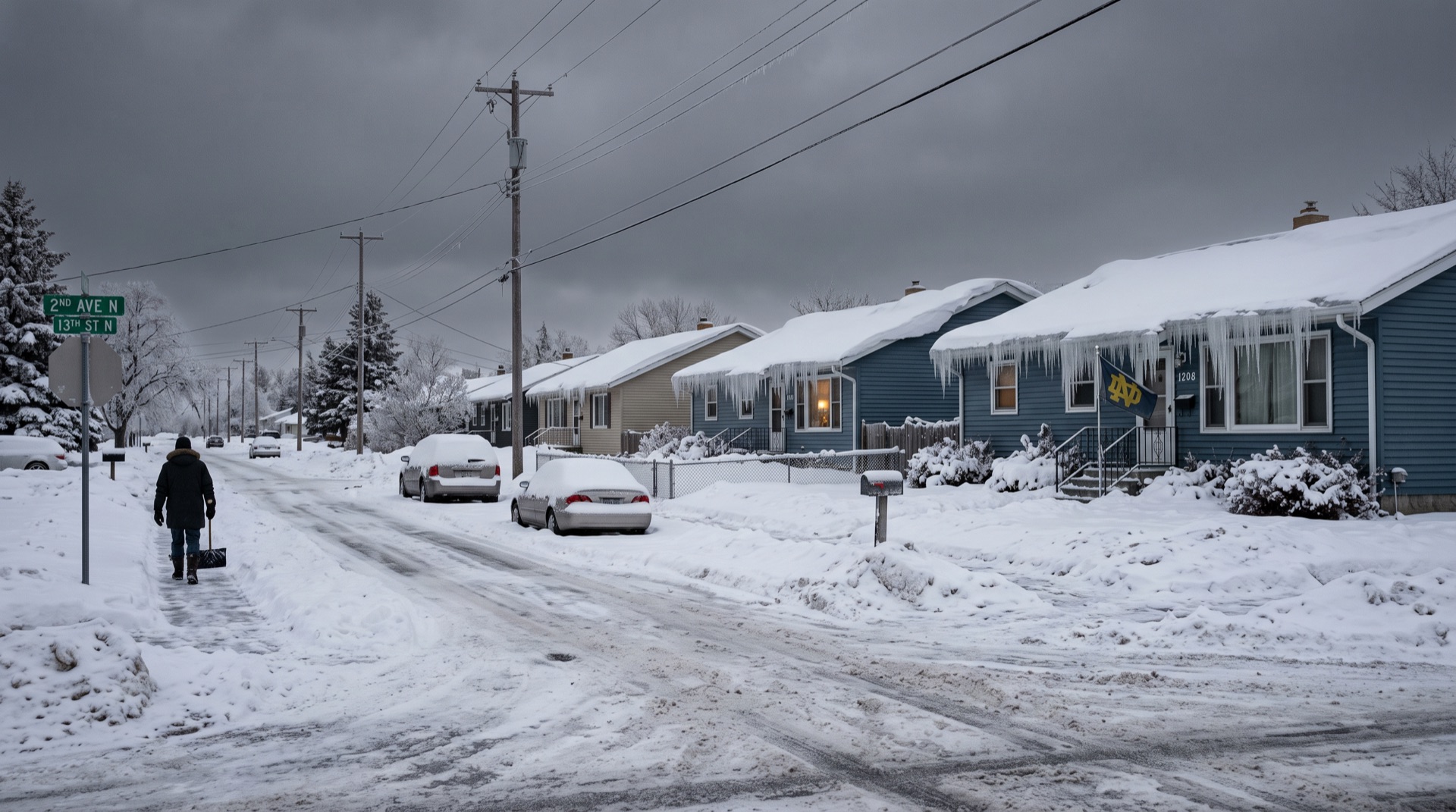
The ice that comes off a roof in Grand Forks in February is rarely one event's worth. It is a laminated record of the whole season, which is why it is thick, dense and firmly bonded to the shingle.
Ice-barrier practice in Grand Forks County
Insulation depth matters at least as much as membrane in this climate, and Grand Forks County stock built before modern attic standards tends to be short on both. One is a code question; the other is why the dam formed.
Crane-Assisted Snow Removal in Grand Forks: How The Work Runs
Why it is often the cheaper number
Per hour a crane costs more than a crew with shovels. Per roof it frequently costs less, because a pick that takes an afternoon can replace several crew-days of hand clearing. Ceiling Sagging or Bulging After Snow.
On a large Grand Forks deck the crane is routinely both the faster and the cheaper answer, and the comparison gets shown rather than asserted.
How a pick actually works
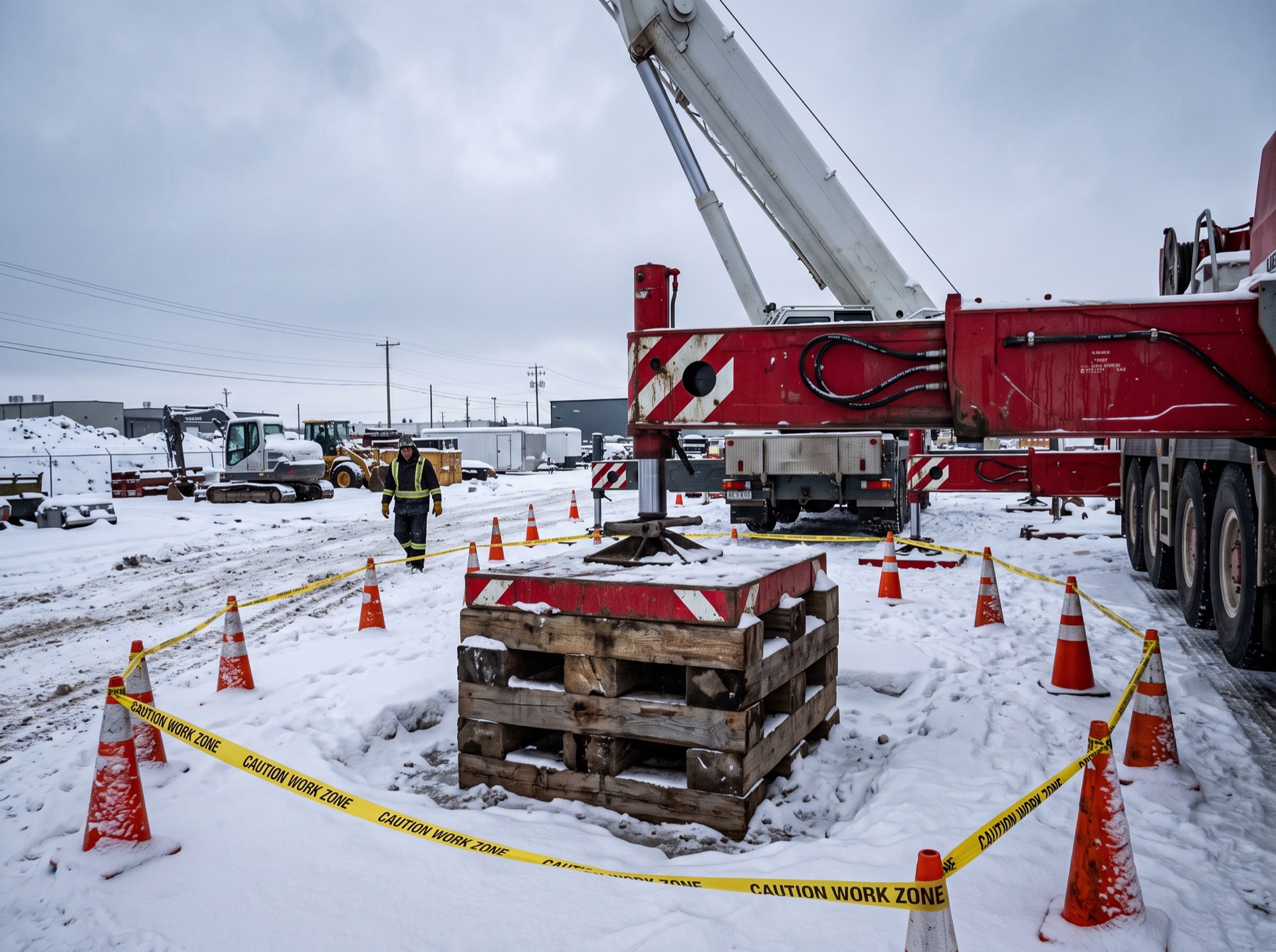
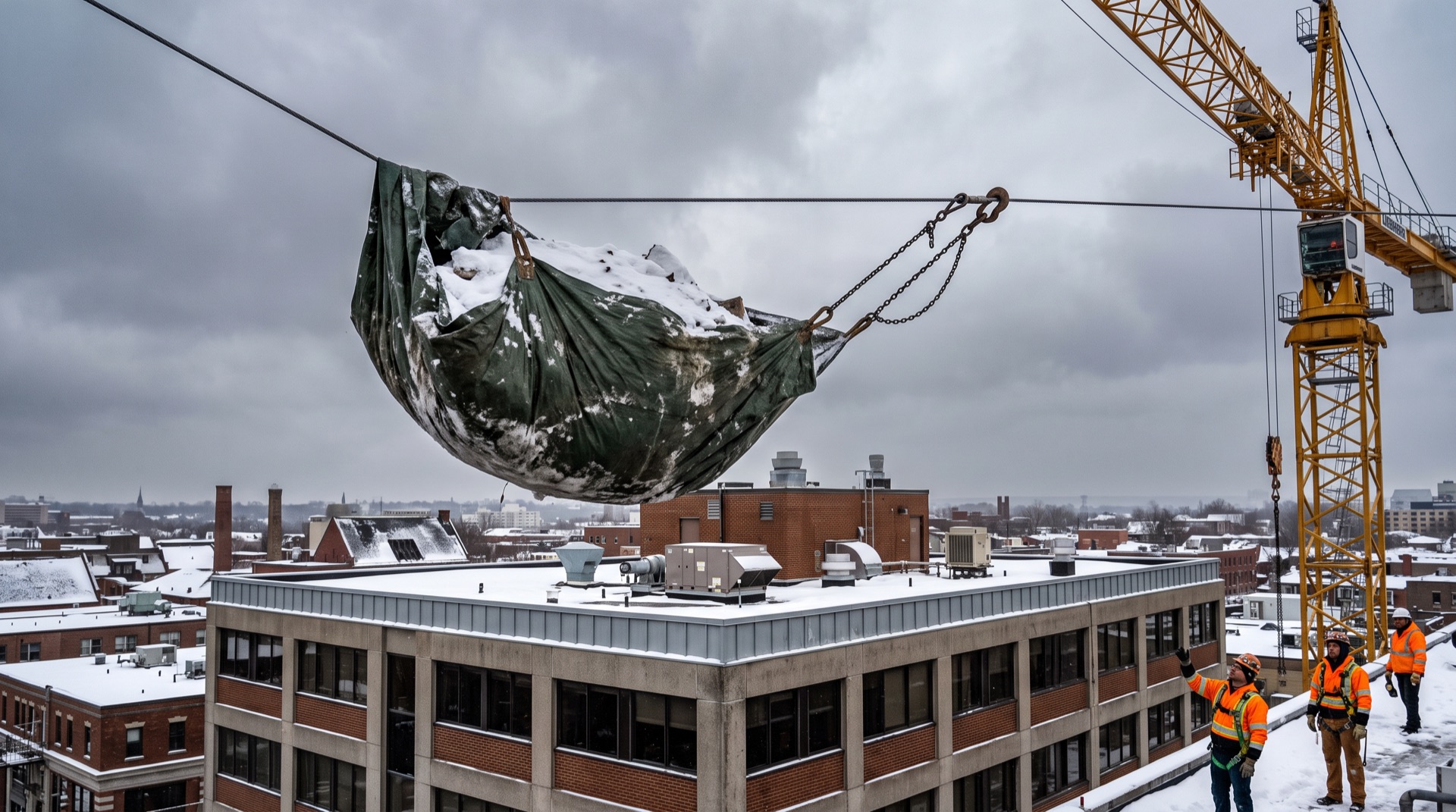
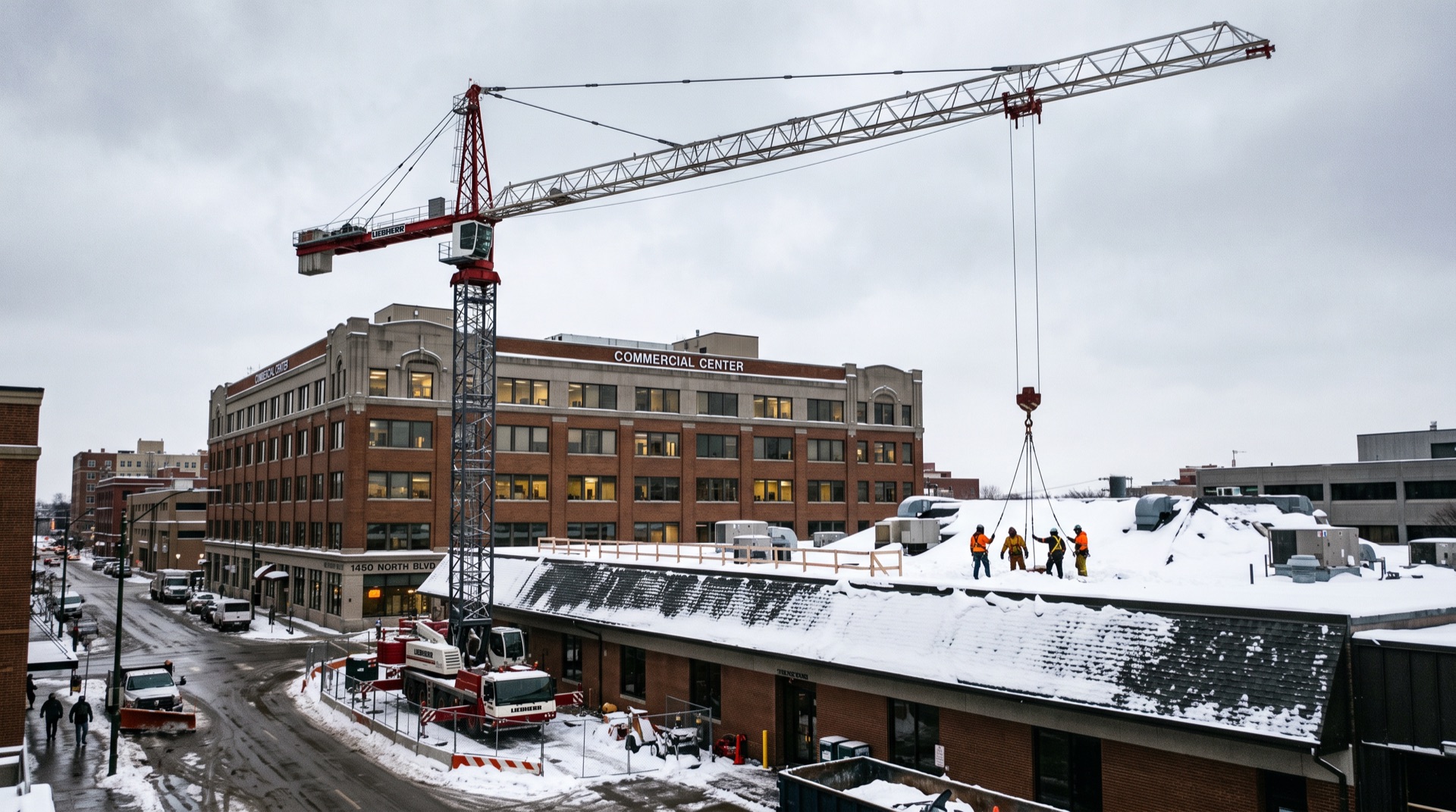
Rip-stop tarps are laid out and anchored on the deck, crews load them, and the boom lifts each loaded tarp clear and sets it down in a designated drop zone on the ground. Outrigger pads are placed on frozen ground rated for the load, and a pedestrian exclusion zone is set and marshalled for the whole operation.
It is a planned lift, not an improvisation. Site access, swing radius, overhead lines, drop zone and ground bearing all get walked before the first tarp goes down.
Documenting the load for the carrier
Depths, densities, calculated loads and dated photographs are recorded through the operation. Most carriers treat preventing an imminent structural failure as loss mitigation, which is a very different claim from one filed after a deck comes down.
That record is what supports it, and it only exists if somebody took the readings at the time.
When a crane is the right call
Multi-story homes and estates where the upper roof cannot be safely reached. Large commercial and industrial decks where the sheer tonnage makes hand clearing a multi-day job. Any roof where deflection is already visible and the load has to come off today rather than over a week.
The decision is made on numbers, not instinct. Depth, density and area give a working load figure, and that figure against the roof's design capacity is what determines whether a crane gets mobilised to a property in Grand Forks.
Wind limits and when a pick gets postponed
Every crane has a wind chart, and a tarp full of snow is about the worst possible load to put on a hook in a gust - large surface area, light enough to sail, heavy enough to hurt. The limit is lower than people expect and it is not negotiable.
A Grand Forks pick that is cancelled for wind gets rescheduled rather than argued about. The alternative is a swinging load over an occupied building.
What you get in Grand Forks
- Load calculated firstDepth, density and area against design capacity before anything mobilises
- Weights documentedDepths, densities and loads recorded for the carrier
- Permits handledPulled where the municipality requires them for a street setup
| Typical scope | Steam, 6-14 crew hours typical |
|---|---|
| Documentation | Dated before and after photos, written scope in Xactimate line items |
| Primary climate stressor | Sustained sub-freezing, long season |
| Dispatch window | Same day to 24 hours |
| Coverage area | Grand Forks and Grand Forks County |
| Removal method | Low-pressure steam only. No chipping, salt or pressure washing. |
| Local ice-barrier practice | Eave membrane required on new work |
Grand Forks Coverage and the Adjoining Communities
Crews working Grand Forks cover the adjoining communities on the same route — Thompson and Emerado — so a storm week usually means one truck handling several addresses in Grand Forks County rather than separate trips.
Nearest hub towns with their own crane snow removal pages: Fargo, West Fargo, Jamestown, Wahpeton, Bismarck, Mandan.
Coverage runs across Grand Forks and the nearby towns all winter, and capacity is surged into whichever North Dakota market the storm actually hits.
Most jobs do not stop at one service. Crane Snow Removal in Grand Forks often runs alongside commercial roof snow removal in Grand Forks, and both get written into one scope rather than billed as separate visits.
Active leak right now? Our 24/7 Grand Forks steam ice dam removal crews are dispatched first during a freeze event. Call (888) 561-9664.