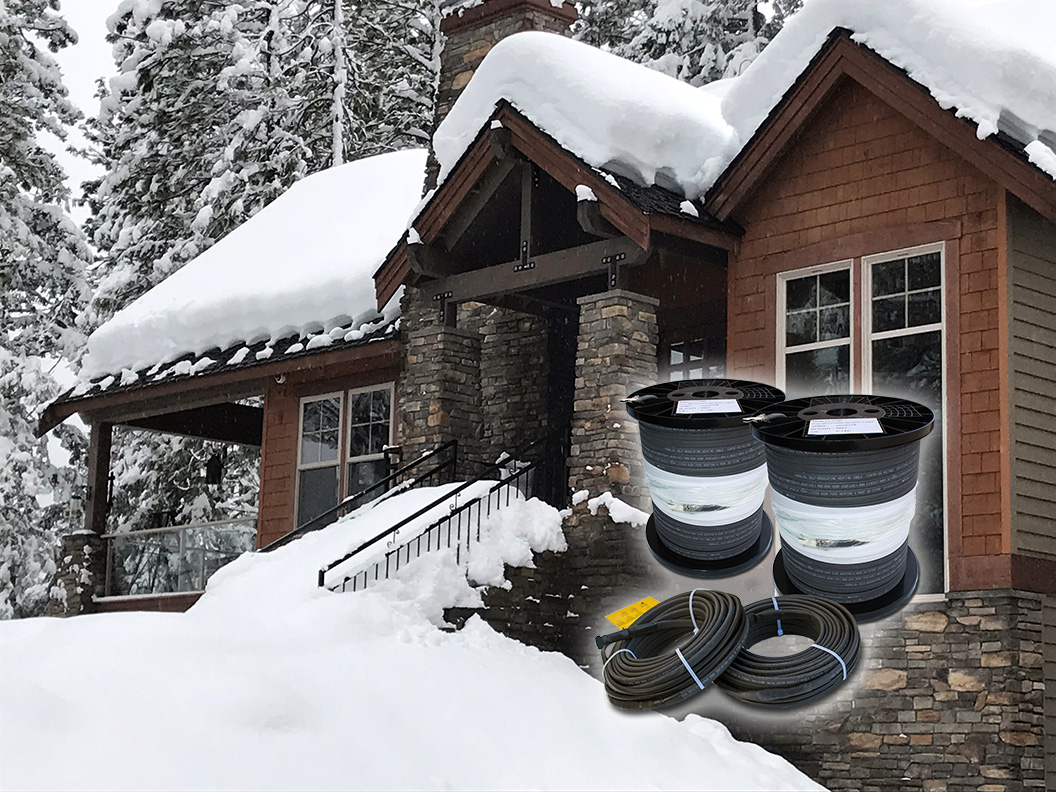
Most South Sioux City homeowners find out about an ice dam from the inside — a damp patch on a bedroom ceiling, or water tracking down the inside of a window frame. As part of our complete South Sioux City winter roof services, crews handle heated roof & gutter cables across Dakota County.
Why South Sioux City Roofs Dam Up: Deep Cold and a Long Snow Season
The defining feature of a Dakota County winter is persistence. It is not one storm, it is a continuous load sitting on the roof from late fall through to a spring thaw.

Every mild afternoon through that stretch releases a little meltwater, and every cold night sets it at the overhang. Done fifty times, that is how an eave ends up carrying several hundred pounds of ice by March.
Ice-barrier practice in Dakota County
In the colder Nebraska jurisdictions the membrane requirement extends well up the roof plane rather than stopping at the first course, precisely because the ice here does not stay near the edge.
Heated Roof & Gutter Cables in South Sioux City: How The Work Runs
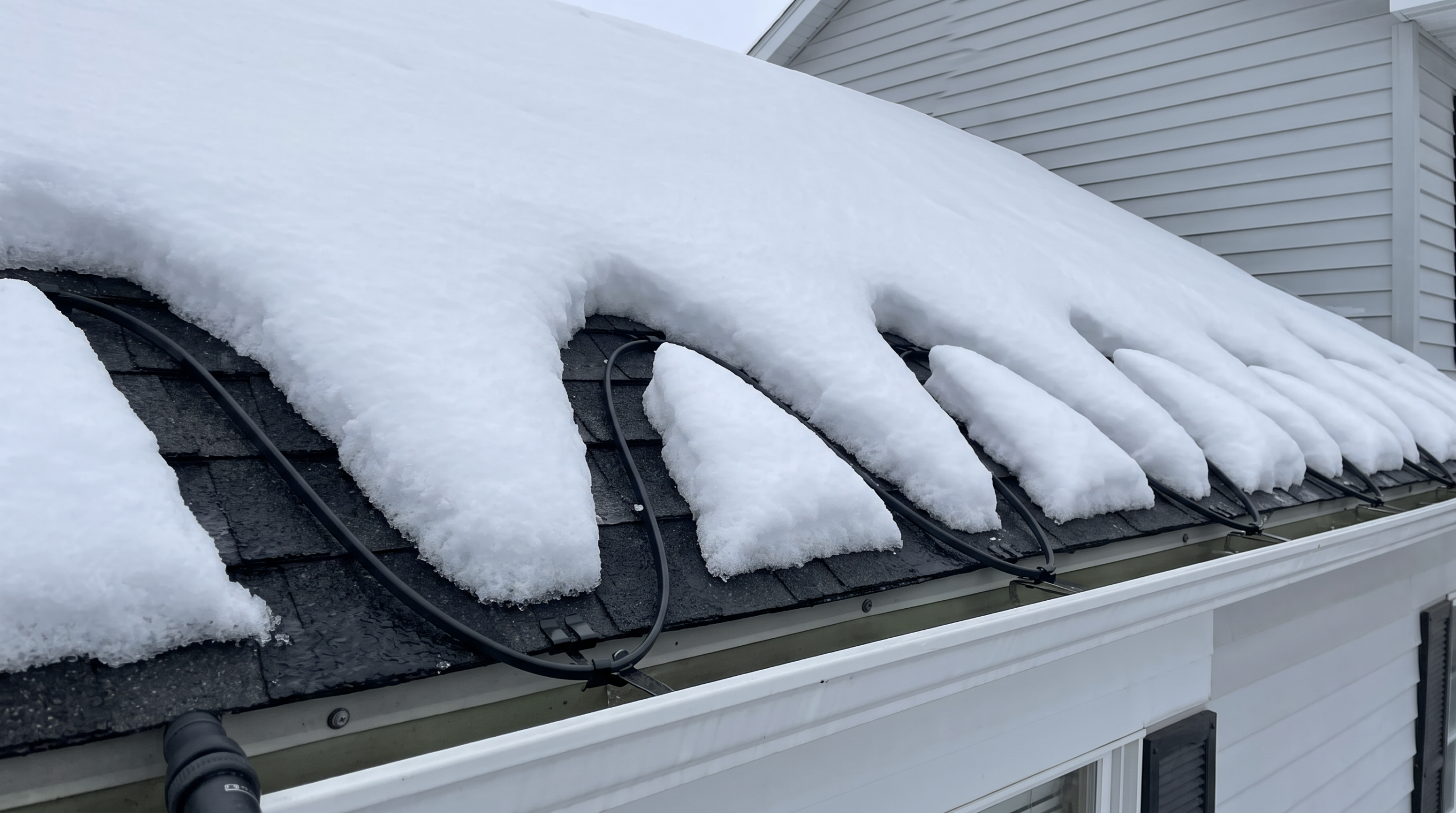
Fastening without putting holes in the roof
Clips and standoffs designed for the job, adhered or clipped to the shingle edge. Never a fastener driven through the covering, and never left loose to abrade in the wind. Icicles and a Wet Ceiling.
The failures that give heat cable a bad name are nearly all installation failures of this kind rather than product failures.
Valleys, downspouts and the parts people forget
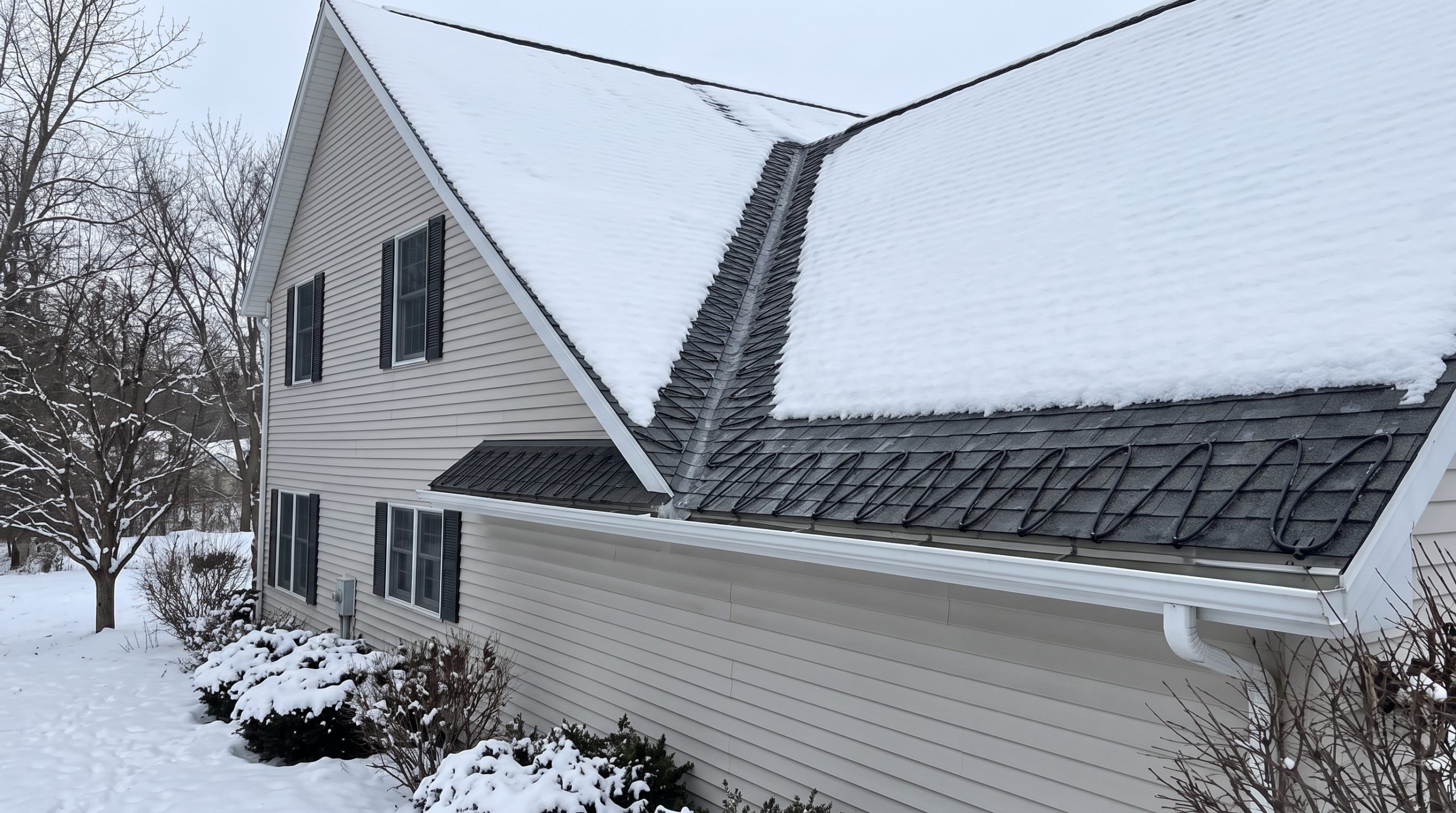
A zig-zag along the eave with nothing in the valley and nothing down the downspout produces a melted strip of roof draining into a solid block of ice. The water still has nowhere to go, and the dam just forms somewhere slightly different.
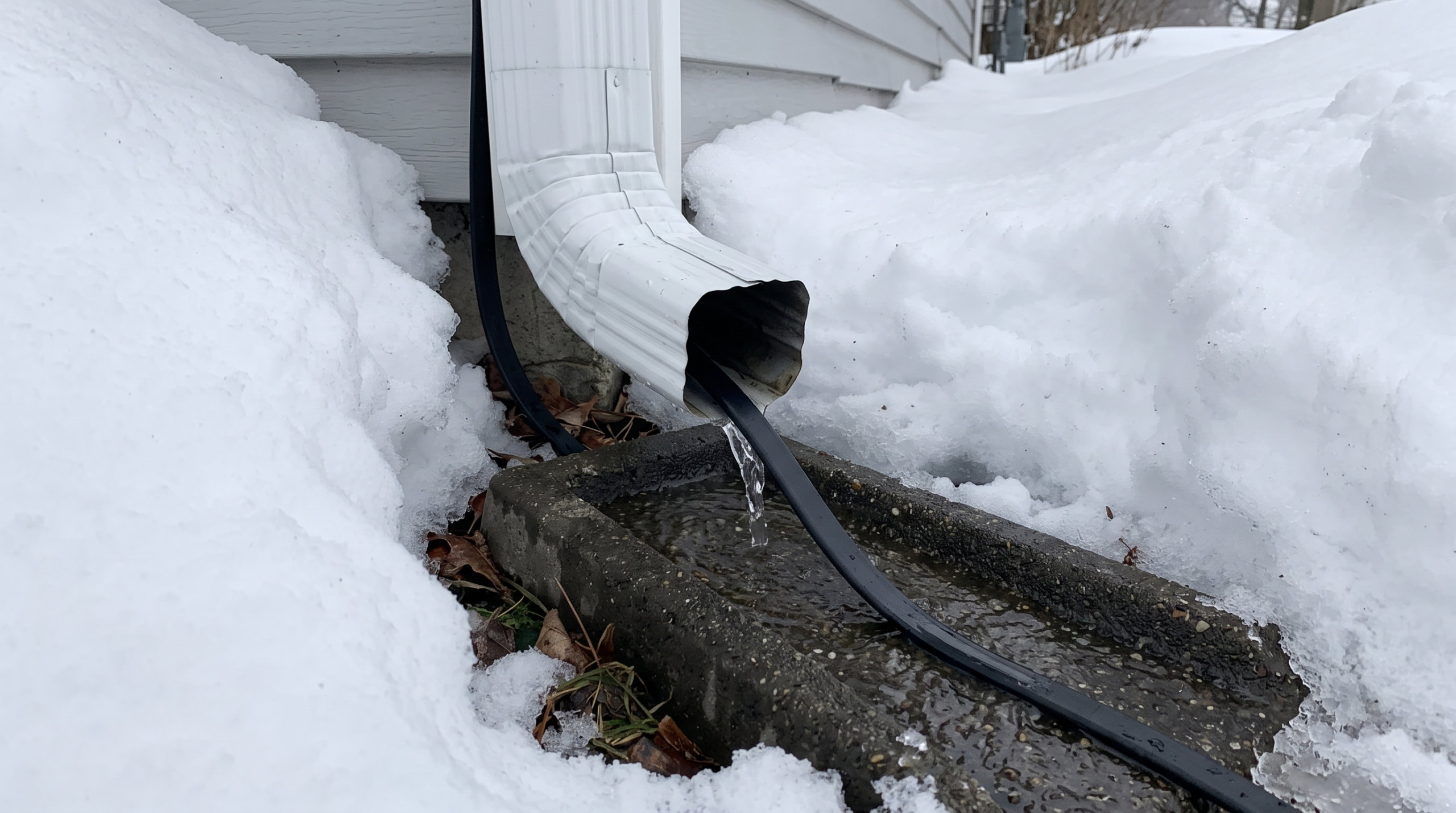
A system that works runs the full path: eave, valley, gutter trough and all the way down the downspout to daylight. The downspout run is the piece most often left out and the piece most often responsible for the system not working.
Controls decide the running cost
A cable on a plain thermostat runs through every dry cold snap, which is most of the winter and none of the risk. A combined temperature and moisture sensor runs it only when there is both cold and water present.
On a South Sioux City winter that difference is most of the operating cost, and the controller pays for itself quickly.
What happens when a section stops working
A dead run is usually one of four things: a tripped ground fault, a failed controller or sensor, physical damage at a specific point, or a connection at the end seal that has let water in.
They are diagnosed with a meter rather than by replacing the whole run. Self-regulating cable can generally be repaired in place with a proper splice kit, so a single damaged section does not mean a new system.
The electrical side
A dedicated GFCI-protected circuit, properly rated terminations and a disconnect somebody can actually reach. Not an extension cord out of a bathroom window, which is what gets found on a surprising number of existing South Sioux City installs.
Done properly it is an ordinary piece of exterior electrical work and it should look like one.
What you get in South Sioux City
- Self-regulating cableOutput varies along the run; safe to overlap, cut to length on site
- GFCI-protected circuitDedicated circuit and proper terminations, not an extension cord
- Downspout traced to daylightThe drain path ends on the ground, not in a block of ice
| Primary climate stressor | Sustained sub-freezing, long season |
|---|---|
| Dispatch window | Same day to 24 hours |
| Coverage area | South Sioux City and Dakota County |
| Local ice-barrier practice | Eave membrane required on new work |
| Typical scope | Steam, 6-14 crew hours typical |
| Pricing model | Billed by the crew hour, rate quoted before dispatch |
| Documentation | Dated before and after photos, written scope in Xactimate line items |
Where We Dispatch Around South Sioux City
Crews working South Sioux City cover the adjoining communities on the same route — Dakota City, Jackson, Homer and Hubbard — so a storm week usually means one truck handling several addresses in Dakota County rather than separate trips.
Nearest hub towns with their own heat cables pages: Norfolk, Fremont, Columbus, Omaha, La Vista, Papillion.
When a storm hits Dakota County, crews are dispatched by severity rather than by call order — water already inside the house goes first.
Most jobs do not stop at one service. Heat Cables in South Sioux City often runs alongside ice dam removal in South Sioux City, and both get written into one scope rather than billed as separate visits.
Active leak right now? Our 24/7 South Sioux City steam ice dam removal crews are dispatched first during a freeze event. Call (888) 561-9664.