


What the Lake Does to a Roof in Chanhassen
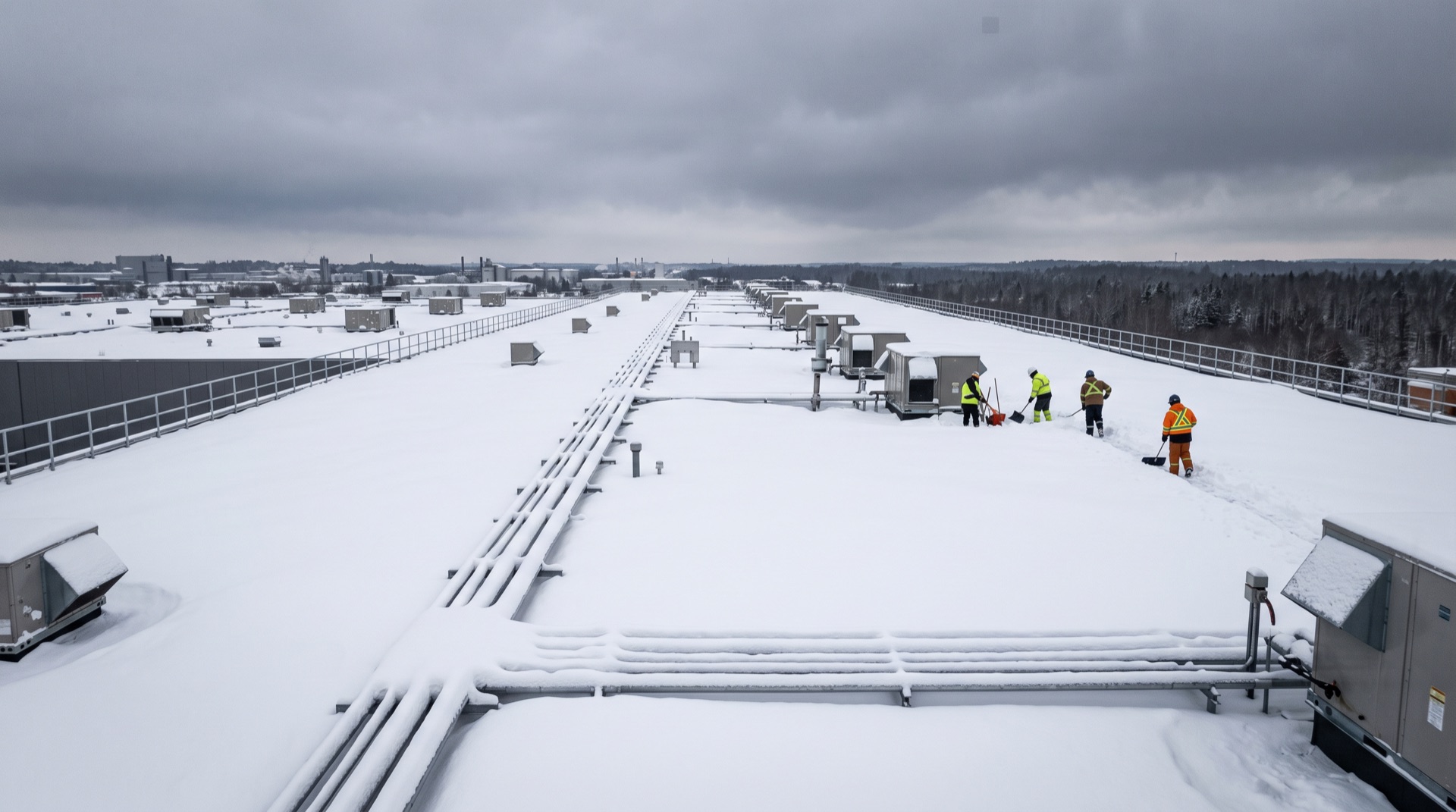
The lake keeps producing snow long after a front has passed, so a roof in Carver County rarely gets the clear stretch it needs to shed. One band follows another and the pack simply deepens.

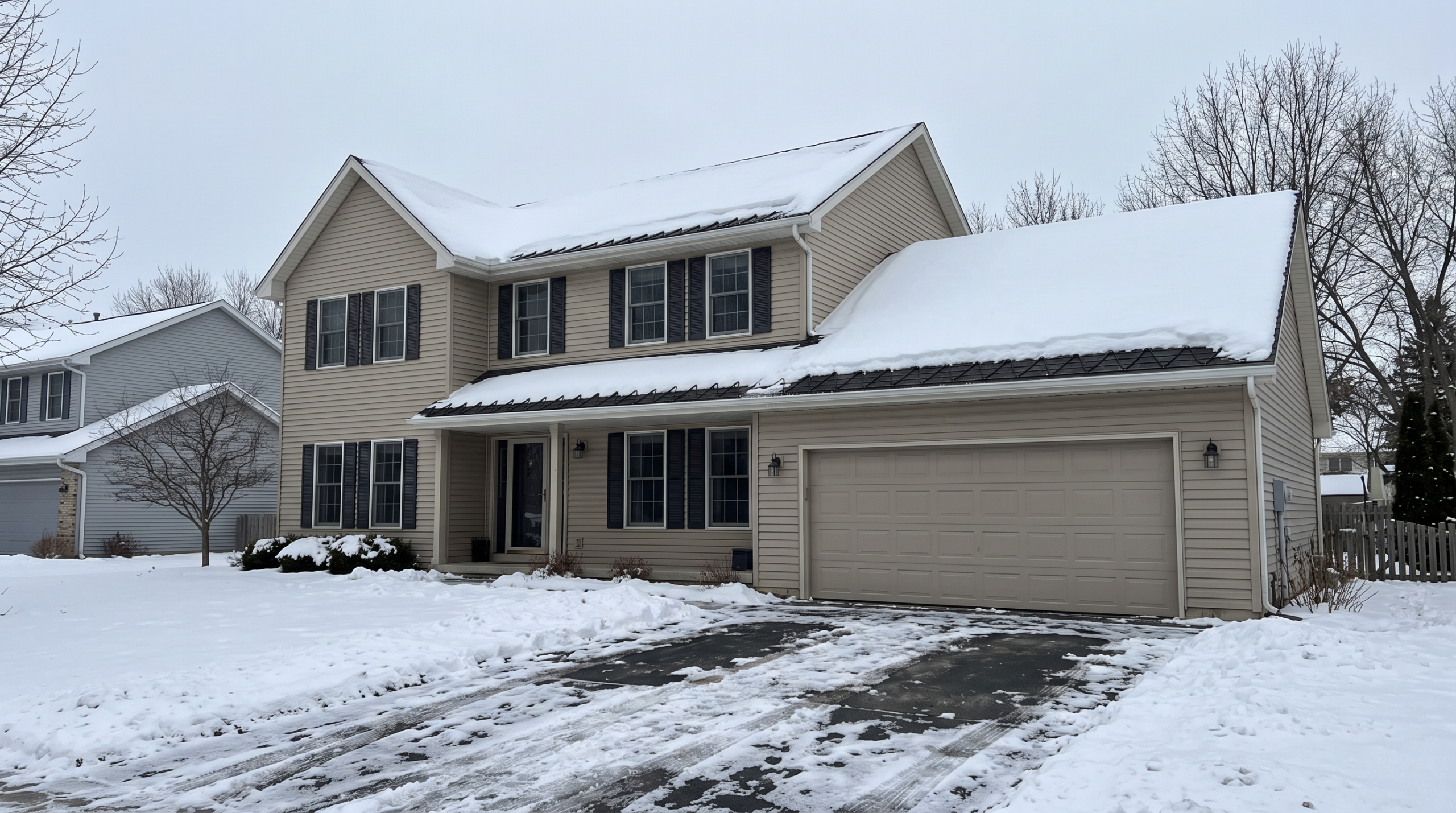
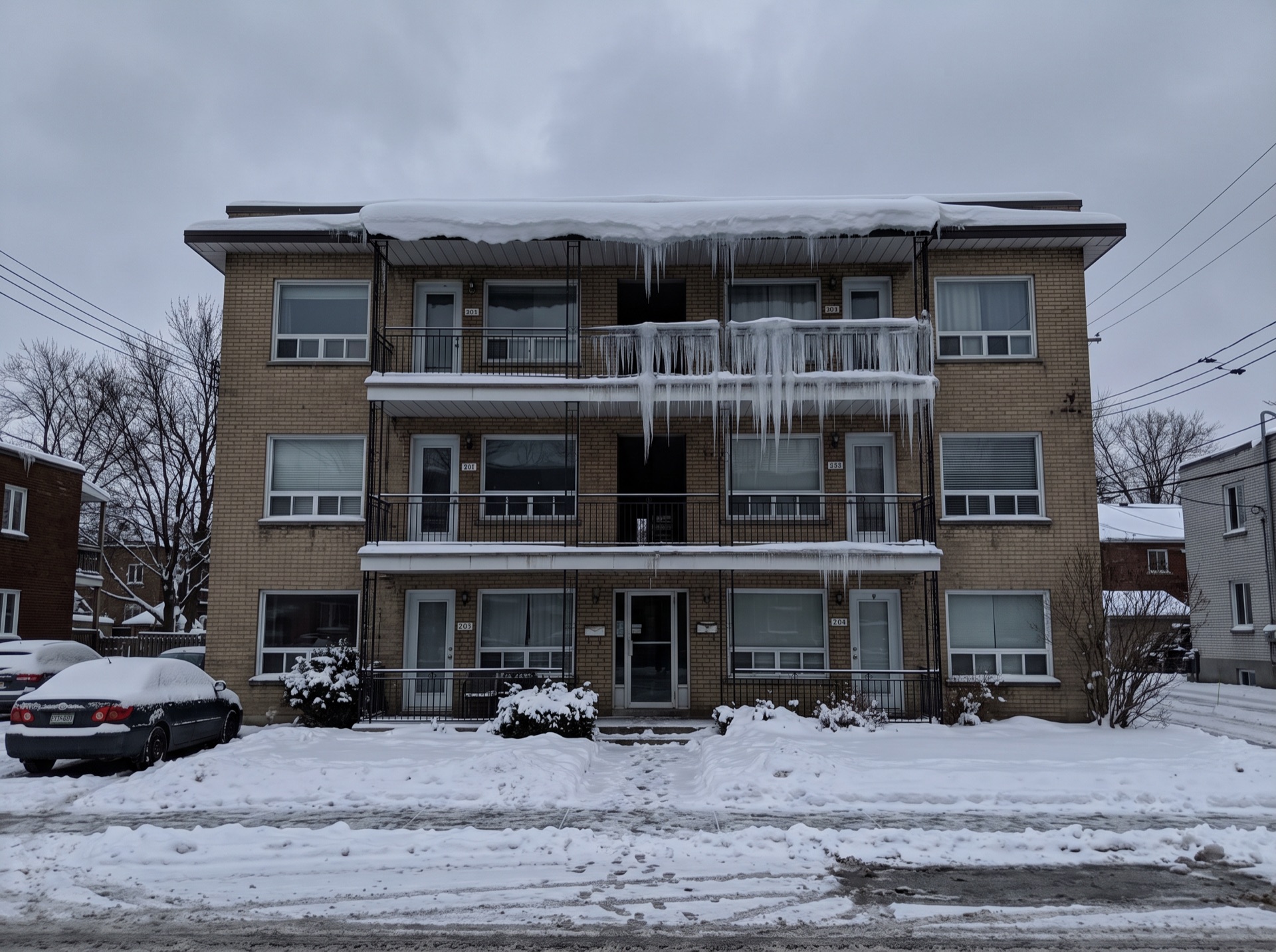
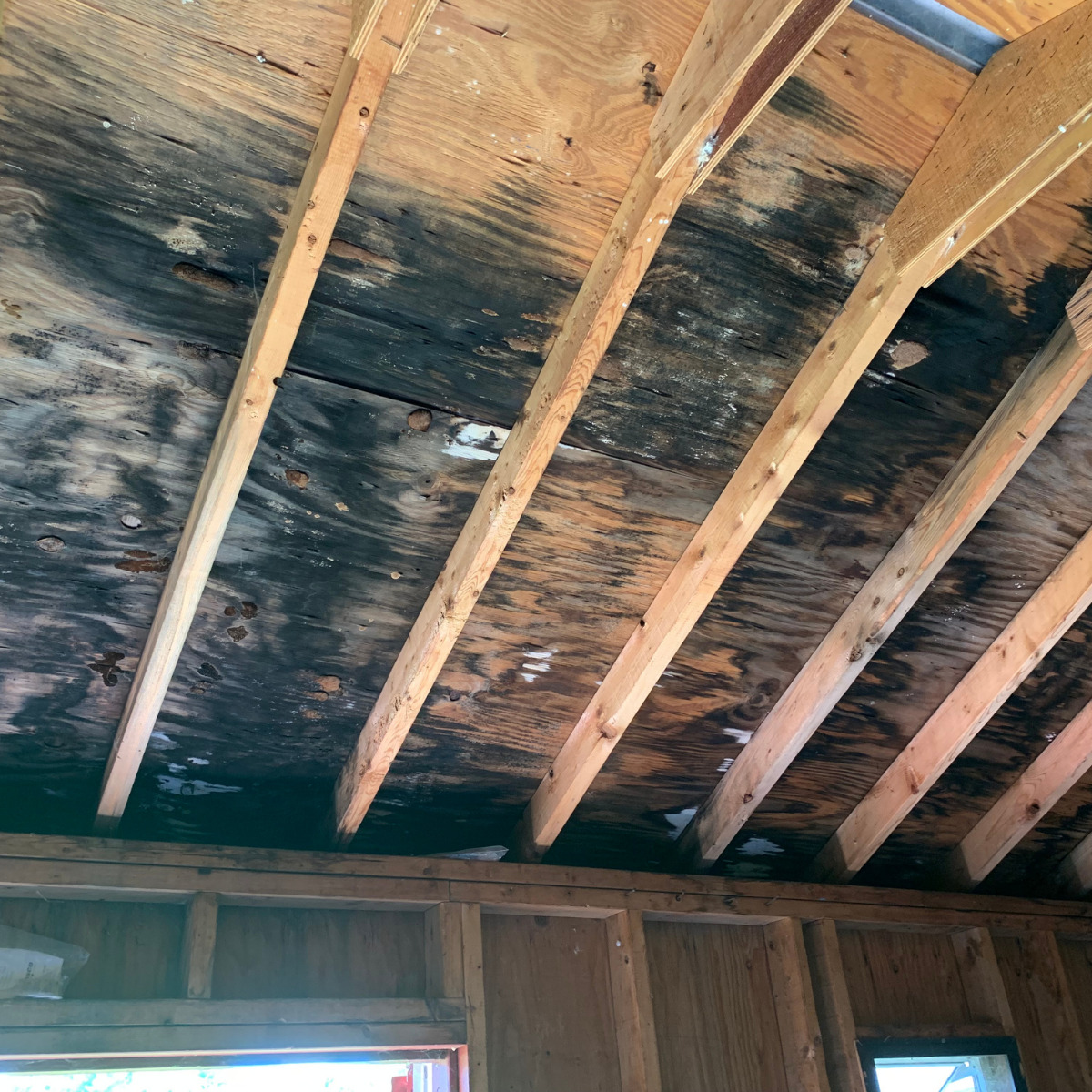
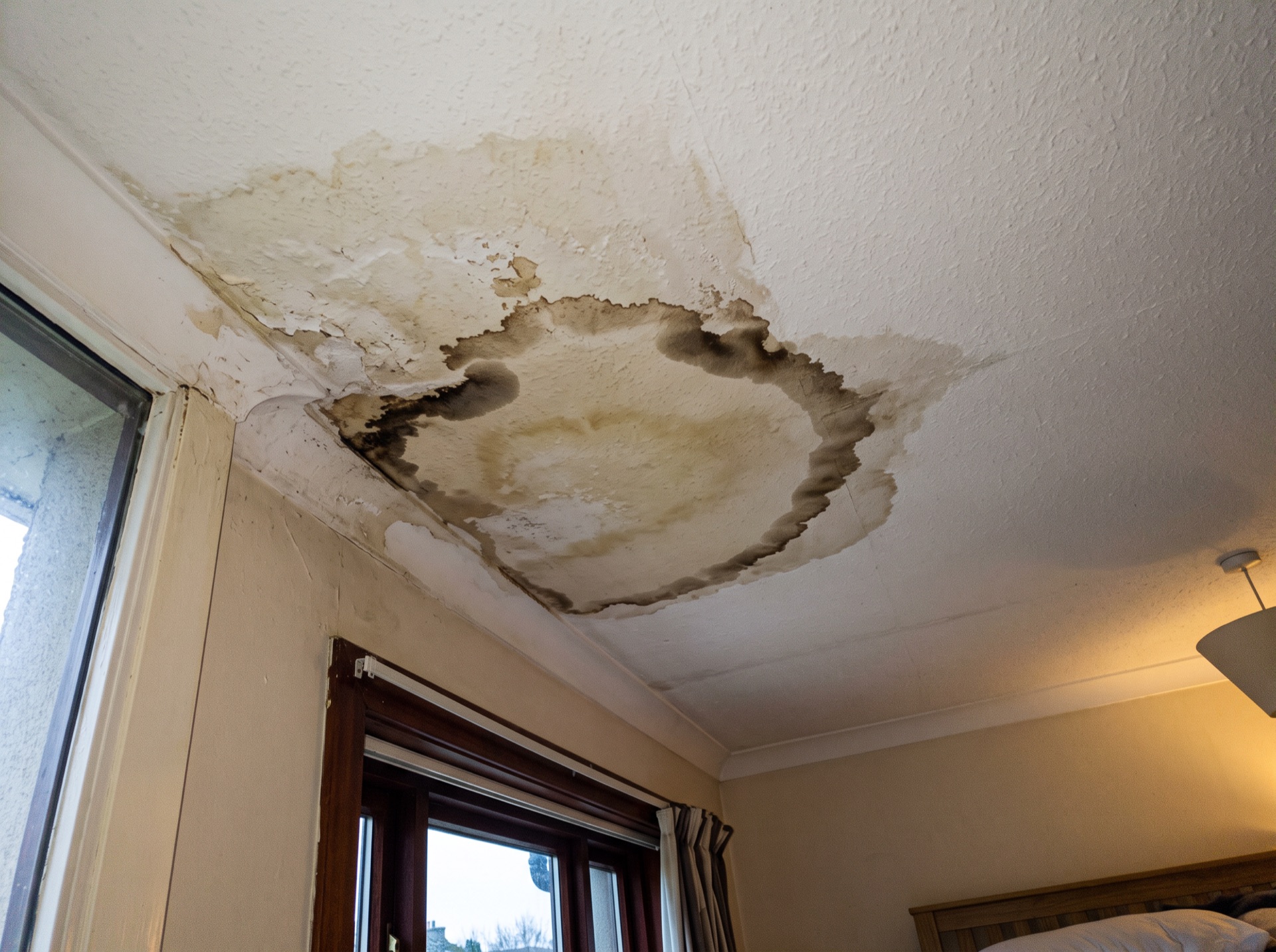
The damage comes on the thaw. Warm air leaking into the attic melts the underside of that pack, the meltwater runs to an eave that is still well below freezing, and it sets. Repeat that four or five times in a January and the ridge of ice at the gutter line stops being cosmetic.
Ice-barrier practice in Carver County
Most Carver County building departments expect self-adhering ice barrier at the eaves on any re-roof permit. The houses that leak are generally the ones last roofed before that became routine.
How We Work a Chanhassen Ice Dam
The first pass is assessment: eaves, valleys, gutter line and any interior staining, all photographed with timestamps. You see what the crew sees, and the rate and likely hours are agreed before work begins.
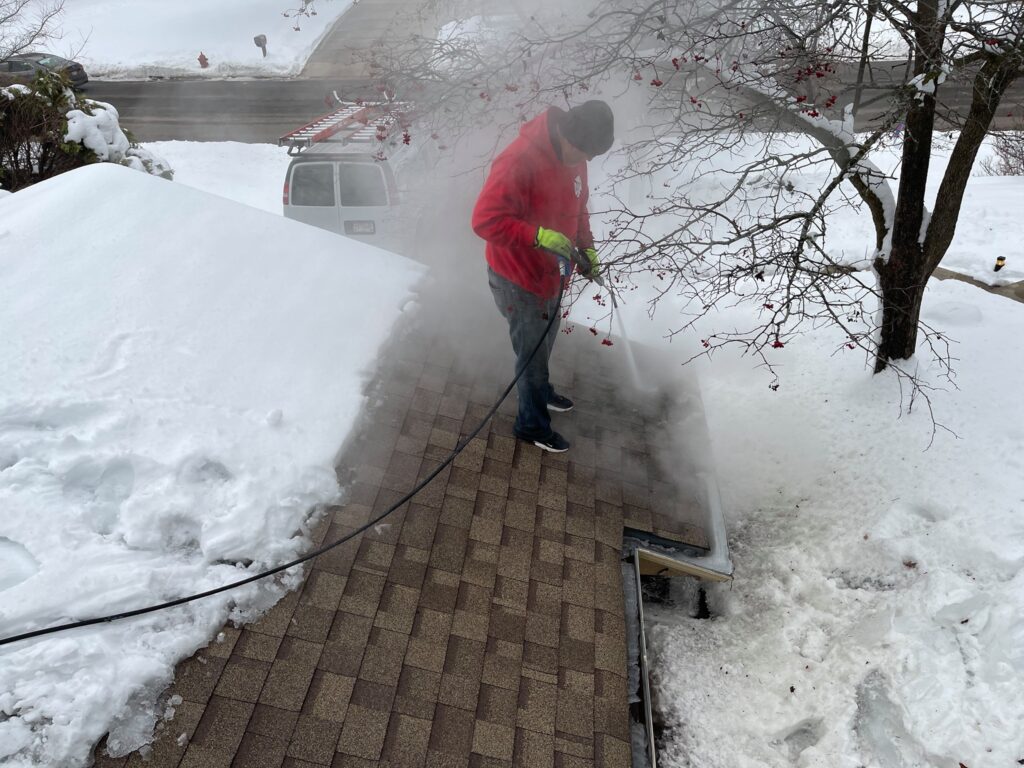
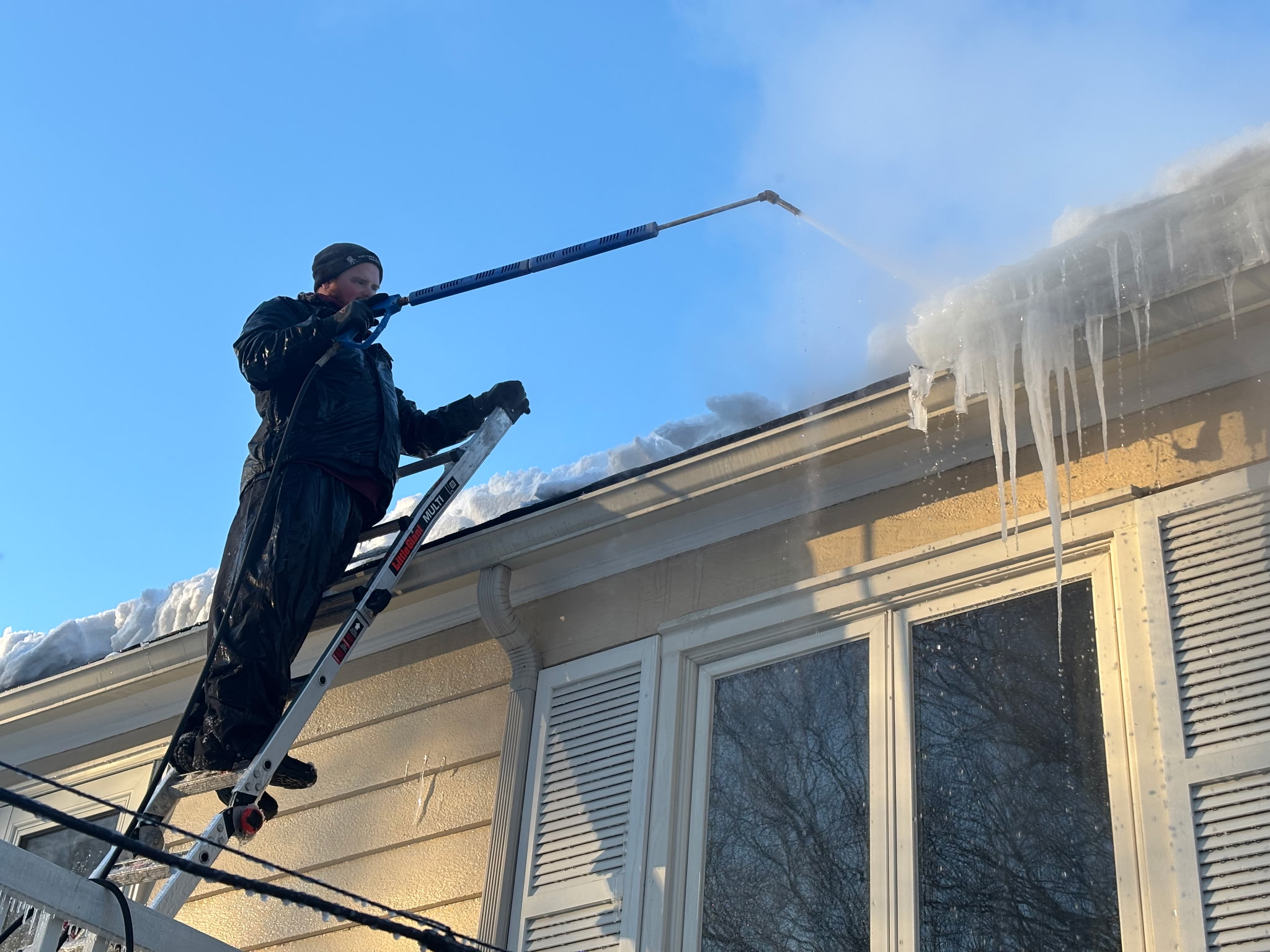
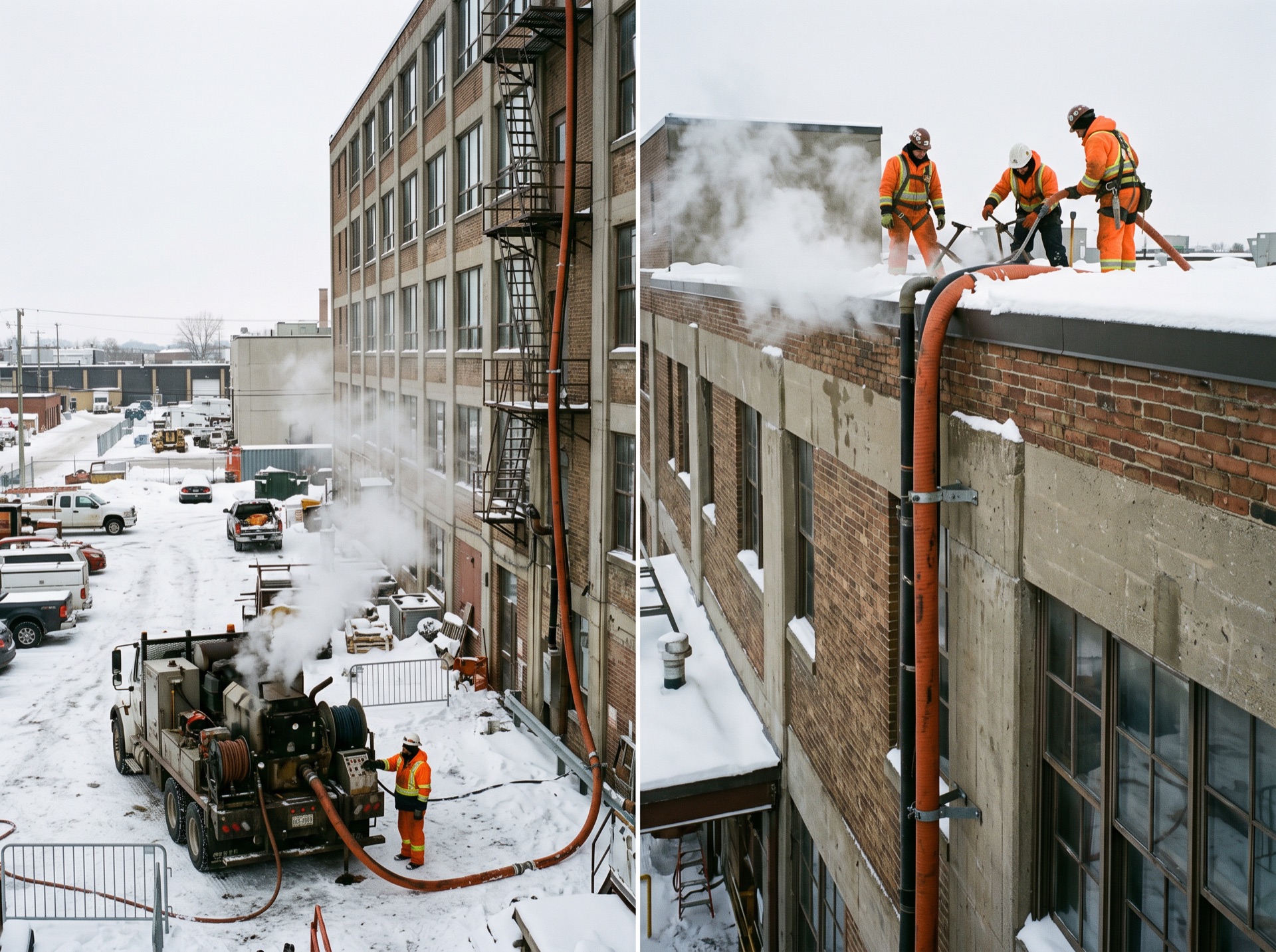
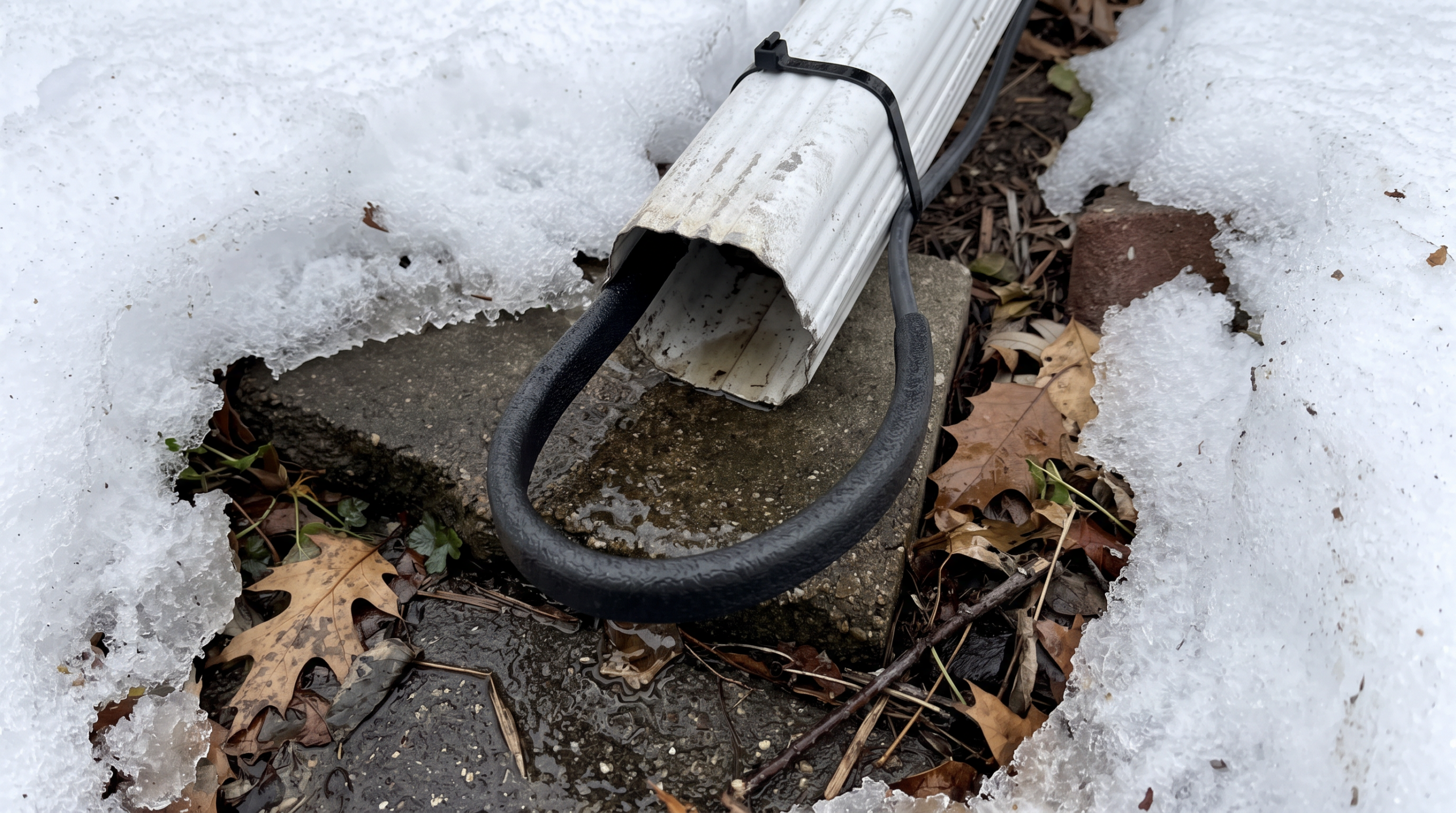
Steam then takes the dam off in sections, prioritizing wherever water is actively backing up behind it. The gutter trough and downspout are cleared through to daylight on the same visit, because a clear eave over a frozen gutter is a temporary fix.
Why salt and ice melt make it worse
Calcium chloride opens a narrow channel and leaves the dam standing. The channel refreezes, the dam does not go anywhere, and in the meantime the runoff corrodes gutter seams, fasteners, flashing and anything growing underneath.
It is a stopgap at best. On a roof in Chanhassen with an active leak it buys hours, not days, and it adds a corrosion problem to the water problem.
Dormers, valleys and dead spots
Ice does not distribute evenly. It concentrates where two roof planes meet, behind dormers, in dead valleys that drain nowhere, and along the north face that never sees sun. Those pockets hold water deepest and leak first.
A crew working a roof in Chanhassen clears the full eave line and then goes back through the valleys and dormer pockets specifically, because clearing the easy straight run and calling it done is how a roof leaks again a week later.
Why the dam formed in the first place
Ice dams are a heat problem wearing a weather costume. Warm air escaping into the attic melts snow on the upper roof; that meltwater runs to the eave, which hangs past the heated envelope and stays below freezing; it refreezes there, and the ridge of ice grows a layer every cycle. Removal is the emergency fix. Before the crew leaves you will know which part of your attic is feeding it.
| Typical scope | Steam, 6-12 crew hours typical |
|---|---|
| Documentation | Dated before and after photos, written scope in Xactimate line items |
| Primary climate stressor | Lake-effect bands, wet heavy pack |
| Removal method | Low-pressure steam only. No chipping, salt or pressure washing. |
| Local ice-barrier practice | Eave membrane expected on re-roofs |
| Dispatch window | Same day to 24 hours |
| Pricing model | Billed by the crew hour, rate quoted before dispatch |
Chanhassen Coverage and the Adjoining Communities
Crews working Chanhassen cover the adjoining communities on the same route — Excelsior, Minnetonka Beach, Victoria, Navarre and Crystal Bay — so a storm week usually means one truck handling several addresses in Carver County rather than separate trips.
Nearest hub towns with their own crew pages: Minnetonka, Eden Prairie, Hopkins, Chaska, Shakopee, St. Louis Park.
When a storm hits Carver County, crews are dispatched by severity rather than by call order — water already inside the house goes first.
Water through a ceiling in Chanhassen is a same-day call, not a next-week one. (888) 561-9664 goes straight to dispatch.