Skip to content
Bath, ME
Flat Roof & Parapet · Sagadahoc County

Commercial Ice Dam Removal in Bath, ME — Full‑Season Storm Response

Ice Dam Now provides commercial ice dam removal in Bath, ME and the surrounding Sagadahoc County, using low-pressure steam only — never chipping, salt or pressure washing. Crews are licensed, insured and harness-certified, dispatch same day for active interior leaks, and bill by the crew hour at a rate quoted before dispatch. Dated photo documentation is supplied for insurance claims.

Tenant-hours scheduling — Work windows set around occupancy and access
Flow confirmed below — An open drain throat over a frozen leader is not an open drain
Drains and scuppers first — Flow restored before the ponded ice is worked
EPDM, TPO and mod-bit — Low-pressure steam only, seams and flashing details avoided

Get Ice Dam Help Bath

A few quick questions, then pick a time. If water is coming in, call instead.

What is the zip code of the home?

Roof leaking right now? Call (888) 561-9664 — that is faster than any form.
Water coming through the ceiling?Every hour an ice dam sits there, more water gets under the shingles.Call (888) 561-9664
24/7
Dispatch All Winter
Steam
Only — No Pressure
Sagadahoc
County Coverage
Same Day
For Active Leaks
Insured
Licensed & Harness-Certified

Ice dams are not a Bath problem so much as a Maine one, and they show up on the same handful of eaves and valleys year after year. As part of our complete Bath winter roof services, crews handle commercial ice dam removal across Sagadahoc County.

Months of Load: Why Bath Eaves Carry Ice

Snow that falls on a roof in Bath in December tends to stay there. A pack that never fully clears is a pack that keeps feeding meltwater to the same eave for months on end.

Diagram showing how ice dams form on roofs due to inadequate insulation and poor ventilation
Heat escaping into the attic melts roof snow; the meltwater refreezes at the cold eave and the dam grows a layer every cycle.

Depth accumulates faster than people expect because nothing in between melts it away. By February a Bath eave can be carrying several hundred pounds of ice with standing water sitting behind the whole length of it.

Ice-barrier practice in Sagadahoc County

Insulation depth matters at least as much as membrane in this climate, and Sagadahoc County stock built before modern attic standards tends to be short on both. One is a code question; the other is why the dam formed.

Commercial Ice Dam Removal in Bath: How The Work Runs

Access control, hatches and escorts

Getting onto a commercial roof is a procedure: keys or fobs, a hatch that may be padlocked, a ladder in a locked plant room, sometimes a site induction and an escort for the duration.

Sorting that out with the property manager in advance is the difference between a crew starting at seven and a crew waiting in the parking lot until nine. Where a tenant controls the only access, that conversation happens before the dispatch rather than on the roof.

Flat roofs fail differently

A pitched residential roof dams at the eave. A commercial deck dams at its drainage: frozen scuppers, iced-over internal drains, and ponding that refreezes into a sheet across the low spots. Water then sits on the membrane at depth, finds a seam or a flashing detail, and comes through into the tenant space below.

Parapet walls make it worse by holding the melt on the deck instead of letting it run off an edge. By the time it shows up as a ceiling tile stain in a Bath unit, there is usually standing water up there.

Parapets hold the water in

A parapet is why a commercial deck ponds instead of shedding. Scuppers through the parapet are the only exit, and they are narrow, exposed on three sides and the first thing to freeze solid.

Steaming a scupper throat open is often the single highest-value twenty minutes of a commercial Bath call.

Roof warranties and who is allowed up there

Most commercial membranes carry a manufacturer's warranty with conditions about who may work on the roof and what methods are permitted. Snow removal is generally fine; mechanical ice removal very often is not, and the wrong contractor with the wrong tool can void cover worth considerably more than the clearing.

The warranty gets read before the roof is walked, and the method used is one the document permits.

The pitched sections nobody plans for

Very few commercial buildings are flat all the way across. Entrance canopies, mansard faces, dormers over older frontages and the sloped transitions between roof levels all shed onto places where people walk.

Those sections behave like a residential roof and get worked like one - steam at the eave, snow guards noted where they are missing, and the pavement below cordoned while material is coming down.
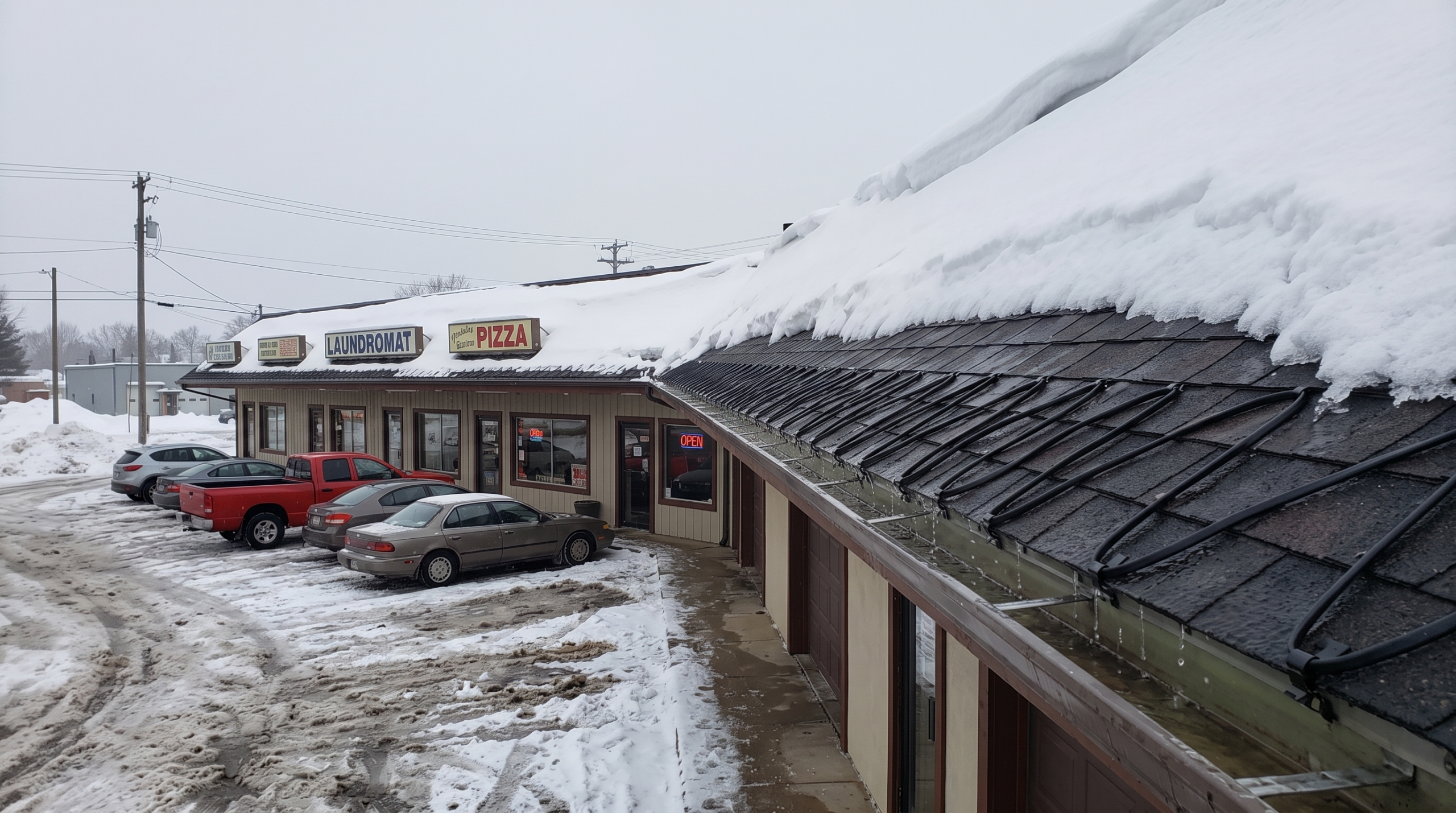
Heavy snow and ice dam buildup on commercial strip mall roofline in winter
A thick ice dam forms along the roofline of a commercial strip mall housing a laundromat and pizza restaurant.

What you get in Bath

  • Documentation for the boardCondition report and photo record with every invoice
  • Drains and scuppers firstFlow restored before the ponded ice is worked
  • EPDM, TPO and mod-bitLow-pressure steam only, seams and flashing details avoided
Commercial Ice Dam Removal in Bath, ME — specification
Service specification for Bath, ME
Coverage areaBath and Sagadahoc County
Dispatch windowSame day to 24 hours
Typical scopeSteam, 6-14 crew hours typical
Local ice-barrier practiceEave membrane required on new work
Primary climate stressorSustained sub-freezing, long season
DocumentationDated before and after photos, written scope in Xactimate line items
Removal methodLow-pressure steam only. No chipping, salt or pressure washing.

Neighborhoods and Towns We Reach From Bath

Crews working Bath cover the adjoining communities on the same route — Woolwich, Georgetown, Topsham, Trevett and Phippsburg — so a storm week usually means one truck handling several addresses in Sagadahoc County rather than separate trips.

Nearest hub towns with their own commercial ice dams pages: Brunswick, Lewiston, Auburn, Portland, Augusta, South Portland.

Coverage runs across Bath and the nearby towns all winter, and capacity is surged into whichever Maine market the storm actually hits.

Most jobs do not stop at one service. Commercial Ice Dams in Bath often runs alongside commercial roof snow removal in Bath, and both get written into one scope rather than billed as separate visits.

Active leak right now? Our 24/7 Bath steam ice dam removal crews are dispatched first during a freeze event. Call (888) 561-9664.
Conditions We Work In

Commercial Ice Dam Removal In Practice

Conditions crews work in across Sagadahoc County. Every job is photographed before and after.

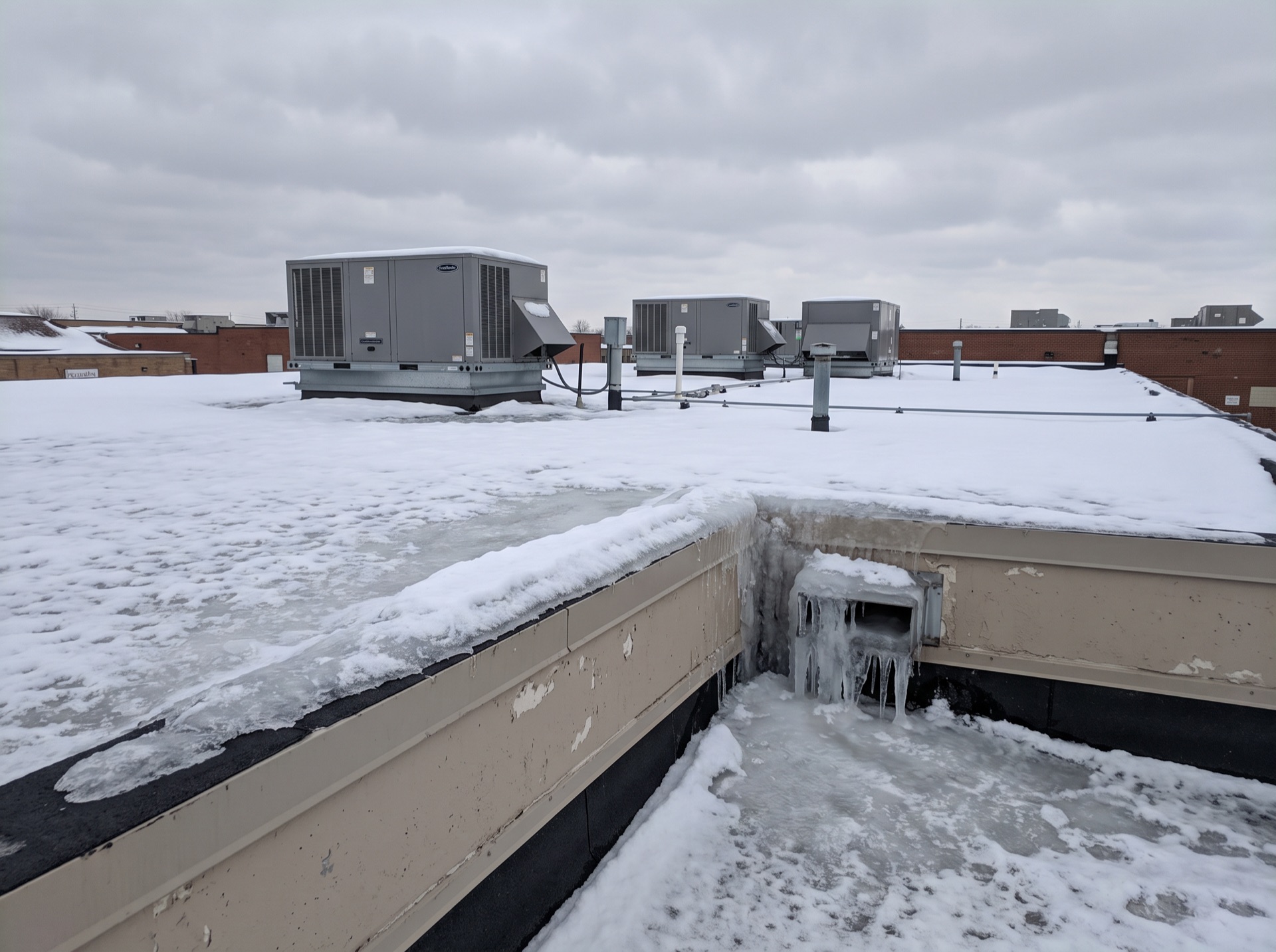
Frozen roof drain at commercial flat roof parapet wall covered in snow and ice
A blocked and frozen roof drain at a commercial building parapet wall, indicating a serious winter drainage problem.
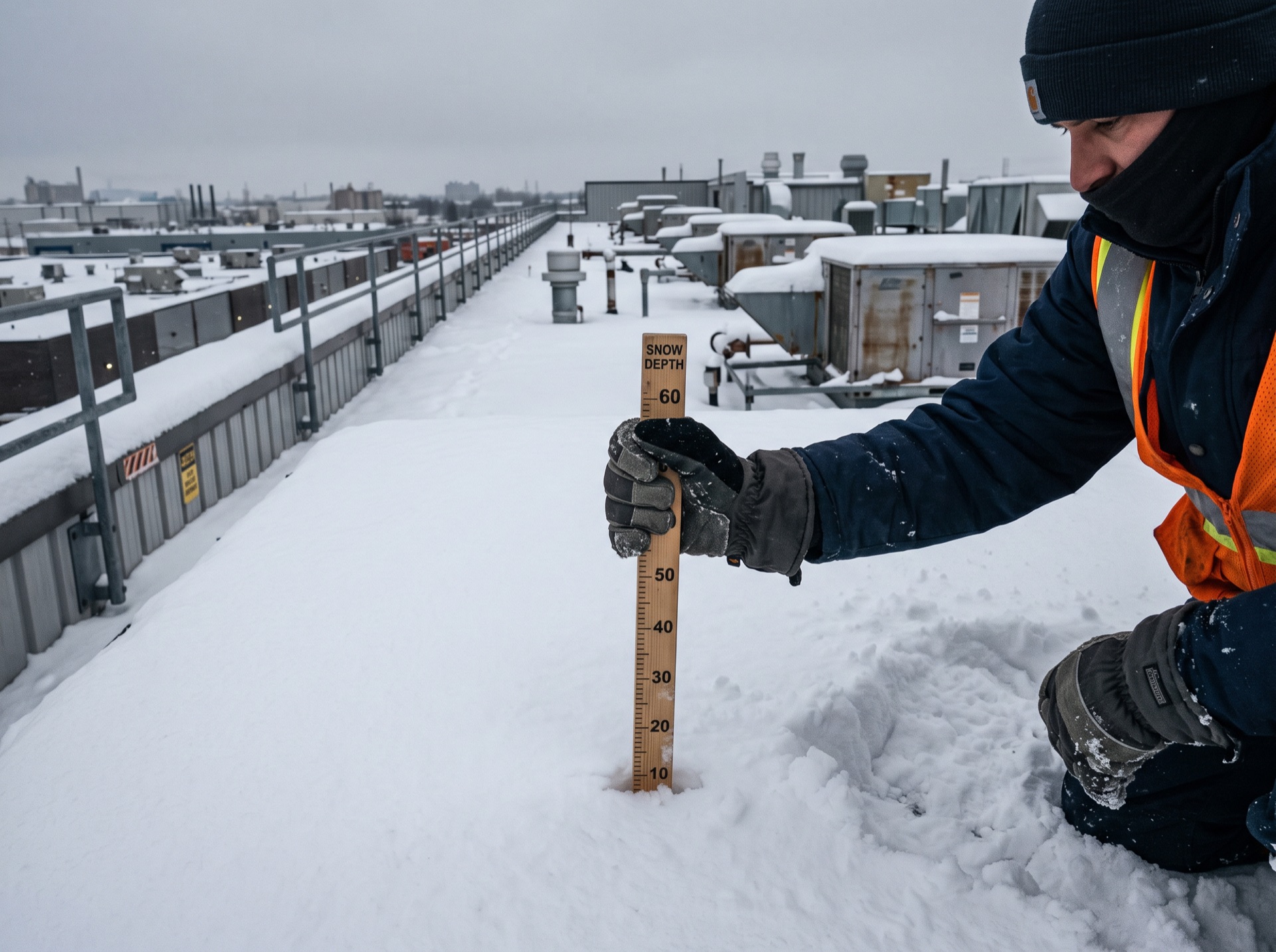
Worker in safety vest measuring snow depth on commercial rooftop with ruler
A safety worker measures accumulated snow depth on a commercial rooftop using a graduated snow depth gauge.
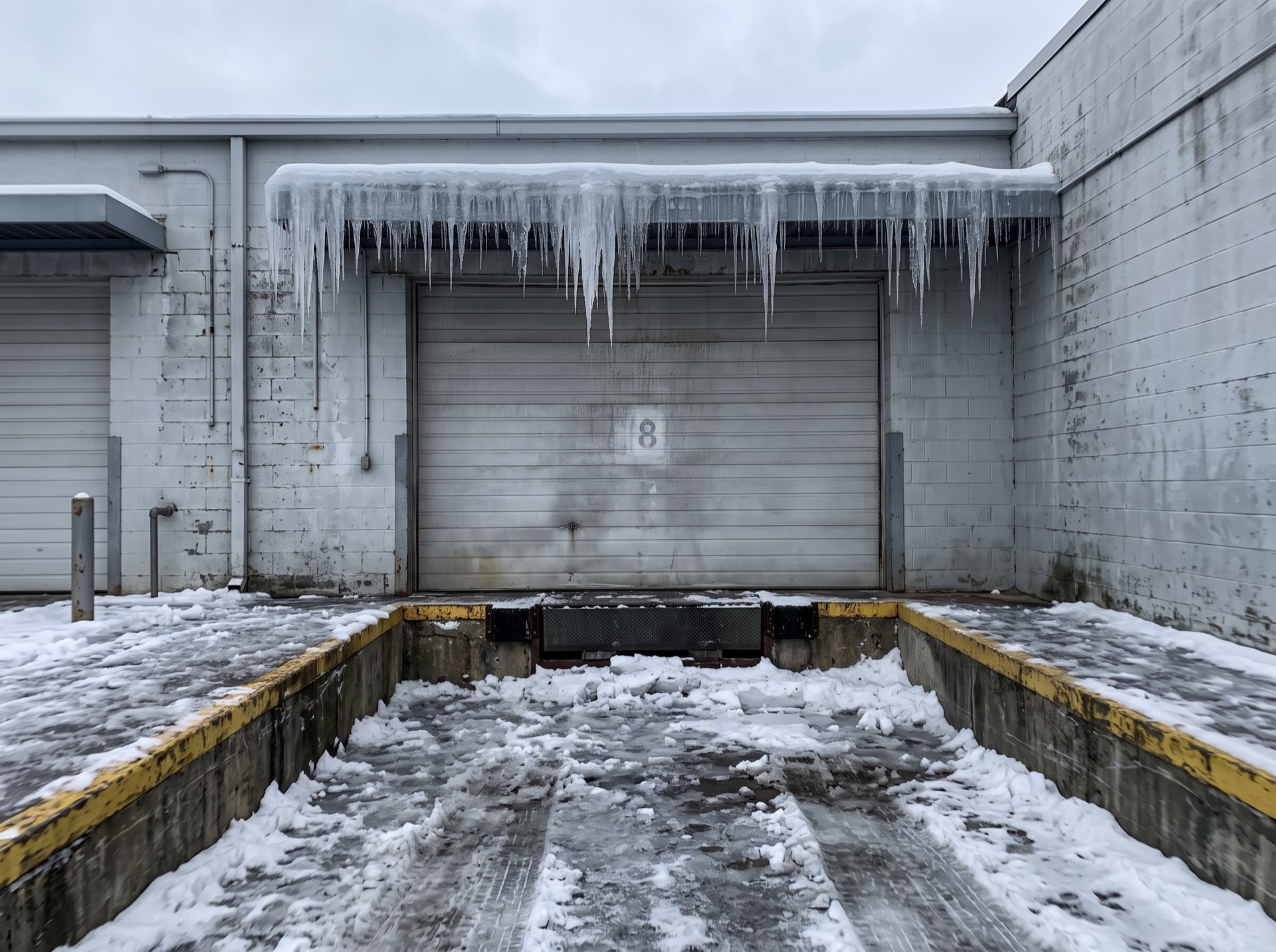
Large icicles hanging over warehouse loading dock number 8 in winter
Heavy icicles form along the roofline above a snow-covered commercial loading dock during freezing winter conditions.
FAQ

Bath and Sagadahoc County FAQ

It is billed by the crew hour, and the rate plus a realistic time estimate are quoted on the phone before anyone is dispatched.

  • Scope drives the hours: length and thickness of the ice, roof pitch and height, and whether the gutters are frozen solid.
  • Access matters too — a three-story Bath roof takes longer to set up on than a ranch.
  • The invoice matches the quote. There are no surprise add-ons written on the tailgate.

Often for the interior water damage, sometimes for the removal itself, but it depends entirely on your carrier and policy wording.

  • Many policies treat emergency mitigation separately under a duty to protect property clause.
  • Denials usually cite the maintenance exclusion, which dated photographs taken during the event are the direct counter to.
  • Crews photograph the dam, the entry points and the interior damage, and write the scope in Xactimate line items.
  • The coverage decision is between you and your carrier — no contractor can promise an outcome there.

Usually. The equipment needs a water supply and a place to park within hose reach, which is normally achievable even on a tight lot.

  • Hose runs of a few hundred feet are routine.
  • Street parking in a Sagadahoc County residential area is generally workable.
  • Tell dispatch about access on the call so the right setup arrives.

Yes. The dispatch area runs across Sagadahoc County, and several addresses in one area are usually handled in the same run.

  • Adjoining communities are on the same route rather than treated as a separate trip.
  • Rural addresses outside the normal radius get told the travel position on the call.
  • Capacity is moved into whichever part of Maine the storm actually hits.

Only where there is interior damage to document or dry. Pure exterior removal happens entirely from outside.

  • If water has come in, seeing it is what makes the claim documentation worth anything.
  • Attic access helps identify the heat source but is not required for removal.
  • Nobody needs to be home for exterior-only work, provided access and payment are arranged.

Yes. Campuses, retail strips and multi-building properties get walked together, prioritized by which deck is closest to failure, and billed under one scope rather than as separate jobs.

Yes, and crews often do. Where noise, access or tenant traffic make that difficult, work gets scheduled outside occupancy. Set the constraint on the call and the window is planned around it.

Nearby

Commercial Ice Dams In Towns Around Bath

Same-Day Response

Get A Bath Crew Out

A dam left alone through February is not the same dam in March. It is bigger, and so is the repair behind it.

✓ Licensed & insured✓ Low-pressure steam only✓ Rate quoted up front✓ Photos for your claim
Online Quote(888) 561-9664