By the time a roof in Kansas City has a visible ridge of ice at the eave, meltwater has already been pooling behind it for several freeze-thaw cycles. As part of our complete Kansas City winter roof services, crews handle heated roof & gutter cables across Wyandotte County.
Why Kansas City Roofs Dam Up: Cycling, Not Snowfall Totals
Three inches of snow and a week of days above freezing and nights below it will build ice on a Wyandotte County eave just as reliably as a foot of snow further north.

And the cycling is relentless rather than dramatic. Fifteen or twenty crossings of freezing in a season each add a layer, and the houses with the thinnest attic insulation in Wyandotte County all find out in the same week.
Ice-barrier practice in Wyandotte County
Ice-barrier membrane at the eaves is required on new work under the residential code Kansas follows, but on a roof built before that it is frequently absent — and this is the region where it is most often skipped.
Heated Roof & Gutter Cables in Kansas City: How The Work Runs
Self-regulating versus constant wattage
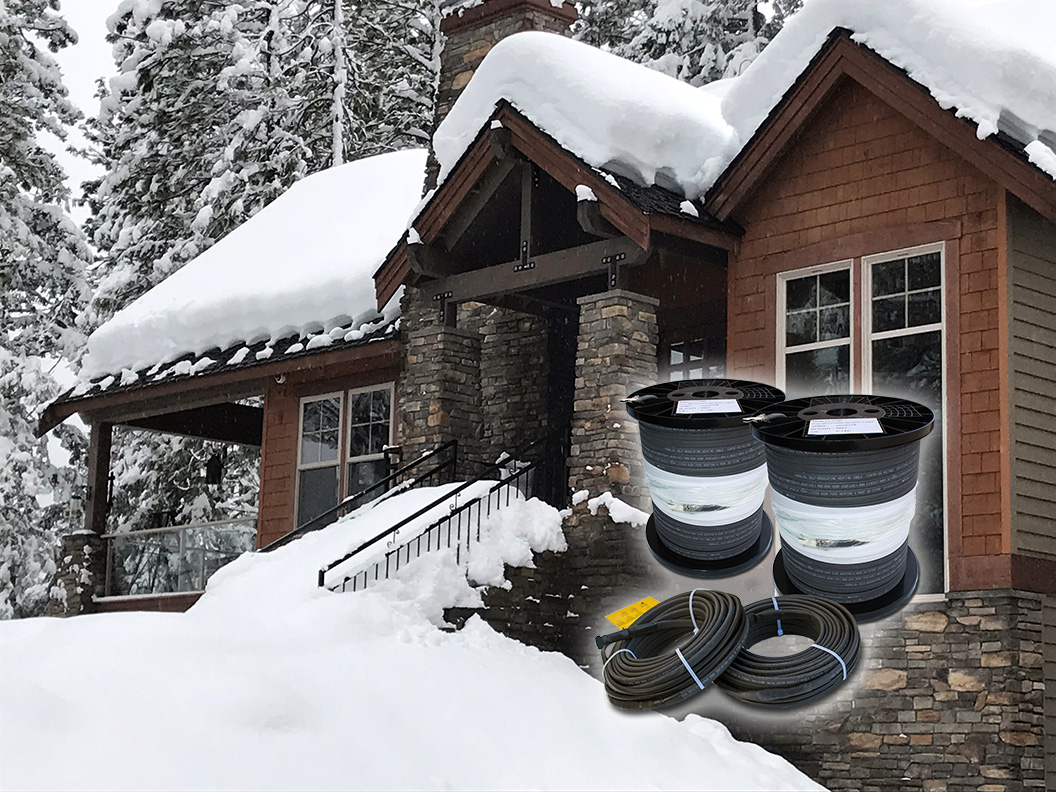
Self-regulating cable varies its output along its own length with the temperature of what it is touching: colder sections draw more, warmer sections throttle back. It can be cut to length on site, it tolerates being overlapped in a gutter, and it cannot cook itself into failure the way constant-wattage cable can. Icicles and a Wet Ceiling.
Constant wattage is cheaper per foot and that is the whole of its case. On a roof in Kansas City that sees real freeze-thaw cycling, self-regulating is the one worth installing.
What shortens the life of a cable run
Self-regulating cable is generally good for a decade or more. What ends it early is ultraviolet exposure on a run left unshaded through summer, physical damage from somebody raking or shovelling over it, rodents in the gutter, and ice loading on clips that were never rated for it.
A system installed with UV-stable cable, proper clips and a note on the roof plan saying where it runs will usually outlast one that was simply stapled up in a hurry.
Valleys, downspouts and the parts people forget
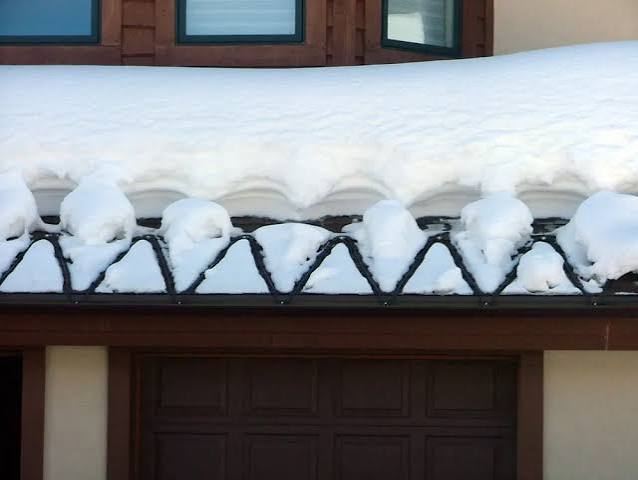
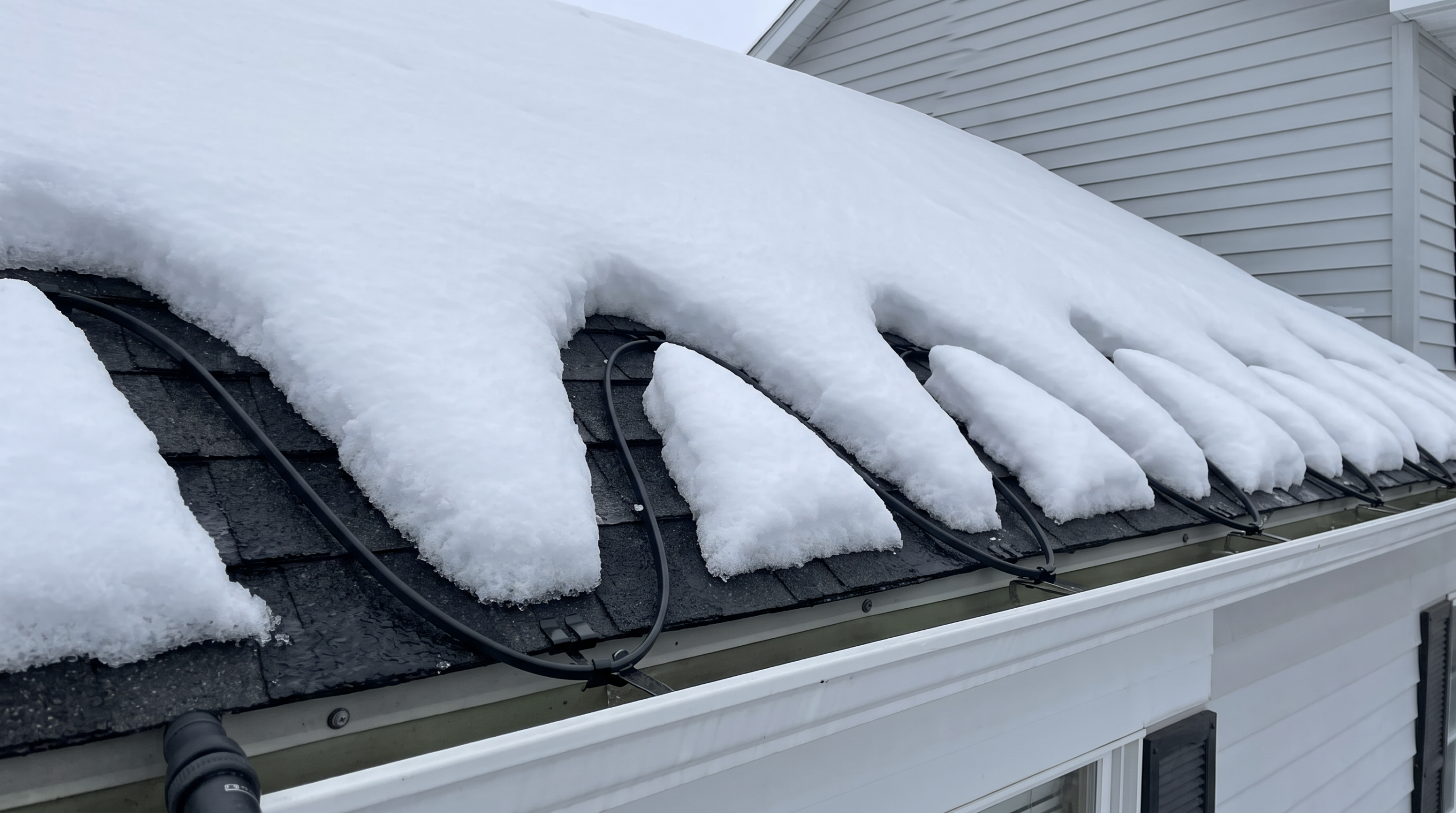
A zig-zag along the eave with nothing in the valley and nothing down the downspout produces a melted strip of roof draining into a solid block of ice. The water still has nowhere to go, and the dam just forms somewhere slightly different.
A system that works runs the full path: eave, valley, gutter trough and all the way down the downspout to daylight. The downspout run is the piece most often left out and the piece most often responsible for the system not working.
The electrical side
A dedicated GFCI-protected circuit, properly rated terminations and a disconnect somebody can actually reach. Not an extension cord out of a bathroom window, which is what gets found on a surprising number of existing Kansas City installs.
Done properly it is an ordinary piece of exterior electrical work and it should look like one.
Layout is most of the job
The cable has to trace a complete path: a zig-zag at the eave deep enough to cover the cold overhang, down through the valleys, along the gutter trough and all the way down the downspout to daylight. A zig-zag that stops short of the heated wall line, or a gutter run with no downspout trace, produces a channel that dead-ends into ice.
Systems get a dedicated GFCI-protected circuit, and controls run on a combination thermostat and moisture sensor so the system runs when it matters and not through a dry January cold snap.
What you get in Kansas City
- Downspout traced to daylightThe drain path ends on the ground, not in a block of ice
- Self-regulating cableOutput varies along the run; safe to overlap, cut to length on site
- Zig-zag sized properlyEave coverage measured against the actual cold overhang
| Service | Heated Roof & Gutter Cables in Kansas City, KS |
|---|---|
| Typical scope | Steam, 4-8 crew hours typical |
| Pricing model | Billed by the crew hour, rate quoted before dispatch |
| Removal method | Low-pressure steam only. No chipping, salt or pressure washing. |
| Primary climate stressor | Repeated thaw-freeze cycling |
| Documentation | Dated before and after photos, written scope in Xactimate line items |
| Local ice-barrier practice | Eave membrane on new work, often absent |
Wyandotte County Coverage From Kansas City
Crews working Kansas City cover the adjoining communities on the same route — Mission, Prairie Village, Edwardsville and Shawnee Mission — so a storm week usually means one truck handling several addresses in Wyandotte County rather than separate trips.
Nearest hub towns with their own heat cables pages: Shawnee, Overland Park, Leawood, Lenexa, Olathe, Leavenworth.
Crews cover Kansas City and the surrounding Wyandotte County towns through the whole season, and during a freeze event they run from first light until dark.
Most jobs do not stop at one service. Heat Cables in Kansas City often runs alongside ice dam removal in Kansas City, and both get written into one scope rather than billed as separate visits.
Active leak right now? Our 24/7 Kansas City steam ice dam removal crews are dispatched first during a freeze event. Call (888) 561-9664.